

Every year around November, the days get shorter, the mornings stay dark, and for millions of people, energy drops, motivation vanishes, and a heavy feeling settles in. It’s not just being tired-it’s seasonal affective disorder, or SAD, a real and recognized form of depression tied to the seasons. If you’ve ever felt like you’re dragging through winter, even when everything else in your life is fine, you’re not alone. And the good news? There’s a proven, non-medication way to fight it: light therapy.
What Exactly Is Winter Depression?
Seasonal affective disorder isn’t just ‘feeling down’ in the cold months. It’s a clinical depression that returns at the same time each year-usually starting in late fall and lifting in spring. The American Psychiatric Association estimates it affects about 5% of U.S. adults, but in places like the UK, where daylight fades early and clouds linger, the numbers are likely similar. Symptoms include oversleeping, craving carbs, gaining weight, feeling sluggish, and avoiding people-even if you normally love socializing.
Unlike regular depression, SAD follows a clear pattern. You feel fine in spring and summer, then the same low mood, fatigue, and irritability show up again like clockwork every winter. That’s because your body’s internal clock, or circadian rhythm, gets thrown off by the lack of natural sunlight. Your brain produces less serotonin, the chemical that affects mood, and more melatonin, the sleep hormone. The result? You feel sleepy during the day and wired at night.
How Light Therapy Works
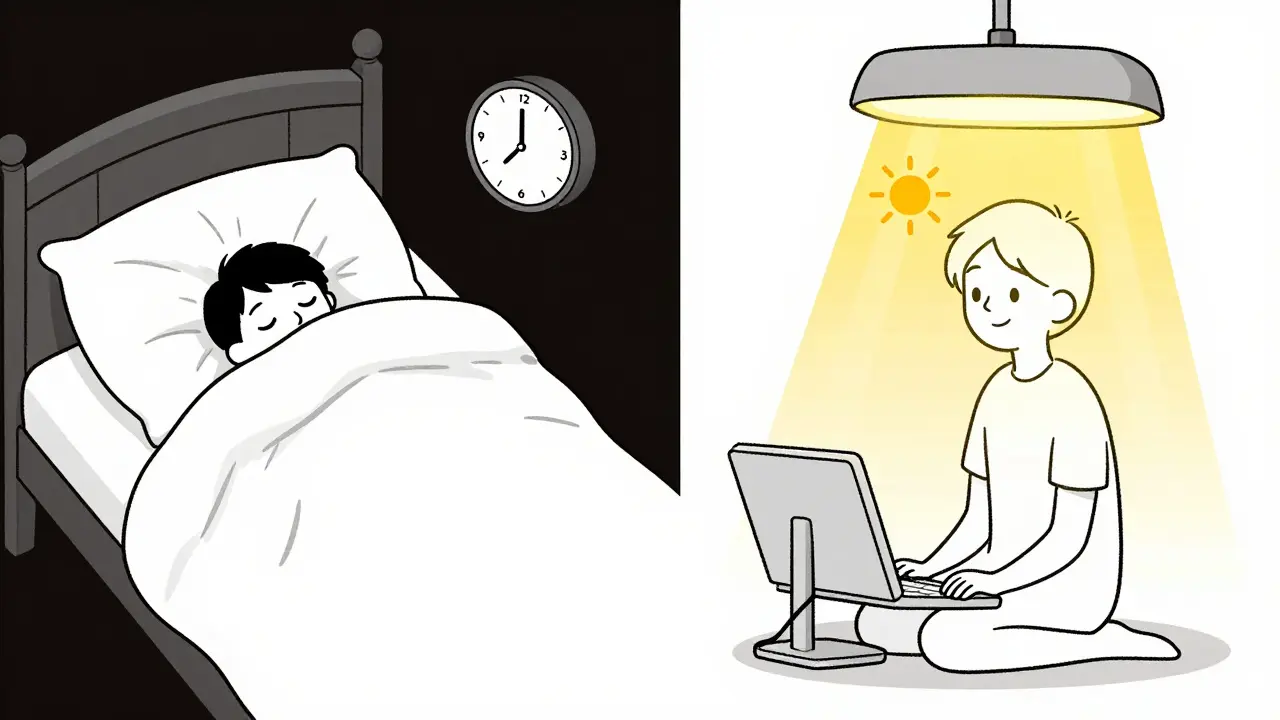
Light therapy, or bright light therapy (BLT), is the most studied and recommended treatment for SAD. It’s not just sitting near a lamp-it’s using a specially designed light box that mimics natural sunlight. The therapy works by tricking your brain into thinking it’s morning, even when it’s still dark outside.
Back in 1984, Dr. Norman Rosenthal and his team at the National Institute of Mental Health first proved that exposure to bright artificial light could lift depression in people with SAD. Since then, dozens of studies have confirmed it. Today, clinical guidelines from the American Psychiatric Association and the Canadian Network for Mood and Anxiety Treatments list light therapy as a first-line treatment for mild to moderate SAD.
The science is straightforward: light enters your eyes, signals your brain to reduce melatonin, and boosts serotonin. Within days, people report feeling more alert, less irritable, and more like themselves. In one 2024 meta-analysis of over 850 people, 50-60% of those using proper light therapy saw their symptoms go into remission.
What You Need: The Right Light Box
Not all lamps are created equal. A regular desk lamp won’t cut it. You need a device designed for therapy, with three key specs:
- 10,000 lux intensity-This is the gold standard. It’s about 20 times brighter than a typical indoor light. Some cheaper boxes only offer 2,500 or 5,000 lux, which means you’d need to sit for 60-90 minutes instead of 30. Stick with 10,000 lux.
- UV-free light-Harmful ultraviolet rays can damage your eyes. Reputable devices filter out all UV radiation. Look for this on the product specs.
- Full-spectrum white light-While some research suggests blue light (460-480 nm) may be more potent, most clinical studies use full-spectrum white light. It’s the safest, most proven option.
Place the light box 16 to 24 inches from your face-no need to stare directly at it. You can read, drink coffee, or check your phone while it’s on. Just make sure the light hits your eyes indirectly. The Center for Environmental Therapeutics recommends positioning it slightly off to the side, at about a 30-degree angle.
When and How Long to Use It
Timing matters more than you think. Morning light is the most effective. Studies show people who use light therapy between 6:00 and 8:00 a.m. have a 68% remission rate. Evening use can disrupt sleep and even make symptoms worse.
The standard protocol: 30 minutes every morning, within an hour of waking up. Most people notice improvements within 3-7 days. One Reddit user, ‘WinterSurvivor89,’ reported their depression score dropped from 22 to 8 on a clinical scale after just five days of daily use.
Consistency is key. Missing a day or two won’t ruin everything, but skipping for a week often brings symptoms back. That’s why many users say the hardest part isn’t the therapy-it’s sticking to the routine. If you’re a late sleeper or have a chaotic morning, consider a dawn simulator. These devices gradually brighten your room 30 minutes before your alarm, mimicking sunrise. They’re less intense than a light box but help reset your rhythm without forcing you to sit still.
How It Compares to Other Treatments
Many people with SAD try antidepressants like fluoxetine (Prozac). But light therapy has advantages:
- Faster results-Antidepressants take 4-6 weeks to work. Light therapy often works in under a week.
- Fewer side effects-No weight gain, sexual dysfunction, or nausea. The most common side effects of light therapy are mild: eye strain, headaches, or feeling jittery. These usually go away after a few days.
- Safe for pregnancy-Medications aren’t always an option for pregnant women. Light therapy is one of the few safe, effective treatments during this time.
A 2006 study comparing light therapy to fluoxetine found both were equally effective after eight weeks-but light therapy worked better by week two. Another study showed 61% of users achieved full remission with light therapy, compared to just 32% with a placebo.
That said, light therapy isn’t magic. For severe depression, it often works best with counseling or medication. And if you have bipolar disorder, light therapy can trigger mania in 5-10% of cases. Always talk to a doctor before starting if you’ve ever had manic episodes.
Real People, Real Results
On Amazon, the Carex Day-Light Classic Plus-a 10,000 lux light box-has over 2,800 reviews and a 4.4-star rating. Sixty-eight percent of users say they saw significant mood improvement within two weeks. Common praises: “I stopped hating mornings,” “I have energy to exercise again,” and “I didn’t need to go back on pills.”
But not everyone benefits. About 30-40% of users report little to no change. One Reddit user, ‘LightBoxSkeptic,’ tried three different boxes over two winters and felt nothing but eye strain. That’s normal. Not everyone responds the same way. Factors like genetics, how much natural light you get during the day, and even the time of day you use the device all play a role.
A 2023 survey by the National Alliance on Mental Illness found that 61% of people who tried light therapy kept using it long-term. The main reason? It worked. The main reason people quit? It was too hard to stick with the routine.
Cost, Insurance, and What to Buy
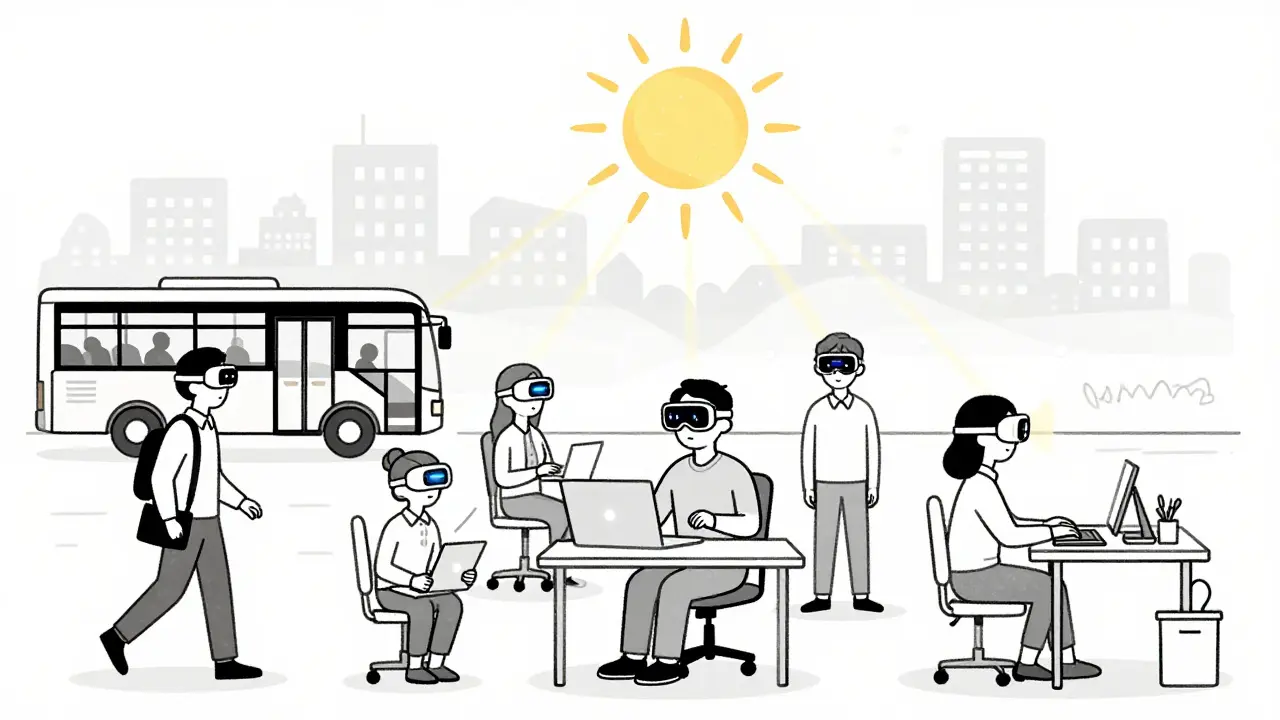
Good light boxes cost between $100 and $200. Premium models with dawn simulation or portability go up to $300. There are also wearable options like Luminette 3-light-emitting glasses that let you move around while getting therapy. They cost about $299 and are popular with commuters or people who work from home.
Unfortunately, most insurance plans don’t cover light therapy. Only about 18% of U.S. insurers reimburse for light boxes, and even then, you usually need a doctor’s note. Aetna is one of the few that covers up to $200 with a prescription. In the UK, NHS prescriptions don’t cover light boxes, but some GPs will recommend them as part of a treatment plan.
Be careful with cheap devices. Consumer Reports tested 20 light boxes in January 2024 and found that 37% of non-certified models didn’t deliver the advertised lux level. Stick to brands recommended by the Center for Environmental Therapeutics (CET). They’re a nonprofit that tests devices and publishes a list of verified products.
Who Should Avoid Light Therapy?
Most people can use light therapy safely. But it’s not for everyone:
- Bipolar disorder-Can trigger mania or hypomania. Always use under medical supervision.
- Eye conditions-Glaucoma, retinopathy, or macular degeneration? Talk to your eye doctor first.
- Photosensitivity-If you take medications that make you sensitive to light (like certain antibiotics or antipsychotics), check with your pharmacist.
If you’re unsure, ask your GP. They can help you decide if light therapy fits your situation-or if you need something else.
The Future of Light Therapy
Light therapy isn’t just for winter depression anymore. A major 2024 study in JAMA Psychiatry showed it also works for non-seasonal depression, with a 41% remission rate compared to 23% in control groups. Researchers are now testing it for perinatal depression, shift work disorder, and even dementia-related agitation.
Companies are also building smarter devices. Stanford University is testing AI-powered systems that adjust light intensity based on your sleep patterns and biomarkers. The FDA just cleared the first prescription light therapy device for treatment-resistant depression.
As awareness grows and prices drop, light therapy could become as common as vitamin D supplements in winter. But right now, it’s still underused. Too many people suffer through winter thinking it’s just ‘the blues.’ It’s not. It’s a medical condition-and there’s a simple, science-backed way to fix it.

14 Comments
Ryan W
January 25 2026
Light therapy? Seriously? We’ve got 300 days of sun in Arizona, and people still whine about winter blues? This is why America’s falling apart-people treat normal seasonal changes like a clinical diagnosis. Buy a damn coffee, go outside for five minutes, and stop treating your brain like a broken LED bulb.
Allie Lehto
January 26 2026
i just wanna say… light therapy saved my soul 💛 i used to cry in the shower every morning in december, now i sit with my coffee and let the sun-in-a-box hug me. it’s not magic, it’s science… and i’m not ashamed to need it. 🌞😭
Henry Jenkins
January 27 2026
There’s a lot of nuance here that’s being overlooked. The circadian rhythm disruption model is well-supported, but the serotonin-melatonin binary is an oversimplification. Recent fMRI studies suggest the suprachiasmatic nucleus’s response to photic input varies significantly across individuals, which explains why 30-40% don’t respond to standard 10,000 lux protocols. Also, the timing isn’t just about morning-it’s about phase advancement. If you’re a night owl with delayed sleep phase, morning light might not help until you’ve shifted your baseline rhythm with behavioral interventions. The real breakthrough isn’t the box-it’s personalized chronobiology.
Dan Nichols
January 29 2026
Everyone’s acting like this is new news. Light therapy’s been around since the 80s. The fact that people still need a 200 dollar gadget to feel human says something about how disconnected we’ve become from natural cycles. Also, why are we still using white light when blue light at 470nm has better efficacy? Because corporations don’t want you to know you can just buy a $15 LED strip from Amazon and tape it to your monitor. The medical establishment profits from selling devices, not educating people.
Renia Pyles
January 30 2026
Oh great, another wellness scam dressed up as science. I tried this for two winters. I sat there like a dumbass with a plastic lamp for 30 minutes every morning. Felt nothing. Then I realized I was just tired because I was eating garbage and scrolling TikTok until 2am. The real cure? Stop being lazy. Go to bed early. Eat protein. Move your body. No lamp needed.
George Rahn
January 31 2026
Let us not forget the grand irony: we have engineered a civilization that requires artificial sunlight to function-yet we call ourselves the pinnacle of evolution. We built cities that block the dawn, then pay $200 to simulate what nature once gave freely. This is not medicine. This is cultural decay dressed in clinical jargon. The real diagnosis? We have forgotten how to live in rhythm with the earth. The light box is a Band-Aid on a severed artery.
Napoleon Huere
February 1 2026
What if the problem isn’t the lack of light, but the lack of meaning? SAD isn’t just about serotonin-it’s about existential fatigue. We’re bombarded with noise, disconnected from community, and forced to perform happiness even when the world feels hollow. Light therapy may reset your circadian rhythm, but it doesn’t fix the loneliness. Maybe we need more than light. Maybe we need belonging.
Aishah Bango
February 1 2026
I don’t care what the studies say. If you’re using a light box and still feeling empty, you’re not broken-you’re being asked to adapt to a system that’s broken. Why are we treating symptoms instead of asking why winter feels so heavy? Maybe it’s not the season-it’s the silence. The isolation. The pressure to be productive even when the world is asleep.
Simran Kaur
February 1 2026
As someone from India where winters are mild but monsoons bring their own kind of gloom, I’ve seen how culture shapes depression. Here, we don’t have light boxes-we have chai with cardamom, family gatherings under warm blankets, and songs sung at dusk. Maybe the real therapy isn’t the light, but the ritual. The human connection. The warmth that doesn’t come from a bulb.
Neil Thorogood
February 3 2026
Bro. I used to be a zombie in January. Now I wake up at 6:30, turn on my Carex box, sip my coffee, and stare at it like it’s my new therapist. 🤓☀️ I’ve got energy. I’ve got vibes. I’ve got a life again. If you’re still skeptical, try it for 7 days. Then come back and tell me it’s placebo. I dare you. 😎
Jessica Knuteson
February 4 2026
50-60% remission rate? That’s not impressive. That’s barely better than placebo. And the meta-analysis you cited? It had publication bias. Also, why are we ignoring the fact that light therapy doesn’t work for people with low vitamin D? You can’t fix a nutrient deficiency with a lamp. This whole thing feels like a distraction from systemic healthcare failures.
Robin Van Emous
February 5 2026
I just want to say thank you for writing this so clearly. I’ve been struggling since last November, and I didn’t know if I was just being dramatic. Reading this made me feel seen. I ordered a light box yesterday. I’m nervous, but hopeful. I think I needed to hear that it’s okay to need help-and that there’s a real, simple way to get it.
Angie Thompson
February 6 2026
Y’all. I used to hate winter. Now I light up my room like a disco ball at 7am and dance while I eat oatmeal. 🕺💃 I’ve got my glow-up in the form of a 10,000 lux box and zero shame. If you’re still on the fence, just try it. Even if it’s 10% better, it’s worth it. You deserve to feel like yourself again.
SWAPNIL SIDAM
February 8 2026
In India, we don’t have SAD. We have chai, we have family, we have sunlight even in December. Maybe the answer isn’t a machine. Maybe the answer is to slow down, sit with people, and let the day breathe. We don’t need to fight winter-we need to learn to live with it.