

After a heart attack, bypass surgery, or other major cardiac event, the last thing you want to hear is that you need to start exercising. It feels counterintuitive. Your heart just went through trauma. Rest makes sense. But here’s the truth: exercise isn’t just safe after a heart event-it’s one of the most powerful tools you have to rebuild your health and live longer. In fact, people who stick to a supervised cardiac rehab program cut their risk of dying from heart disease by 20-30%. That’s not a small boost. That’s life-changing.
Why Exercise After a Heart Event Isn’t Dangerous-It’s Essential
For decades, doctors told heart patients to take it easy. Rest. Avoid stress. Don’t push too hard. That advice came from a place of caution, but science has moved on. Modern research shows that the real danger isn’t movement-it’s inactivity. When you don’t use your heart, it weakens. Muscles shrink. Blood flow slows. Blood pressure rises. All of that makes another heart event more likely.
Cardiac rehabilitation isn’t just a fancy term. It’s a structured, medically supervised plan designed around your body’s needs after a heart event. It’s not a gym membership. It’s not a generic fitness routine. It’s a personalized path back to strength, confidence, and independence. Studies show that patients who complete rehab are 47% less likely to be readmitted to the hospital within a year. They also regain their ability to walk, climb stairs, and do daily tasks faster than those who try to recover on their own.
The Three Phases of Safe Cardiac Exercise
Recovery doesn’t happen overnight. It happens in stages. And each stage has clear rules. Skipping ahead is risky. Staying too long in one phase slows progress. Here’s how it breaks down:
Phase 1: Hospital and Early Recovery (0-7 Days)
This is the time to move gently-not to sweat. You’re still healing. Your heart is fragile. The goal? Keep blood moving and prevent clots. Exercises are simple: ankle pumps (flexing and pointing your feet), seated marches (lifting knees slowly while sitting), and short walks around the hospital room. These aren’t about fitness. They’re about circulation.
Intensity? Think 1-2 METs. That’s less than walking slowly. You shouldn’t feel out of breath. If your heart rate jumps more than 20 beats above resting, or if you feel dizzy, stop. Your care team will monitor you closely. Don’t push yourself. Let your body lead.
Phase 2: Early Outpatient (Weeks 1-6)
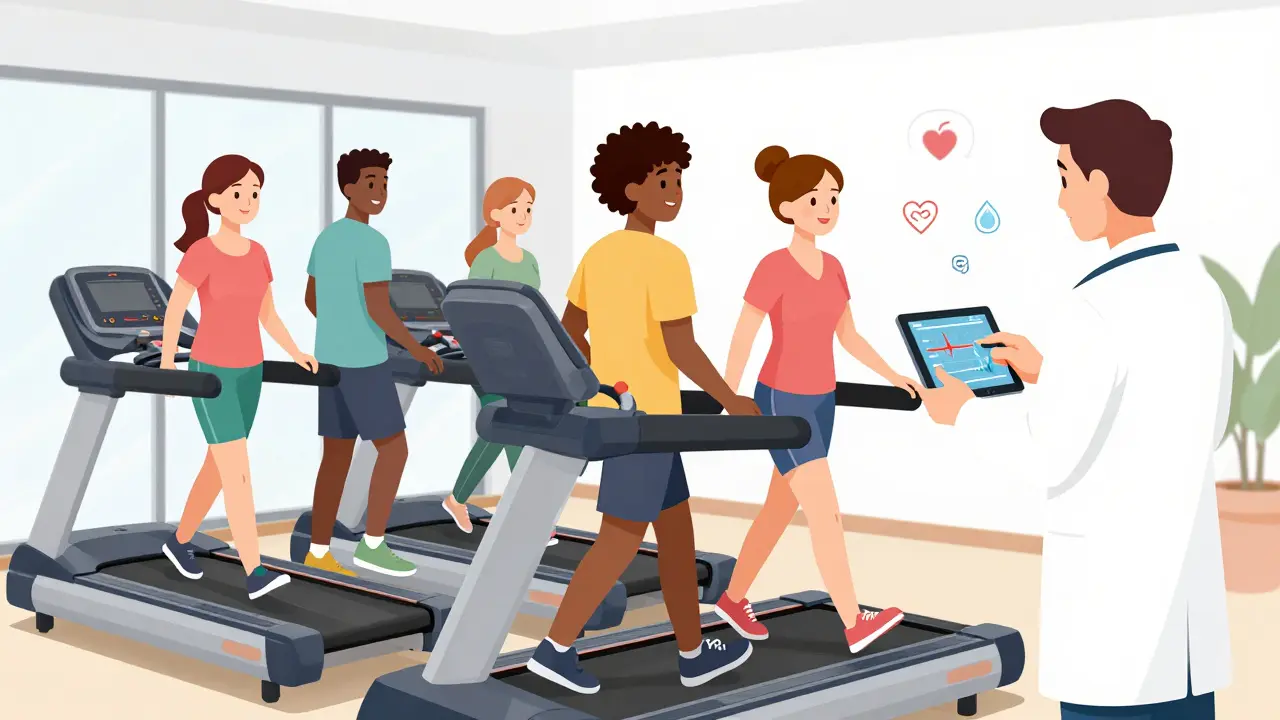
Once you’re home, you’ll likely start formal rehab. This phase lasts 4-6 weeks. Sessions are usually 3 times a week, supervised by a cardiac physiologist or nurse. You’ll start with 5-10 minutes of walking, then slowly build up to 30 minutes. The target? A Rating of Perceived Exertion (RPE) of 11-14 on the Borg Scale-that’s “light” to “somewhat hard.”
Your heart rate target? Your resting heart rate plus 20-30 beats per minute. If you’re on beta-blockers (common after heart events), your max heart rate will be lower. That’s normal. Don’t chase numbers. Focus on how you feel. Can you talk while walking? If yes, you’re in the right zone. If you’re gasping, slow down.
Strength work starts too-light resistance bands, seated arm curls, wall push-ups. Two days a week is enough. No heavy lifting. No straining. Your muscles need to rebuild, not scream.
Phase 3: Long-Term Maintenance (6+ Weeks)
This is where you take control. The goal? Live like someone who’s healthy, not someone who’s recovering. The American Heart Association recommends at least 150 minutes of moderate aerobic activity per week. That’s 30 minutes, 5 days a week. Or 75 minutes of vigorous activity. Add strength training twice a week.
What does this look like? Brisk walking, cycling on flat ground, swimming, or using an elliptical machine. You can try higher-intensity workouts now-like short bursts of faster walking-but only if your doctor says it’s safe. A 2024 study in JAMA Cardiology found that high-intensity interval training (HIIT) is not only safe for stable patients but can improve fitness 37% more than steady-state exercise.
But here’s the catch: you need to know your limits. Keep using your RPE scale. Keep checking your heart rate. Keep listening.
Supervised Rehab vs. Going It Alone
You might think: “I’ve got a fitness tracker. I’ll just follow the guidelines.” But here’s what happens when people skip supervised rehab:
- 27% of self-directed exercisers push too hard in the first month, raising their risk of complications.
- Only 45% of those who don’t do rehab stick with exercise after a year. In rehab programs? 92% do.
- Patients in formal programs recover function 25% faster than those who don’t.
Why? Because rehab isn’t just about exercise. It’s about education. You learn your warning signs. You get your medications adjusted. You talk to a counselor who helps with fear and anxiety. You’re not alone. And that makes all the difference.
One patient I spoke with-after a stent placement-tried to walk 2 miles on day 10. She felt fine. But she had chest tightness she didn’t recognize. She ended up in the ER. A rehab program would have taught her: chest pressure, dizziness, or pain in the jaw or arm means STOP. Right now.
Warning Signs: When to Stop Immediately
You’re not going to have a heart attack while exercising if you’re following the plan. But you need to know the red flags. Stop and call your doctor if you experience:
- Chest pain or pressure
- Pain spreading to your arm, neck, jaw, or back
- Dizziness or lightheadedness
- Unusual shortness of breath (not from exertion)
- Palpitations or irregular heartbeat
- Slurred speech or sudden weakness
These aren’t “maybe” signs. They’re emergencies. Don’t wait. Don’t hope it passes. Call your provider or 999.
Medications and Exercise: What You Need to Know
If you’re on beta-blockers, ACE inhibitors, or diuretics, your body responds differently to exercise. Beta-blockers lower your heart rate. That means your target heart rate zone is lower than what you’d see in a general fitness guide. Don’t try to hit a “normal” heart rate. Use your RPE instead.
Diuretics can make you dehydrated. Drink water before, during, and after exercise. Avoid caffeine-heavy drinks. If you feel lightheaded, sit down. Check your pulse. If it’s racing and you’re dizzy, call your doctor.
Medication timing matters too. Some blood pressure meds peak in the morning. If you’re on them, schedule exercise when the effect is strongest-usually 2-4 hours after taking your dose.
Overcoming Fear and Anxiety
It’s normal to be scared. Sixty-eight percent of heart patients say they worry they’ll trigger another event. That fear is real. But it’s also why rehab works so well.
Being in a supervised setting teaches you: you’re safe. You’re monitored. You’re taught how to respond. After 4 weeks, 82% of rehab participants say their fear of exercise has dropped significantly.
Here’s what helps:
- Use the “talk test”: If you can speak in full sentences, you’re fine.
- Keep a symptom journal: Note how you feel after each session. Patterns emerge.
- Exercise at the same time daily: Consistency builds confidence.
- Bring a friend: Social support reduces anxiety.
What If You Can’t Access Rehab?
Only 20-30% of eligible patients in the U.S. join cardiac rehab. Why? Transportation. Work. Cost. Insurance confusion. But things are changing.
Many programs now offer hybrid options: 12 in-person visits + 24 virtual check-ins using Bluetooth heart rate monitors. Medicare covers these. So do most private insurers. Ask your doctor. Ask your hospital. If they don’t offer it, ask for a referral.
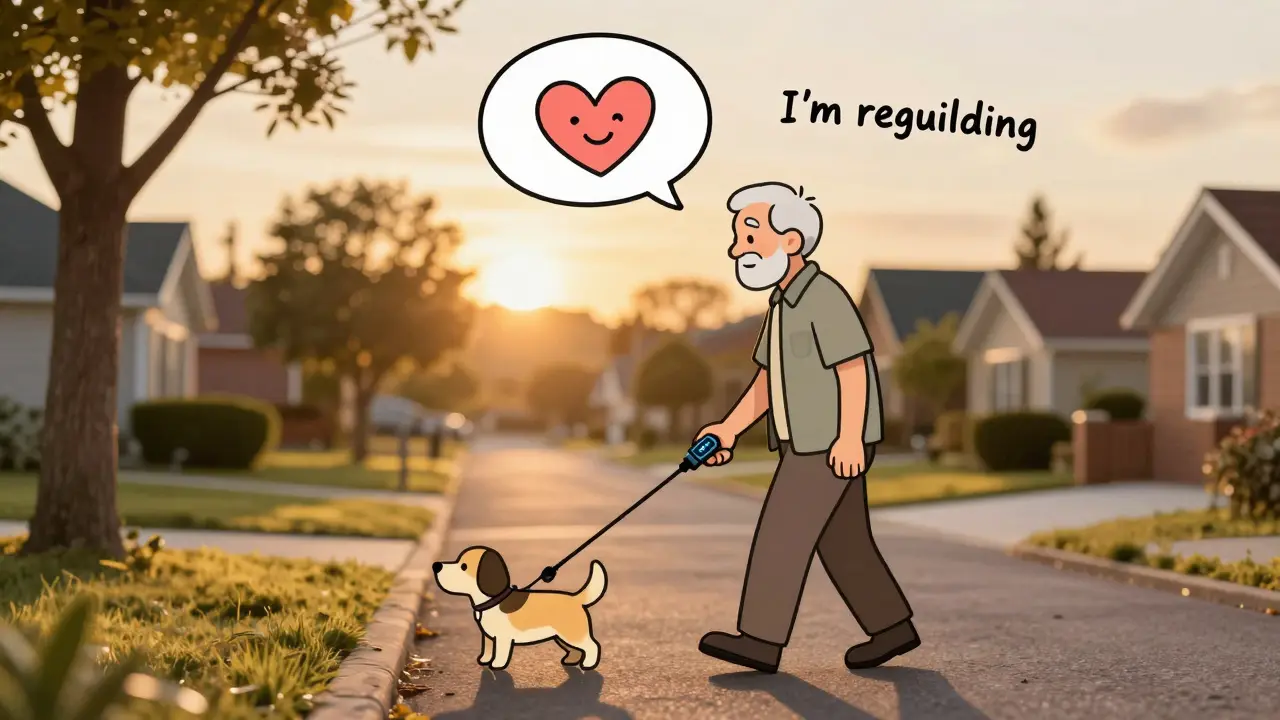
And if you’re in a rural area? Try mall walking. Use a stationary bike at home. Walk your dog. The goal isn’t perfection-it’s consistency. Even 10 minutes a day is better than nothing.
What’s Next? The Future of Cardiac Recovery
Technology is making rehab more accessible. Wearable ECG patches now monitor your heart in real time. AI tools are being tested to adjust your workout intensity on the fly based on your vital signs. One 2023 pilot showed 28% better adherence when patients got live feedback.
By 2027, 40% of cardiac rehab patients may use digital platforms. That’s huge. But tech doesn’t replace human care. It supports it. You still need someone to explain your numbers, to calm your fears, to remind you: you’re not broken. You’re rebuilding.
Start Today-One Step at a Time
You don’t need to run a marathon. You don’t need to lift weights. You just need to move. Today. Tomorrow. The next day.
Start with walking around your living room. Then the hallway. Then the driveway. Count your steps. Aim for 500. Then 1,000. Then 2,000. Celebrate each milestone. Your heart isn’t asking for perfection. It’s asking for presence.
Cardiac rehab isn’t a punishment. It’s a second chance. And it’s one of the most effective, evidence-backed tools we have to turn survival into thriving.
Can I start exercising the same day after a heart attack?
For low-risk patients, gentle movement like ankle pumps and short walks can begin within 24 hours after a heart attack or stent placement. This is now supported by research showing faster recovery. But always follow your care team’s instructions. High-risk patients may need to wait longer.
Is it safe to do strength training after a heart event?
Yes, but only after you’ve built up endurance and under supervision. Start with light resistance bands or bodyweight exercises like seated leg lifts or wall push-ups. Avoid heavy lifting, straining, or holding your breath. Two sessions per week are enough. Always use low weight and high reps.
How do I know if I’m exercising too hard?
Use the talk test: if you can’t speak in full sentences without gasping, you’re going too hard. Also, monitor your heart rate-it should be your resting rate plus 20-30 bpm. If you feel chest pressure, dizziness, nausea, or unusual fatigue, stop immediately. These are warning signs, not just discomfort.
What if I’m on beta-blockers? Can I still reach a good heart rate?
Beta-blockers lower your heart rate, so your target zone will be lower than standard guidelines. Don’t try to hit a “normal” number. Instead, use the Rating of Perceived Exertion (RPE) scale. Aim for 11-14 (light to somewhat hard). Focus on how you feel, not the number on the monitor.
Does insurance cover cardiac rehab?
Yes. Medicare Part B covers 36 sessions of cardiac rehab after a heart attack, bypass surgery, or stent placement. Most private insurers cover it too. You may need a referral from your cardiologist. If your hospital doesn’t offer it, ask for a list of accredited programs. Telehealth options are now covered as well.
Can I do cardiac rehab if I live in a rural area?
Yes. Many programs now offer hybrid models: a few in-person visits plus virtual sessions using a Bluetooth heart rate monitor. You can also start with walking at home, in a mall, or on a stationary bike. The key is consistency. Even 10 minutes a day builds strength. Talk to your doctor about remote monitoring options.
How long does it take to feel normal again?
Most people notice improvement in energy and stamina within 4-6 weeks of starting rehab. Full recovery-where you can do daily activities without fatigue-often takes 3-6 months. It varies by age, damage severity, and how consistently you stick with the program. Patience and persistence matter more than speed.

11 Comments
Jacob Carthy
February 24 2026
They say exercise saves lives but dont mention how many people get hospitalized trying to follow these "safe" guidelines. I know a guy who did 30 mins of walking and ended up in the ER because his heart rate spiked. They act like its just a walk in the park but its not. Its a gamble with your ticker.
lela izzani
February 24 2026
Actually, that guy probably wasn't monitored. Supervised rehab is designed to catch those spikes before they become emergencies. You dont just go out and walk blind. You start at 5 minutes, you get your vitals checked, and you progress slowly. Its not about pushing-it's about listening.
Joseph Cantu
February 24 2026
Of course they say its safe. The system needs you to stay active so you dont collect disability. The pharmaceutical companies love it too-more meds, more follow-ups, more tests. Cardiac rehab? More like a revenue stream wrapped in a wellness blanket. You think they care about your heart? They care about your insurance card.
David McKie
February 25 2026
Youre right. This whole thing is a scam. I read the study they cite. It was funded by a consortium of gyms and medtech firms. The real truth? Most heart patients die within two years regardless of rehab. Exercise just delays the inevitable. They dont want you to know that.
Joanna Reyes
February 25 2026
I lost my dad last year after his second bypass. He tried to do everything on his own because he didn't trust the system. He thought rehab was "too much"-too many appointments, too many rules. He didn't know that the reason he felt worse after 6 weeks was because he skipped the strength training phase. He started lifting dumbbells at home. One day he couldn't lift his coffee cup. The doctors said his muscles had atrophied so badly his heart had to work twice as hard. If he'd done the program, he'd still be here. I'm in rehab now. I'm 52. I walk 20 minutes every morning. I cry sometimes. But I'm alive. And I'm not giving up.
Cory L
February 26 2026
Yo. I did this after my stent. First week I couldnt walk to the mailbox without puffing. By week 4 I was doing hill walks. By month 3 I was hiking with my dog. It felt like getting my life back. Not some miracle cure-just slow, dumb, consistent movement. The key? Dont compare yourself to who you were. Compare yourself to who you are right now. That’s your new baseline. And it’s enough.
William James
February 26 2026
you dont have to be perfect to be healing. i had a heart attack at 48. i thought i was done. turned out i was just beginning. the numbers dont matter. the sweat dont matter. what matters is that you show up. even if its just to sit on the porch and breathe. even if its just to stretch your toes. your heart remembers. it knows you care. and thats the real medicine. dont let anyone tell you its too late. its never too late to start being gentle with yourself.
Stephen Archbold
February 26 2026
Just did my 12th rehab session. My heart rate monitor glitched and showed 180 bpm. I panicked. The nurse laughed and said "that's your Fitbit lying to you." She showed me how to check my radial pulse. I felt so dumb. But also so relieved. This whole thing? It's not about tech. It's about trust. Trusting your body. Trusting the process. Trusting the person who says "slow down" even when you think you're fine.
Lisandra Lautert
February 27 2026
Stop. Just stop. If you're on beta-blockers, your heart rate target is not a suggestion. It's a medical boundary. Ignoring it is not bravery. It's negligence. And if you're reading this and thinking "I'll just push through," you're one step away from a code blue.
Southern Indiana Paleontology Institute
February 28 2026
i live in rural indiana and we dont have rehab but i walk my dog 2 miles every day. my doc said its enough. its not about fancy machines its about moving. my dog doesnt care if i have a stent. he just wants to go. so we go.
Anil bhardwaj
March 1 2026
I’m from India. We don’t have rehab centers like this. But we have chai, family, and walking after dinner. My uncle had a heart attack. He walks 30 minutes every evening with his grandchildren. He’s alive. He’s happy. Sometimes the simplest things are the most powerful.