
Yohimbe Blood Pressure Risk Calculator
How Yohimbe Affects Your Blood Pressure
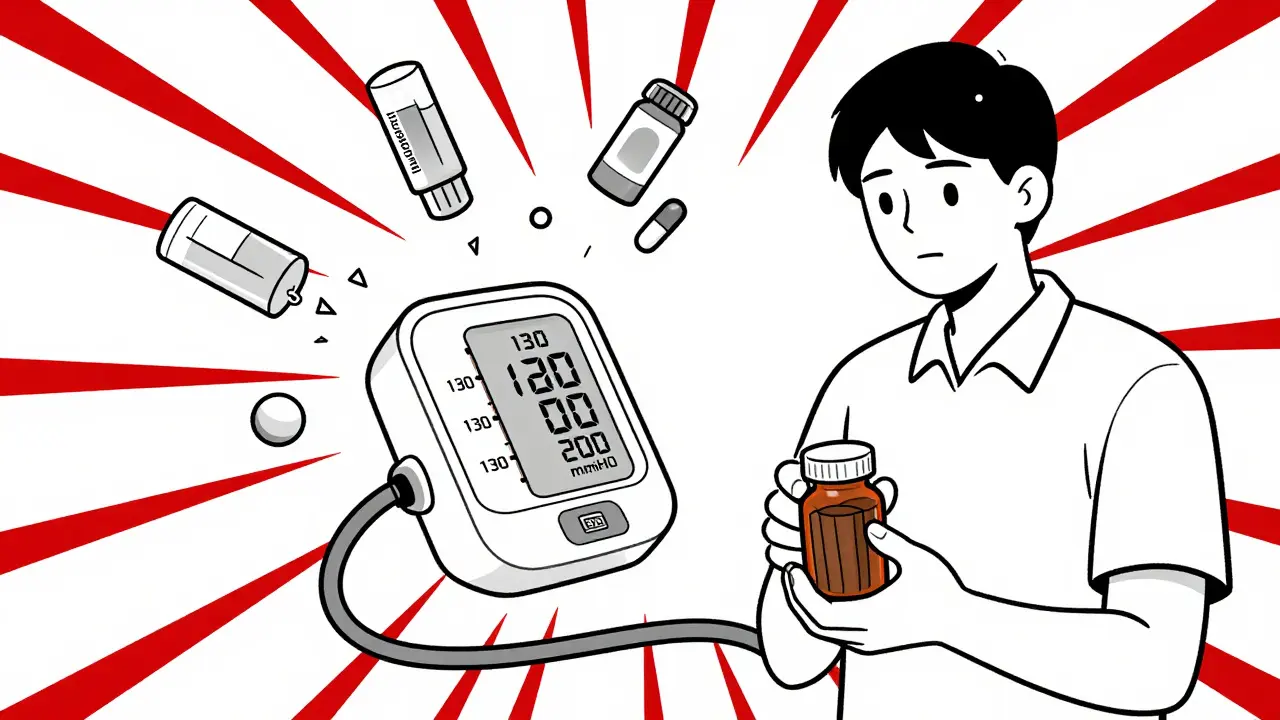
Yohimbe can raise systolic blood pressure by 20-30 mmHg. If you're taking blood pressure medications, this risk is even greater.
Enter your blood pressure and medication details to see your risk level.
If you're taking medication for high blood pressure, you might think a natural supplement like yohimbe is a safe way to boost energy, lose weight, or improve performance. But here’s the hard truth: yohimbe can turn a routine day into a medical emergency when mixed with common blood pressure drugs.
What Is Yohimbe, Really?
Yohimbe comes from the bark of a tree in West Africa. Its active ingredient, yohimbine, was first isolated in 1896 and later approved by the FDA in 1989 for erectile dysfunction under the brand name Yocon. But today, it’s mostly sold as a dietary supplement-marketed for weight loss, stamina, or male enhancement. What’s not on the label? How dangerous it really is.
The problem isn’t just that it’s herbal. It’s how it works. Yohimbine blocks alpha-2 receptors in your nervous system, which normally help keep your blood pressure in check. When those receptors are blocked, your body releases more norepinephrine-a chemical that speeds up your heart and squeezes your blood vessels. The result? Blood pressure spikes.
Studies show yohimbine can raise systolic blood pressure by 20 to 30 mmHg in some people. That’s like going from 130 to 160 in minutes. And because yohimbe supplements aren’t regulated like drugs, you never know how much you’re actually getting. One 2015 analysis found that 30% of U.S. products didn’t even contain natural yohimbine-they used synthetic versions. Others had anywhere from zero to over 6 mg per serving, even when labeled as 5 mg.
Why It’s Deadly With Blood Pressure Meds
Let’s say you’re on lisinopril, metoprolol, or amlodipine-common drugs prescribed to lower blood pressure. They work by relaxing vessels, slowing your heart, or helping your body get rid of fluid. Yohimbe does the exact opposite. It fights your medication at the molecular level.
Take clonidine, for example. It’s an alpha-2 agonist-it tells your body to calm down. Yohimbine is an alpha-2 antagonist-it screams for your body to speed up. When you mix them, your blood pressure can jump 30 to 50 mmHg in under an hour. That’s not a theory. It’s been documented in emergency rooms.
The Mayo Clinic’s 2025 drug database lists 12 major classes of blood pressure medications that interact dangerously with yohimbine. That includes:
- Beta-blockers (like atenolol and propranolol)
- ACE inhibitors (like enalapril and ramipril)
- Calcium channel blockers (like diltiazem and verapamil)
- Diuretics (like hydrochlorothiazide)
- Alpha-blockers (like doxazosin)
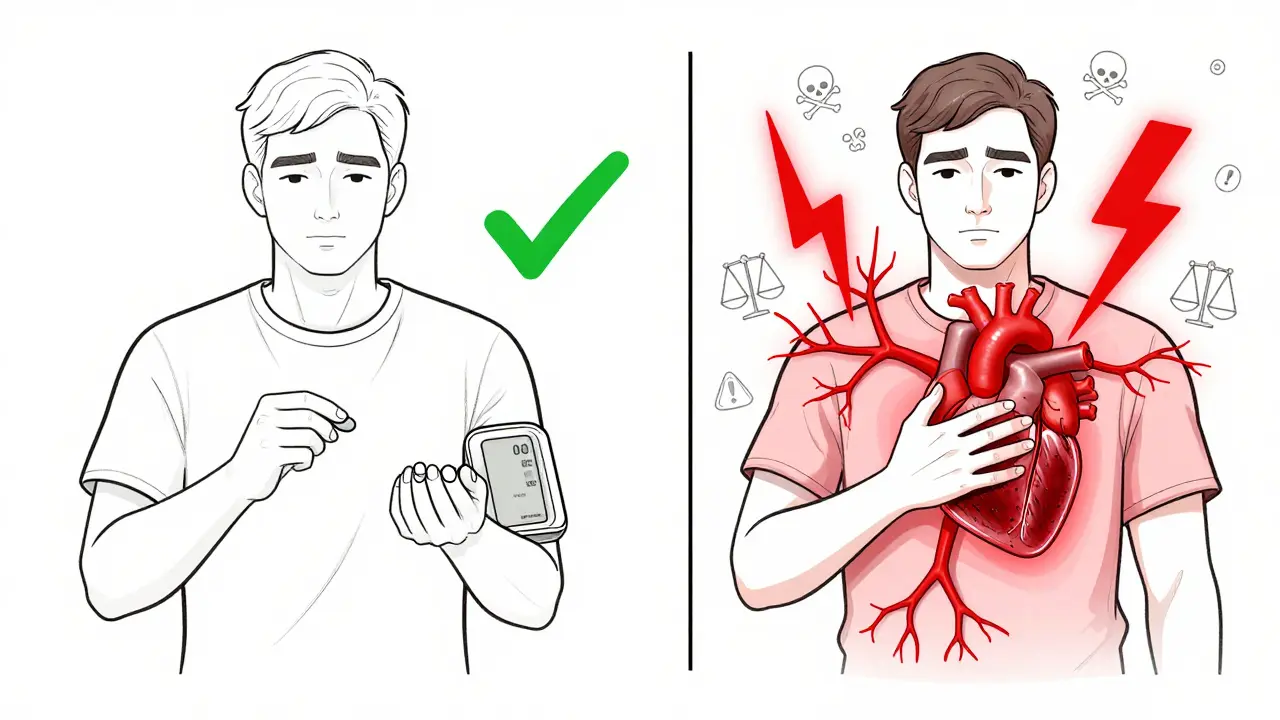
And it doesn’t stop there. Yohimbine also clashes with antidepressants like amitriptyline and venlafaxine-drugs that already increase norepinephrine. A 2022 study found 17 cases of severe hypertension (systolic BP over 180 mmHg) in people who took both. That’s not just high blood pressure. That’s a hypertensive crisis-stroke, heart attack, or kidney damage territory.
Real People, Real Emergencies
It’s not just doctors warning about this. Real people are posting about it online.
On WebMD, 87% of 214 reviews from users with high blood pressure said they had negative reactions after taking yohimbe. Over 60 of them described sudden spikes in blood pressure. Forty-one reported their heart racing so hard they thought they were having a heart attack.
One Reddit thread titled “Yohimbe nearly killed me while on lisinopril” has 147 comments. Thirty-two users shared similar stories-some with readings over 200 mmHg. One man, 41, ended up in the ER after taking a single capsule. His doctor told him he was lucky he didn’t have a stroke.
The California Poison Control System tracked 7 years of cases (2000-2007). Of all supplement-related calls, yohimbe was responsible for 73% of cardiovascular emergencies. Sixty-seven percent of cases involved tachycardia. Fifty-eight percent involved severe hypertension. And 78% of those cases required medical intervention-far higher than any other supplement.
What’s on the Label? Nothing Reliable
Here’s the kicker: you can’t trust the bottle.
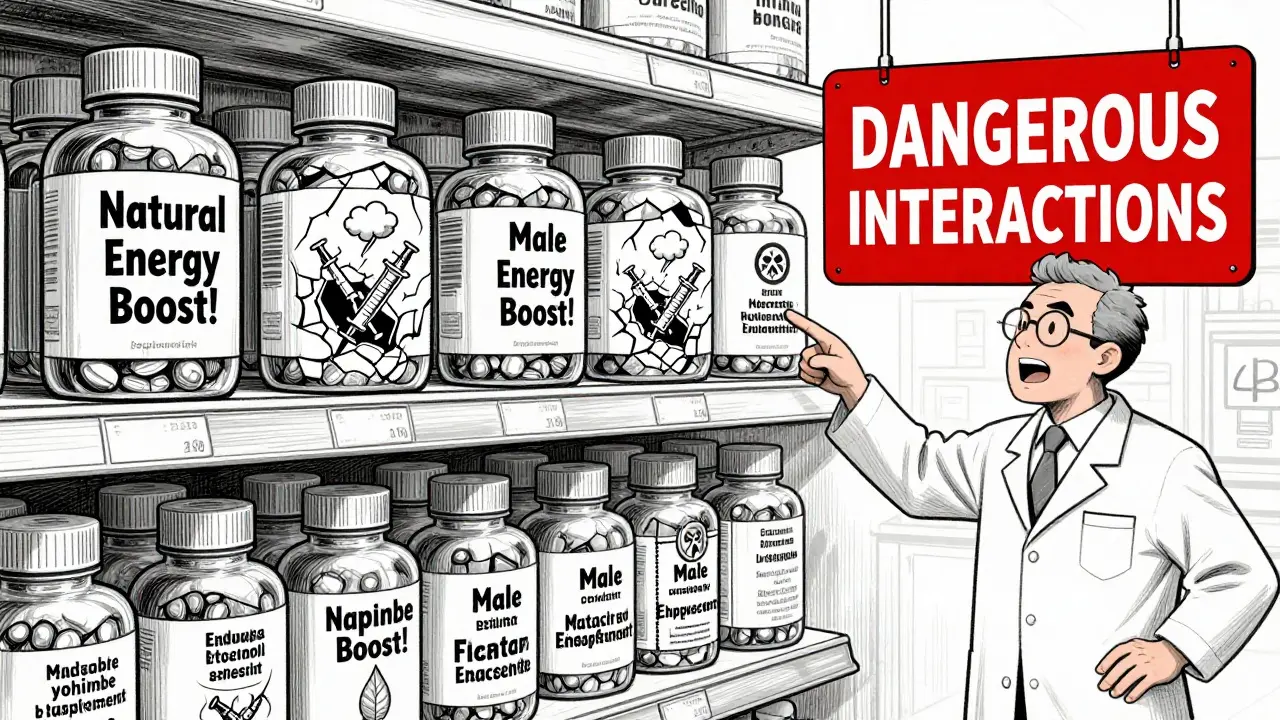
ConsumerLab.com tested 27 yohimbe supplements in 2022. Sixty-eight percent didn’t match their label claims. Some had 200% less yohimbine than stated. Others had 400% more. One product labeled as 5 mg actually contained 28.7 mg-more than five times the dose.
And most labels don’t even mention the risks. A 2023 NCCIH review found that 78% of yohimbe products failed to warn about cardiovascular side effects. That’s not negligence. That’s negligence with a profit margin.
In 2023, the FDA recalled 17 brands of yohimbe supplements after testing showed wildly inconsistent dosing. The same year, the European Medicines Agency and Health Canada banned yohimbe entirely. Canada’s ban came after a 2020 review found “unacceptable cardiovascular risks.”
Who’s at Risk?
You don’t have to be elderly to be in danger. The average age of people admitted to ERs after taking yohimbe? 37. That’s younger than most people think. Many are athletes, fitness enthusiasts, or men trying to improve performance. They think they’re being smart by choosing a “natural” option.
But if you have:
- High blood pressure
- Heart disease
- Kidney or liver problems
- Are taking any blood pressure or psychiatric medication
-you are not a candidate for yohimbe. Period.
The American Heart Association rated yohimbe as “high risk” for hypertensive emergencies. Between 2015 and 2021, they documented 43 cases of dangerous blood pressure spikes linked to this supplement. The American College of Cardiology now recommends that doctors specifically ask patients about yohimbe use during medication reviews-especially if their blood pressure won’t come down.
What Should You Do?
If you’re currently taking yohimbe and blood pressure meds, stop immediately. Don’t wait for symptoms. Don’t try to “cut back.” The interaction can happen with a single dose.
Call your doctor or pharmacist. Tell them exactly what you’ve been taking-including the brand name if you have it. If you’ve had chest pain, dizziness, blurred vision, or a pounding heartbeat since starting yohimbe, get checked now.
If you’re thinking about starting it? Don’t. There are safer, proven ways to improve energy, lose weight, or support sexual health-without risking your heart.
Pharmacists are seeing this more often. A 2022 survey found 89% of community pharmacists had spotted at least one yohimbe-blood pressure interaction in the past year. Nearly 3 in 10 had to respond to emergencies.
The market for yohimbe in the U.S. is still $38 million a year-mostly sold as male enhancement or weight loss supplements. But experts predict sales will drop 18-22% annually through 2027. Why? Because more people are learning the truth.
What’s Next?
The FDA’s 2023 draft guidance proposes mandatory warning labels on all yohimbe products: “WARNING: May cause dangerous increases in blood pressure, especially when taken with blood pressure medications. Not for use by persons with heart disease or hypertension.”
That’s a step forward. But it shouldn’t be needed. No supplement should be allowed to carry this level of risk without a prescription.
For now, the safest choice is simple: if you’re on blood pressure medication, leave yohimbe on the shelf. Your heart won’t thank you for taking a chance. It will thank you for walking away.
Can yohimbe raise blood pressure even if I don’t take any medication?
Yes. Even without medication, yohimbe can cause dangerous spikes in blood pressure. Studies show it can raise systolic pressure by 20-30 mmHg in susceptible individuals. People with undiagnosed hypertension, anxiety, or heart conditions are especially at risk. A single dose can trigger dizziness, chest pain, or a rapid heartbeat.
How long does yohimbe stay in your system?
Yohimbine has a half-life of 0.5 to 1.5 hours, meaning half of it clears from your blood within that time. But its effects can last 4-6 hours, and in some people, especially those with liver or kidney issues, it can linger longer. Even after the feeling wears off, your blood pressure may still be elevated.
Is there a safe dose of yohimbe for people with high blood pressure?
No. No dose is considered safe for people with high blood pressure or heart disease. The Memorial Sloan Kettering Cancer Center and the American Heart Association both explicitly warn against any use. Even 5 mg-a common dose in supplements-has triggered hypertensive crises in vulnerable individuals.
Are all yohimbe supplements the same?
No. Testing shows huge differences between brands. Some contain no yohimbine at all. Others have synthetic versions or 4-5 times the labeled amount. A 2022 ConsumerLab analysis found 68% of products had inaccurate labeling. This makes dosing unpredictable and extremely risky.
What should I take instead of yohimbe for energy or weight loss?
Focus on proven, safe methods: regular exercise, adequate sleep, protein-rich meals, and stress management. If you need a supplement, talk to your doctor about options like green tea extract (in moderation) or L-carnitine-both have better safety profiles and no known interaction with blood pressure meds. Never assume “natural” means safe.
Can I take yohimbe if I stopped my blood pressure medication?
No. Stopping blood pressure medication without medical supervision is dangerous and can itself lead to spikes in pressure. Even if you’ve stopped, your body may still be adjusting. Yohimbe adds another unpredictable stressor. Always consult your doctor before making any changes to your treatment plan.

12 Comments
Meina Taiwo
December 21 2025
Yohimbe is a hard no if you're on BP meds. I've seen patients crash hard in the ER. No gray area here.
Stop before it's too late.
Sarah Williams
December 22 2025
I used to buy this stuff thinking 'natural = safe' until my cousin ended up in the hospital after taking it with lisinopril.
Now I scream at anyone even thinking about it. Please, just don't.
There's no reward worth your heart.
Brian Furnell
December 23 2025
Yohimbine, as an alpha-2 adrenergic receptor antagonist, induces a sympathomimetic cascade-increasing norepinephrine release, elevating systemic vascular resistance, and triggering tachycardia.
When co-administered with ACE inhibitors, beta-blockers, or clonidine, it creates a pharmacodynamic antagonism that can precipitate hypertensive urgency or emergency.
Moreover, the unregulated nature of dietary supplements introduces extreme pharmacokinetic variability-dosing can range from subtherapeutic to lethal within the same brand.
ConsumerLab’s 2022 findings confirm that 68% of products misrepresent yohimbine content-this isn’t just negligence, it’s public health malpractice.
The FDA’s 2023 draft guidance is a start, but what we need is Schedule IV classification-not warning labels.
Southern NH Pagan Pride
December 24 2025
They don't want you to know this but yohimbe was banned in Canada because the pharma giants are scared it'll expose how useless their $200/month pills really are.
They're lying about the 'danger' to keep you hooked.
And why is it only 'dangerous' with BP meds? Coincidence? I think not.
They control the studies too.
Check the funding sources.
They're hiding the truth.
Wake up.
They don't want you healthy.
They want you medicated.
And they're using fear to sell you more drugs.
Trust nature, not the FDA.
Yohimbe saved my life.
They just don't want you to know.
Grace Rehman
December 25 2025
So we're supposed to trust the FDA and the American Heart Association but not the guy on Reddit who says he's been taking yohimbe for 10 years and his BP is better than his doctor's
Wow what a revelation
Next you'll tell me the moon landing was real
And that water isn't secretly a conspiracy
Oh wait
That's what they want us to think
But I'm onto them
They're using 'medical consensus' to keep us docile
Meanwhile the real cure is in the jungle
And they're poisoning the trees
Just like they poisoned the water
And the air
And our minds
So keep taking your pills
And I'll keep taking my bark
Because apparently I'm too dumb to know what's good for me
But hey
At least I'm not on the grid
Or whatever
Peace out
Love y'all
But not the system
Jerry Peterson
December 26 2025
As someone raised in a family that uses traditional herbs, I get the appeal.
But this isn't like turmeric or ginger.
Yohimbe is potent, unpredictable, and not worth the gamble.
My uncle took it with his meds and ended up in the ICU.
He's fine now, but he won't touch it again.
Respect your body, respect your meds.
There's no shortcut to health.
Siobhan K.
December 28 2025
Let’s be real: the supplement industry is a Wild West where profit trumps safety.
Yohimbe isn’t the only one-remember ephedra?
People died.
They banned it.
Now yohimbe is the new ephedra.
And the FDA? Playing catch-up while companies rake in millions.
It’s not about natural vs synthetic.
It’s about regulation vs greed.
And right now, greed is winning.
And we’re the ones paying the price.
Orlando Marquez Jr
December 29 2025
It is of considerable concern that unregulated botanical dietary supplements containing yohimbine alkaloids may present an unquantifiable risk to individuals with pre-existing cardiovascular conditions.
Pharmacovigilance data from the CDC and Poison Control Systems indicate a statistically significant correlation between yohimbe ingestion and hypertensive crises, particularly among patients concurrently utilizing antihypertensive pharmacotherapy.
Further, the absence of standardized dosing and the presence of adulterants constitute a public health liability.
It is therefore recommended that healthcare providers actively screen for yohimbe use during routine medication reconciliation protocols.
Additionally, patient education initiatives should be prioritized in primary care settings to mitigate avoidable adverse events.
Jackie Be
December 31 2025
I took yohimbe once
Just one capsule
And my heart started pounding like a drum in my chest
I thought I was dying
My vision went blurry
I called 911
They said I was lucky
That I didn't have a stroke
That one capsule almost killed me
And now I'm scared to even look at supplements
Don't be stupid like me
Just say no
It's not worth it
Not even close
Jon Paramore
January 1 2026
Yohimbine’s half-life is short, but its cardiovascular effects linger longer due to receptor occupancy and norepinephrine accumulation.
Even after plasma levels drop, sympathetic overdrive can persist for 4–6 hours.
And in hepatic or renal impairment, clearance is significantly delayed.
That’s why some people report delayed reactions-sometimes hours after ingestion.
Don’t assume ‘it’s over’ just because you feel fine.
BP can spike later.
And if you’re on meds, you’re playing Russian roulette with a loaded chamber.
Just don’t.
Swapneel Mehta
January 1 2026
Back home in India, we use natural herbs all the time.
But we also know their power.
Yohimbe isn't a spice.
It's a medicine.
And like any medicine, it needs respect.
Don't treat it like a protein shake.
And if you're on BP meds?
Don't risk it.
There's no shame in asking your doctor first.
That's wisdom, not weakness.
Cameron Hoover
January 2 2026
I used to sell yohimbe supplements.
Not because I believed in them.
But because people kept buying them.
Then I started reading the ER reports.
Then I read the FDA recalls.
Then I met a guy who almost died after one capsule.
Now I don't sell anything.
I just tell people the truth.
And if you're on blood pressure meds?
Walk away.
It's not worth it.
Not even a little bit.