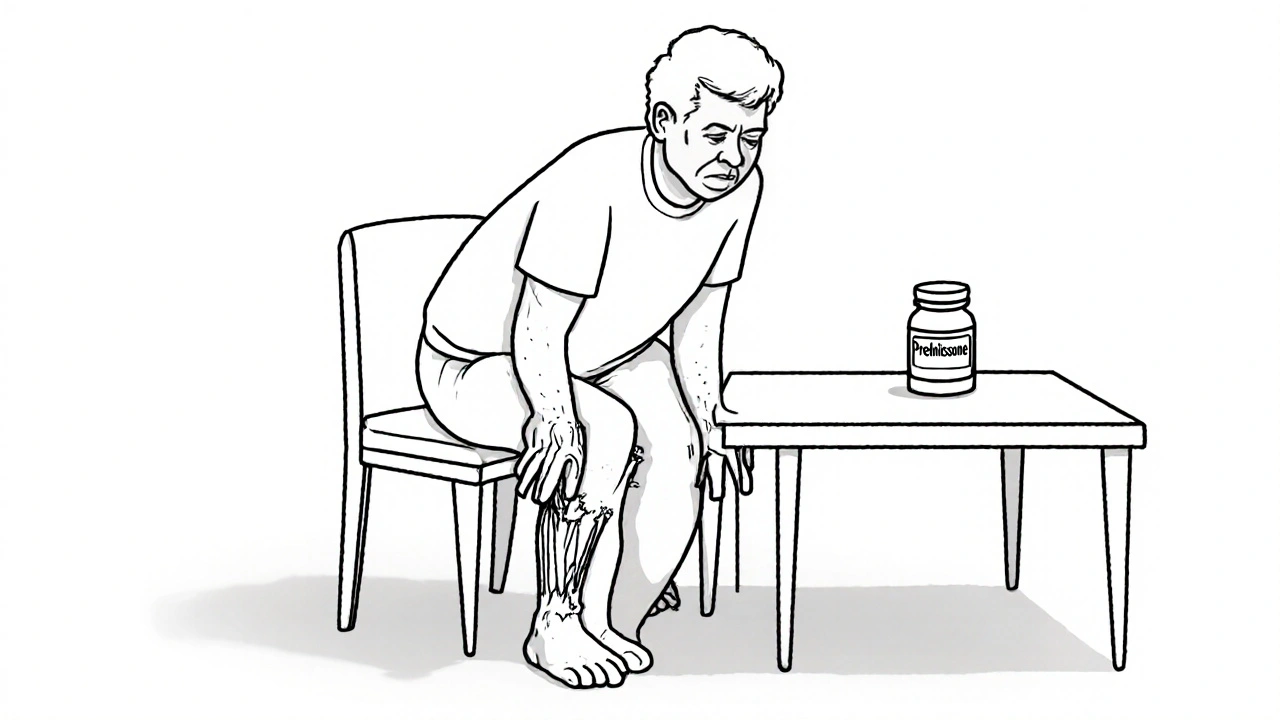
Steroid myopathy causes painless, proximal muscle weakness in people on long-term corticosteroids. Learn how to recognize it early, why it’s often missed, and how physical therapy can safely rebuild strength without worsening damage.
Muscle Weakness from Steroids: Causes, Risks, and What to Do
When you take steroids, synthetic versions of hormones like cortisol used to reduce inflammation and suppress the immune system. Also known as corticosteroids, they’re prescribed for everything from asthma to rheumatoid arthritis—but they don’t come without trade-offs. One of the most common but rarely discussed side effects is muscle weakness, a gradual loss of strength, especially in the thighs and shoulders, that can happen even at normal doses. It’s not just feeling tired. It’s struggling to stand up from a chair, climbing stairs, or lifting your grocery bags. This isn’t a myth. It’s called corticosteroid myopathy, a well-documented condition where prolonged steroid use breaks down muscle proteins faster than the body can rebuild them.
Why does this happen? Steroids interfere with how your muscles use energy. They lower protein synthesis, increase muscle breakdown, and reduce the number of muscle fibers that actually contract. The longer you’re on them—especially doses over 10 mg of prednisone daily for more than a few weeks—the higher your risk. Older adults, people with existing muscle loss, or those on high doses for autoimmune conditions are hit hardest. And here’s the twist: you might not notice it until you suddenly can’t do something you used to handle easily. Unlike exercise-induced soreness, this weakness doesn’t get better with rest. It gets worse the longer you stay on the drug.
It’s not just about stopping steroids, either. Even after you quit, recovery can take months. Some people regain full strength. Others don’t. That’s why it’s critical to talk to your doctor early. They can help you lower your dose safely, suggest physical therapy, or switch to a different treatment if possible. And if you’re on steroids long-term, simple steps like light resistance training, eating enough protein, and avoiding falls can make a big difference. This isn’t about fear. It’s about awareness. The posts below dig into real cases, studies on muscle recovery after steroid use, how to spot early signs, and what alternatives exist for managing inflammation without sacrificing your strength.