
Steroid Myopathy Assessment Tool
Assess Your Muscle Weakness
This tool helps identify if your symptoms match steroid myopathy. It's based on the diagnostic criteria from the International Myopathy Guidelines Consortium.
Select symptoms that match your experience. Note: Steroid myopathy typically causes proximal weakness (hips and shoulders) without pain.
How many seconds does it take to stand up from a chair 5 times?
Results will appear here after assessment
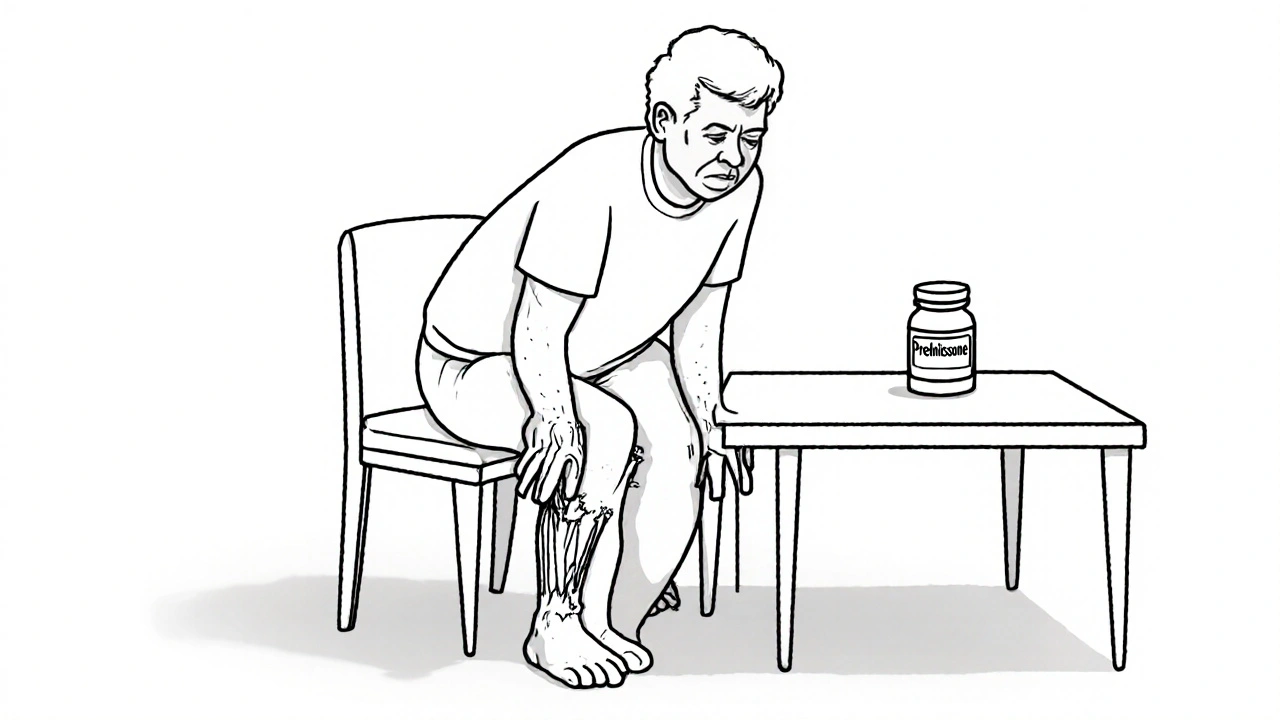
When you're on long-term steroids for asthma, rheumatoid arthritis, or another chronic condition, you might notice something strange: you can't stand up from a chair without using your hands. Climbing stairs feels impossible. Lifting your arms to reach a shelf? Forget it. And here’s the kicker - there’s no pain. No burning, no soreness, no swelling. Just pure, quiet weakness. This isn’t just being out of shape. It’s steroid myopathy.
What Exactly Is Steroid Myopathy?
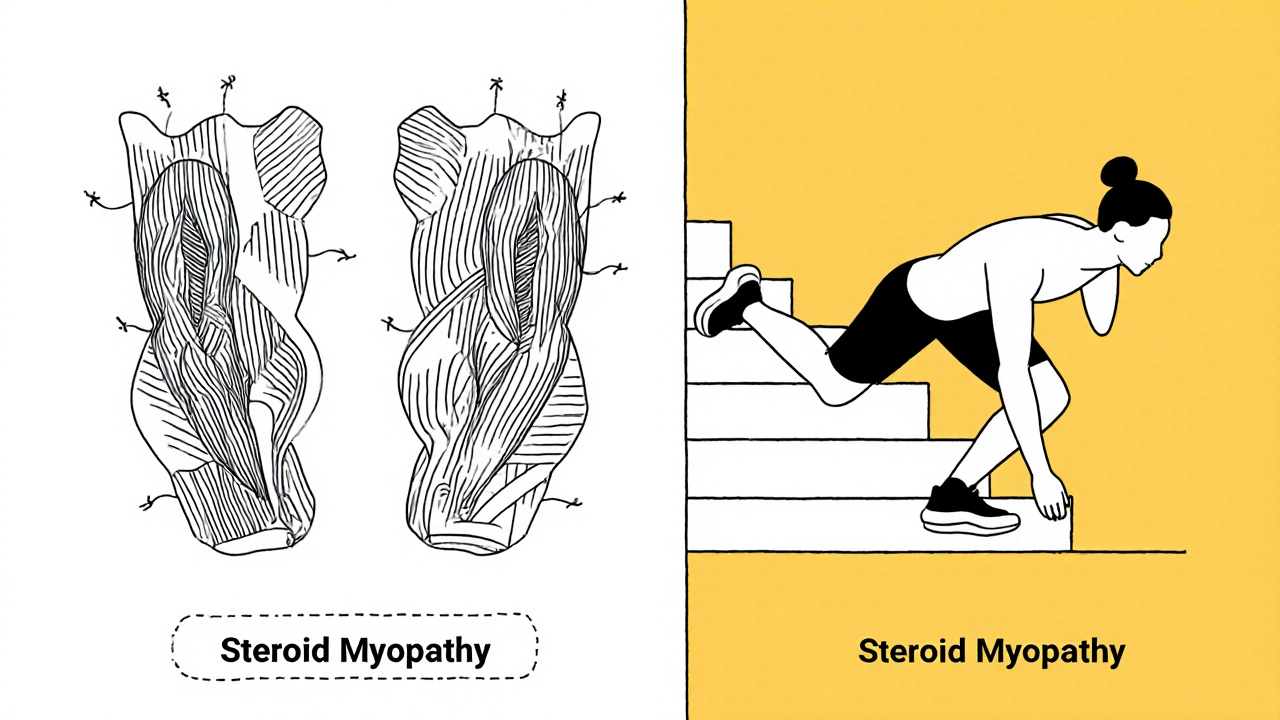
Steroid myopathy is muscle weakness caused by taking corticosteroids like prednisone, dexamethasone, or cortisone. It’s not an infection. It’s not inflammation. It’s a direct toxic effect on your muscle fibers - specifically the fast-twitch type 2b fibers that power standing, climbing, and lifting. These fibers break down faster than they rebuild, thanks to how steroids mess with your body’s protein balance.
The problem usually shows up after taking more than 10 mg of prednisone daily for four weeks or longer. In hospitals, people on high-dose IV steroids - say, 40-60 mg daily - can develop severe weakness in just two or three weeks. And it’s more common than you think. Studies show between 2.4% and 21% of people on chronic steroids develop it. In some clinics, up to 40% of cases are missed because doctors assume the weakness is from the original illness or just aging.
How Do You Know It’s Steroid Myopathy and Not Something Else?
Here’s what makes steroid myopathy different from other muscle problems:
- No pain. Unlike inflammatory muscle diseases, you won’t feel sore or tender.
- Proximal weakness only. Your hips and shoulders go first. Your hands and feet? Usually fine.
- Normal blood tests. Creatine kinase (CK) levels stay within the normal range (30-170 U/L). In inflammatory myopathies, CK spikes above 500 U/L.
- Normal EMG. Nerve tests don’t show the abnormal firing patterns seen in autoimmune muscle diseases.
- No inflammation on biopsy. Muscle samples show shrunken type 2b fibers - no immune cells, no redness, no swelling.
That last point is key. If your doctor orders a muscle biopsy and sees inflammation, it’s probably not steroid myopathy. That’s a sign of polymyositis or dermatomyositis - totally different diseases that need different treatment.
Who’s at Risk?
If you’re taking steroids for any of these, you’re at risk:
- Chronic asthma or COPD
- Rheumatoid arthritis
- Lupus or other connective tissue diseases
- Polymyositis or vasculitis
- Acute lymphoblastic leukemia (especially on dexamethasone)
Dexamethasone is worse than prednisone for muscle damage. That’s why kids with leukemia on dexamethasone protocols often lose muscle strength fast - even if their cancer is responding well. And it’s not just adults. People over 65, those with poor nutrition, or anyone on high doses for months are at higher risk.
Why Is It So Often Missed?
Doctors don’t check for it. Routine muscle strength tests - like asking you to push against their hands - miss early weakness. A 2019 study found that 78% of patients with steroid myopathy tested normal on manual exams, but dynamometer tests showed real strength loss.
Patients often blame themselves. “I’m just getting older.” “I haven’t been exercising.” “My arthritis is getting worse.” But if you’re on steroids and suddenly can’t get up from a low chair without using your arms, that’s not normal aging. That’s a red flag.
One Reddit user put it perfectly: “I could walk fine, but I couldn’t stand up from my couch without pushing off with my hands. I thought I was just lazy. Turns out, my muscles were being eaten by the medicine.”
How Physical Therapy Can Help - And What to Avoid
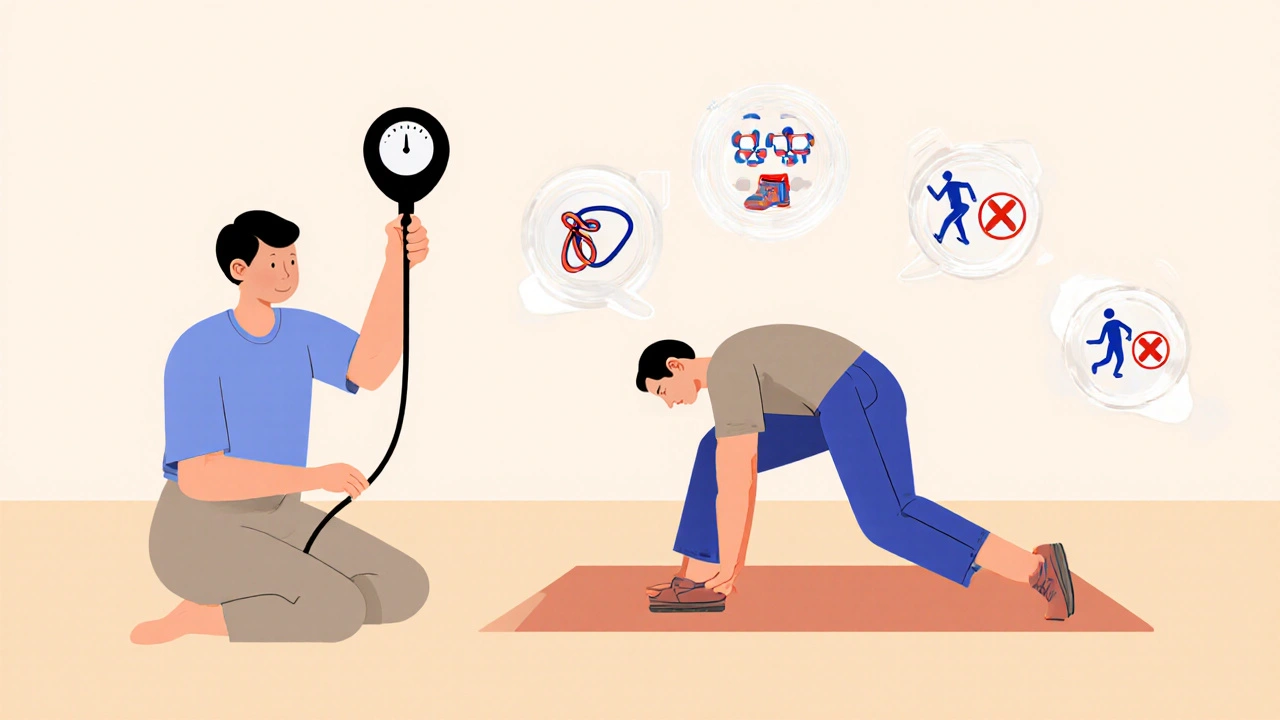
The good news? You can rebuild strength. But you can’t just hit the gym hard. High-intensity lifting or long cardio sessions can make things worse. Steroid myopathy isn’t about being out of shape - it’s about muscle breakdown. You need smart, gentle training.
Here’s what works:
- Start slow. Begin with 30% of your one-rep max. That’s light. Think: bodyweight squats, seated leg extensions, wall push-ups.
- Focus on resistance, not speed. Slow, controlled movements trigger muscle growth without tearing fibers.
- Target the hips and thighs. These are the first muscles affected. Exercises like step-ups, bridging, and mini-squats are key.
- Train 2-3 times a week. More than that increases risk of damage. Less won’t help.
- Progress slowly. Add 5-10% more resistance every two weeks - only if you feel stronger, not sore.
A 2020 study tracked 45 people doing this exact protocol. After 12 weeks, they improved their timed chair rise test by 23.7%. The control group - who just got advice - improved by only 8.2%. No injuries. No setbacks.
What to avoid:
- Heavy squats or deadlifts
- High-rep endurance workouts
- Running or jumping
- Any exercise that causes muscle burning or prolonged soreness
Physical therapists who specialize in neuromuscular conditions use tools like handheld dynamometers to measure strength changes. They also use functional tests: how long it takes to stand from a chair five times, how fast you can climb four stairs, or how many times you can raise your arms overhead in 30 seconds.
What About Stopping Steroids?
Some people think: “If steroids are causing this, just stop them.” But that’s not always possible. For many, steroids are life-saving. Stopping them can trigger disease flare-ups - worse than the muscle weakness.
Here’s the truth: steroid myopathy doesn’t get worse when you stop. In fact, strength usually improves slowly once the dose is lowered. But you still need physical therapy to rebuild. Your muscles won’t fix themselves.
Doctors are now exploring new drugs called SEGRMs - selective glucocorticoid receptor modulators. One, called Vamorolone, shows promise. In trials, patients got the same anti-inflammatory benefit as prednisone but with 40% less muscle loss. These drugs aren’t widely available yet, but they’re the future.
What You Can Do Today
You don’t have to wait for a specialist. Start now:
- Track your daily function. Can you stand from a chair without hands? Climb stairs? Lift your arms? Write it down.
- Ask your doctor for a strength test. Request a timed chair rise test or a dynamometer check.
- Request a referral to a physical therapist who’s worked with steroid myopathy or neuromuscular conditions.
- Start light resistance training. Use resistance bands or bodyweight. Do 10 squats, 10 wall push-ups, 10 bridges. Three times a week.
- Don’t wait for pain. If you feel weaker, even without pain, speak up.
Remember: steroid myopathy isn’t your fault. It’s a side effect of a powerful medicine. But it’s treatable. And the sooner you act, the faster you’ll get your strength back.
What’s Next?
The World Health Organization predicts steroid use will rise 12-15% over the next decade as more older adults need long-term anti-inflammatory treatment. That means more people will face this hidden weakness. But awareness is growing. The International Myopathy Guidelines Consortium is finalizing the first standardized physical therapy protocols for steroid myopathy - expected by the end of 2025.
Until then, knowledge is your best tool. Know the signs. Know the tests. Know what works. And don’t let quiet weakness go ignored.
Can steroid myopathy be reversed?
Yes, steroid myopathy can be reversed with proper management. Strength typically improves when steroid doses are reduced and combined with supervised, low-to-moderate intensity resistance training. Recovery takes weeks to months, depending on how long steroids were taken and how early therapy begins. Muscle fibers can regenerate if the catabolic trigger is removed and the right stimulus is applied.
Does steroid myopathy cause muscle pain?
No, steroid myopathy is typically painless. This is one of its defining features. Unlike inflammatory muscle diseases like polymyositis, which cause aching and tenderness, steroid-induced weakness is silent. Patients often describe feeling “heavy” or “weak,” but never sore. Pain suggests another condition - like nerve compression or joint disease - and should be evaluated separately.
Is steroid myopathy the same as muscle wasting from aging?
No. Age-related muscle loss (sarcopenia) affects all fiber types slowly over years and is usually accompanied by general frailty. Steroid myopathy hits fast-twitch type 2b fibers rapidly - often within weeks - and is localized to proximal muscles. It’s more sudden, more specific, and more severe in its pattern. A 70-year-old on prednisone can lose strength faster than a healthy 80-year-old.
Can blood tests diagnose steroid myopathy?
No, blood tests alone can’t diagnose it. Creatine kinase (CK), lactate dehydrogenase (LDH), and other muscle enzymes are usually normal. That’s actually a clue - elevated enzymes suggest inflammation or damage from trauma or autoimmune disease. Normal levels in the presence of weakness point toward steroid myopathy. Diagnosis relies on clinical history, functional testing, and sometimes muscle biopsy.
How long does it take to recover from steroid myopathy?
Recovery time varies. Mild cases may improve in 3-6 months after reducing steroid dose and starting therapy. Severe cases, especially after years of high-dose use, can take a year or more. Consistent resistance training is the biggest factor. Patients who stick with therapy see steady gains. Those who stop early often plateau or lose progress. Patience and persistence are essential.
Can I still exercise while on steroids?
Yes - but not all exercise is safe. Avoid high-intensity, heavy lifting, or endurance activities like running or CrossFit. Focus on light-to-moderate resistance training: bodyweight exercises, resistance bands, or machines at 30-60% of your max. Do it 2-3 times a week. This helps rebuild muscle without triggering more breakdown. Always consult a physical therapist before starting a new program.
Are there any supplements that help with steroid myopathy?
No supplement has been proven to reverse steroid myopathy. While protein intake should be adequate (1.2-1.6 g per kg of body weight), extra protein powders or amino acid supplements don’t override the drug’s effect. Vitamin D and calcium are important for bone health if you’re on long-term steroids, but they won’t fix muscle weakness. The only proven treatment is targeted physical therapy and dose reduction when possible.
Should I get a muscle biopsy?
Not always. A biopsy is usually only needed if the diagnosis is unclear - for example, if you have pain, elevated enzymes, or signs of inflammation. In classic steroid myopathy, the history and functional tests are enough. Biopsies carry small risks and aren’t necessary for most patients. Talk to your neurologist or rheumatologist about whether it’s warranted in your case.

13 Comments
Robert Bashaw
December 1 2025
Bro. I was on 40mg of prednisone for lupus for 18 months. One day I tried to pick up my cat and my arms just... gave out. Like my muscles were made of wet cardboard. I thought I was dying. Turned out I couldn’t stand up from my couch without using my hands. Felt like my body was being slowly devoured by a silent ghost. No pain. Just... weakness. I cried in the bathroom that day. Not from pain. From fear. This post? It’s the first time someone put my nightmare into words. Thank you.
Geoff Heredia
December 2 2025
They don’t want you to know this. Big Pharma is hiding the truth. Steroid myopathy? It’s not a side effect-it’s a designed feature. They know muscle wasting makes you dependent. More pills. More doctor visits. More $$$ for the system. They’re replacing your strength with bureaucracy. Dexamethasone? It’s not medicine. It’s a slow-acting chemical leash. Wake up.
Peter Lubem Ause
December 3 2025
Let me be clear: this is one of the most important posts I’ve read in years. Steroid myopathy is silent, widespread, and tragically overlooked. I’ve seen it in my clinic-patients over 65, on long-term steroids for RA, told they’re just ‘getting old.’ No. Their fast-twitch fibers are being selectively dismantled. The good news? Muscle plasticity is real. With gentle, progressive resistance training-start with seated leg lifts, wall push-ups, and timed chair stands-you can rebuild. Not overnight. But steadily. And safely. I’ve had patients regain 70% of lost strength in 4 months. Don’t wait for pain. Act now. Your muscles are still there. They’re just sleeping.
Mary Kate Powers
December 4 2025
I’m a PT who specializes in neuromuscular rehab, and I want to say thank you for writing this. So many patients come to me after months of being dismissed. I always start with the chair rise test-it’s the most telling. And I never push them into heavy weights. We go slow. We celebrate tiny wins: ‘You stood up without hands today!’ That’s victory. You’re not broken. Your body is just healing in the quietest way. Keep going. You’ve got this.
Steven Howell
December 5 2025
This is a clinically significant contribution to the discourse surrounding iatrogenic muscle atrophy. The delineation between steroid myopathy and inflammatory myopathies is both precise and underappreciated in primary care settings. The referenced 2020 study demonstrating a 23.7% improvement in timed chair rise with low-intensity resistance training represents a paradigm shift in rehabilitation protocols. I recommend this be disseminated to all rheumatology and pulmonology departments. The absence of elevated CK levels as a diagnostic clue is particularly noteworthy.
Brandy Johnson
December 7 2025
Of course the system ignores this. People on steroids are already ‘damaged goods’ in the medical hierarchy. Why bother helping someone who’s ‘chosen’ to be weak? If you’re on prednisone, you’re already losing the battle. This isn’t a medical issue-it’s a moral one. Stop blaming the drug. Start blaming the lifestyle that got you here.
Peter Axelberg
December 9 2025
I’ve been on 10mg prednisone for 7 years for asthma. I thought I was just out of shape. Then I tried to carry my laundry basket up the stairs and collapsed. Not because I was tired. Because my quads just... didn’t respond. I started doing wall squats. 10 reps. Three times a week. After 6 weeks, I could stand up from my couch without using my hands. No magic. No miracle. Just consistency. If you’re reading this and you’re on steroids? Start today. Not tomorrow. Today. Your future self will thank you.
Monica Lindsey
December 9 2025
Pathetic. You’re blaming the medicine. Why not take responsibility? If you can’t lift a chair, maybe you should’ve stayed off the drugs. Or better yet-don’t get sick in the first place. This isn’t a tragedy. It’s a consequence.
jamie sigler
December 10 2025
I read this whole thing. Honestly? I’m too tired to care. My legs feel heavy. I don’t know if it’s the steroids or just life. Maybe I’ll do something about it. Maybe not. Either way, I’m just gonna lie here.
Bernie Terrien
December 11 2025
They call it myopathy. I call it muscle murder. Prednisone doesn’t just weaken you-it erases your power. And they act like it’s normal. Like it’s just part of the package. It’s not. It’s a slow, silent betrayal by the very thing meant to save you.
stephen idiado
December 11 2025
Proximal weakness? Nonsense. It’s just sarcopenia with a steroid label. Biopsies are overkill. Bloodwork is all you need. If CK’s normal, it’s not muscle. It’s laziness. Or poor nutrition. Or both. Stop medicalizing weakness.
Subhash Singh
December 11 2025
Thank you for this meticulously detailed exposition. The differential diagnosis between steroid-induced myopathy and autoimmune myopathies is indeed critical, particularly given the divergent therapeutic implications. The referenced functional assessments-timed chair rise, stair climb, and overhead arm repetition-are validated, objective measures that should be integrated into routine clinical evaluations. I shall incorporate these protocols into my own practice immediately.
Tina Dinh
December 12 2025
YOU GOT THIS 💪🔥 I’ve been there. I did 10 wall push-ups every morning. Now I can lift my toddler. No drama. Just grit. You’re not weak-you’re healing. Keep going. You’re stronger than you think. 🌟