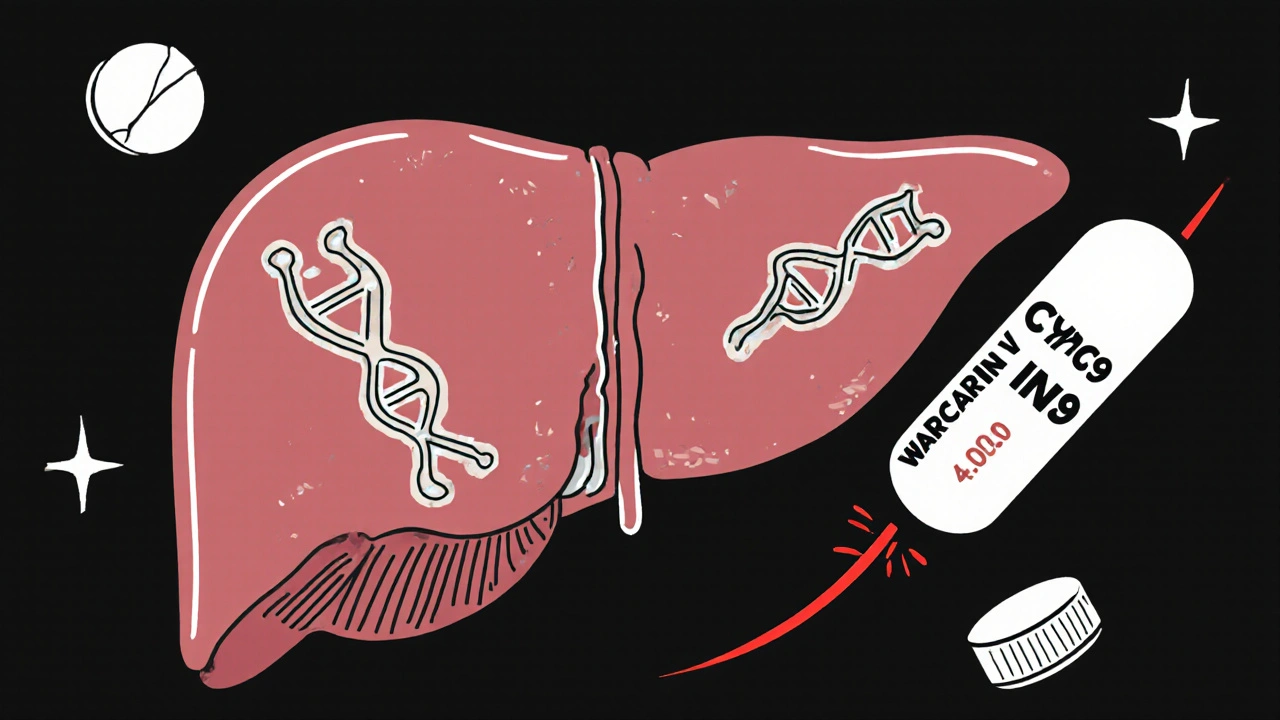
CYP2C9 and VKORC1 gene variants significantly affect warfarin dosing and bleeding risk. Genetic testing can reduce dangerous side effects by up to 32% in the first 90 days of therapy.
CYP2C9: How This Enzyme Affects Your Medications and What You Need to Know
When your body processes medications, one of the most important players is CYP2C9, a liver enzyme responsible for breaking down over 15% of commonly prescribed drugs. Also known as cytochrome P450 2C9, it’s the reason why two people taking the same pill at the same dose can have completely different results. Some people break down drugs fast—others barely touch them. And it’s not about how much you weigh or how healthy you are. It’s mostly about your genes.
This enzyme handles drugs like warfarin, ibuprofen, losartan, and some diabetes pills. If your CYP2C9 is slow, those drugs build up in your system and raise your risk of side effects. If it’s too fast, the drug might not work at all. That’s why some people on warfarin need a tiny dose to avoid bleeding, while others need triple that amount just to stay in range. It’s not a mistake—it’s biology. And it’s why pharmacogenomics, the study of how genes affect drug response is becoming part of real-world care. Doctors aren’t just guessing anymore. They’re starting to test for CYP2C9 variants before prescribing.
It’s not just about single drugs. CYP2C9 also interacts with other enzymes and substances. Grapefruit juice? It doesn’t touch CYP2C9—but other things like certain antibiotics or herbal supplements can slow it down. That’s when your blood pressure med suddenly becomes too strong. Or your painkiller gives you dizziness you didn’t expect. That’s why your medication interactions, the hidden conflicts between drugs, supplements, and your body’s enzymes matter more than you think. A simple OTC painkiller might be fine for most people, but if you’re a slow CYP2C9 metabolizer, it could be dangerous.
You don’t need to be a scientist to understand this. If you’ve ever been told your medication "didn’t work" or "made you sick" when it worked fine for someone else, CYP2C9 might be why. And if you’re on long-term meds—especially for heart disease, diabetes, or blood clots—knowing your enzyme profile could save you from hospital visits. It’s not routine yet, but more labs offer the test, and more insurers are covering it. You just have to ask.
The posts below dive into real cases: how CYP2C9 affects warfarin dosing, why some people get severe side effects from common painkillers, and how genetic differences explain why one person’s miracle drug is another person’s nightmare. You’ll also find practical advice on talking to your pharmacist about metabolism, what to do if you suspect your meds aren’t working right, and how to avoid dangerous combos. This isn’t theory. It’s what’s happening in clinics and kitchens across Canada right now.