
Immunosuppressant Safety Checker
Understand Your Personal Risk
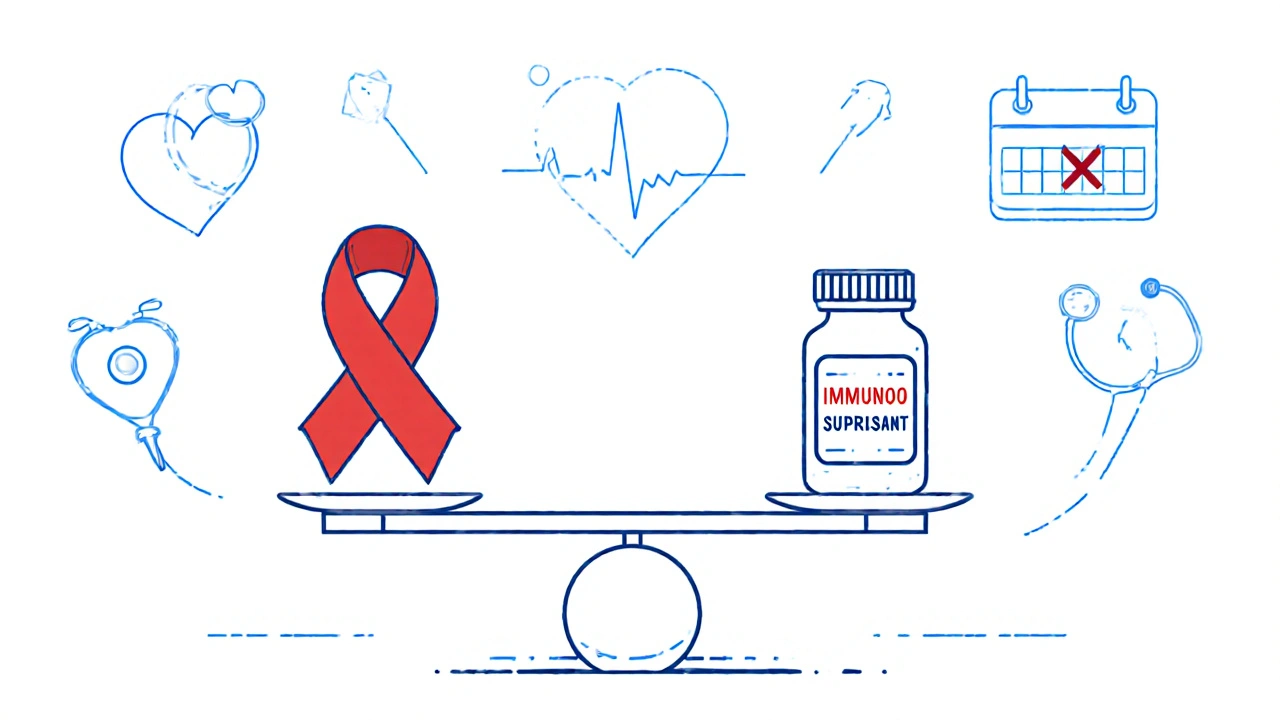
Based on the latest research (2024 analysis of 24,382 patients), most patients with cancer history can safely start immunosuppressants without waiting five years. This tool helps assess your specific risk based on cancer type, stage, and time since remission.
Your Risk Assessment
Immunosuppressants and Cancer History: What You Need to Know About Recurrence Risk
If you’ve had cancer and now need immunosuppressants for rheumatoid arthritis, Crohn’s disease, or psoriasis, you’ve probably been told to wait five years before starting treatment. The fear? That suppressing your immune system might let cancer come back. For years, that was the standard advice. But the science has changed-and fast.
Recent studies involving over 24,000 patients show something surprising: immunosuppressants don’t increase your risk of cancer returning. Not anti-TNF drugs like infliximab or adalimumab. Not methotrexate or azathioprine. Not even combinations of them. The old rule-wait five years-was never backed by solid data. Now, we know it’s not needed.
Why Did Doctors Think Immunosuppressants Caused Cancer to Return?
The logic seemed simple. Your immune system hunts down rogue cancer cells. If you weaken it with drugs, those cells might slip through undetected. It made sense in theory. And for a long time, doctors played it safe. If you had breast cancer, melanoma, or lymphoma, they’d hold off on biologics or immune modulators until five years had passed since your last treatment.
But theory doesn’t always match reality. The problem? No large, long-term studies ever proved that waiting made a difference. Most of the guidance came from caution, not evidence. And for patients with severe autoimmune diseases, that delay could mean years of pain, fatigue, joint damage, or uncontrolled bowel inflammation-risks that were just as dangerous as a potential cancer return.
The Data That Changed Everything
In 2016, a major review in Gastroenterology looked at 11,702 patients with autoimmune diseases who’d had cancer. They compared those on no immunosuppression, anti-TNF drugs, traditional immune modulators, and combo therapy. The recurrence rates? Almost identical.
- No immunosuppression: 37.5 cases per 1,000 person-years
- Anti-TNF therapy: 33.8 cases per 1,000 person-years
- Traditional modulators: 36.2 cases per 1,000 person-years
- Combination therapy: 54.5 cases per 1,000 person-years
That last number looks high, but it wasn’t statistically significant. In other words, the difference could’ve been random. The study found no link between any treatment and higher cancer recurrence. And the P-values? All above 0.1-meaning no real difference.
Then came the 2024 analysis, twice as big. It included 24,382 patients and over 85,000 person-years of follow-up. Same result. No increased risk with anti-TNF drugs, methotrexate, or newer agents like ustekinumab, vedolizumab, or JAK inhibitors. Even starting treatment within a year of cancer diagnosis didn’t raise the risk.
Timing Doesn’t Matter-But Cancer Type Does
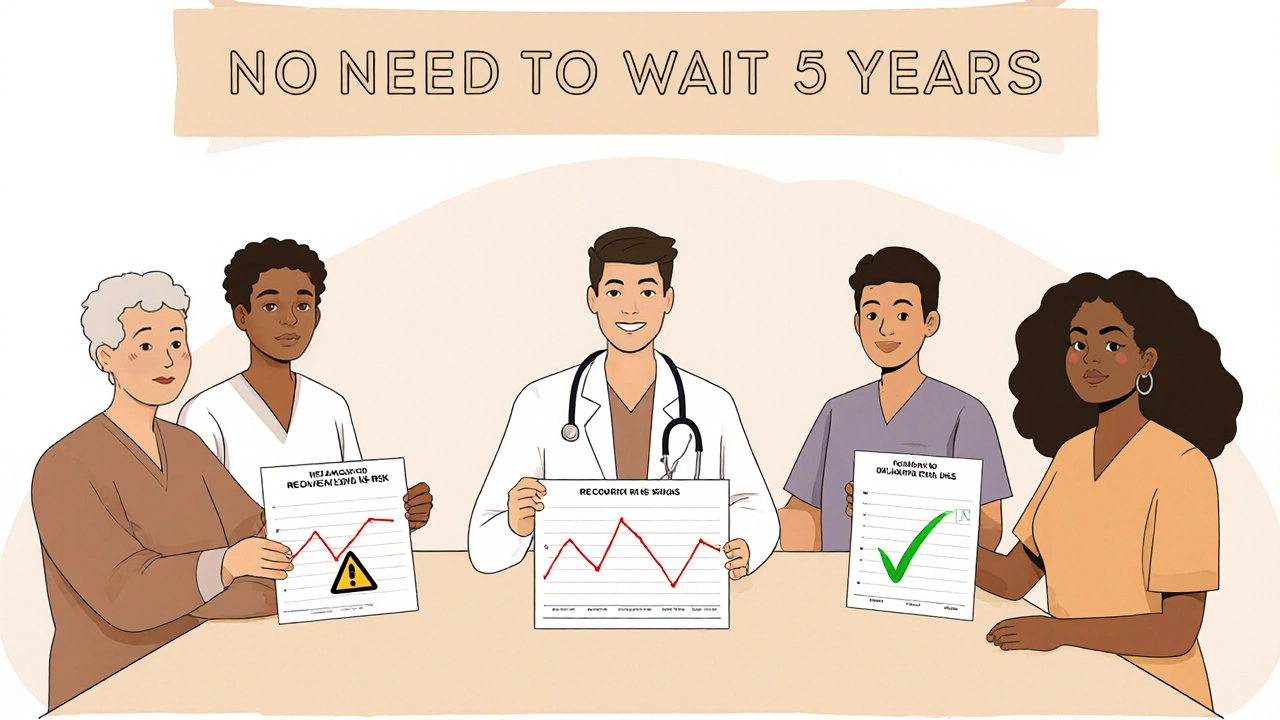
One of the biggest myths busted? The five-year waiting period. The data shows it’s arbitrary. Whether you started immunosuppressants six months or six years after cancer treatment, the recurrence risk stayed the same. P-value: 0.43. No difference.
But here’s the nuance: not all cancers are the same. Melanoma and blood cancers like leukemia or lymphoma still need more caution. These cancers are more sensitive to immune surveillance. While the overall data is reassuring, doctors still tend to delay treatment in patients with recent melanoma or active hematologic cancers-especially if they’re in the first two years after diagnosis.
For solid tumors like breast, colon, or lung cancer, the risk is not meaningfully higher with immunosuppressants. The same goes for skin cancers other than melanoma. The key isn’t time since cancer. It’s the type, stage, and whether you’re in remission.
What About Newer Drugs? Are They Safer?
The newer biologics-ustekinumab, secukinumab, vedolizumab, and JAK inhibitors-weren’t even widely used in the early studies. But the 2024 analysis included them. And guess what? Their recurrence rates were actually lower than traditional drugs like methotrexate, though the difference wasn’t statistically significant.
This suggests these newer agents might not just be as safe-they could potentially be better. That’s still being studied, but early data is encouraging. The FDA and EMA have already updated drug labels to reflect this. For example, the prescribing information for adalimumab now says: “Clinical studies have not shown an increased risk of cancer recurrence in patients with prior malignancy.”
How Are Doctors Changing Their Approach?
Five years ago, many rheumatologists and gastroenterologists avoided immunosuppressants entirely in cancer survivors. Now, they’re shifting to personalized decisions. The American College of Rheumatology and the European League Against Rheumatism both updated their guidelines in 2023. The message? Stop using a one-size-fits-all waiting period.
Today, treatment decisions are based on:
- What type of cancer you had
- How advanced it was (stage I vs. stage IV)
- How long you’ve been in remission
- How severe your autoimmune disease is
- Whether you’re at high risk for disease flares without treatment
For example, a patient with severe, active Crohn’s disease and a history of stage I colon cancer that’s been in remission for three years? Most doctors would now feel comfortable starting anti-TNF therapy. A patient with early-stage melanoma diagnosed six months ago? They’d likely wait longer and monitor closely.
What This Means for Patients
If you’re sitting on the fence because you’re scared of cancer coming back, here’s the truth: the fear is real, but the risk isn’t. Your autoimmune disease won’t get better on its own. Left untreated, RA can destroy your joints. IBD can lead to hospitalizations and surgery. Psoriasis can affect your mental health and increase heart disease risk.
Waiting five years to treat these conditions doesn’t protect you from cancer-it might hurt you more.
Work with your care team. Ask:
- What type of cancer did I have?
- What stage was it?
- How long has it been in remission?
- What are the risks of not treating my autoimmune disease?
Don’t let outdated advice keep you from living well. The data is clear: you can manage both your autoimmune condition and your cancer history safely.

What’s Next? Ongoing Research
Even with strong evidence, science doesn’t stop. Two major studies are still underway:
- RECOVER Study (NCT04567821): Tracking IBD patients with prior cancer on various immunosuppressants. Results expected in 2026.
- RHEUM-CARE (NCT04321987): Following 5,000 RA patients with cancer histories to see which drug combinations are safest.
These studies will help fine-tune recommendations-even further. But for now, the message is clear: don’t delay treatment out of fear. Talk to your doctor. Make a plan based on your real risk, not outdated rules.
Market and Regulatory Impact
This isn’t just a clinical shift-it’s a market revolution. The global immunosuppressant market hit $120 billion in 2023. Biologics make up 65% of that. After the 2016 meta-analysis, prescriptions for immunosuppressants in cancer survivors jumped 18.7% between 2017 and 2022. Why? Because doctors finally had proof they could prescribe safely.
The FDA and EMA didn’t just sit back. They updated drug labels. Insurance companies adjusted policies. Pharmacists now have clearer guidance. This is how evidence changes real-world care.
Do immunosuppressants cause cancer to come back?
No. Large, high-quality studies involving over 24,000 patients show no increased risk of cancer recurrence with anti-TNF drugs, methotrexate, azathioprine, or newer biologics like ustekinumab and JAK inhibitors. The fear that these drugs trigger cancer return is not supported by evidence.
Should I wait five years before starting immunosuppressants after cancer?
No. The five-year waiting rule was based on caution, not data. Studies show that starting immunosuppressants sooner-even within a year-doesn’t raise cancer recurrence risk. Treatment decisions should be based on cancer type, stage, and remission status-not an arbitrary time cutoff.
Are some immunosuppressants safer than others after cancer?
All major classes-anti-TNF, traditional modulators, and newer biologics-have similar recurrence rates. Newer agents like ustekinumab and vedolizumab show slightly lower numbers, but the difference isn’t statistically proven. The key is choosing the right drug for your autoimmune condition, not picking one because you think it’s “safer” for cancer.
Is melanoma different? Should I avoid immunosuppressants if I had it?
Yes, melanoma is a special case. Because it’s highly responsive to immune surveillance, doctors often delay immunosuppressants for at least two years after diagnosis-especially if it was stage II or higher. But even then, it’s not a hard rule. Each case is evaluated individually based on tumor thickness, lymph node involvement, and current health.
Can I restart immunosuppressants if my cancer comes back?
If your cancer returns, you’ll need to pause immunosuppressants and work with your oncologist. But if you’re in remission again, you can often restart them-just like before. There’s no evidence that restarting after a recurrence increases risk again, as long as the cancer is under control.
What should I ask my doctor before starting immunosuppressants?
Ask: What type and stage was my cancer? How long have I been in remission? Is there a specific reason to delay treatment? What are the risks of not treating my autoimmune disease? And can we monitor me closely with regular check-ups and screenings?
Final Takeaway
You don’t have to choose between managing your autoimmune disease and protecting yourself from cancer recurrence. The science no longer supports that false choice. The risk of cancer coming back isn’t higher because of immunosuppressants. The real risk? Leaving your arthritis, IBD, or psoriasis untreated.
Work with your doctors. Get the facts. Make a plan. You’ve survived cancer. You don’t have to live in fear of treatment after it.

9 Comments
Dana Dolan
November 20 2025
Wow, this finally puts my mind at ease. I was terrified to start my biologic after breast cancer, even though I’ve been in remission for 3 years. My old rheum doc told me to wait 5 years like it was gospel. Turns out he was just following old memes from the 2010s. Thanks for the clarity.
Reema Al-Zaheri
November 20 2025
The data presented here is statistically robust, and the longitudinal follow-up of over 85,000 person-years significantly mitigates concerns regarding selection bias. The p-values consistently exceeding 0.1 indicate no clinically meaningful association between immunosuppressant use and cancer recurrence across all drug classes. This is not merely observational-it is evidence-based medicine at its finest.
Derron Vanderpoel
November 21 2025
I cried reading this. My wife had melanoma in 2021, and we were told to wait until 2026 to even think about her RA meds. She’s been in pain every single day since. I showed this to her and she just sat there silent for 10 minutes. Then she said, ‘I think I’m gonna call my doctor tomorrow.’ Thank you. From the bottom of my heart.
Timothy Reed
November 22 2025
This is an excellent summary of a major paradigm shift in clinical practice. The transition from fear-based guidelines to evidence-based decision-making is precisely what modern medicine should strive for. It’s also a reminder that patient autonomy and individualized care must supersede blanket protocols. Well-researched and well-presented.
Christopher K
November 24 2025
So what you’re saying is… the government and big pharma finally got around to telling us the truth? Wow. Took ‘em long enough. Meanwhile, regular folks were suffering because some ivory tower doc thought he was being ‘cautious.’ Classic. Now I’m gonna need a new doctor who actually reads studies instead of memorizing outdated handouts.
harenee hanapi
November 25 2025
Everyone’s so excited about this, but what about the people who DID get cancer back after starting these drugs? Nobody talks about them. I know someone. Her name was Linda. She took adalimumab after colon cancer… and now she’s gone. You think that’s just coincidence? You think it’s ‘statistically insignificant’? I don’t believe in statistics. I believe in loss. And I’m not going to pretend it’s okay just because the numbers look good on paper.
Christopher Robinson
November 25 2025
Big thanks for sharing this. 🙏 I’ve been in remission from lymphoma for 4 years and have had Crohn’s flare-ups since day one. My GI just told me I can start vedolizumab next week. I was so scared, but now I feel like I can breathe again. Also-yes, newer biologics are a game changer. I’m so glad the data’s catching up with what we’ve seen clinically. 💪
James Ó Nuanáin
November 27 2025
While the statistical analysis presented is undeniably compelling, one must not overlook the epistemological limitations inherent in retrospective cohort studies. The absence of evidence is not, strictly speaking, evidence of absence. Furthermore, the commercial implications of this shift-particularly within the context of the $120 billion immunosuppressant market-demand a degree of epistemic vigilance. One wonders whether regulatory updates have been sufficiently insulated from market pressures.
Nick Lesieur
November 28 2025
So… you’re telling me the whole five-year rule was just doctors being lazy? And now they’re gonna hand out biologics like candy? Great. Next thing you know, we’ll be giving JAK inhibitors to toddlers with eczema. Someone’s gotta stop this madness. Also, typo: ‘immunosuppresants’ lol. 😂