
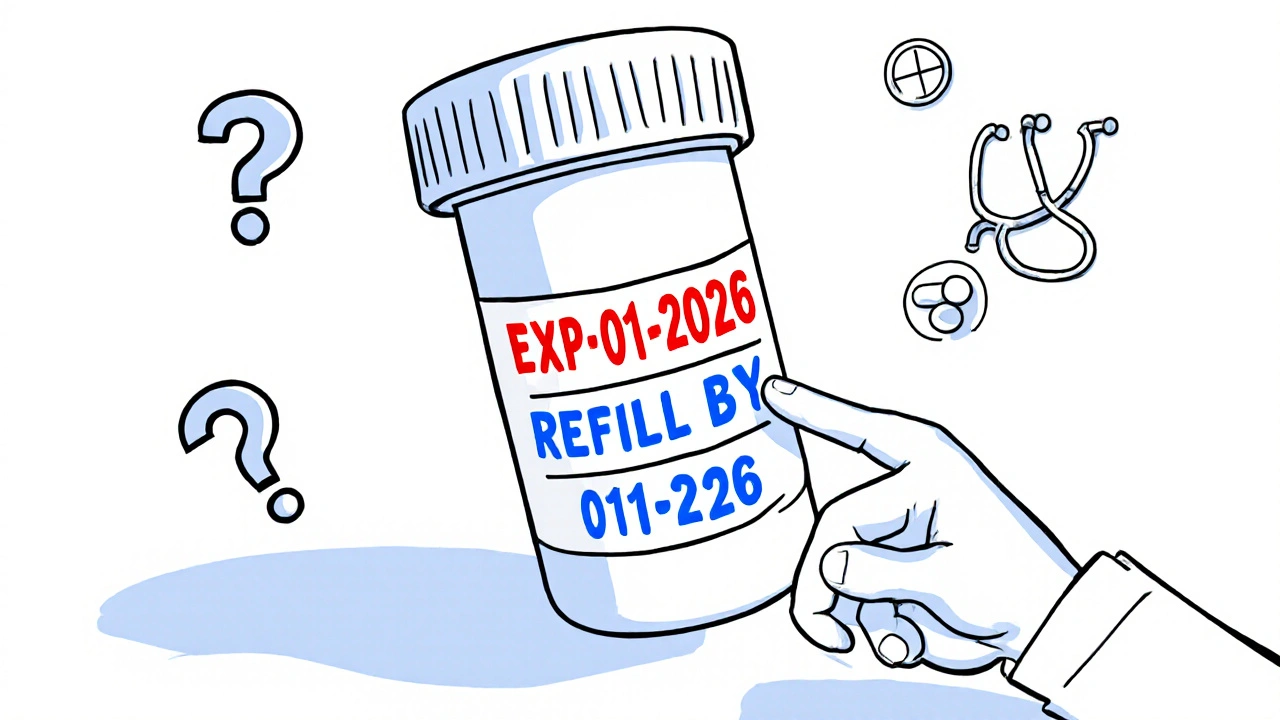
Have you ever looked at your prescription bottle and wondered: is this medicine still good, or do I just need to call for a refill? You’re not alone. Many people mix up the refill-by date and the expiration date on their prescription labels-and that confusion can cost you money, health, or both.
What the Expiration Date Actually Means
The expiration date on your prescription bottle isn’t a suggestion. It’s a hard cutoff set by the drug manufacturer and verified by the FDA. This is the last day the medication is guaranteed to be safe and effective under normal storage conditions. After this date, the drug might lose strength, break down into harmful compounds, or just stop working altogether.For example, insulin, antibiotics like amoxicillin, or heart medications like nitroglycerin can become dangerously ineffective after expiration. Even if your pills look fine-no discoloration, no odd smell-they’re not safe to take past this date. The FDA requires manufacturers to test drugs for stability over time, and the expiration date is based on real data, not guesswork.
Here’s the catch: many medications stay potent well past their expiration date. One FDA study found that 88% of drugs still worked after their labeled date if stored properly. But here’s the legal reality: pharmacists can’t legally dispense medication past its expiration date. So even if your pills are still good, the pharmacy won’t refill them after that date. That’s why the expiration date is printed so clearly on the label.
What the Refill-By Date Really Is
The refill-by date (sometimes called refill-through date) has nothing to do with how long the medicine lasts. It’s an administrative rule set by your doctor and enforced by your insurance or pharmacy system. It tells you the last day you can get a refill on that prescription without needing a new one from your provider.Most prescriptions for non-controlled medications allow refills for one year from the original fill date. So if you picked up your blood pressure pill on March 15, 2024, you can usually get refills until March 15, 2025. After that, the pharmacy system blocks any further refills-even if you still have pills left and they haven’t expired.
Controlled substances like opioids, ADHD meds, or sleep aids follow stricter rules. DEA regulations limit refills to six months, and some states like New York make that even shorter for certain drugs. This is to prevent misuse, but it also means you’ll need to schedule a doctor’s visit sooner than you might expect.
Why does this exist? It’s a safety net. Doctors need to check in on how you’re doing, whether the medication is still working, and whether side effects have popped up. Insurance companies also use this date to control costs and prevent stockpiling. But for patients, it often feels arbitrary-especially when you’re still taking the same dose and feeling fine.
Why People Confuse the Two
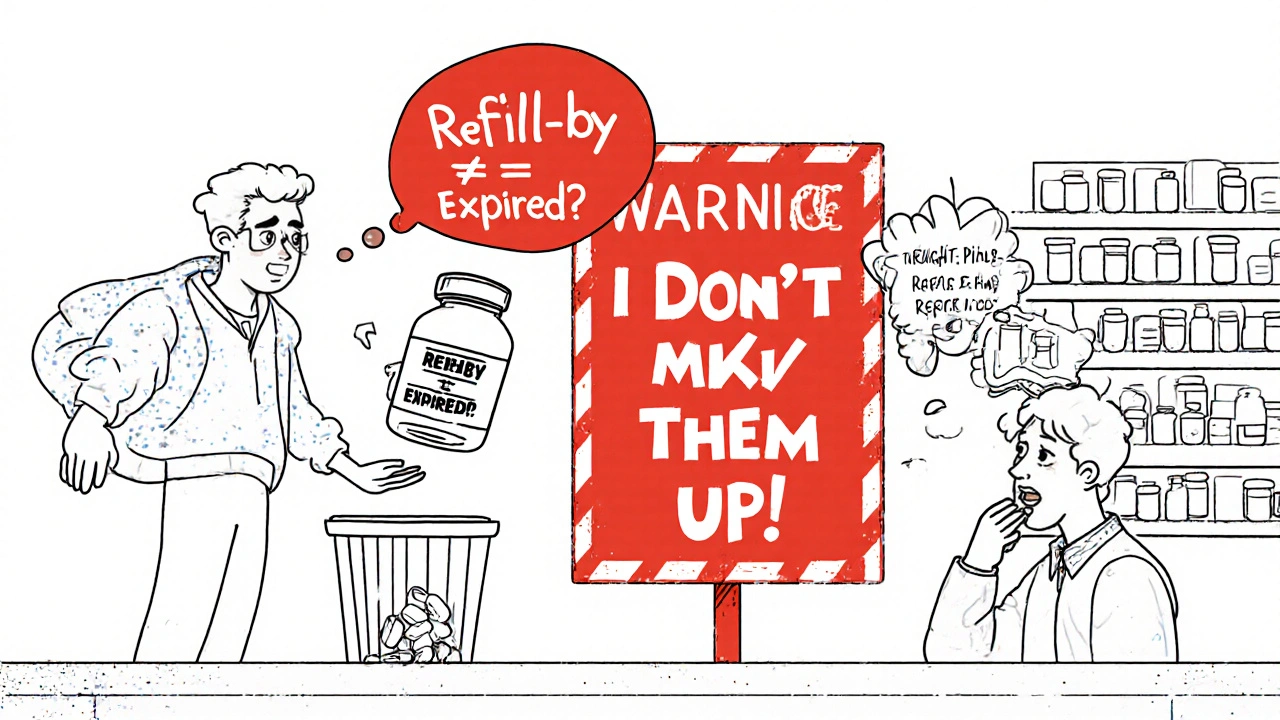
It’s easy to mix them up. Both dates are printed on the same label. Both have the word “by” or “until.” Both tell you when something ends. But they mean completely different things.A Consumer Reports survey found that over half of people couldn’t tell the difference between the two dates. One Reddit user shared how they threw out $300 worth of unexpired insulin because they thought the refill-by date meant the medicine was bad. Another person held onto expired antibiotics because they still had refills left-and ended up sick when the drug didn’t work.
Pharmacists say this confusion is one of the top reasons patients call the pharmacy. In fact, nearly 40% of all prescription-related questions are about: “Can I still take this?” or “Why won’t you refill this?”
Here’s the real problem: if you think the refill-by date is the expiration date, you might throw away perfectly good medicine. If you think the expiration date is just a refill rule, you might take a drug that’s lost its strength-and put your health at risk.
How to Read Your Label Correctly
Look at your prescription bottle. You’ll usually see three key lines:- Expiration Date: Usually labeled “EXP” or “Use by,” followed by a month and year (e.g., EXP 09/2025). This is your safety cutoff.
- Refill-By Date: Often labeled “REFILLS EXPIRE,” “REFILL UNTIL,” or “REFILL BY.” This is your administrative cutoff.
- Number of Refills Remaining: Look for “Refills: 3” or similar. This tells you how many times you can still get the same prescription filled before needing a new one.
Here’s a real-world example: You get a prescription for metformin on January 10, 2025. The label says:
- EXP: 01/2026
- REFILL BY: 01/2026
- REFILLS: 4
This means you can refill your prescription up to four times before January 10, 2026. Even if you only used two refills, you can’t get a third refill after January 10, 2026. But if you still have pills left on March 1, 2026, you can still take them-until the expiration date (January 2026) passes. After that, even if you have pills, you shouldn’t use them.
Some pharmacies now use color-coded labels to help. CVS and Walgreens now print refill-by dates in blue and expiration dates in red. It’s a small change-but it cuts down on confusion.
What Happens When You Miss the Refill-By Date
If you wait until after the refill-by date to ask for more, you can’t just walk in and get it. You’ll need a new prescription from your doctor. That means a phone call, a visit, or maybe even a telehealth appointment.For chronic conditions like diabetes, high blood pressure, or thyroid disease, missing a refill-by date can mean days or weeks without medication. Studies show that 24% of Medicare patients experience treatment gaps because they didn’t realize their refill window had closed.
Some pharmacies will call your doctor automatically if you’re due for a refill-but not all do. And if your doctor is out of office or your insurance requires prior authorization, it can take 3-5 business days to get the new script back to the pharmacy.
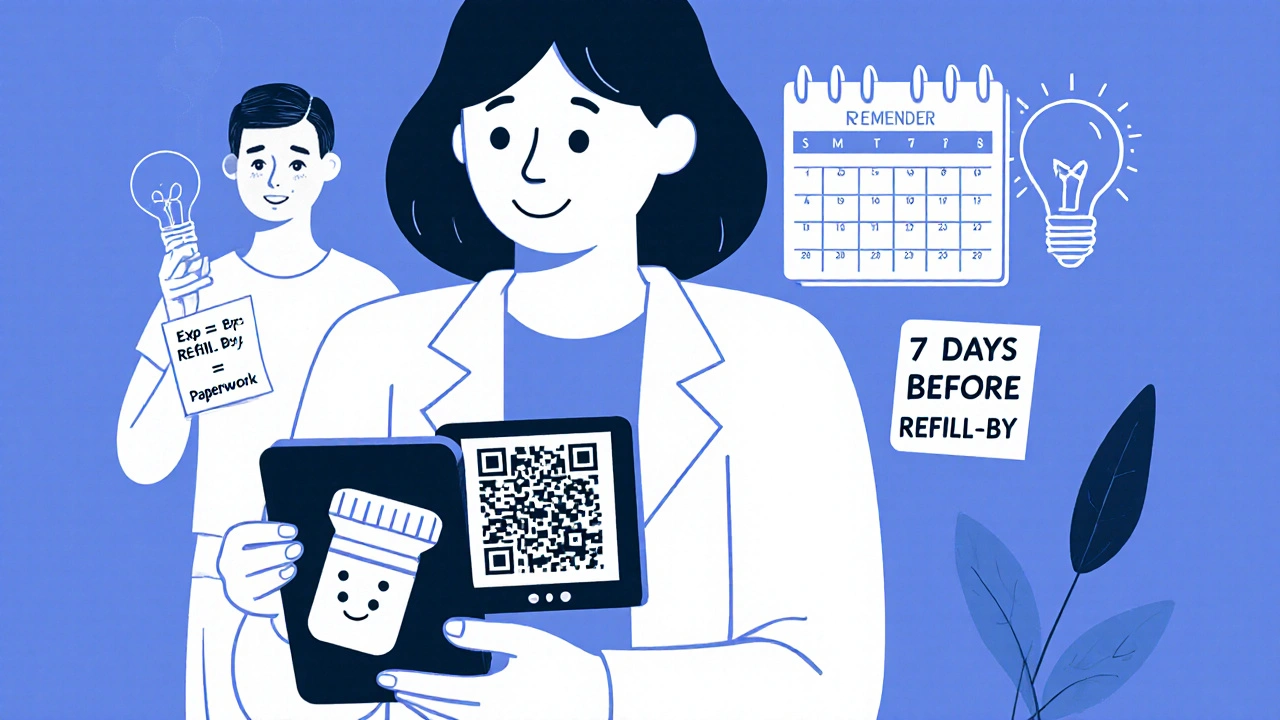
Best practice? Set a reminder on your phone 7 days before your refill-by date. That gives you time to contact your doctor without rushing. Keep a simple log: write down the date you filled the prescription, the refill-by date, and the expiration date. It takes two minutes-and it could save you from a health scare.
What to Do If Your Medicine Expires
Don’t flush it. Don’t throw it in the trash. Don’t give it to someone else.Most pharmacies have drug take-back programs. CVS, Walgreens, and many local pharmacies have drop-off bins in their lobbies. The FDA and DEA encourage this because it prevents accidental poisoning, misuse, and environmental contamination.
If you can’t find a drop-off location, mix expired pills with coffee grounds or cat litter in a sealed bag before throwing them away. This makes them unappealing and unusable. Never crush or flush pills unless the label specifically says to.
And remember: if your medication expired but you still have refills left, you can’t use it. Even if it looks fine. Even if you’re out of money. The risk isn’t worth it.
What’s Changing in 2025
Pharmacies are finally trying to fix this confusion. By 2025, most electronic prescriptions will clearly separate the two dates in digital records. CVS has already rolled out QR codes on labels that, when scanned, play a 30-second video explaining the difference. Early results show a 48% drop in patient calls about dates.The FDA is also pushing for standardized wording on all labels. Instead of “REFILL BY,” labels may say “REFILL VALID UNTIL.” Instead of “EXP,” it might say “DO NOT USE AFTER.”
Some states are changing rules too. California now requires a 12-month refill period for most chronic meds. New York still limits it to 6 months for controlled substances. But the trend is clear: more clarity, less confusion.
Final Takeaway: Know the Difference
Your expiration date is about safety. Your refill-by date is about paperwork.One tells you when the medicine stops working. The other tells you when the pharmacy can no longer refill it without a new prescription.
Don’t assume they’re the same. Don’t guess. Check both dates every time you pick up a new bottle. Keep track. Set reminders. Talk to your pharmacist if you’re unsure.
Medication errors are one of the leading causes of preventable harm. And a lot of them start with a simple mix-up on a prescription label. You don’t need a medical degree to understand this. You just need to look at the label-and ask the right question.
What happens if I take medicine after the expiration date?
Taking medicine past its expiration date can be risky. While some drugs remain stable, others lose potency or break down into harmful substances. Medications like insulin, antibiotics, or heart drugs can become ineffective or dangerous. The FDA advises against using any medication after its labeled expiration date, even if it looks fine.
Can I still refill my prescription after the refill-by date?
No. Once the refill-by date passes, the pharmacy’s system blocks further refills. You’ll need a new prescription from your doctor. This is not a technical glitch-it’s a safety and legal requirement. Don’t wait until the last day; plan ahead and contact your provider at least a week before the date.
Why does my prescription say I have refills left but I can’t get them?
The refill-by date may have passed, even if refills remain. For example, if your prescription says “Refills: 3” but the refill-by date was last month, you can’t use those refills anymore. The system prioritizes the date over the refill count. Always check both numbers.
Are expiration dates the same for all medications?
No. Liquid medications, insulin, and refrigerated drugs often have shorter expiration dates-sometimes just 30 days after opening. Pills and capsules usually last 1-2 years. Always check the label. If it says “discard after 30 days,” that overrides the manufacturer’s expiration date.
Can I ask my pharmacist to extend my refill-by date?
No. Only your prescribing provider can extend or renew a prescription. Pharmacists can’t change refill dates-even if they know you’re still taking the medication safely. They can, however, call your doctor on your behalf to request a renewal. Always ask them to help.
How can I avoid running out of medication?
Set a phone reminder 7 days before your refill-by date. Keep a simple log with both the refill-by and expiration dates. Use pharmacy apps that send refill alerts. If you’re on Medicare or have mail-order prescriptions, check your plan’s refill rules-they may differ from your pharmacy’s default settings.
Next Steps for Better Medication Safety
- Write down both dates on a sticky note and put it on your medicine cabinet. - Ask your pharmacist to explain your label the next time you pick up a prescription. - Use a pill organizer with dates marked on it. - If you’re on multiple medications, keep a master list with expiration and refill dates for each. - Don’t hesitate to call your doctor’s office if you’re unsure. They’d rather hear from you than have you go without your meds.Knowing the difference between these two dates isn’t just helpful-it’s essential. Your health depends on it.

7 Comments
Dolapo Eniola
November 21 2025
Yo, this is why America's healthcare system is a joke 😤 You pay $200 for insulin, then some bureaucrat says 'oh sorry, refill-by date passed'-but the pills are fine?! That’s not safety, that’s corporate greed wrapped in a white coat. I’ve seen people skip doses because they can’t afford a $150 doctor visit just to refill a 5-cent pill. The FDA knows drugs last years past expiration-so why let pharmacies play gatekeeper? This ain’t medicine, it’s a pay-to-play scam. 🤬
Agastya Shukla
November 22 2025
Interesting breakdown. From a pharmacological standpoint, the expiration date is derived from accelerated stability testing per ICH Q1A(R2) guidelines-so yes, it’s data-driven. But the refill-by date? That’s purely a regulatory artifact from the DEA’s 2002 Controlled Substances Act amendments, later adopted by insurers to curb 'pharmacy shopping.' The real issue is the lack of interoperability between EHRs and pharmacy dispensing systems. Many systems still treat 'refill remaining' as a static counter, not a dynamic window tied to clinical need. We need API-driven, patient-centric prescription workflows-not paper-based legacy rules.
Pallab Dasgupta
November 23 2025
LET ME TELL YOU SOMETHING. I WAS ON METFORMIN FOR 7 YEARS. I HAD 4 REFILLS LEFT. EXPIRATION WAS 2026. REFILL-BY WAS JAN 2025. I DIDN’T NOTICE. I RAN OUT. I GOT SICK. I ENDED UP IN THE ER. COST ME $2,200. I COULD’VE AVOIDED IT IF I’D KNOWN THE DIFFERENCE BETWEEN A DATE THAT MEANS 'DON’T TAKE THIS' AND A DATE THAT MEANS 'THEY WON’T GIVE YOU MORE.' WHY IS THIS NOT TAUGHT IN HIGH SCHOOL? WHY ISN’T IT ON EVERY MEDICATION BOX IN BIG BOLD RED? I’M STILL MAD. 😤
Ellen Sales
November 24 2025
So many of us are just trying to survive… and the system makes it feel like we’re doing something wrong for needing help. I’ve sat in pharmacy lines for 45 minutes just to ask, 'Can I still take these?' and been handed a pamphlet. No one looks me in the eye. No one says, 'Hey, here’s what matters.' I keep a little notebook-expiration, refill-by, notes on how I feel. It’s my tiny rebellion against a system that treats health like a spreadsheet. You’re not lazy for forgetting. You’re just human. And you deserve better. 💛
Josh Zubkoff
November 26 2025
Okay but let’s be real-this whole post is just a glorified pharmacy ad. The FDA study saying 88% of drugs are still potent? That’s from a 2012 military stockpile test under controlled conditions. Real people store meds in humid bathrooms, in hot cars, in drawers next to toothpaste. And let’s not pretend the refill-by date is just 'paperwork.' It’s a legal shield for pharmacies and doctors so they don’t get sued when someone takes expired insulin and dies. Also, the 'color-coded labels' thing? CVS rolled that out in 2023. It’s barely 10% of pharmacies. This isn’t progress-it’s performative. And the QR code video? That’s a Band-Aid on a gunshot wound. The real problem is that people can’t afford to see their doctor every 6 months. But hey, at least the label is pretty now.
fiona collins
November 27 2025
Check both dates. Always. Simple.
Rachel Villegas
November 28 2025
I used to think the refill-by date was when the medicine expired too. I threw out a whole bottle of my thyroid med because I didn’t know better. I felt so stupid. But then my pharmacist sat down with me for 10 minutes and showed me how to read the label. She even wrote the dates on a sticky note and put it on my pill bottle. I still have it. I don’t know why no one ever told me this before. It’s not complicated. Just… nobody takes the time.