
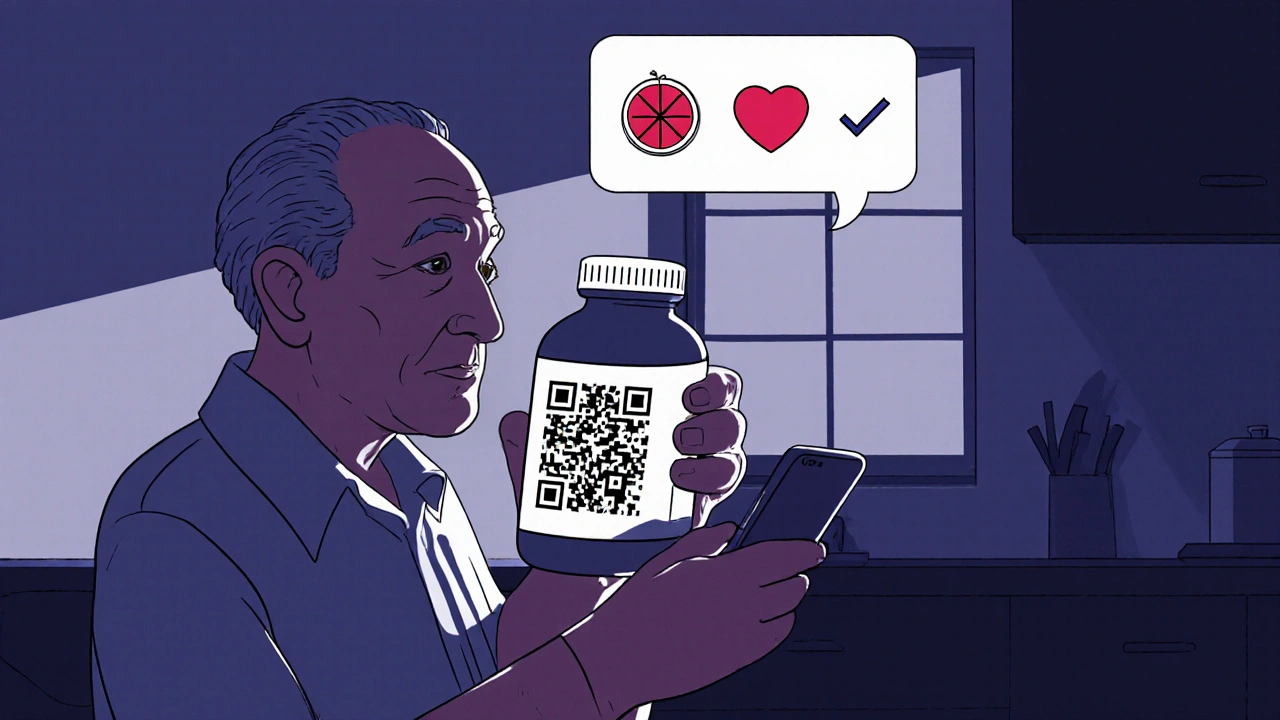
Imagine opening your medicine bottle and scanning a small square on the label with your phone. In seconds, you see a clear video showing exactly how to take your pills, a list of foods to avoid, and a warning about interactions with your other meds. No more squinting at tiny print or calling the pharmacy at 8 p.m. because you’re confused. This isn’t science fiction-it’s happening in pharmacies right now, and it’s changing how people manage their medications.
Why QR Codes Are Replacing Paper Inserts
For decades, patients got a small paper insert with every prescription. These inserts were often hard to read, got lost, or were too technical to understand. Now, QR codes are replacing them. When you scan a code on your pill bottle, you’re not just opening a webpage-you’re accessing up-to-date, personalized medication information that’s been verified by your pharmacist and approved by regulators. The shift started gaining speed after the FDA encouraged electronic labeling in 2013, but real adoption exploded during the pandemic. With fewer in-person visits and more people managing meds at home, digital access became essential. By 2022, pharmaceutical companies increased QR code use by 327% compared to 2019, according to the Healthcare Distribution Alliance. The numbers back it up: a 2023 study by Freyr Solutions showed a 43% drop in medication errors when QR codes were used. Patients were also 28% more likely to take their meds correctly, according to the Journal of Medical Internet Research. That’s not just convenience-it’s saving lives.Static vs. Dynamic QR Codes: What’s the Difference?
Not all QR codes are the same. There are two types: static and dynamic. Static ones point to a fixed URL-like a printed sign that can’t be changed. If the info on that page updates, the code still leads to the old version. That’s dangerous for medications, where dosage warnings or recalls can change overnight. Dynamic QR codes are the standard in healthcare today. They’re like a smart link that can be updated remotely. If a drug’s safety warning changes, the pharmacy can update the landing page without reprinting a single label. This flexibility makes them ideal for prescriptions. In fact, 88% of pharmaceutical QR codes now use dynamic technology, according to Clappia’s 2023 industry analysis. Dynamic codes also track scans. Pharmacies can see when and where a patient scanned the code, what device they used, and even how long they spent reading the info. That data helps identify patients who might need extra support-like someone who scans the code but never reads the safety section.How to Scan and Use a Digital Prescription Label
Using a QR code on a prescription label is simple, but there are best practices to make sure it works every time:- Open your phone’s camera app. Most modern phones (iPhone 7 or newer, Android 8 or newer) automatically recognize QR codes-no extra app needed.
- Hold your phone steady, about 6 to 12 inches from the label. Make sure the entire code fits in the frame.
- Wait for the notification to pop up. It might say “Open website” or show a preview of the page.
- Tap to open the link. The page will load with medication details in plain language.
- The label is smudged, folded, or on a curved surface-try repositioning the bottle.
- There’s glare from lights. Move to a better-lit spot.
- Your phone’s camera lens is dirty. Wipe it with a soft cloth.
- Exact dosage instructions (e.g., “Take one tablet by mouth twice daily, with food”)
- What to avoid (alcohol, grapefruit, other meds)
- Warning signs (dizziness, rash, breathing trouble)
- Storage instructions (refrigerate? Keep dry?)
- How to report side effects or get help
- Links to video tutorials or patient support programs
What Pharmacies Need to Do to Implement QR Codes
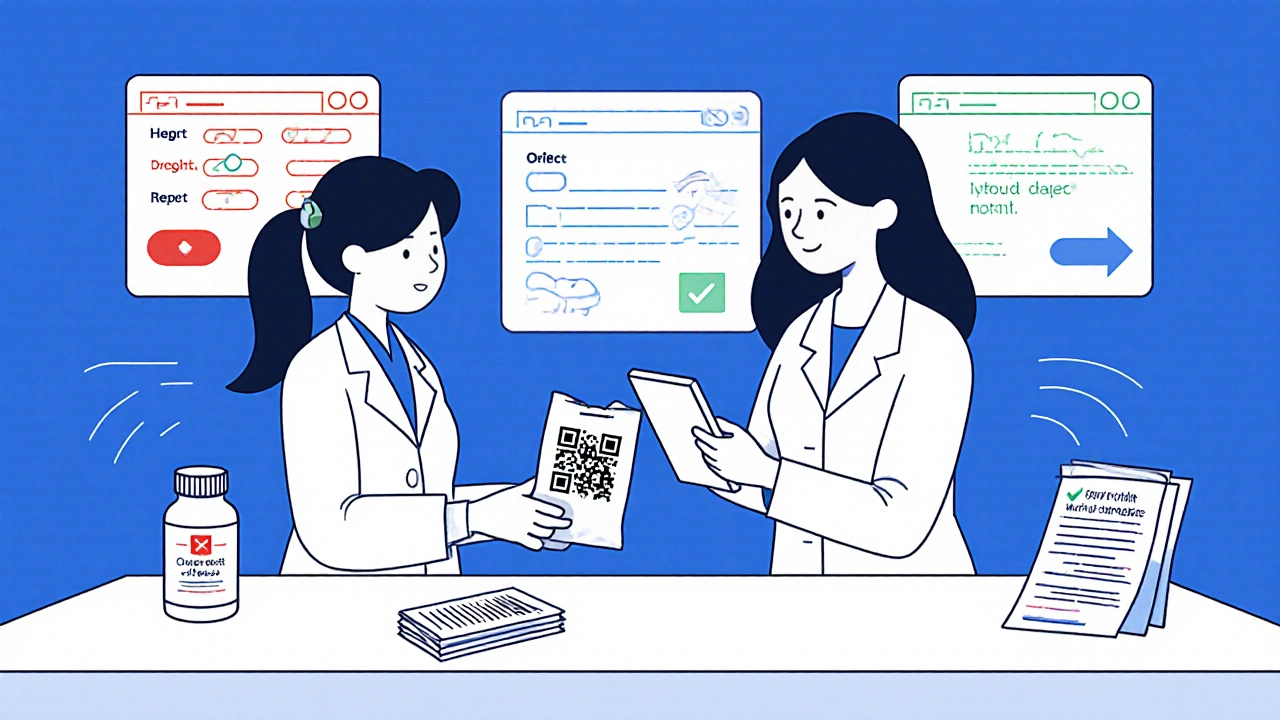
For pharmacies and hospitals, adding QR codes isn’t just about printing a code. It’s a full system change. Here’s what it takes:- Regulatory check: Make sure your country’s rules allow digital labeling. Singapore’s Health Sciences Authority requires certain safety info to appear on the physical label even if the full details are online. The EU and FDA now support this too.
- Content design: Write patient-friendly language. Avoid medical jargon. Use bullet points, bold headers, and short sentences. Include translations if your patient population speaks multiple languages.
- Technical setup: Use a dynamic QR code platform that integrates with your pharmacy software. Platforms like Clappia and Sona QR connect to EHR systems via HL7 FHIR APIs, so the info updates automatically when a doctor changes a prescription.
- Staff training: Pharmacists and techs need 40 to 80 hours of training to handle scanning, troubleshooting, and patient education. One pharmacy reported 17 hours per technician just to get comfortable with their system.
- Patient education: Put up posters, hand out simple cards, or play short videos in waiting rooms. Tell patients: “Scan this code to get help anytime.”
- Monitor and improve: Track scan rates. If fewer than 70% of patients are scanning, something’s wrong-maybe the code is too small or the page loads too slow.
Real-World Success Stories
One community pharmacy in Bristol reduced patient callback questions by 63% after adding QR codes to all prescription bags. Patients stopped calling with basic questions like “Can I take this with coffee?” because the answer was right there in the video. In an ICU, a hospital used QR codes on IV bags to verify medications before administration. Errors dropped by 41%. That’s not just efficiency-it’s preventing life-threatening mistakes. A diabetes program in the U.S. mailed QR code postcards to patients with their prescriptions. Eighty-three percent of patients used them to watch short videos on insulin injection and carb counting. One patient said, “I finally understood why I need to eat before my shot. My doctor never explained it like that.” DosePacker, a company that makes daily pill dispensers, added QR codes to each dose cup. Among heart failure patients, adherence jumped from 62% to 89% in just three months.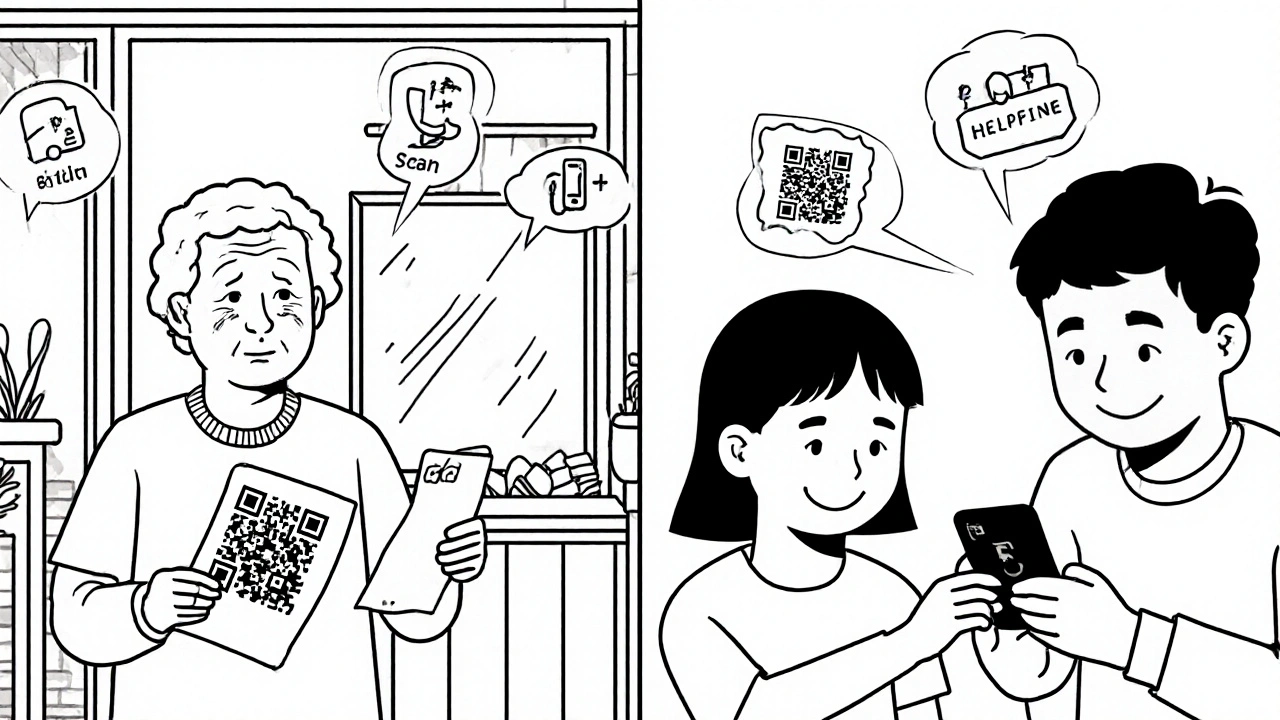
The Downsides and How to Fix Them
QR codes aren’t perfect. A 2023 study found that 23% of rural patients struggle to scan codes because of poor internet. Others, especially seniors, have trouble with smartphones. AARP’s 2024 survey showed only 58% of people over 65 feel comfortable using QR codes. This creates a digital divide. If you only rely on QR codes, you risk leaving vulnerable people behind. The fix? Always keep a printed version of key safety info on the label-dosage, warnings, and emergency contacts. The Access Board and FDA both require this. Offer staff-assisted scanning at the counter. Have tablets ready for patients who need help. Provide a toll-free phone line for those without smartphones. Also, test your QR codes. Make sure they scan on glossy bottles under fluorescent lights, on curved surfaces, and from 10 feet away. ISO/IEC 18004:2015 standards say you need a 4-module quiet zone (clear border) and at least 70% contrast. Too small? Use a 1.5-inch square minimum. Too slow to load? Optimize your landing page to load in under half a second.What’s Next for Digital Prescription Labels
The future is already here. By 2026, the EU plans to require QR codes on all prescription medications. The FDA is linking them to Universal Device Identifiers (UDIs) so every medical device and drug can be tracked together. New tools are emerging too. Freyr Solutions now includes AI-powered interaction checkers in QR landing pages. If you scan a code while taking blood pressure meds, the page might warn you not to take certain painkillers. Clappia’s latest version tracks inventory in real time, so pharmacies know exactly how many doses are left. Multilingual support is also improving. Some systems now auto-detect your phone’s language and show the info in your preferred language-no need to switch pages. But the biggest change won’t be tech. It’ll be mindset. Medication safety isn’t just about pills-it’s about access, understanding, and trust. QR codes aren’t magic. They’re tools. And like any tool, they work best when they’re designed for real people-not just regulations.Final Thoughts
QR codes on prescription labels are no longer optional. They’re becoming the standard. And for good reason: they reduce errors, improve adherence, and give patients real control over their health. But success doesn’t come from just slapping a code on a bottle. It comes from thoughtful design, staff training, patient education, and always having a backup plan for those who can’t-or won’t-scan. If you’re a patient, scan the code. You’ll learn more in 30 seconds than you would from reading a paper insert for 10 minutes. If you’re a pharmacist or provider, start small. Pick one high-risk medication. Add a dynamic QR code. Train your team. Track results. Then expand. This isn’t about tech. It’s about making sure no one takes a pill without knowing exactly what they’re taking-and why.Can I use any QR code scanner app for my prescription label?
You don’t need a special app. Most smartphones built since 2018 can scan QR codes using the built-in camera. Just open your camera, point it at the code, and wait for the notification. If your phone doesn’t auto-detect it, download a free QR scanner like Google Lens or Microsoft Lens. Avoid obscure apps-stick to trusted ones to protect your privacy.
What if the QR code doesn’t work or the website is down?
Every prescription label with a QR code must also include printed safety information: dosage, warnings, and emergency contacts. If the code doesn’t work, use that printed info. Contact your pharmacy-they’re required to help you get the right details. Most digital platforms also have backup phone lines or live chat support for patients who can’t access the site.
Are QR codes safe for my personal data?
Scanning a prescription QR code doesn’t collect your name, address, or medical records unless you log in. The landing page typically shows general medication info. If the site asks for login credentials, it’s likely connected to your health portal-make sure it’s your pharmacy’s official site before entering any info. Look for https:// and a padlock icon in the browser.
Why do some QR codes on meds look blurry or too small?
Poor print quality or tiny codes are usually cost-cutting mistakes. For reliable scanning, QR codes should be at least 1.5 inches square with a clear border around them. If a code is too small or smudged, contact your pharmacy. They’re required to follow ISO/IEC 18004:2015 standards. You have the right to clear, scannable labeling.
Can I use QR codes if I don’t have a smartphone?
Yes. Every QR-coded prescription must have printed safety information on the label. You can also ask your pharmacist to print out the digital info for you, call you with instructions, or use a tablet at the counter to scan and explain it to you. No one should be denied access to medication safety info because they don’t own a smartphone.
Do all countries use QR codes the same way for prescriptions?
No. Singapore requires certain safety info to appear on the physical label even if the full details are online. The EU is moving toward mandatory QR codes by 2026. The U.S. supports them but doesn’t require them yet. Always check your local regulations. Your pharmacist should be able to tell you what’s required in your region.
How do I know if the QR code on my prescription is legitimate?
The QR code should be placed clearly on the label, not hidden under a sticker or on a fold. When scanned, it should lead to a secure website (https://) from your pharmacy or a known pharmaceutical company (like Pfizer, Novartis, or your local pharmacy chain). If the link looks suspicious-like a random string of letters or a .xyz domain-don’t open it. Call your pharmacy to verify.

15 Comments
Pawan Jamwal
November 20 2025
Bro, this is why India needs to stop copying US tech and make its own QR system. We got 1.4 billion people and half still use feature phones. Why are we letting Big Pharma dictate how we take pills? 🤡
Bill Camp
November 21 2025
I SCANNED MY PRESCRIPTION LAST WEEK AND MY PHONE AUTO-OPENED A PAGE THAT SAID 'TAKE WITH WATER' LIKE I'M A CHILD. THIS ISN'T INNOVATION, IT'S CONDESCENDING. AMERICA ISN'T LEADING, IT'S LAZILY AUTOMATING HUMAN CARE. 🇺🇸💥
Lemmy Coco
November 21 2025
i just tried scanning my blood pressure med qr code and it took 12 seconds to load on my wifi. my grandma asked me why the phone was frozen. i told her it was the future. she said 'the future is quiet' and handed me the paper insert. 🤷♂️
rob lafata
November 22 2025
Let’s be real - this whole QR code push is just a corporate cover for data harvesting. You think they’re giving you ‘medication info’? Nah. They’re tracking your scan patterns, device IDs, location, and selling it to insurers who’ll jack up your premiums when they see you scan ‘antidepressants’ at 2 a.m. This isn’t healthcare. It’s surveillance capitalism with a pill bottle.
Matthew McCraney
November 23 2025
I’ve been scanning my meds for 6 months now and I swear the website changes every time. Last week it said ‘avoid grapefruit’ - this week it says ‘grapefruit is safe.’ I called the pharmacy and they said ‘oh that was a glitch.’ Glitch? That’s how people die. This system is a goddamn lottery and they’re letting us play with our lives.
serge jane
November 23 2025
The real question isn’t whether QR codes work better than paper inserts it’s whether we’ve lost the ability to have a conversation about our health with another human being. If I have to scan a code to understand why I’m taking a pill then maybe the problem isn’t the label it’s the entire system that turned medicine into a transaction and not a relationship. I miss when the pharmacist remembered my name and asked how my dog was doing before handing me the bottle.
Nick Naylor
November 23 2025
QR CODES MUST BE MINIMUM 1.5 INCHES. ISO/IEC 18004:2015. QUADRANT MARKERS MUST BE CLEAR. CONTRAST RATIO MUST EXCEED 70%. NO EXCEPTIONS. IF YOUR PHARMACY IS USING A 0.8-INCH CODE ON A CURVED BOTTLE, THEY ARE IN VIOLATION OF FEDERAL GUIDELINES. REPORT THEM. THIS ISN’T A SUGGESTION. THIS IS A REQUIREMENT.
Brianna Groleau
November 24 2025
I’m from a small town in Mississippi. My mom doesn’t have a smartphone. She reads her prescriptions by holding them up to the light. But last week, the pharmacy gave her a laminated card with the QR code info printed on it - in big font, with pictures of pills. She cried. She said, ‘They finally listened.’ That’s what this is really about. Not tech. Not efficiency. Just… being seen.
Rusty Thomas
November 26 2025
I scanned my insulin code and it played a 3-minute video of a woman saying ‘take before meals’ in 12 languages. I’m not even bilingual. I just stared at it. Then I called my sister and screamed ‘THE PHARMACY JUST TALKED TO ME IN SWAHILI!’ She said I was having a breakdown. I said ‘NO, THE TECHNOLOGY IS JUST TOO GOOD.’ 😭
Sarah Swiatek
November 27 2025
Oh wow, a QR code that tells you not to mix your meds with grapefruit. Groundbreaking. Next they’ll tell you not to breathe oxygen if you have COPD. Look, I get it - the paper inserts were terrible. But this? This is just replacing one form of passive information delivery with another. The real problem is that doctors don’t explain anything. The solution isn’t a code. It’s a conversation. And no app can fix that.
Dave Wooldridge
November 29 2025
I saw a news report that the FDA is linking these codes to UDI systems. That means every pill I take is being tracked in a federal database. Who’s to say they won’t start denying refills if you scan too often? Or flag you for ‘medication overuse’? I’ve been taking 20 pills a day since my accident. What if they think I’m a drug seeker? This isn’t safety. It’s control.
Rebecca Cosenza
November 30 2025
I scanned mine. It worked. I didn’t cry. I didn’t cheer. I just took my pill. That’s all that matters.
swatantra kumar
December 2 2025
In India we call this ‘jugaad tech’ - fixing a problem with whatever’s lying around. QR codes on meds? Cool. But first, fix the internet in villages. Fix the power supply. Fix the fact that 70% of patients don’t know what ‘bid’ means. Tech won’t save us if we don’t fix the basics first. 😅📱
Cinkoon Marketing
December 2 2025
I run a small pharmacy in Vancouver and we added QR codes last year. 80% of our patients scan them. But here’s the thing - we still print the dosage in 14pt font on the bottle. Because sometimes, the phone dies. Or the kid drops it in the toilet. Or the grandma just doesn’t trust blinking screens. Tech is a tool. Not a replacement for common sense.
robert cardy solano
December 3 2025
I scanned my code. It loaded. It said ‘take with food.’ I ate a banana. Took the pill. Went back to sleep. That’s it. That’s the whole story.