
Medication Blood Pressure Impact Calculator
Step 1: Select Medication
Ibuprofen (NSAID)
High RiskNaproxen (NSAID)
Moderate RiskCelecoxib (COX-2)
Low-ModeratePrednisone (Steroid)
High RiskPseudoephedrine
High RiskAcetaminophen
SafeStep 2: Your Details
Estimated Result
Select a medication
Choose a medication from the list and click 'Estimate Impact' to see potential changes to your blood pressure.
Your blood pressure is high. You’ve cut out the salt, started walking, and maybe even tried that new diet everyone is talking about. Yet, your numbers stay stubbornly up. Before you assume your lifestyle changes aren’t working or that you need stronger prescriptions, look at your medicine cabinet. The culprit might not be what you’re eating, but what you’re taking.
Drug-induced hypertension is a real, often overlooked condition where medications raise your blood pressure to dangerous levels. It accounts for roughly 2-5% of all hypertension cases, but in patients with resistant high blood pressure, that number jumps significantly. According to the American Heart Association’s 2023 scientific statement on secondary hypertension, this condition affects millions annually. The scary part? Many people take these drugs for years without realizing they are quietly sabotaging their heart health.
Key Takeaways
- NSAIDs like ibuprofen are the most common cause, raising systolic BP by 3-10 mm Hg in regular users.
- Corticosteroids (like prednisone) can spike blood pressure within 24 hours, especially at doses above 20 mg/day.
- Monitoring is critical: Check your BP before starting new meds, then at 1-2 weeks, 4-6 weeks, and quarterly if stable.
- Management starts with review: Switching to safer alternatives like acetaminophen or celecoxib can resolve issues in 60-70% of NSAID cases.
- Don't ignore OTCs: Decongestants and herbal supplements like St. John's Wort can trigger hypertensive crises.
The Usual Suspects: Which Medications Raise Blood Pressure?
Not all pills are created equal when it comes to cardiovascular risk. Some drugs interfere with how your kidneys handle sodium, while others tighten your blood vessels directly. Knowing which classes of drugs carry the highest risk is the first step in protecting yourself.
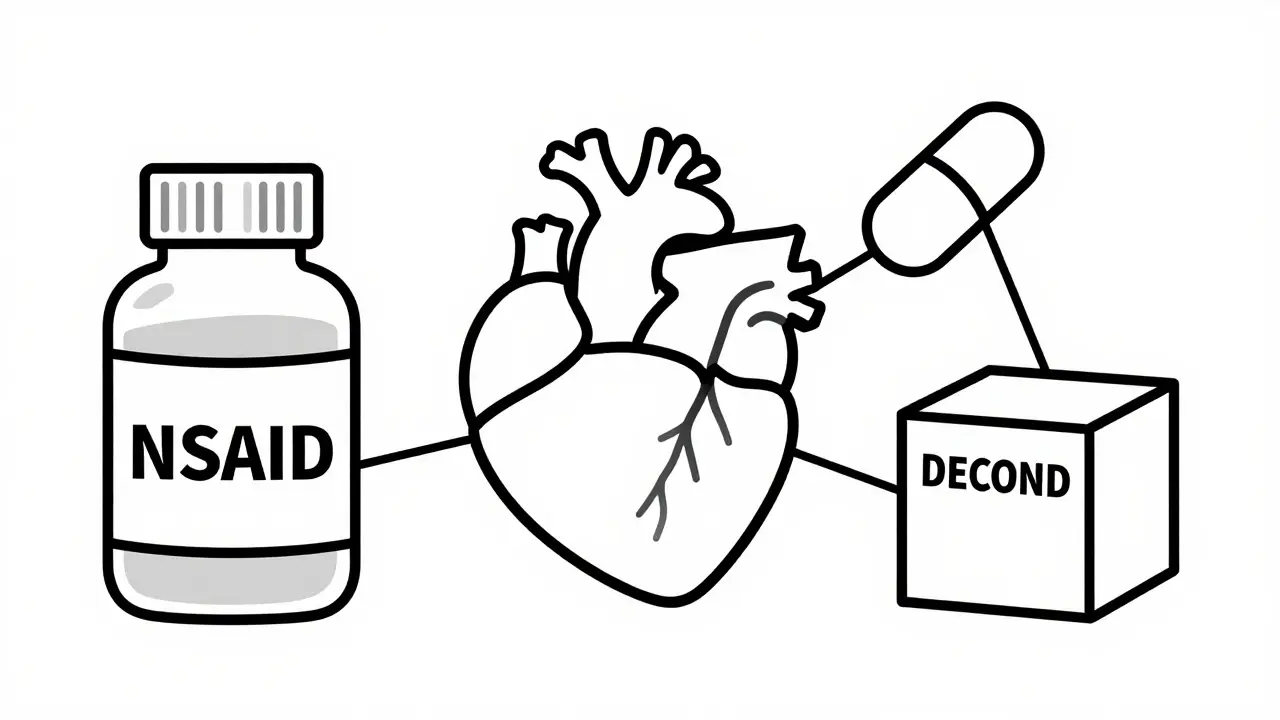
Non-Steroidal Anti-Inflammatory Drugs (NSAIDs) are the biggest offenders among over-the-counter medications. Think ibuprofen (Advil, Motrin) and naproxen (Aleve). These drugs inhibit cyclooxygenase enzymes, which reduces prostaglandin production. Prostaglandins normally help keep your blood vessels relaxed and help your kidneys excrete sodium. When you block them, your body holds onto water and salt, increasing blood volume. A 2022 meta-analysis in the American Journal of Medicine found that standard doses of ibuprofen cause significant blood pressure elevation in about 12% of patients who already have hypertension. For those with normal blood pressure, systolic readings can jump by 3-5 mm Hg after just two weeks of regular use. In hypertensive patients, that jump can be 5-10 mm Hg.
Corticosteroids, such as prednisone, are another major contributor. These are often prescribed for autoimmune conditions, asthma, or severe inflammation. They work by activating mineralocorticoid receptors, leading to massive sodium retention and potassium loss. If you are taking oral cortisol at doses of 80-200 mg per day, your systolic blood pressure can rise by as much as 15 mm Hg within 24 hours. The risk is dose-dependent. At least 20% of patients on oral prednisone develop hypertension, and if you stay on doses above 20 mg/day for more than four weeks, that risk shoots up to 50-60%.
Other notable culprits include:
- Antidepressants: Specifically Serotonin-Norepinephrine Reuptake Inhibitors (SNRIs) like venlafaxine (Effexor). By inhibiting norepinephrine reuptake, they increase sympathetic tone. Clinically significant blood pressure elevation occurs in 8-15% of patients, particularly at doses above 150 mg/day.
- Decongestants: Pseudoephedrine and phenylephrine stimulate alpha-adrenergic receptors, causing immediate vasoconstriction. A 2023 study showed these can increase systolic BP by 5-10 mm Hg within hours, lasting up to 12 hours.
- ADHD Stimulants: Amphetamine salts and methylphenidate elevate BP in 10-25% of users. Dextroamphetamine carries the highest risk, with an incidence rate of nearly 25%.
- HIV Medications (HAART): These can increase systolic BP in about 18% of patients, usually manifesting after six months of treatment.
How to Monitor Your Blood Pressure Effectively
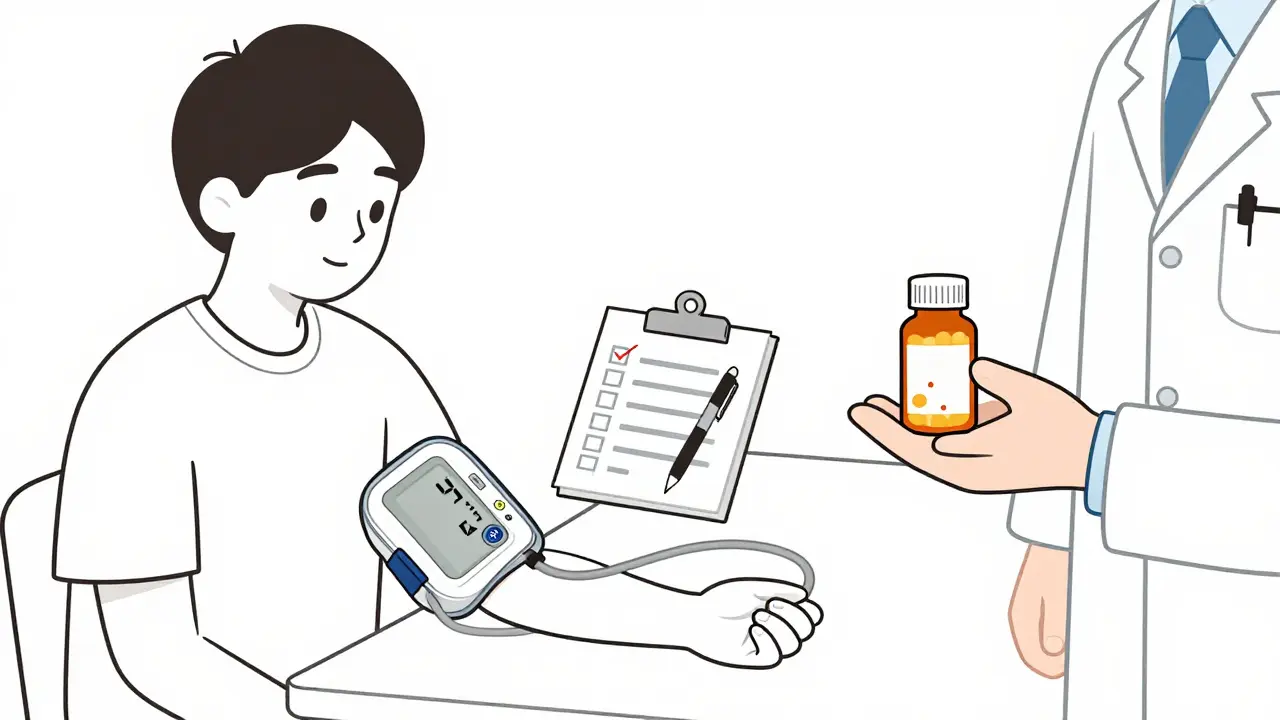
If you are taking any of the medications listed above, guessing isn’t enough. You need data. The 2023 American Heart Association Scientific Statement outlines a clear monitoring protocol that you should discuss with your doctor.
- Baseline Measurement: Always check your blood pressure before starting a new therapy. This gives you a reference point.
- Early Follow-Up: Measure again at 1-2 weeks after starting the medication. Then, check at 4-6 weeks.
- Ongoing Checks: If your blood pressure remains stable, quarterly checks are recommended.
- Daily Monitoring for High-Risk Groups: If you are on corticosteroids, daily checks during the first month are crucial. Pay attention to orthostatic changes-the difference between sitting and standing measurements. A drop of more than 20/10 mm Hg upon standing occurs in about 35% of patients developing steroid-induced hypertension.
For home monitoring, the American Medical Association recommends taking twice-daily measurements for seven days prior to medication initiation and after any dosage change. Average the readings from the second six days to get an accurate picture. If you are high-risk-meaning you have pre-existing hypertension, renal impairment, or are on multiple BP-elevating drugs-consider Ambulatory Blood Pressure Monitoring (ABPM). ABPM provides a 24-hour average, with diagnostic thresholds set at daytime systolic ≥135 mm Hg or 24-hour average ≥130 mm Hg.
Managing Drug-Induced Hypertension: A Stepped Approach
Discovering that your medication is raising your blood pressure doesn’t mean you have to stop treating your original condition. It means you need a strategy. The 2023 AHA/ACC guidelines recommend a stepped approach.
Step 1: Medication Review and Modification
The first line of defense is always to see if you can discontinue or reduce the offending agent. In 60-70% of NSAID-related cases, stopping the drug resolves the hypertension within 2-4 weeks. For decongestants, resolution happens in 40-50% of cases in the same timeframe.
If you need pain relief, switch to alternatives. Acetaminophen (up to 3,000 mg/day) has no significant effect on blood pressure. If you need anti-inflammatory action, celecoxib (Celebrex) is a better choice. A head-to-head trial in the New England Journal of Medicine showed celecoxib caused only a 2.4 mm Hg average systolic increase, compared to 5.7 mm Hg for ibuprofen.
Step 2: Antihypertensive Therapy
If you cannot stop the medication-for example, if you need corticosteroids for a serious autoimmune flare-you may need to add blood pressure medication. Calcium channel blockers (like amlodipine) or thiazide diuretics (like hydrochlorothiazide) are considered first-line treatments here. Combination therapy is needed in 35-45% of these cases.
Avoid beta-blockers as a first-line option. The American Heart Association specifically recommends against them for drug-induced hypertension because they are less effective against vasoconstrictive mechanisms. In a randomized trial of 287 patients, beta-blockers had only a 45% response rate, compared to 72% for calcium channel blockers.
Step 3: Lifestyle Modifications
Lifestyle changes work even harder when fighting medication-induced spikes. Sodium restriction (less than 1,500 mg/day) and potassium supplementation (2,500-3,500 mg/day) can counteract the sodium-retaining effects of steroids and NSAIDs. Moderate aerobic exercise (150 minutes/week) can further reduce BP by 5-8 mm Hg.
| Medication | Class | Avg Systolic BP Increase | Risk Level |
|---|---|---|---|
| Ibuprofen | NSAID | 5.7 mm Hg | High |
| Naproxen | NSAID | ~3-4 mm Hg (estimated lower impact) | Moderate |
| Celecoxib | COX-2 Inhibitor | 2.4 mm Hg | Low-Moderate |
| Acetaminophen | Analgesic | 0 mm Hg | None |
Why Doctors Often Miss This Connection
You might wonder why your doctor hasn’t warned you about this. The truth is, awareness gaps are widespread. A 2022 study in JAMA Internal Medicine found that only 58% of physicians could correctly identify all high-risk medications. Patient surveys show that only 22% of primary care providers routinely screen for NSAID use in hypertensive patients.
Dr. William B. White, former President of the American Society of Hypertension, noted that approximately 15-20% of patients referred for resistant hypertension have undiagnosed drug-induced hypertension, most commonly from NSAIDs or decongestants. This is often resolved simply by adjusting the medication list. Don’t wait for your doctor to catch it. Bring a complete list of everything you take-including over-the-counter drugs, herbal supplements, and recreational substances-to every visit.
Frequently Asked Questions
Can over-the-counter painkillers really raise my blood pressure permanently?
Regular use of NSAIDs like ibuprofen can lead to sustained high blood pressure. While the effect is reversible upon stopping the medication, long-term uncontrolled hypertension can cause permanent damage to blood vessels and organs. If you rely on daily painkillers, consult your doctor about safer alternatives like acetaminophen or topical treatments.
I take prednisone for asthma. Should I worry about my blood pressure?
Yes, especially if you are on oral doses above 20 mg/day for more than four weeks. Corticosteroids cause sodium retention and fluid buildup. Monitor your blood pressure daily during the first month of therapy. If your readings stay elevated, your doctor may prescribe a calcium channel blocker or diuretic to counteract the effect.
Are herbal supplements safe for people with high blood pressure?
Not necessarily. Supplements like St. John's Wort have been linked to hypertensive crises in some patients. Because supplements are not regulated as strictly as prescription drugs, their interactions with blood pressure medications can be unpredictable. Always disclose supplement use to your healthcare provider.
What is the best time of day to check my blood pressure if I take morning medications?
Ideally, check your blood pressure before taking your morning medication and before eating or drinking caffeine. This provides a baseline reading. If you are monitoring for drug-induced spikes, also check 2-4 hours after taking the medication to see its peak effect. Consistency is key, so try to measure at the same times each day.
Can switching from ibuprofen to naproxen help lower my blood pressure?
Naproxen generally has a smaller impact on blood pressure than ibuprofen, with only 5-7% of patients experiencing clinically significant increases compared to higher rates for ibuprofen. However, it is still an NSAID and carries risk. Acetaminophen is the safest option for blood pressure, while celecoxib is a moderate-risk alternative if anti-inflammatory action is required.
