
You stand in the pharmacy aisle, staring at a wall of vials and pens. NovoLog, Lantus, Tresiba, Humalog. The names sound like code, and the prices on the shelf tags make your head spin. If you have been diagnosed with diabetes, specifically type 1 or advanced type 2, understanding a chronic condition affecting how your body processes blood sugar is no longer optional-it is survival. But picking the right insulina hormone that regulates blood glucose levels by allowing cells to absorb sugar from the bloodstream isn't about finding the "best" drug. It is about matching the medicine’s behavior to your daily life.
We are going to cut through the medical jargon. You need to know which insulin hits fast for dinner, which one keeps you stable overnight, and why your doctor might suggest a pen over a syringe. We will look at the specific types, the regimens they form, and the real-world trade-offs regarding cost, convenience, and safety.
The Four Speeds of Insulin
Think of insulin not as a single product, but as tools with different speeds. Your pancreas naturally releases insulin in two ways: a steady background drip (basal) and sharp spikes when you eat (bolus). Modern therapy tries to mimic this using four distinct categories based on onset, peak, and duration.
| Type | Onset | Peak Action | Duration | Common Brand Names |
|---|---|---|---|---|
| Rapid-Acting | 10-15 min | 30-90 min | 3-5 hours | NovoLog, Humalog, Apidra |
| Short-Acting (Regular) | 30 min | 2-3 hours | 5-8 hours | Humulin R, Novolin R |
| Intermediate-Acting | 1-2 hours | 4-12 hours | 12-18 hours | NPH (Humulin N, Novolin N) |
| Long-Acting | 1-2 hours | No pronounced peak | 24+ hours | Lantus, Levemir, Tresiba |
| Ultra-Long-Acting | 6 hours | No pronounced peak | >42 hours | Tresiba (degludec) |
Rapid-acting insulins are the sprinters. They start working within 10 to 15 minutes, which means you can inject them right before or even immediately after eating. This flexibility is huge if your meals are unpredictable. Brands like insulin lisproa rapid-acting insulin analog approved by the FDA in 1996 (Humalog) and insulin asparta rapid-acting insulin analog approved in 1999 (NovoLog) dominate this space. They clear out quickly, reducing the risk of low blood sugar hours later.
Short-acting (Regular) insulin is older technology. It takes 30 minutes to kick in, so you must plan ahead. It peaks later and lasts longer, which can cause unexpected drops in blood sugar if you skip a snack. However, it is significantly cheaper than rapid-acting analogs, making it a vital option for those managing tight budgets.
Intermediate-acting insulin, known as NPH, was the standard for decades. It provides background coverage but has a distinct peak between 4 and 12 hours. That peak is dangerous; if you don’t eat during that window, your blood sugar can crash, especially at night. Many patients find themselves waking up sweating or confused because of this unpredictable profile.
Long-acting and ultra-long-acting insulins are designed to be flat. They provide a steady baseline without spikes. insulin glarginea long-acting insulin analog approved in 2000 that lasts approximately 24 hours (Lantus) and insulin detemira long-acting insulin analog lasting 18-24 hours (Levemir) last about 24 hours. insulin degludecan ultra-long-acting insulin analog with a duration exceeding 42 hours (Tresiba) goes beyond 42 hours, offering more flexibility in timing. If you miss an injection by a few hours, Tresiba’s effect remains stable, whereas others might leave you uncovered.
Building Your Regimen: Basal-Bolus vs. Premixed
Having the right tools doesn’t help if you use them wrong. Most people fall into one of two regimen structures. The choice depends largely on your lifestyle flexibility and how much time you want to spend calculating doses.
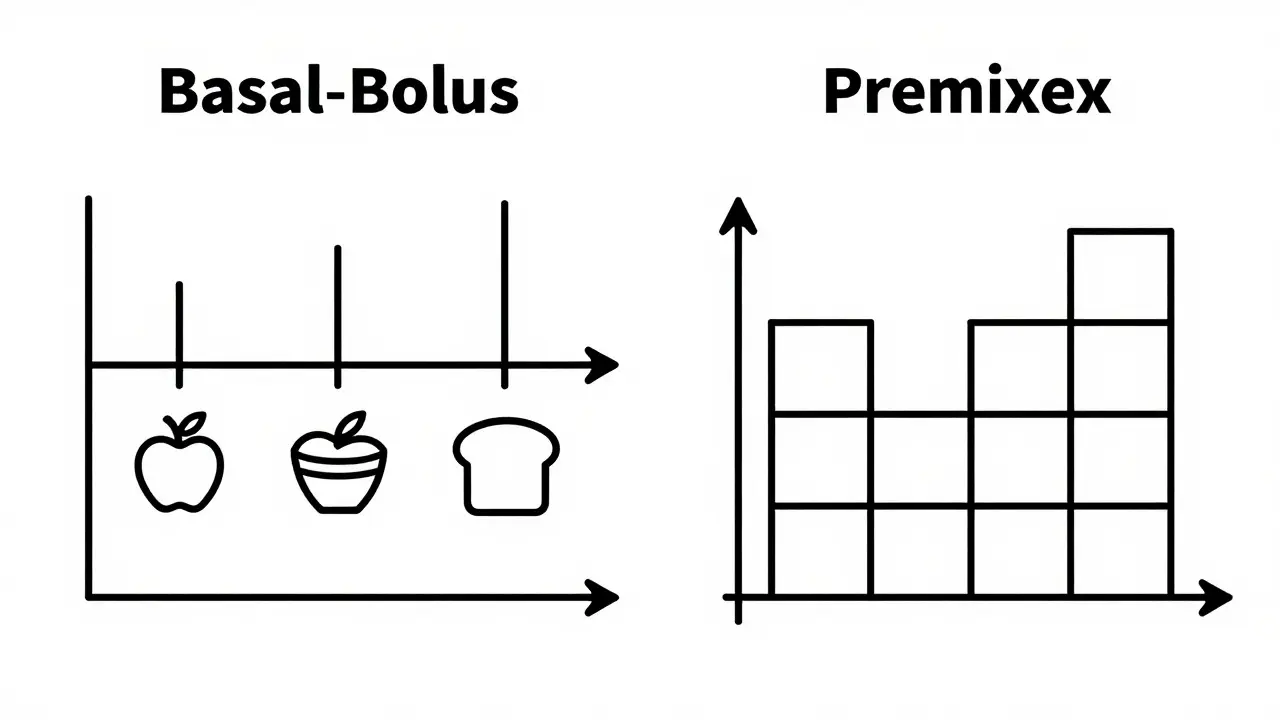
The Basal-Bolus Regimen is the gold standard for Type 1 diabetes and many Type 2 cases. It combines a long-acting "basal" shot once or twice a day with rapid-acting "bolus" shots before every meal. This mimics a healthy pancreas. You calculate your meal dose based on carbohydrate counting-typically 1 unit of insulin for every 10 to 15 grams of carbs-and add a correction dose if your blood sugar is already high. It requires work. You need to test your blood sugar multiple times a day and adjust for exercise or stress. But it offers the best freedom to eat what and when you want.
Premixed Insulins combine intermediate and rapid-acting insulins in one vial (e.g., 70% NPH, 30% Lispro). You take two fixed shots a day, usually before breakfast and dinner. There is no carb counting. It is simple and predictable. The downside? Rigidity. If you decide to skip lunch or go for a run after dinner, you are stuck with the insulin that is already in your system. Hypoglycemia risks increase because the mix forces a peak regardless of your food intake.
For some, Insulin Pumps replace multiple injections. These small devices deliver rapid-acting insulin continuously. Newer hybrid closed-loop systems automatically adjust basal rates based on continuous glucose monitor (CGM) data. Studies show pumps can reduce A1C by 0.5% to 1.0% compared to manual injections, but they come with site infections, mechanical failures, and a steep learning curve.
Cost, Access, and the Reality of Pricing
Let’s talk about money, because it dictates choices more than chemistry does. Analog insulins (the newer rapid and long-acting types) cost 10 to 15 times more than human insulins (Regular and NPH). A vial of human insulin might cost $25-$35 at discount retailers, while analogs range from $250 to $350 per vial without insurance.
This price gap creates a difficult trade-off. Analogs have flatter profiles and lower hypoglycemia risk. Human insulins are cheap but dangerous if mistimed. In 2023, 25% of insulin-dependent patients reported rationing doses due to cost. The Inflation Reduction Act capped Medicare costs at $35/month, which increased analog usage among seniors by 18%. However, for those on commercial insurance or uninsured, biosimilars like Semglee (a generic version of Lantus) offer a middle ground, capturing significant market share by providing similar efficacy at a lower price point.
If cost is your primary constraint, ask your doctor about human insulin programs or manufacturer copay cards. Never ration insulin without consulting a specialist; the cost of treating severe hypoglycemia or long-term complications far exceeds the price of the medication.
Special Considerations: Inhaled and Weekly Options
Not everyone wants needles. Inhaled insulina rapid-acting insulin delivered via inhaler, such as Afrezza, approved in 2014 (Afrezza) starts working in 12 minutes and clears in 3 hours. It is ideal for people with needle phobia or those who struggle with finger-prick anxiety. However, it requires good lung function. Smokers or those with asthma should avoid it due to the risk of bronchospasm. It is also expensive, often costing over $1,000 a month without coverage.
In 2024, the landscape shifted with the approval of once-weekly insulina new class of basal insulin, such as icodec, requiring only one injection per week (icodec). This represents a massive leap in convenience. For patients struggling with injection fatigue, weekly dosing could improve adherence and quality of life. Early trials show it matches daily insulins in effectiveness, though it takes several days to reach full potency, meaning you still need daily insulin during the transition period.
How to Choose: A Practical Decision Framework
Choosing the right medication is not a solo decision. It involves your endocrinologist, your budget, and your daily habits. Here is how to narrow it down:
- Unpredictable Schedule? Go with Rapid-Acting + Ultra-Long-Acting (e.g., NovoLog + Tresiba). The flexibility allows you to inject close to mealtime and handle missed doses better.
- Budget-Constrained? Ask about Regular + NPH or biosimilar options. You will need stricter meal timing to avoid lows, but the savings are substantial.
- Hypoglycemia Unawareness? Avoid NPH. Switch to long-acting analogs (Glargine or Degludec) which have minimal peaks and significantly lower nighttime low-risk.
- Needle Phobic? Explore inhaled insulin for bolus needs and consider smart pens that hide the needle mechanism for basal needs.
- High Cardiovascular Risk? While insulin controls sugar, discuss GLP-1 agonists (like semaglutide) with your doctor. They offer heart benefits and weight loss, potentially delaying or reducing the need for high-dose insulin.
Remember, the goal is not just a number on a meter. It is maintaining energy, protecting your kidneys and eyes, and living your life without fear of sudden crashes. Start with a baseline, track your numbers closely for six weeks, and adjust. Diabetes management is a marathon, not a sprint.
What is the difference between basal and bolus insulin?
Basal insulin is long-acting and provides a steady background level of insulin throughout the day and night to keep blood sugar stable between meals. Bolus insulin is rapid-acting and is taken to cover the carbohydrates in a specific meal or to correct a high blood sugar reading.
Which insulin has the lowest risk of hypoglycemia?
Ultra-long-acting insulins like insulin degludec (Tresiba) generally have the lowest risk of severe hypoglycemia, particularly at night. Their flat pharmacokinetic profile means there are no sharp peaks that can cause sudden drops in blood sugar.
Can I switch from NPH to long-acting analog insulin?
Yes, many patients switch from NPH to analogs like glargine or degludec to reduce hypoglycemia risk. However, the conversion ratio is not always 1:1. Your doctor may reduce the total daily dose by 10-20% initially to ensure safety during the transition.
Is inhaled insulin safe for everyone?
No. Inhaled insulin is not recommended for current smokers, former smokers, or people with chronic lung diseases like asthma or COPD. It can cause acute bronchospasm and requires regular monitoring of lung function.
How do I determine my insulin-to-carb ratio?
A common starting point is the "Rule of 500": divide 500 by your total daily insulin dose. For example, if you take 50 units a day, 500 / 50 = 10. This suggests 1 unit of rapid-acting insulin covers 10 grams of carbohydrates. Always verify this with your healthcare provider.
