
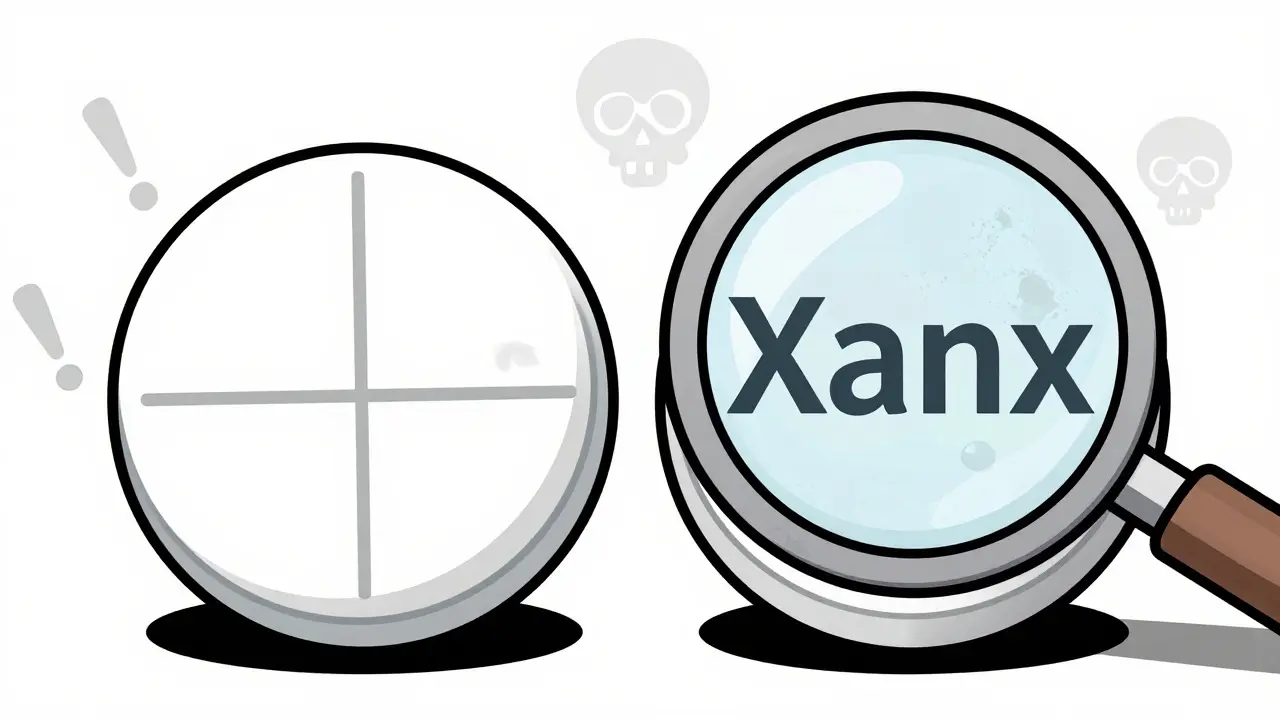
Every year, around 1 million people die from counterfeit medications. These aren’t just bad drugs-they’re dangerous imitations that look real but can kill you. You might think it couldn’t happen to you, but fake pills are everywhere now, and they’re getting better at fooling people. They look just like your prescription, taste the same, even come in the same bottle. But inside? They might have no active ingredient. Or too much. Or worse-poison.
What Exactly Is a Counterfeit Medication?
A counterfeit medication is any drug that’s been deliberately and fraudulently mislabeled. It could be missing the right medicine, contain the wrong dose, or have toxic stuff mixed in. The World Health Organization separates these into two types: substandard (poorly made or stored) and falsified (fake on purpose). Falsified drugs are the real threat-they’re made in secret labs, often overseas, with no rules, no inspections, and no care for human life. These aren’t just old-school knockoffs. Today’s counterfeiters are using high-tech printing, real-looking packaging, and even fake QR codes. They copy brand names like Mounjaro®, Ozempic®, Xanax®, and Adderall® because those are in high demand. People looking for weight-loss drugs or anxiety meds are especially targeted. Criminal networks sell them on social media, encrypted apps, and shady websites that look like real pharmacies.How to Spot a Fake Pill or Medicine
You don’t need a lab to catch red flags. Here’s what to look for:- Changes in appearance: Your pill is usually round and white. Now it’s oval and light yellow? That’s a warning. Same with capsules-if the color, size, or markings are different, don’t take it.
- Strange packaging: Look closely at the box or blister pack. Are the fonts slightly off? Is there a typo like “Xanx” instead of “Xanax”? Are the labels faded, wrinkled, or glued on crookedly? Real manufacturers don’t make those mistakes.
- No lot number or expiration date: Every legitimate medicine has a batch number and expiry date printed clearly. If it’s missing, or if the date looks scratched or altered, walk away.
- Unusual taste or smell: If your pill tastes bitter, metallic, or smells weird, it’s not right. Real pills have a neutral or slightly chemical taste-not sour, not moldy.
- Excess powder or crystals: Open the bottle. If you see loose powder inside, or tiny crystals stuck to the sides, that’s not normal. Legitimate pills are factory-sealed and tightly packed.
- Too good to be true: A 70% discount on Ozempic? A friend selling Xanax for $1 a pill? That’s how they lure you in. Counterfeiters use low prices to trap people, especially those without insurance or afraid to ask for help.
Buying Online? You’re Already at Risk
The biggest source of counterfeit drugs today is the internet. The National Association of Boards of Pharmacy (NABP) found over 10,000 illegal online pharmacies selling fake versions of GLP-1 weight-loss drugs alone. Many of these sites look professional-they have SSL certificates, real-looking logos, and even fake “verified” badges. Here’s the truth: Any website that sells prescription drugs without a valid prescription is illegal. The U.S. Food and Drug Administration (FDA) says legitimate pharmacies require a prescription and are licensed in the state where they operate. If you’re buying from a site based in another country, you’re already playing Russian roulette. Even if the site says it’s “verified,” check it against the NABP’s VIPPS program. If it’s not on that list, don’t trust it. And never buy from social media sellers-whether it’s Instagram, WhatsApp, or Telegram. Those are criminal networks, not pharmacies.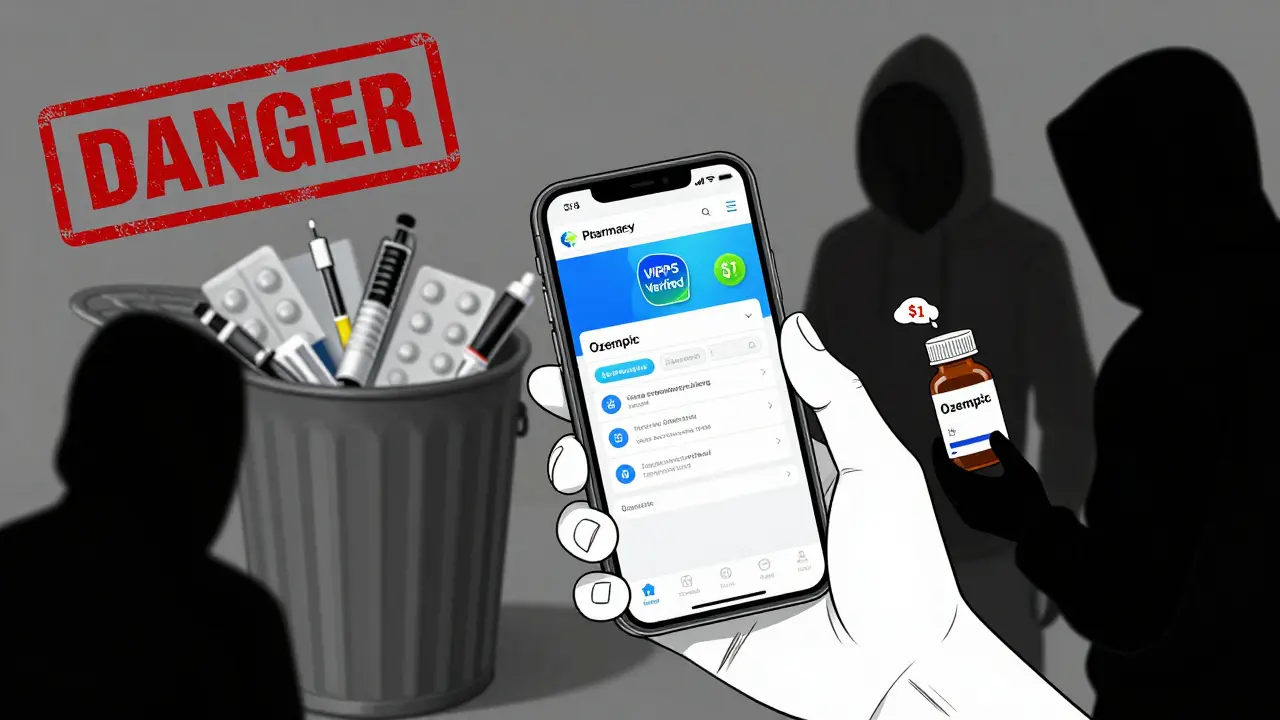
What to Do If You Suspect a Fake
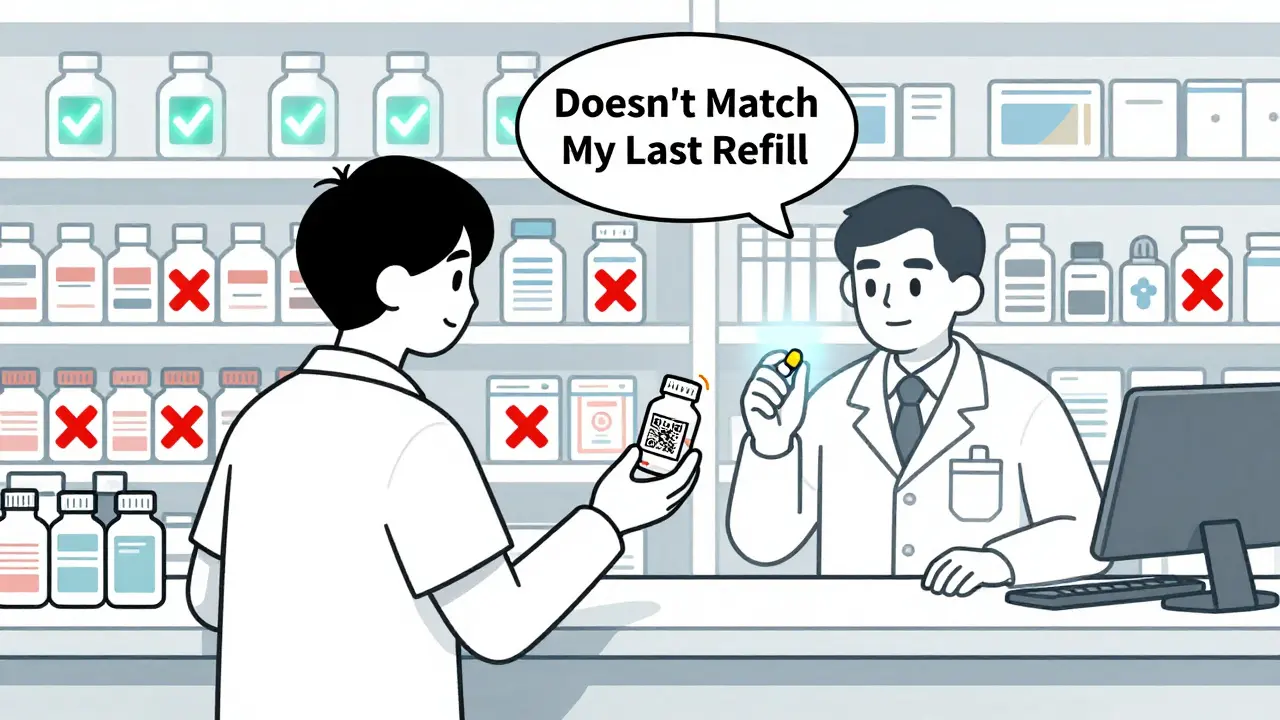
If something feels off about your medicine, don’t guess. Act.- Call your pharmacist. Show them the pill. Ask: “Is this the same as last time?” Pharmacists see hundreds of prescriptions a day. They know what’s normal.
- Call your doctor. If you’ve had a new side effect-dizziness, nausea, no effect at all-tell them. It could be the medicine.
- Check the lot number. Call the drug manufacturer. Companies like Pfizer and Eli Lilly track counterfeit reports. If you give them the lot number, they can tell you if it’s real.
- Report it. In the U.S., report to the FDA’s MedWatch program. In the UK, contact the MHRA. In Canada, use Health Canada’s reporting system. These agencies collect data to shut down fake suppliers.
How to Stay Safe for Good
The best way to avoid counterfeit drugs is to cut off the supply chain before it reaches you.- Only use licensed pharmacies. That means your local pharmacy, hospital pharmacy, or a verified online pharmacy with VIPPS certification.
- Never accept meds from friends. Even if they’re “just sharing.” That’s how counterfeiters spread fake pills-through social networks.
- Ask for the original packaging. If your prescription comes in a generic bottle with no label, refuse it. Legitimate pharmacies always use branded packaging.
- Know your medication. Look up your drug online. See what it’s supposed to look like. Save a picture of your pill and its packaging. Compare every refill.
- Use track-and-trace tools. Some newer medications have digital codes you can scan with your phone. If the code doesn’t match the manufacturer’s database, it’s fake.
Why This Is Getting Worse
Counterfeit drugs are rising because they’re incredibly profitable. A single fake Ozempic pen can cost $10 to make and sell for $1,000. The margins are insane. Criminals don’t care if you live or die-they care about the cash. Newer drugs are especially vulnerable. Mounjaro®, Zepbound®, and other GLP-1 agonists are in high demand but hard to produce. Counterfeiters can’t replicate the complex manufacturing process, so they fill fake pens with saline, sugar water, or worse. The FDA issued a warning in May 2024 about counterfeit Ozempic pens in the U.S. market-some contained no active ingredient at all. And it’s not just pills. Fake injections, eye drops, insulin pens, and even vaccines are being faked. The WHO issued a global alert in June 2024 about falsified injectable diabetes medications circulating in North America, Europe, and South America.You’re Not Alone-But You Are Responsible
Millions of people buy meds online every year. Many don’t realize they’re at risk. But once you know what to look for, you can protect yourself and your family. Don’t wait until you feel sick to act. If your medicine looks, tastes, or works differently, question it. Talk to your pharmacist. Call the manufacturer. Report it. Your life could depend on it.Counterfeit drugs aren’t a distant problem. They’re in your neighborhood, on your phone, and possibly in your medicine cabinet. Stay alert. Stay informed. And never assume your medicine is safe just because it looks right.
How can I tell if my medication is fake just by looking at it?
You can spot red flags like changes in color, shape, or size of the pill; spelling errors on the label; missing lot or expiry numbers; unusual taste or smell; or packaging that looks cheap or damaged. Real medications are made with precision-any inconsistency is a warning sign.
Is it safe to buy medicine from websites that offer huge discounts?
No. Any website offering prescription drugs at prices far below retail is almost certainly selling counterfeits. Legitimate pharmacies don’t operate on 70% discounts. These sites often have no license, no pharmacist on staff, and no way to verify your prescription.
Can I trust online pharmacies that say they’re “verified”?
Only if they’re listed on the National Association of Boards of Pharmacy’s VIPPS program. Many fake sites use fake badges. Always check VIPPS.gov to confirm. If it’s not there, assume it’s unsafe.
What should I do if I’ve already taken a fake medication?
Stop taking it immediately. Contact your doctor or go to the nearest emergency room if you feel unwell. Report the product to your country’s health authority-like the FDA in the U.S. or MHRA in the UK. Keep the packaging and pills as evidence.
Are counterfeit drugs only a problem in developing countries?
No. Fake medicines are a global problem. The WHO reports that falsified drugs are found in high-income countries like the U.S., UK, Canada, and Germany. Criminals target wealthier markets because people pay more for brand-name drugs, especially newer treatments like weight-loss injections.
Can I report a fake drug anonymously?
Yes. Agencies like the FDA and MHRA allow anonymous reporting. You can submit details like the product name, lot number, where you bought it, and what it looked like-without giving your name. Your report helps shut down dangerous operations.
Why can’t I just rely on my pharmacist to catch fakes?
Pharmacists are your first line of defense, but they can’t catch everything. Counterfeiters are getting better at copying packaging. Some fake pills have real lot numbers stolen from legitimate batches. That’s why you need to check for yourself and speak up if something feels off.
Do generic drugs have a higher risk of being counterfeit?
Not inherently. Generic drugs are regulated just like brand-name ones. But because they’re cheaper, counterfeiters often target them too-making fake generics that look real but contain nothing useful. Always check the packaging and ask your pharmacist if you’re unsure.

11 Comments
Solomon Ahonsi
February 2 2026
Bro, I bought some 'Xanax' off Telegram last month for $2 a pill. Took one, felt like I got hit by a bus and then dropped into a vat of lukewarm soup. My heart was racing, I couldn't think straight. Turns out it was just fentanyl-laced sugar. I'm lucky I didn't die. Don't be stupid. Buy from a pharmacy or don't buy at all.
George Firican
February 3 2026
The rise of counterfeit pharmaceuticals isn't just a public health crisis-it's a symptom of a deeper societal fracture. We've commodified wellness to the point where people are desperate enough to gamble with their lives for a discount on a weight-loss drug. The criminal networks thrive not because they're clever, but because our healthcare system has failed to make essential medicines accessible and affordable. We punish the buyer while the architects of this broken system collect dividends. Until we address the root cause-profit over people-we're just rearranging deck chairs on the Titanic.
Matt W
February 3 2026
Just had my pharmacist flag my Ozempic bottle yesterday. The cap was slightly off-color and the lot number looked smudged. I called the manufacturer-they confirmed it was fake. I didn't even know what to say. They gave me a free replacement and told me to report it. Seriously, if something feels off, don't hesitate. Your pharmacist is your best friend here.
Anthony Massirman
February 5 2026
Don't buy from Instagram. Period.
Murarikar Satishwar
February 7 2026
Many people in India rely on online pharmacies for affordable insulin and antihypertensives. While some are legitimate, the lack of regulation makes it dangerous. I always cross-check the manufacturer's website and verify the batch number before use. Education and awareness can save lives-especially in communities where access to healthcare is limited.
larry keenan
February 7 2026
From a pharmacovigilance standpoint, the proliferation of falsified GLP-1 agonists represents a significant escalation in the sophistication of illicit pharmaceutical supply chains. The integration of QR code spoofing and tamper-evident packaging replication suggests a level of technical capability previously associated with state-sponsored operations. The FDA’s current detection mechanisms are reactive rather than proactive, necessitating a paradigm shift toward blockchain-based serialization and real-time global tracking.
Chinmoy Kumar
February 8 2026
i never knew fake meds were this common even in usa. i thought it was just third world thing. my uncle got some diabetes pills from a website and he got real sick. we called the doc and they said it was fake. i checked the vipps site and the site wasnt there. lesson learned. always check before buying online.
Sandeep Kumar
February 9 2026
USA thinks it's above this but guess what fake pills are everywhere here too. You think your fancy insurance protects you? Nah. You think your doctor knows everything? Nope. You think the FDA is watching? Ha. They're asleep. Buy from your local pharmacy or shut up. No one cares about your cheap online deals when you're dead
Gary Mitts
February 10 2026
So... you're telling me the same people who buy $1000 iPhones from shady sellers are now doing it with their life-saving meds? Shocking. Truly. I'm sure the guy who sold you that 'Mounjaro' pen is also the same guy who sold you that 'limited edition' AirPods that turned out to be a brick.
clarissa sulio
February 10 2026
I used to buy my Adderall from a guy at the gym. I thought he was cool. Now I'm terrified every time I refill. My kid has ADHD and I'm so scared I gave him something that could hurt him. I finally went to my doctor and got a proper script. It cost more but I sleep better now. Don't be like me.
Bridget Molokomme
February 12 2026
Oh wow, so the government finally cares about fake pills? Funny how they didn’t care when people were dying from opioid overdoses or when insulin cost $300 a vial. Now that rich people are getting scammed, suddenly it’s a national emergency. Classic.