
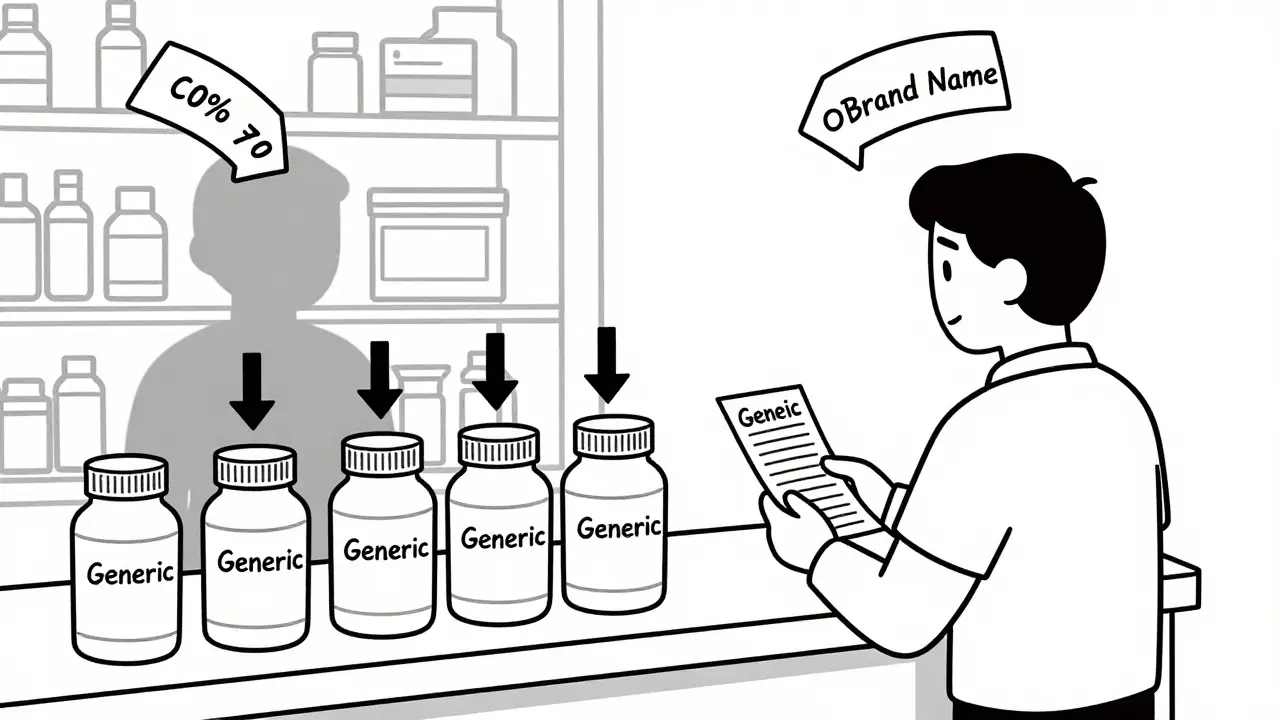
When you pick up a prescription, you probably don’t think about how much the price was negotiated down before it reached the pharmacy. But behind every pill, there’s a story of competition-especially when it comes to generic drug competition. In the U.S., generics make up 90% of all prescriptions filled, yet they account for just 22% of total drug spending. That’s not an accident. It’s the result of deliberate strategies by buyers-government programs, insurers, and pharmacy benefit managers-to use the threat or reality of generic alternatives to force prices down.
Why Generic Drugs Change Everything
Generic drugs aren’t just cheaper copies. They’re legally identical to brand-name drugs in active ingredients, dosage, safety, and effectiveness. The key difference? No research and development costs. Once a patent expires, multiple manufacturers can enter the market. And when they do, prices don’t just drop-they plummet. Data from the FDA shows that when six generic manufacturers sell the same drug, prices fall by an average of 90.1%. With nine competitors, that jumps to 97.3%. That’s not a small discount. That’s a market collapse. And buyers know it. They don’t wait for generics to appear. They use the *possibility* of generics as leverage long before the first pill hits the shelf.The Power of the Therapeutic Alternative
The biggest shift came with the 2022 Inflation Reduction Act, which gave Medicare the power to directly negotiate prices for certain high-cost drugs. But here’s the twist: Medicare can’t negotiate with drugs that already have generic competition. So instead, they use something called therapeutic alternatives. CMS doesn’t set a price out of thin air. They look at what other drugs in the same class are selling for. If Drug A has three generic versions already on the market, and Drug B is a brand-name alternative, CMS uses the average price of those generics as a starting point. That’s how they push the brand-name drug’s price down-even if no generic exists for it yet. For example, if a brand-name diabetes drug costs $500 a month, but similar drugs with generics are averaging $40 a month, CMS can start negotiations at $45. The manufacturer has to justify why their drug should cost more. That’s not just negotiation. That’s market pressure built into policy.How Other Countries Do It Differently
The U.S. isn’t the only player. Canada’s system, introduced in 2014, uses a tiered pricing model. If only one company sells a generic version of a drug, the government allows a higher price. But as more generics enter-say, three, five, or seven-the maximum allowable price drops. It’s like a sliding scale based on competition. In Europe, countries like Germany and the UK use reference pricing. They pick a benchmark price based on what other countries pay for the same drug. If your drug costs more than the reference, you either drop your price or get cut off from public reimbursement. The UK updated its system in April 2023 to include prices from other European nations, making it harder for companies to charge more just because they’re selling in the UK. These systems work because they’re transparent. Manufacturers know the rules. They can plan. That’s not always true in the U.S.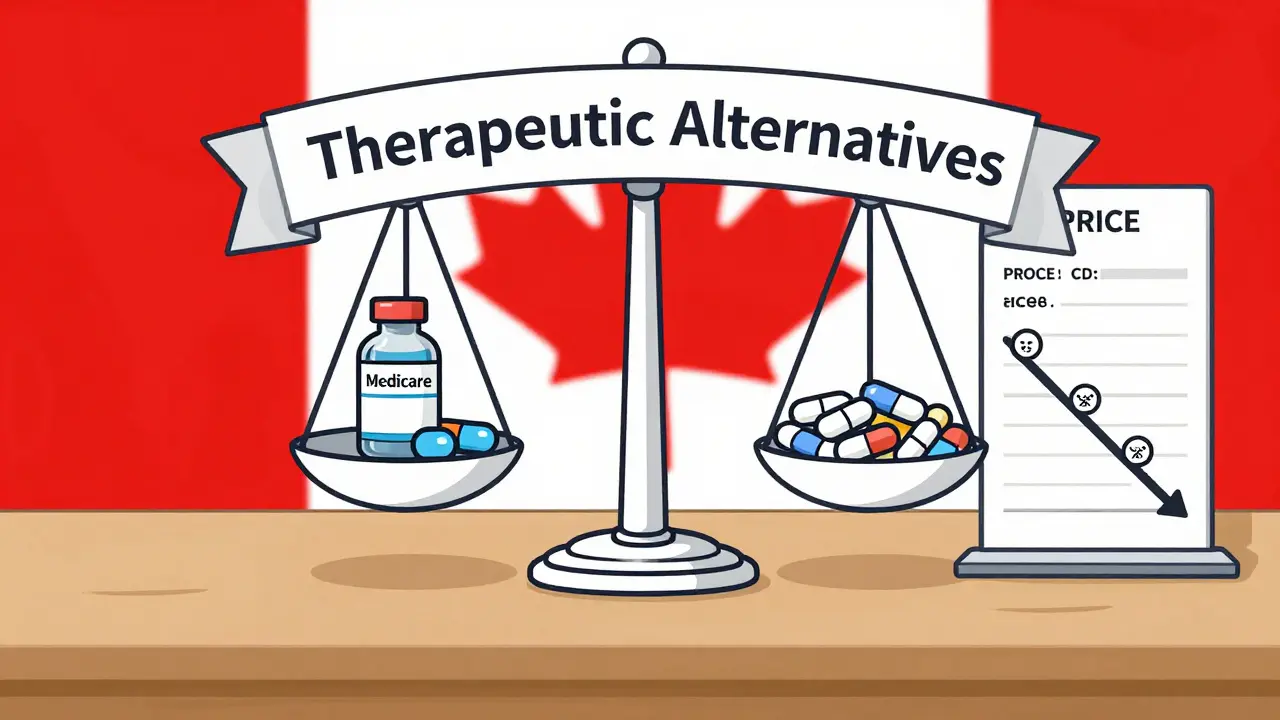
The Hidden Game: Reverse Payments and Patent Games
But it’s not all fair play. Brand-name companies don’t want generics to win. So they’ve developed tactics to delay them. One common trick? Reverse payments. A brand-name company pays a generic manufacturer to stay out of the market. Between 2000 and 2008, 22% of patent settlements involved these payments, according to the European Commission. The FTC found that between 2010 and 2020, 106 generic drugs were delayed because of these deals. Another tactic? Product hopping. A company makes a tiny change to their drug-like switching from a pill to a capsule-and files a new patent. Then they stop selling the old version. Patients are forced to switch, and generics can’t enter until the new patent expires. Between 2015 and 2020, there were 1,247 of these maneuvers, according to FTC data. These aren’t loopholes. They’re strategies. And they’re why some drugs still cost hundreds of dollars even when generics are legally allowed.Who Wins and Who Loses?
Patients win when prices drop. The Congressional Budget Office estimates the first 10 drugs negotiated under Medicare could save beneficiaries $6.8 billion a year. AARP supports this, saying it makes life-saving drugs affordable. Generic manufacturers win too-when the system works. Companies like Teva, Sandoz, and Viatris dominate the market because they can produce drugs at scale. But many smaller generic makers struggle. Why? Because if the government sets a low price for a brand-name drug before generics even enter, those small companies can’t justify the cost of entering the market. Avalere Health found that generics aren’t just competing with the brand-they’re competing with a government-set price. That makes it hard to recover R&D costs or invest in manufacturing. Pharmaceutical companies argue this kills innovation. PhRMA spent over $300 million lobbying against Medicare negotiation in 2023. But the Association for Affordable Medicines counters that generics have lowered prices for four decades without killing innovation. The real issue? The balance between profit and access.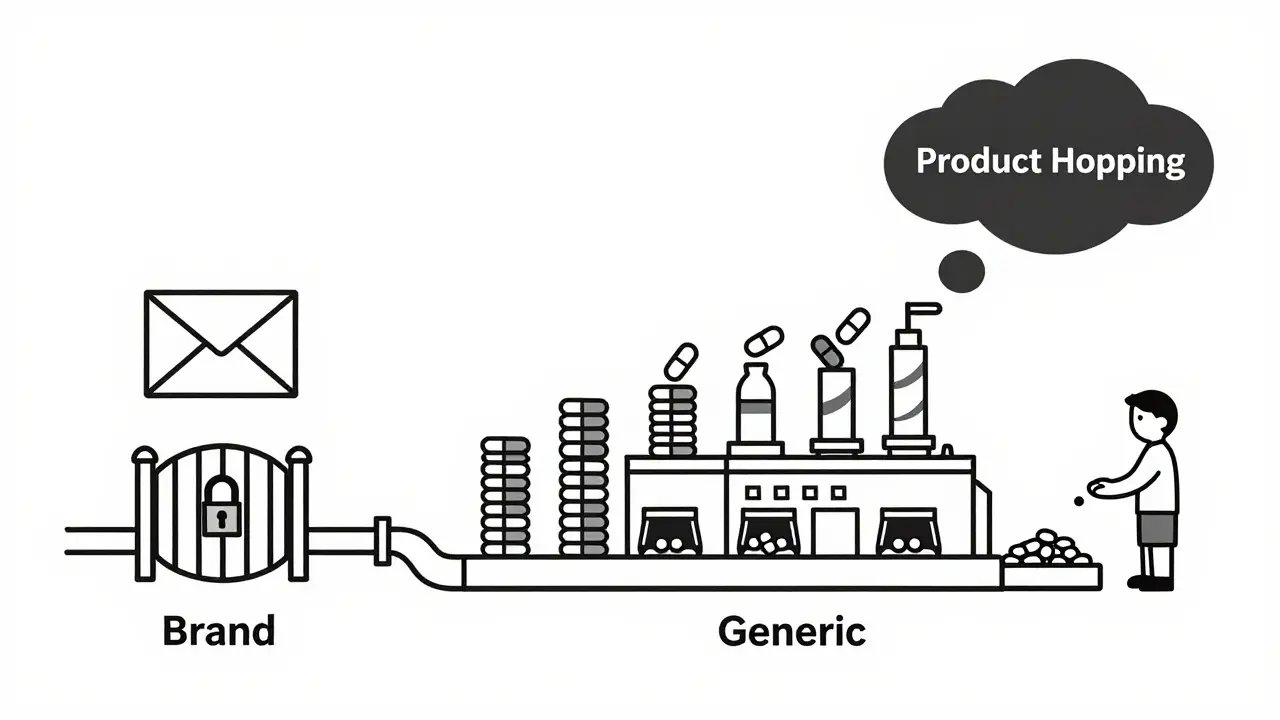
The Data Challenge: Tracking Real Competition
To make this work, buyers need real-time data. CMS uses two key sources: Average Manufacturer Prices (AMP) and Prescription Drug Event (PDE) data. AMP shows what manufacturers actually charge. PDE shows what pharmacies actually bill. Together, they reveal whether a generic is truly on the market-or just sitting on a shelf. But not all payers have this access. Many pharmacy benefit managers (PBMs) use secret algorithms. Their pricing models are black boxes. That’s why transparency is a growing demand. A 2022 Kaiser Family Foundation survey found that 85% of large health systems needed specialized economists just to understand the pricing data. It’s not enough to say “there are generics.” You need to know: Are they being sold? Are they being prescribed? Are they being stocked? Without that, you’re negotiating in the dark.What’s Next? Complex Generics and Biosimilars
The next frontier isn’t simple pills. It’s complex generics and biosimilars-drugs made from living cells, like insulin or rheumatoid arthritis treatments. These aren’t easy to copy. It takes years, millions in investment, and regulatory hurdles. That’s why biosimilars only have a 45% market share, compared to 90% for traditional generics. The competition is slower. The price drops are smaller. And the negotiation models don’t work the same way. Some experts are pushing for new frameworks-ones that account for manufacturing complexity, not just the number of competitors. The ISPOR survey shows 73% of health technology agencies plan to use real-world evidence by 2025 to judge value. That means not just price, but how well the drug works in real patients.The Bottom Line
Generic drug competition isn’t just a market force. It’s a tool. Buyers use it to control costs, protect patients, and force transparency. But it’s fragile. Patent games, reverse payments, and government pricing that’s too aggressive can all break it. The best systems don’t just lower prices. They encourage more competition. Canada’s tiered model does that. The U.S. Medicare program tries, but risks chilling generic entry. The goal shouldn’t be to pick winners. It should be to make sure the market works. Because when competition is real, prices fall. When it’s blocked, patients pay more. And in health care, that’s not just economics-it’s life or death.How do generic drugs lower prescription prices?
When multiple manufacturers produce the same generic drug, they compete on price. The more competitors, the lower the price. With six or more generic versions, prices often drop by 90% or more. This happens because manufacturers don’t need to recoup R&D costs, so they can sell at a fraction of the brand-name price.
Can Medicare negotiate prices for drugs with generic versions?
No, Medicare cannot directly negotiate prices for drugs that already have generic versions on the market. But it can use the prices of those generics as a benchmark to set lower starting prices for brand-name drugs in the same therapeutic class. This indirect leverage still drives down overall costs.
What are reverse payments in the pharmaceutical industry?
Reverse payments occur when a brand-name drug company pays a generic manufacturer to delay entering the market. These deals, sometimes called "pay-for-delay," are designed to extend the brand’s monopoly. Between 2010 and 2020, the FTC found 106 such agreements delayed generic entry.
Why do some generic drugs still cost a lot?
Some generics remain expensive due to low competition-often because of patent litigation, product hopping, or manufacturing barriers. Complex drugs like insulin or biologics are harder to copy, so fewer manufacturers enter. In markets with only one or two generic makers, prices stay high.
How does Canada’s tiered pricing system work?
Canada sets a maximum price for each drug based on how many generic versions are available. If only one generic exists, the price cap is higher. As more generics enter-say, five or more-the cap drops significantly. This encourages competition while still allowing manufacturers to earn a profit.
Do generic drugs have the same effectiveness as brand-name drugs?
Yes. The FDA requires generic drugs to have the same active ingredients, dosage, strength, route of administration, and therapeutic effect as the brand-name version. They must also meet the same strict manufacturing standards. The only differences are in inactive ingredients, like fillers or dyes, which don’t affect how the drug works.
What’s the difference between generics and biosimilars?
Generics are exact copies of small-molecule drugs made chemically. Biosimilars are highly similar versions of complex biologic drugs made from living cells. Biosimilars are harder and more expensive to produce, so they face less competition and achieve only about 45% market share, compared to 90% for traditional generics.
How do pharmacy benefit managers (PBMs) influence generic drug pricing?
PBMs negotiate drug prices with manufacturers and pharmacies on behalf of insurers. Many use proprietary algorithms to determine which drugs to cover and at what price. While some offer transparency, others don’t disclose how they set prices, making it hard to know if generic competition is truly being leveraged.

8 Comments
Kitty Price
December 17 2025
Wow, this is wild to think about how much we’re saving just by having generics 😍 I picked up my blood pressure med last week and it was $4. Like… I could’ve bought a whole pizza for that. 🍕
Colleen Bigelow
December 17 2025
Oh please. This is all a socialist scam to destroy American pharma. Who the hell lets the government set prices? Next they’ll be telling us how many carbs we can eat. The FDA? More like the FED’s little puppet. And don’t get me started on those sneaky Indian generics-half of them are probably laced with chalk and regret. Wake up, sheeple.
Randolph Rickman
December 17 2025
Actually, this is one of the smartest things the U.S. has done in healthcare in decades. Generic competition isn’t just about saving money-it’s about dignity. People shouldn’t have to choose between insulin and rent. And yeah, reverse payments and product hopping are total BS. But the good news? More transparency is coming. CMS is slowly getting better at using real data, not guesswork. Small generic makers are struggling, sure-but if we fix the reimbursement models, not just the prices, we can bring them back into the game. It’s fixable. We just need the will.
sue spark
December 19 2025
i never realized how much the pBM black box affects what i pay. like i see a generic on the shelf but the copay is still high and i dont know why. no one explains it. its like playing monopoly with real life money
Arun ana
December 20 2025
India makes over 60% of the world’s generics. We’ve been doing this for decades. The U.S. is just catching up. But I agree with you, Randolph-small manufacturers need support. In India, we have public-private partnerships to help them scale. Maybe the U.S. could try something similar? No need to reinvent the wheel.
Dave Alponvyr
December 21 2025
So let me get this straight… the government sets a price based on what generics *could* cost… and then the brand company cries and says "but innovation!"
Bro. You made $20 billion last year. Your CEO bought a yacht shaped like a pill. Chill.
Kim Hines
December 22 2025
Canada’s tiered system makes so much sense. Why don’t we just copy it? It’s not rocket science. More competitors = lower prices. Basic economics. But no, we’d rather have 12 lobbyists in a room arguing over a $0.10 difference on a pill.
Cassandra Collins
December 24 2025
theyre lying about generics being safe. i heard a nurse say the fillers in them are made from recycled hospital plastic. thats why my anxiety got worse after switching. and the FDA? totally bought off. theyre all in on it. the real cure is vitamin d and a tinfoil hat