
INR Interaction Calculator
Calculate Your INR Risk with Bactrim
This tool shows how Trimethoprim-Sulfamethoxazole (Bactrim) can increase your INR and what to do about it.
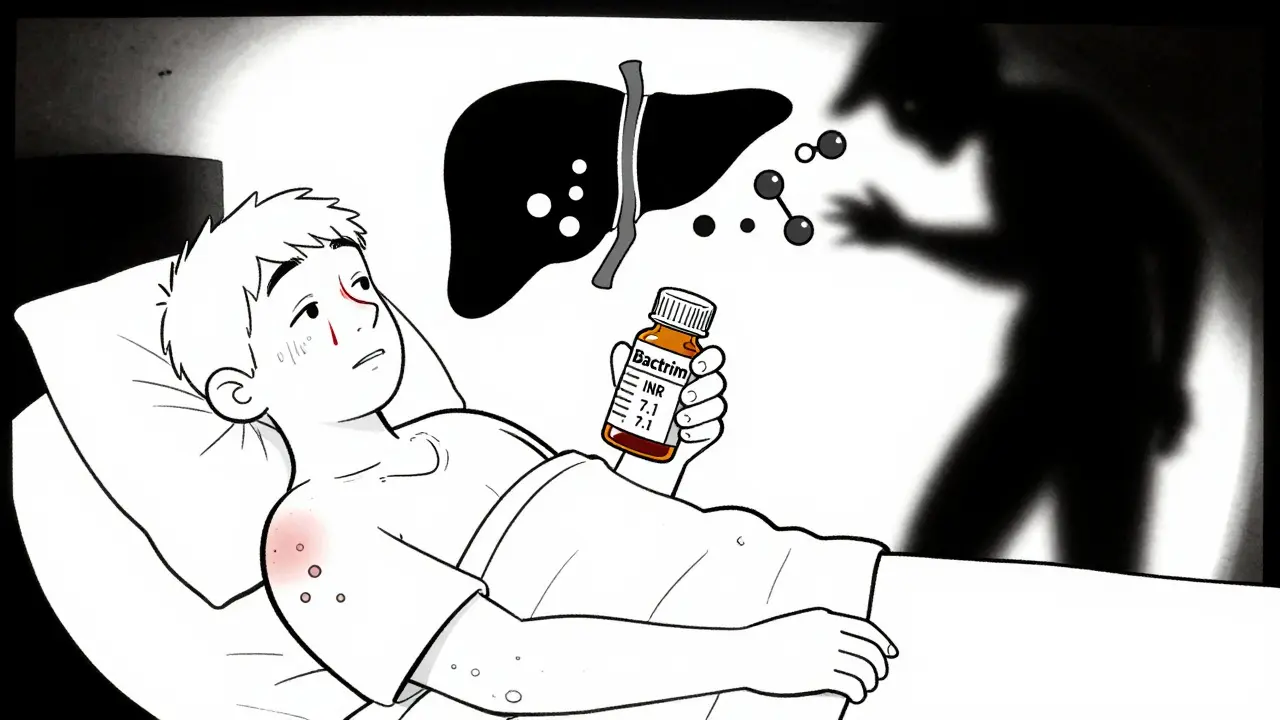
Imagine you’re on warfarin to prevent a stroke or manage a mechanical heart valve. Your INR is steady at 2.8 - right in the target range. Then you get a urinary tract infection. Your doctor prescribes Trimethoprim-Sulfamethoxazole (Bactrim, Septra). Three days later, you wake up with bruising on your arm, a nosebleed that won’t stop, and dizziness. Your next INR check? 7.1. This isn’t rare. It’s a well-documented, dangerous interaction that sends hundreds of people to the ER every year.
Why This Combination Is So Dangerous
Warfarin doesn’t just thin your blood - it keeps your clotting system in a tight balance. It works by blocking vitamin K, which your liver needs to make clotting factors. Too little, and you bleed. Too much, and clots form. Trimethoprim-Sulfamethoxazole (TMP-SMX) throws this balance off in three ways:- Displaces warfarin from protein binding sites. Warfarin is 97-99% bound to albumin in your blood. TMP-SMX is also highly protein-bound. When both are in your system, they fight for space. The displaced warfarin becomes active, increasing its effect.
- Slows down warfarin metabolism. The S-enantiomer of warfarin - the more powerful half - is broken down mainly by the liver enzyme CYP2C9. Trimethoprim blocks this enzyme. Studies show this cuts S-warfarin clearance by 20-30%, causing levels to rise fast.
- Reduces gut vitamin K. Sulfamethoxazole kills off some of the bacteria in your intestines that produce vitamin K. Less vitamin K means even less clotting factor production, making warfarin’s effect stronger.
The result? INR jumps. Usually within 36 to 72 hours after starting the antibiotic. That’s why many patients don’t connect the dots - they feel fine on day two, then collapse on day four.
How Much Does INR Really Rise?
Not all patients see the same spike. But data from over 70,000 warfarin users shows clear patterns:| Antibiotic | Average INR Increase | 95% Confidence Interval |
|---|---|---|
| Trimethoprim-Sulfamethoxazole | 1.8 units | 1.5-2.1 |
| Ciprofloxacin | 0.9 units | 0.7-1.1 |
| Amoxicillin | 0.4 units | 0.2-0.6 |
That 1.8-unit jump is huge. If your INR was 2.5, it could hit 4.3 - already above the safe upper limit of 4.0. At INR >5.0, the risk of serious bleeding increases sharply. In one study, 42% of patients with this interaction ended up hospitalized. Over 60 people died from fatal bleeding in just five years, according to FDA reports.
Who’s at Highest Risk?
It’s not random. Certain people are far more likely to have a dangerous reaction:- Age over 75: Liver function slows. Kidneys clear drugs slower. The body handles the extra warfarin poorly.
- Heart failure or liver disease: These conditions reduce protein production. Less albumin means more free warfarin floating around.
- Low vitamin K intake: People who eat little green leafy vegetables, or who are malnourished, have less backup vitamin K to counteract warfarin.
- Males: Studies show men are 9% more likely than women to experience INR spikes with TMP-SMX - a pattern still not fully explained.
- High baseline INR: If you’re already near the top of your target range (say, 3.5), even a small increase can push you into danger.
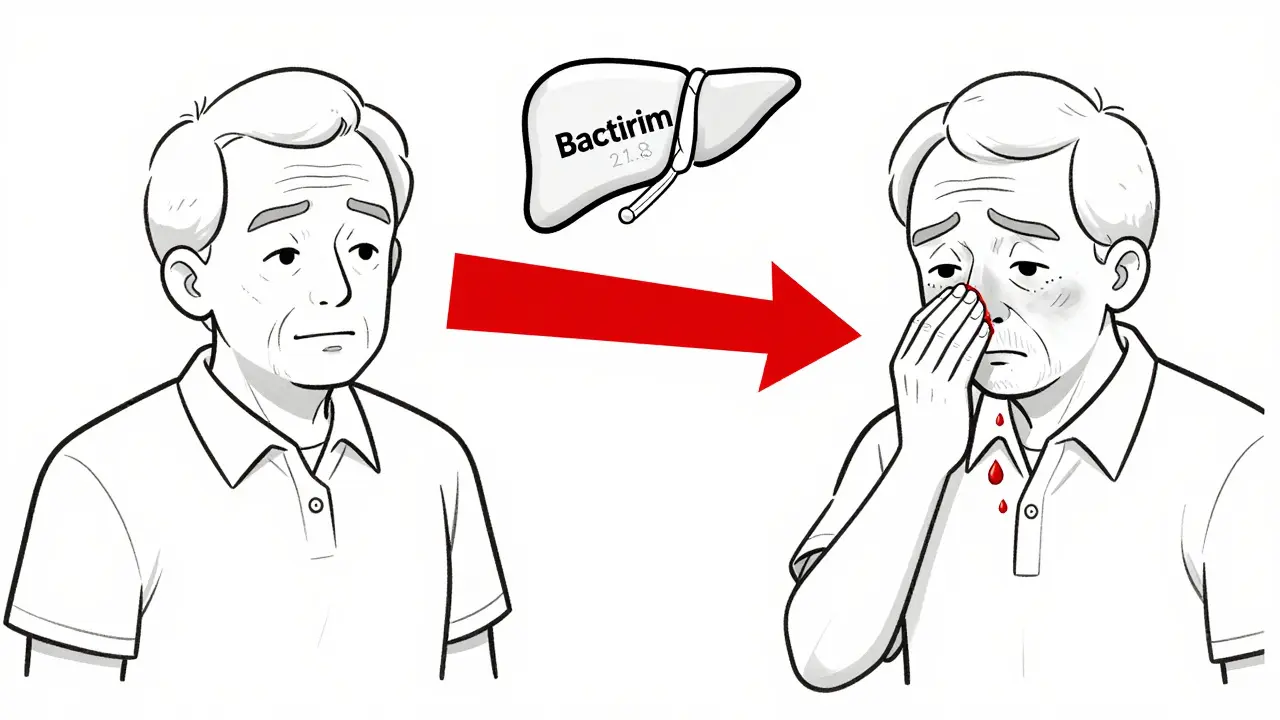
One nurse practitioner in Texas told me about a 79-year-old man with a mechanical mitral valve. His INR was 3.0. He got Bactrim for a UTI. Three days later, he had a brain bleed. He didn’t survive.
What Doctors Should Do - And What They Often Don’t
The American Heart Association and the Institute for Safe Medication Practices both list this as a high-alert interaction. That means it’s on par with insulin overdoses or heparin errors. Yet, a 2022 JAMA study found nearly 1 in 5 warfarin patients still got an interacting antibiotic within 30 days.Here’s what should happen:
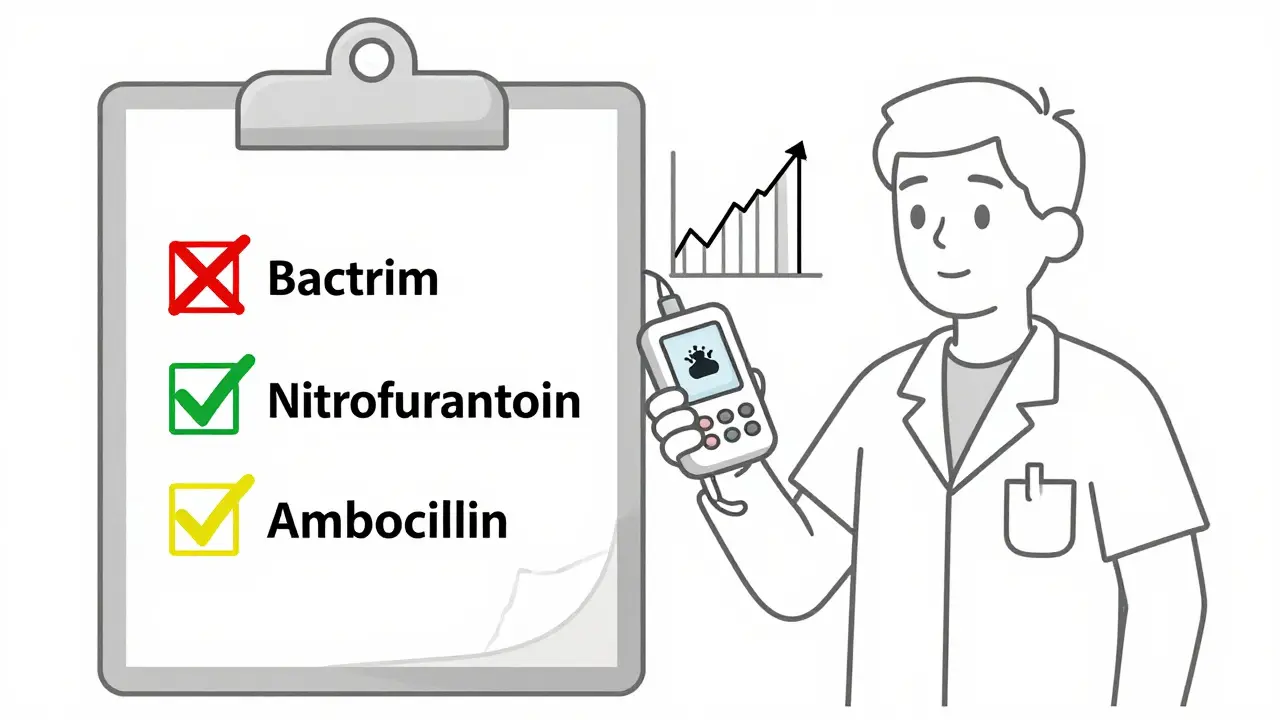
- Check INR before starting TMP-SMX. Know your baseline.
- Check INR again 48-72 hours later. This is non-negotiable. Waiting longer is dangerous.
- Reduce warfarin dose by 20-30% preemptively - especially if you’re over 70, have heart failure, or are on a high dose.
- Use alternatives. For UTIs, nitrofurantoin or fosfomycin are safer. For pneumonia, azithromycin or doxycycline usually don’t interact.
But many doctors still prescribe TMP-SMX without checking. Why? It’s cheap. It’s broad-spectrum. It’s familiar. But the data doesn’t lie: this is one of the most dangerous antibiotic choices for someone on warfarin.
What to Do If Your INR Spikes
If your INR goes above 4.0, don’t panic - but act fast:- INR 4.0-5.0, no bleeding: Skip 1-2 doses of warfarin. Recheck in 2-3 days. Resume at a lower dose.
- INR 5.0-10.0, minor bleeding (bruising, nosebleed, gum bleeding): Take 1-2.5 mg of oral vitamin K. Recheck INR in 24 hours.
- INR >10.0 or serious bleeding (vomiting blood, black stool, headache, weakness): Go to the ER. You need IV vitamin K (5-10 mg) and possibly 4-factor prothrombin complex concentrate (PCC) to reverse the effect fast.
Don’t wait for symptoms. If you’re on warfarin and start TMP-SMX, assume your INR will rise - even if you’ve taken it before without issue. Individual responses vary wildly. One patient might have no change. Another might bleed out. There’s no way to predict who’s who.
Why DOACs Haven’t Fixed This Problem
Direct oral anticoagulants (DOACs) like apixaban and rivaroxaban don’t interact with TMP-SMX the same way. That’s why they’ve replaced warfarin for many people. But here’s the catch: 2.6 million Americans still take warfarin in 2026. Why?- People with mechanical heart valves - DOACs are not approved for them.
- People with antiphospholipid syndrome - warfarin is still the gold standard.
- Cost - warfarin costs $5/month. DOACs cost $400+.
- Some patients prefer the ability to monitor INR - it gives them control.
So this interaction isn’t going away. The NIH just funded a $2.4 million study to better predict who’s at risk - with results expected in 2025. Until then, we’re stuck with the data we have: TMP-SMX and warfarin is a deadly combo.
What You Can Do Right Now
If you’re on warfarin:- Always tell every doctor and pharmacist you’re on warfarin - even for a simple UTI.
- Ask: “Is there a safer antibiotic than Bactrim for my infection?”
- Get your INR checked before and after any antibiotic - don’t wait for symptoms.
- Keep a log: write down your INR, date, and any antibiotics you take. Share it with your anticoagulation clinic.
- Learn the signs of bleeding: unusual bruising, pink or red urine, headaches, dizziness, vomiting blood.
One patient in Ohio told me: “I didn’t know antibiotics could make warfarin dangerous. My doctor never warned me. Now I check my INR every time I get a prescription.” That’s the new standard.
Bottom Line
Trimethoprim-Sulfamethoxazole and warfarin don’t just interact - they can kill. This isn’t a theoretical risk. It’s a daily reality in clinics, ERs, and hospitals. The science is clear. The data is overwhelming. The solution? Avoid the combo if you can. If you can’t, monitor like your life depends on it - because it does.Can I take Bactrim if I’m on warfarin?
It’s not recommended. Bactrim (TMP-SMX) can spike your INR within 3 days, increasing bleeding risk. If no other antibiotic works, your doctor should reduce your warfarin dose by 20-30% and check your INR within 48 hours. Never take it without close monitoring.
How long does the interaction last?
The effect starts within 36-72 hours of starting TMP-SMX and can last up to 7-10 days after you stop the antibiotic. Your liver needs time to clear the drug and restore normal metabolism. Keep checking your INR for at least 10 days after finishing the course.
What antibiotics are safe with warfarin?
Amoxicillin, cephalexin, azithromycin, and doxycycline generally don’t affect INR. Nitrofurantoin is preferred for UTIs. Always confirm with your pharmacist or anticoagulation clinic - even "safe" antibiotics can vary by individual.
Do I need to stop warfarin if I need Bactrim?
Never stop warfarin without medical advice. Stopping can cause clots - which can be just as dangerous as bleeding. Instead, reduce the dose, check INR early, and use vitamin K if needed. Your doctor will guide you based on your INR and bleeding risk.
Can I take vitamin K to prevent the interaction?
No. Taking vitamin K supplements to "counteract" warfarin is dangerous and can make your INR unstable. Only use vitamin K if your INR is dangerously high (over 5.0) and you’re bleeding - and only under medical supervision.
