

Trimester-Specific Medication Risk Checker
Check Your Medication Safety
Enter the medication name and your current pregnancy week to see trimester-specific risks and safety information.
When you're pregnant, taking any medication - even something as simple as an allergy pill or pain reliever - can feel like walking a tightrope. You need relief, but you're terrified of hurting your baby. The truth is, not all medications are risky at every stage of pregnancy. The danger isn't just about what you take, but when you take it.
Why Timing Matters More Than You Think
Pregnancy isn't one long block of time. It's three distinct phases, each with its own rules for how your baby grows - and how drugs might interfere. The first trimester is when the baby's organs form. That’s the most sensitive window. A medication taken on day 22 of pregnancy could mess up the heart. The same drug taken on day 40 might not cause any structural harm at all. This isn't theory. It's science. After the thalidomide disaster in the 1960s, doctors realized birth defects weren't random. They were tied to exact days of exposure. Today, we know the neural tube closes between days 18 and 26. The heart develops between days 20 and 40. The limbs form between days 24 and 36. Miss those windows, and the risk drops dramatically. Before day 20 after fertilization, most medications follow the "all-or-nothing" rule. If the embryo is damaged, it doesn't survive - and you miscarry. If it survives, it’s usually unharmed. That’s why early pregnancy losses from meds are often not preventable - and why stopping a drug before you even know you're pregnant isn't always necessary.First Trimester: The Critical Window
This is when most major birth defects linked to drugs happen. But not all drugs are dangerous here. Isotretinoin (Accutane) is the classic example. If taken between days 21 and 55 after fertilization, it increases the risk of severe brain, heart, and facial defects by 50 times. That’s why the FDA requires the iPLEDGE program - two negative pregnancy tests before starting, monthly tests while on it, and one month after stopping. Since its rollout, pregnancy rates among users dropped from nearly 5 per 100 women per year to under 1. Paroxetine (Paxil) carries a slightly higher risk of heart defects if taken between days 20 and 24. The absolute risk is still low - about 2-3% versus 1% in the general population - but it’s enough that doctors now recommend switching to sertraline (Zoloft) early in pregnancy if you’re on an SSRI. Ondansetron (Zofran), often used for morning sickness, showed a small increased risk of heart defects in one large study - but only if taken before week 10. After that, no increased risk was found. That’s why some OB-GYNs now wait until after the first trimester to prescribe it, unless symptoms are severe. NSAIDs like ibuprofen are generally safe before week 20. But if you take them after week 20, you risk low amniotic fluid. After week 32, they can cause the baby’s ductus arteriosus - a vital blood vessel - to close too early. That’s why most doctors tell you to stop NSAIDs after 20 weeks.Second Trimester: Shifting Risks
By week 13, most major structures are formed. So the risk of physical birth defects drops sharply. But that doesn’t mean everything is safe. ACE inhibitors - drugs like lisinopril or enalapril - are fine before week 8. But after that, they can cause kidney damage, skull deformities, and low amniotic fluid in up to 40% of exposed babies. That’s why doctors switch pregnant patients to labetalol or methyldopa early on. These have been studied across thousands of pregnancies with no increased risk of major defects. Antidepressants like sertraline and citalopram are considered low-risk for structural defects in the second trimester. But here’s the catch: the baby’s brain is still developing. Long-term effects aren’t fully known, which is why many providers prefer to keep doses stable rather than increase them mid-pregnancy. Doxylamine/pyridoxine (Diclegis) is one of the few anti-nausea drugs proven safe throughout all trimesters. It’s been studied in over 200,000 pregnancies with no increased malformation risk. If you’ve been told to avoid all nausea meds in the first trimester, that’s outdated advice.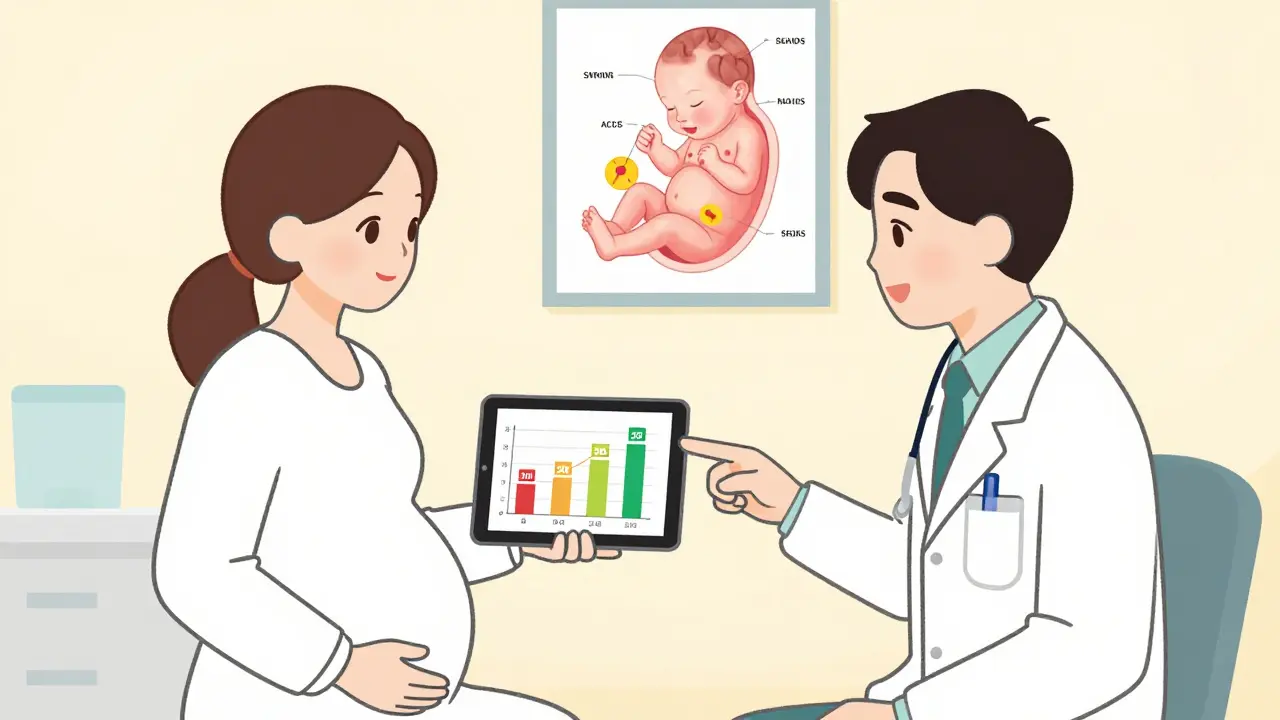
Third Trimester: The Physiological Trap
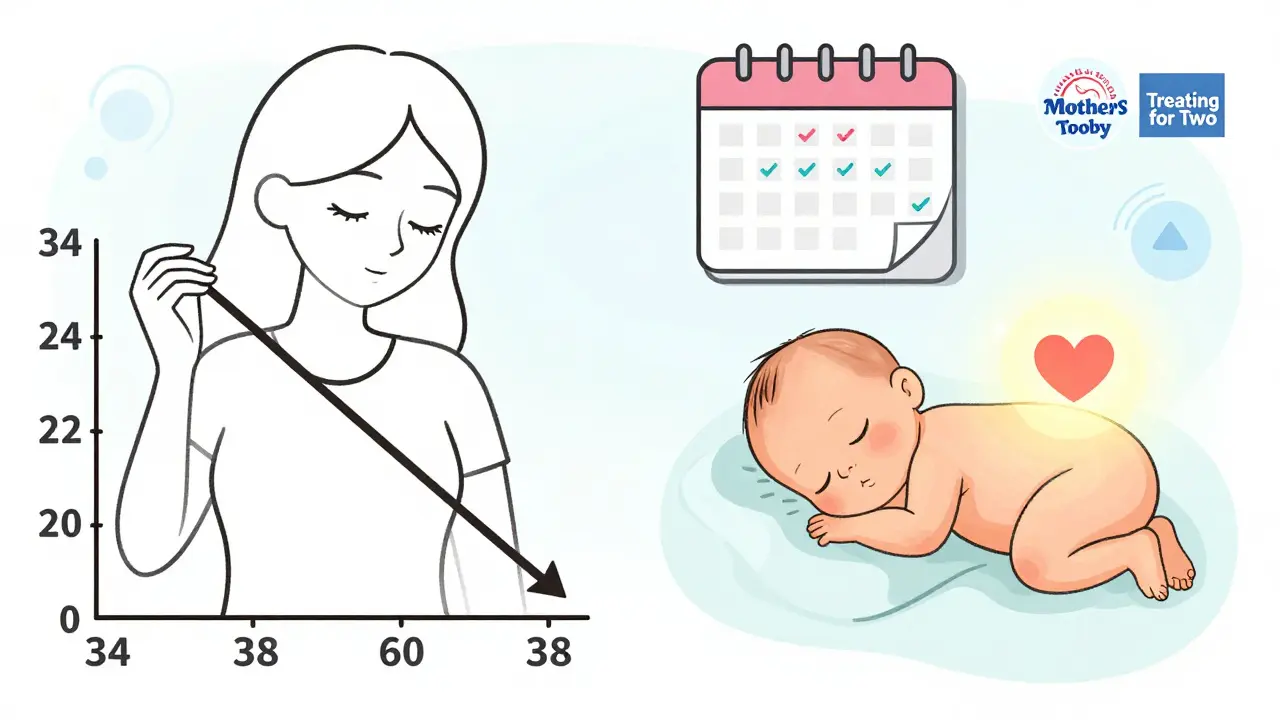
By now, your baby’s organs are built. But they’re not fully functional. That’s why third-trimester medication risks look different. SSRIs like paroxetine or fluoxetine can cause neonatal adaptation syndrome in up to 30% of babies exposed in the final weeks. Symptoms include jitteriness, breathing trouble, feeding issues, and high-pitched crying. These usually resolve within days or weeks - but they can mean a NICU stay. The fix? Don’t stop cold turkey. Tapering slowly - reducing dose by 25% every two weeks starting at 34 weeks - can cut this risk in half. One mom on Reddit shared how she lowered her sertraline dose from 100mg to 50mg over six weeks before delivery and avoided symptoms her first child had. NSAIDs are a no-go after week 32. Even a single dose can cause the baby’s heart to reroute blood flow dangerously. That’s why labor nurses check if you’ve taken ibuprofen in the last week before induction. Codeine and other opioids can cause neonatal abstinence syndrome (NAS), where the baby goes through withdrawal after birth. Symptoms include tremors, seizures, and extreme irritability. If you’ve been on opioids for chronic pain, your OB should work with a pain specialist to switch to safer alternatives or plan for a gradual taper before delivery.What’s Actually Safe?
Some meds are trusted across all trimesters.- Acetaminophen (Tylenol): The go-to painkiller. Studies tracking over 200,000 pregnancies show no link to developmental issues at standard doses (up to 3,000mg/day). Avoid long-term high doses (>3,500mg/day for more than two weeks), though.
- Loratadine (Claritin): Safe for allergies. Category B. No increased risk of birth defects. Yet many doctors still tell patients to avoid all antihistamines in the first trimester - a myth.
- Metformin: For women with PCOS or gestational diabetes, stopping metformin in early pregnancy because of fear can lead to dangerous high blood sugar. ACOG recommends continuing it throughout.
- Insulin: The only diabetes medication proven safe in pregnancy. Oral pills like metformin are also considered safe, but insulin remains the gold standard for tight control.
How to Make Smarter Decisions
Most pregnant people take at least one medication. Over 70% take prescription drugs. But here’s the problem: 79% of those drugs lack solid safety data for pregnancy. Here’s how to navigate it:- Know your dates. Your doctor should confirm gestational age with an ultrasound before week 10. Many people think they’re 8 weeks pregnant when they’re actually 10. That changes everything.
- Ask for trimester-specific data. Don’t just ask, "Is this safe?" Ask, "What’s the risk if I take this in week 12 versus week 28?"
- Use trusted resources. MotherToBaby (run by OTIS) offers free, expert consultations. The CDC’s Treating for Two tool helps you weigh risks by trimester.
- Don’t self-discontinue. A woman on Reddit stopped her metformin at 8 weeks out of fear - and ended up hospitalized at 14 weeks with dangerously high blood sugar. Always talk to your provider first.
- Check labeling. Since 2015, all new drug labels use the Pregnancy and Lactation Labeling Rule (PLLR). Look for "Clinical Considerations" - that’s where trimester-specific risks are detailed.
What’s Changing in 2025
The field is moving fast. In 2023, the NIH funded a $4.7 million project to build a personalized trimester-risk calculator that factors in your genetics, exact gestational age, and how your body processes drugs. It’s expected to launch in 2025. The FDA is also pushing for real-world data from electronic health records to track medication outcomes during pregnancy. Right now, only 27% of drug labels include precise trimester-based risk numbers. That’s changing. Meanwhile, doctors are finally catching up. ACOG and the American Psychiatric Association now recommend specific SSRI tapering protocols for third-trimester use. And more OB-GYNs are using digital tools like Micromedex and Lexicomp to check risks - though only 31% feel truly confident doing it.Final Takeaway
You don’t need to avoid all meds during pregnancy. You need to avoid the wrong meds at the wrong time. The goal isn’t zero exposure - it’s smart exposure. Work with your provider. Use reliable sources. Don’t rely on Reddit or Instagram. And remember: sometimes, the biggest risk isn’t the medication - it’s the untreated condition.Is it safe to take Tylenol during pregnancy?
Yes, acetaminophen (Tylenol) is considered the safest pain reliever during all trimesters. Studies of over 200,000 pregnancies show no increased risk of birth defects or developmental issues at standard doses (up to 3,000mg per day). Avoid taking it for more than two weeks at high doses (over 3,500mg/day) unless directed by your doctor.
Can I continue my antidepressant during pregnancy?
Many antidepressants are safe, but timing matters. Sertraline (Zoloft) is preferred in the first trimester because it has the lowest risk of birth defects. If you’re on paroxetine (Paxil), switching early is recommended. In the third trimester, gradual tapering (25% every two weeks starting at 34 weeks) can reduce the risk of neonatal withdrawal symptoms. Never stop abruptly without medical supervision.
What medications should I avoid completely during pregnancy?
Isotretinoin (Accutane) is strictly contraindicated - it causes severe birth defects. ACE inhibitors (like lisinopril) are dangerous after week 8, increasing risk of kidney and skull problems. NSAIDs like ibuprofen should be avoided after week 20 due to risk of low amniotic fluid and early heart closure. Always consult your provider before stopping or starting any medication.
Are over-the-counter allergy meds safe?
Yes, loratadine (Claritin) and cetirizine (Zyrtec) are both Category B and considered safe throughout pregnancy. Many doctors still wrongly advise avoiding all antihistamines in the first trimester, but large studies show no increased risk of birth defects. If you have seasonal allergies, managing them is safer than suffering through uncontrolled symptoms.
What if I took a medication before I knew I was pregnant?
Don’t panic. If you took a medication before day 20 after fertilization, the risk is usually "all-or-nothing" - either the pregnancy continues normally, or it doesn’t. If you’re past day 20, contact MotherToBaby or your OB-GYN. They can assess the specific drug, timing, and dose. Most exposures don’t lead to birth defects, and many unnecessary terminations happen because of misdated pregnancies.
Where can I find reliable information on pregnancy medications?
Use trusted, evidence-based sources: MotherToBaby (a service of OTIS) offers free, confidential expert consultations. The CDC’s Treating for Two website has trimester-specific decision tools. Avoid Reddit, Facebook groups, or social media influencers - they often spread misinformation. Always verify advice with your healthcare provider or a teratology specialist.

16 Comments
Thomas Anderson
December 16 2025
Acetaminophen is still the gold standard for pain relief in pregnancy. I’ve seen too many women panic and stop it out of fear, then end up with uncontrolled migraines or fever - which are way riskier than Tylenol. Stick to 3,000mg/day max, and don’t overthink it.
Edward Stevens
December 17 2025
So let me get this straight - we’re now treating pregnancy like a chemistry lab with a stopwatch? Day 22? Day 36? Next thing you know, we’ll be scheduling ibuprofen like a coffee break. At this point, I just want to know what’s actually *safe* without needing a PhD in teratology.
Alexis Wright
December 17 2025
Let’s be honest - this whole ‘trimester-specific risk’ framework is just corporate medicine’s way of outsourcing liability. You think the FDA cares about your baby’s ductus arteriosus? No. They care about lawsuits. That’s why isotretinoin has iPLEDGE and Zofran gets a vague ‘maybe after week 10’ warning. Meanwhile, the real villains - glyphosate, PFAS, endocrine disruptors in your shampoo - get zero labeling. This is distraction science.
And don’t get me started on ‘trusted resources.’ MotherToBaby? Run by OTIS - a consortium funded by pharmaceutical companies and academic institutions that have a vested interest in keeping drugs on the market. The data is *selected*, not comprehensive. If you want real safety, avoid all synthetics. Period.
Oh, and that ‘all-or-nothing’ rule? That’s just a comforting myth for people who can’t handle the truth: if your embryo survives a teratogen, it’s already compromised. You just don’t see it until age 3.
Dwayne hiers
December 18 2025
Important clarification: the 2015 Pregnancy and Lactation Labeling Rule (PLLR) replaced the old A/B/C/D/X categories. The new format emphasizes clinical considerations, risk summaries, and data limitations - not just letter grades. Many providers still reference the outdated system, leading to unnecessary discontinuation of safe meds like metformin or loratadine. Always check the ‘Clinical Considerations’ section on the label - it’s where the nuance lives.
Sinéad Griffin
December 20 2025
OMG YES 🙌 I took Zofran at 8 weeks and my OB freaked out - then I found this exact study and showed her. She was like ‘ohhhhhh.’ Now I’m 28 weeks and still taking it. My nausea? Gone. My baby? Perfect. 🤱💖
Jonny Moran
December 22 2025
For anyone stressed about meds: you’re not alone. I was terrified when I found out I was pregnant while on sertraline. But after talking to a perinatal psychiatrist and switching to a stable dose, I had the smoothest pregnancy of my life. The goal isn’t zero meds - it’s smart, monitored use. You’ve got this.
Sarthak Jain
December 23 2025
hey guys, i read this whole thing and i think its super helpful. but i live in india and here most doc just say 'dont take any tablet'... even for tylenol. is it same here? i took cetirizine last month for allergies... hope its ok? 😅
Daniel Wevik
December 24 2025
Medical decision-making in pregnancy must be grounded in evidence, not anecdote. The data on sertraline and acetaminophen is robust across multiple large cohort studies and meta-analyses. The risk-benefit calculus favors treatment for maternal mental health and pain control - especially when untreated conditions pose greater fetal risk. Always consult a teratologist or maternal-fetal medicine specialist before altering regimen.
Rulich Pretorius
December 24 2025
There’s a deeper truth here: we’ve turned pregnancy into a minefield of fear, not because the risks are higher, but because we’ve lost trust in the body’s resilience. Our ancestors took herbs, smoked, drank - and birthed healthy children. We’re drowning in data, but starving for wisdom. The real question isn’t ‘what drug?’ - it’s ‘what kind of support do we give mothers?’
Maybe the most dangerous thing isn’t ibuprofen. It’s isolation. It’s shame. It’s being told you’re a threat to your own child just for needing help.
jeremy carroll
December 26 2025
so i took ibuprofen at 19 weeks by accident… and then panicked for 3 weeks. then i called mothertobaby and they said ‘eh, probably fine, just avoid it from now on.’ my baby’s 8 months old and thriving. don’t let fear run your life. you’re not a bad mom for being human.
Rich Robertson
December 28 2025
As someone who’s lived in three countries and worked with pregnant women across cultures, I’ve seen how stigma around medication varies wildly. In the U.S., it’s ‘avoid everything.’ In parts of Asia, it’s ‘take anything for nausea.’ The truth? Most drugs are safer than we think. The real issue? Access to good advice. If you don’t have a provider who understands trimester-specific risks, reach out to MotherToBaby. Free. Confidential. Lifesaving.
Natalie Koeber
December 29 2025
Have you noticed how every ‘safe’ drug is made by Big Pharma? Coincidence? I think not. The FDA, CDC, ACOG - all funded by the same corporations that profit from prenatal meds. They want you dependent. They don’t want you healing naturally. That’s why they scare you into thinking Tylenol is safe - but never mention magnesium, ginger, or acupuncture. The system doesn’t want you well. It wants you buying.
Wade Mercer
December 31 2025
It’s irresponsible to tell people it’s okay to take SSRIs or NSAIDs during pregnancy. You’re normalizing chemical dependency in a sacred, vulnerable time. The body is designed to endure discomfort - not medicate it. If you need Zofran, you’re not ‘suffering from morning sickness’ - you’re failing your baby’s natural development. Just say no.
Daniel Thompson
December 31 2025
As a physician who has reviewed over 300 pregnancy medication exposures, I must emphasize: timing is everything, but so is dosage and duration. A single 200mg dose of ibuprofen at 28 weeks carries negligible risk. Daily use for three weeks? That’s a different story. The key is precision - not fear. Always document exposure and follow up with fetal growth scans. Most outcomes are reassuring.
Tim Bartik
December 31 2025
So let me get this straight - if I took a Zofran at 8 weeks and my kid turns out to be a genius who plays violin and speaks Mandarin, it’s fine? But if they sneeze funny? I’m a monster? This whole thing is a guilt-trip wrapped in a white coat. I took what I needed. My daughter is 4. She’s healthy. Screw the charts.
Edward Stevens
January 2 2026
And now I see the author’s reply. Oh good. Another guy with a medical degree telling us we’re all idiots for being scared. Cool. I’m just glad my OB didn’t lecture me about ‘smart exposure’ while I was sobbing over a pregnancy test. Sometimes the bravest thing isn’t taking the pill - it’s asking for help without shame.