

Canagliflozin Risk & Comparison Tool
Personal Risk Factor Check
Based on the CANVAS Program and ADA guidelines, identify if you have specific risk factors that may require extra caution when taking canagliflozin.
Risk Assessment Result
Select your conditions above and click "Assess My Profile" to see your risk level.
Drug Comparison Data
| Medication | Hazard Ratio* |
|---|---|
| Placebo | Reference |
| Canagliflozin | ~2.0 - 2.1 |
| Empagliflozin | 1.05 |
| Dapagliflozin | 0.76 |
*Hazard Ratio vs Placebo regarding amputation risk. Lower is better. Data sourced from CANVAS, EMPA-REG OUTCOME, and DECLARE-TIMI 58 trials.
Imagine being told that the pill helping you control your blood sugar might also put your toes at risk. For years, this was the headline surrounding Canagliflozin, a sodium-glucose cotransporter 2 (SGLT2) inhibitor used to treat type 2 diabetes. Sold under brand names like Invokana, this drug has been a staple in diabetes management since its approval by the U.S. Food and Drug Administration (FDA) in 2013. But then came the CANVAS trial results in 2017, which showed a worrying spike in lower-limb amputations. The FDA slapped a boxed warning on the label. Panic set in among patients and doctors alike.
Fast forward to 2026, and the story is far more nuanced. The boxed warning was removed in 2020 after further studies showed the benefits often outweighed the risks for many patients. Yet, the concern hasn't vanished-it’s just evolved. Today, we know the risk is real but specific, manageable, and heavily dependent on your individual health profile. If you’re taking canagliflozin or considering it, you don’t need to fear every step you take. You do, however, need to understand the data, recognize the warning signs, and know exactly how to protect your feet.
The Origin of the Controversy: What the CANVAS Trial Found
To understand where we stand today, we have to look back at why the alarm bells rang in the first place. The CANVAS Program, published in 2017, combined data from two major clinical trials involving over 10,000 patients with type 2 diabetes and cardiovascular disease. The results were stark: patients taking canagliflozin had nearly twice the risk of amputation compared to those on a placebo.
Specifically, the study reported an amputation rate of 4.2 events per 1,000 patient-years for the 100 mg dose and 5.5 events per 1,000 patient-years for the 300 mg dose, versus 2.8 events per 1,000 patient-years for the placebo group. This translated to hazard ratios of roughly 2.0 to 2.1. In plain English, if you were on the drug, you were statistically twice as likely to lose part of a limb than if you weren’t.
However, context matters immensely here. Most of these amputations were minor-meaning they occurred at the toe or metatarsal level, accounting for about 80% of cases. Major amputations above the ankle were less common. The key takeaway isn’t that canagliflozin causes random limb loss; it’s that it may accelerate complications in people who already have compromised circulation or nerve damage in their feet.
| Treatment Group | Dose | Amputation Rate (per 1,000 patient-years) | Hazard Ratio vs. Placebo |
|---|---|---|---|
| Placebo | N/A | 2.8 | Reference |
| Canagliflozin | 100 mg | 4.2 | 2.01 |
| Canagliflozin | 300 mg | 5.5 | 2.12 |
Is It Just Canagliflozin? Comparing SGLT2 Inhibitors
One of the most important questions patients ask is whether this risk applies to all drugs in the SGLT2 inhibitor class. These medications work by helping your kidneys remove excess sugar through urine. Other popular options include empagliflozin (Jardiance) and dapagliflozin (Farxiga). Fortunately, the data suggests that the amputation signal appears unique to canagliflozin.
A 2021 meta-analysis examining over 40,000 canagliflozin users found a statistically significant elevated risk of amputation (Odds Ratio 1.60). In contrast, major trials for other SGLT2 inhibitors told a different story. The EMPA-REG OUTCOME trial for empagliflozin showed no significant increase in amputation risk (Hazard Ratio 1.05). Similarly, the DECLARE-TIMI 58 trial for dapagliflozin actually showed a non-significant trend toward *reduced* amputation risk (Hazard Ratio 0.76).
This distinction is crucial. It means that if you are concerned about this specific side effect, switching to another SGLT2 inhibitor might be a viable option, provided your doctor agrees it’s appropriate for your overall health. The mechanism behind canagliflozin’s unique risk is still debated, but some experts believe it may be linked to its slightly stronger effects on lowering blood pressure and body weight, which could potentially reduce blood flow to extremities in vulnerable patients.
Who Is Actually at Risk? Identifying High-Risk Profiles
Not everyone taking canagliflozin will face amputation issues. In fact, the absolute risk remains low for the general population. According to calculations by Griffin et al., the number needed to harm (NNH) is approximately 556. This means that for every 556 patients treated for one year, one additional amputation might occur due to the drug. While serious, this statistic highlights that the vast majority of users do not experience this outcome.
However, risk is not evenly distributed. Certain groups are significantly more vulnerable. Dr. Darren K. McGuire, principal investigator of the CANVAS Program, noted that the amputation signal seems confined largely to high-risk patients. You should be extra cautious if you fall into any of these categories:
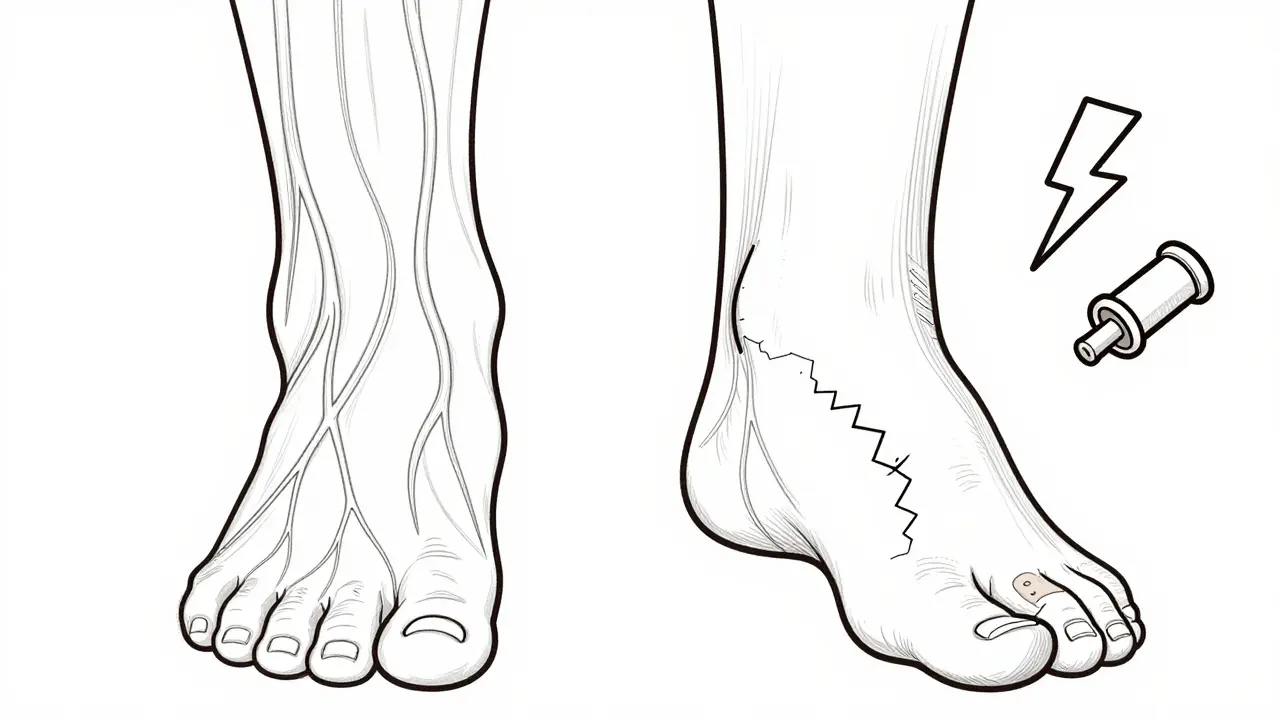
- Pre-existing Peripheral Artery Disease (PAD): PAD affects 20-30% of people with type 2 diabetes. It narrows the arteries in your legs, reducing blood flow.
- Diabetic Neuropathy: Nerve damage reduces sensation in your feet. About 50% of long-term diabetics have some form of neuropathy. If you can’t feel pain, you won’t notice small injuries until they become infections.
- History of Foot Ulcers or Amputations: If you’ve had a foot ulcer before, the recurrence rate within one year is around 40%. A prior amputation is a strong predictor of future ones.
- Current Tobacco Use: Smoking severely constricts blood vessels, compounding any circulatory issues caused by diabetes or medication.
- Absent Pedal Pulses: If your doctor cannot feel pulses in your feet during an exam, your circulation is already compromised.
If you have two or more of these risk factors, the University of Michigan’s clinical protocols suggest avoiding canagliflozin altogether in favor of alternative treatments. For those with fewer risk factors, careful monitoring is usually sufficient.
Why the Boxed Warning Was Removed
In June 2017, the FDA issued a black box warning-the strongest safety alert-for canagliflozin regarding amputations. By January 2020, that warning was gone. Why the change? It wasn’t because the risk disappeared; it was because the broader picture became clearer.
Newer trials, particularly the CREDENCE trial, demonstrated profound kidney and cardiovascular benefits for patients with diabetic kidney disease. These benefits included slowing the progression of kidney failure and reducing heart attacks and strokes. Dr. Lisa Yanoff, a former FDA medical officer, explained that the "totality of evidence" showed these life-saving benefits outweighed the amputation risk for many patients, especially those with existing kidney issues.
Today, the prescribing information still includes detailed warnings in the "Warnings and Precautions" section. It explicitly advises monitoring for new pain, tenderness, sores, ulcers, and infections in the legs and feet. The removal of the boxed warning reflects a shift from blanket caution to personalized risk-benefit analysis.
Practical Prevention: Protecting Your Feet on Canagliflozin
Knowledge is power, but action saves limbs. If you are prescribed canagliflozin, you must adopt a proactive approach to foot care. The American Diabetes Association (ADA) and the American Podiatric Medical Association recommend comprehensive foot examinations at every medical visit. Don’t wait for your annual checkup; make foot checks a routine part of your diabetes management.
Here is a practical checklist for daily and professional care:
- Daily Self-Inspection: Look at your feet every day. Use a mirror if you need to see the bottoms. Check for redness, blisters, cuts, calluses, or ingrown toenails. If you have neuropathy, rely on sight, not feeling.
- Immediate Reporting: Report any new pain, sores, or infections in your feet or legs to your doctor immediately. Do not try to treat them yourself with over-the-counter creams without consulting your provider.
- Proper Footwear: Wear well-fitting shoes and clean, dry socks. Avoid walking barefoot, even indoors. Consider diabetic-specific shoes if recommended by your podiatrist.
- Hyaldration and Skin Care: Dry skin cracks easily. Moisturize your feet daily, but avoid putting lotion between your toes, which can promote fungal growth.
- Professional Exams: Ensure your doctor checks your pedal pulses and performs a monofilament test for sensation regularly.
The National Institute for Health and Care Excellence (NICE) guidelines emphasize that patients should be educated on self-monitoring. If you have reduced sensation due to neuropathy, you are essentially flying blind when it comes to foot injuries. Vigilance is your only defense.

Real-World Perspectives and Current Developments
How does this play out in real life? Patient forums offer mixed but informative anecdotes. On PatientsLikeMe, a small percentage of canagliflozin users reported foot problems, with some citing amputation concerns. One Reddit user shared a harrowing story of a non-healing ulcer leading to a toe amputation after 18 months on the drug, prompting a switch to Jardiance. Conversely, others report years of use with no issues and significant improvements in HbA1c levels.
These stories underscore the variability of individual responses. They also highlight the importance of listening to your body. If something feels wrong, speak up.
Looking ahead, research continues to evolve. The ongoing FOOT-STEP trial, expected to conclude in late 2026, is investigating whether structured foot care protocols can mitigate amputation risk in high-risk patients. Additionally, Janssen Pharmaceuticals is developing a modified-release formulation of canagliflozin (INVOKANA XR), which aims to reduce peak plasma concentrations and potentially lower side effects. Meanwhile, the ADA’s 2025 Standards of Care now recommend routine ankle-brachial index (ABI) measurements before starting canagliflozin in patients with cardiovascular risk factors. An ABI below 0.9 is considered a relative contraindication, signaling poor circulation.
Making the Decision: Alternatives and Next Steps
Despite the concerns, canagliflozin remains a valuable tool. It generated $1.87 billion in global sales in 2023, and 22% of SGLT2 inhibitor prescriptions still go to this drug. Many patients benefit greatly from its glucose-lowering and kidney-protective effects. The goal isn’t to scare you away from effective treatment but to empower you to use it safely.
If you are worried about amputation risk, discuss alternatives with your endocrinologist. Empagliflozin and dapagliflozin are excellent options with different safety profiles. Dapagliflozin, for instance, has shown no increased amputation risk and may even offer slight protective trends. However, remember that no drug is perfect; dapagliflozin has been associated with a slight increase in fracture risk in some studies.
Ultimately, the decision depends on your complete health picture. Do you have severe kidney disease where canagliflozin’s renal benefits are critical? Or do you have advanced peripheral artery disease where the amputation risk is too high? There is no one-size-fits-all answer. Work closely with your healthcare team to weigh the pros and cons based on your specific biology and lifestyle.
Does canagliflozin cause amputation in everyone who takes it?
No, the vast majority of people taking canagliflozin do not experience amputation. The absolute risk is low, with approximately 1 additional amputation event for every 556 patients treated for one year. The risk is significantly higher for individuals with pre-existing conditions like peripheral artery disease, diabetic neuropathy, or a history of foot ulcers.
Is the amputation risk specific to canagliflozin or all SGLT2 inhibitors?
Current evidence suggests the amputation risk is specific to canagliflozin. Other SGLT2 inhibitors like empagliflozin (Jardiance) and dapagliflozin (Farxiga) have not shown a similar increase in amputation rates in large clinical trials. In fact, some studies suggest dapagliflozin may have a neutral or slightly protective effect against amputations.
Why was the FDA boxed warning removed from canagliflozin?
The FDA removed the boxed warning in 2020 after reviewing additional data, including the CREDENCE trial. These studies demonstrated that canagliflozin provides significant cardiovascular and kidney benefits, particularly for patients with diabetic kidney disease. The agency determined that for many patients, these life-saving benefits outweighed the relatively low risk of amputation.
What should I do if I notice a sore on my foot while taking canagliflozin?
Contact your healthcare provider immediately. Do not ignore the sore or attempt to treat it solely with over-the-counter remedies without professional advice. Early intervention is critical to preventing minor sores from progressing to infections that could lead to amputation. Keep the area clean and protected until you can see a doctor.
Are there tests to determine if I am at high risk for amputation before starting canagliflozin?
Yes, the 2025 ADA Standards of Care recommend measuring the ankle-brachial index (ABI) before initiating canagliflozin in patients with cardiovascular risk factors. An ABI reading below 0.9 indicates peripheral artery disease and is considered a relative contraindication. Your doctor may also perform a physical exam to check for pedal pulses and sensation using a monofilament test.

11 Comments
Mark Hogan
June 4 2026
hey guys, just read this whole thing. its pretty intense but also makes sense. i know a few people on invokana and they seem fine, but the foot stuff is scary. good info tho 👍
Roderick Gooden
June 5 2026
It is absolutely imperative that we scrutinize the methodology of these trials with a critical eye, because while the data presented here regarding the CANVAS program appears statistically significant, one must consider the broader context of patient selection bias which often skews results in pharmaceutical studies, thereby necessitating a more robust meta-analysis before any definitive conclusions are drawn about the inherent safety profile of canagliflozin compared to other SGLT2 inhibitors such as empagliflozin or dapagliflozin, especially given the conflicting narratives that emerge when examining real-world evidence versus controlled trial outcomes.
ANGELA CHINENYE
June 7 2026
Thank you for sharing this comprehensive overview; it is indeed crucial to understand the nuances of medication risks. Please note that individual health profiles vary significantly, so consulting with a healthcare provider is always recommended. The information provided highlights the importance of monitoring foot health, which is a vital aspect of diabetes management. Remember, knowledge empowers better decision-making.
Aishwarya Thankachan
June 8 2026
Wow!! 🤯 This is super detailed! I work in pharma compliance and the difference between canagliflozin and others like Jardiance is huge in terms of risk-benefit analysis. The NNH of 556 is key for our discussions with HCPs. Always check your ABI scores folks! 💉🦶 #DiabetesCare #SGLT2
Jerry Mathews
June 8 2026
nice write up. my dad was on invokana for years and switched to farxiga after his doctor mentioned the amputation stats. he’s been doing great since then. no issues at all. just shows you gotta listen to your doc and keep an eye on things.
Adelaide Motata
June 9 2026
Honestly, most people dont read labels anyway. if you cant even manage basic foot care, why are you surprised? its not the drugs fault, its user error. stop blaming big pharma for your own negligence. lol
Mike Crump
June 10 2026
G'day everyone! Mike here from Down Under. This is a fantastic discussion. I've got a mate who's a podiatrist and he swears by the daily inspection routine mentioned above. It's not just about the meds, it's about that holistic approach to health. Keep those feet happy and healthy, folks! 🌏👟
Samantha Arbuckle
June 11 2026
This changes everything for me. I was considering switching but now im scared. thanks for the emojis and the info. it helps to see it laid out like this. 🙏✨
Stephanie Francis
June 12 2026
The removal of the boxed warning is a testament to the evolving nature of medical science. However, one must remain vigilant. :D The data does not lie, but interpretation requires expertise. Let us continue to engage in thoughtful discourse regarding these critical health matters.
Henri-Paul Soulodre
June 12 2026
Oh, the tragedy of it all! To think that a simple pill could lead to such devastating consequences... it breaks my heart. We are living in a time where convenience outweighs caution, and the price is paid in flesh and blood. How can we sleep at night knowing this risk exists? It is a moral failing of our society!
Hassan Bukhari
June 14 2026
Look, if you're smart enough to be reading this, you're probably smart enough to know that generic advice doesn't apply to everyone. The 'average' patient is a myth. You need a tailored approach, obviously. Most people here are just parroting headlines without understanding the pharmacokinetics involved. Typical.