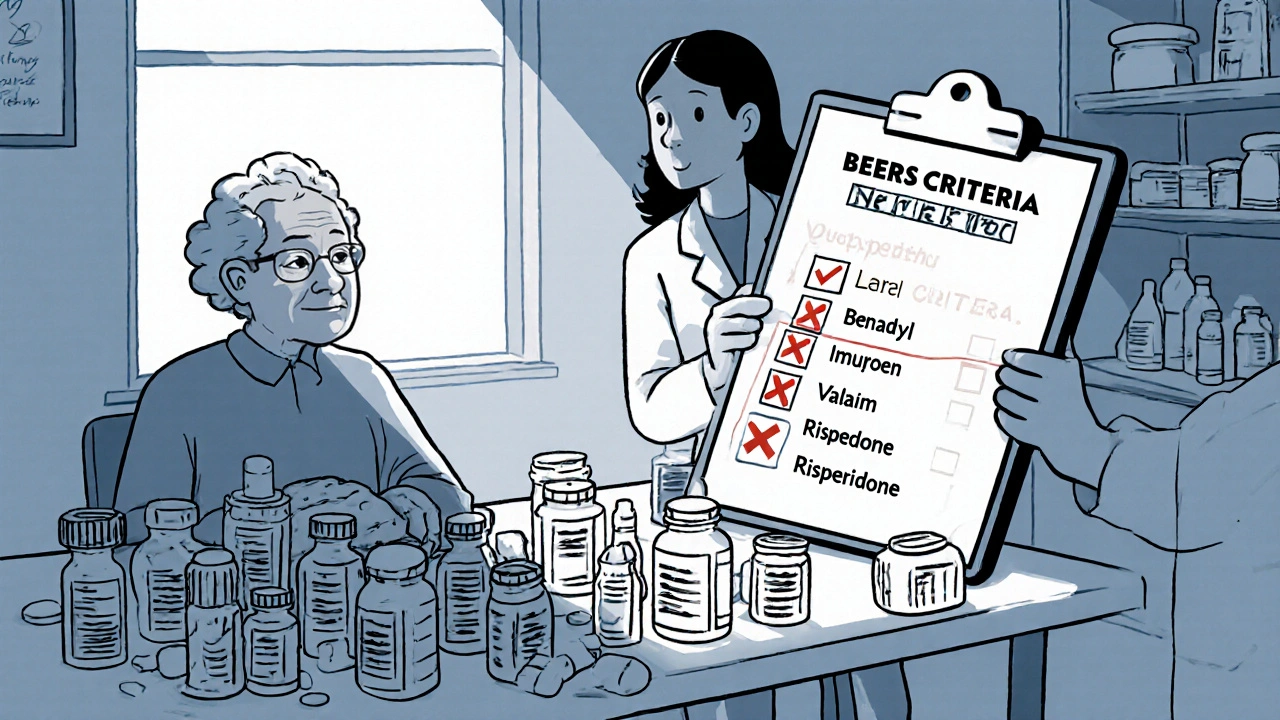
The Beers Criteria identifies medications that pose more risks than benefits for seniors. Learn which common drugs to avoid, why they're dangerous, and what safer alternatives exist for older adults.
Geriatric Prescribing: Safe Medication Use for Older Adults
When it comes to geriatric prescribing, the process of selecting and adjusting medications for older adults, often with multiple chronic conditions. Also known as prescribing for the elderly, it’s not just about treating disease—it’s about keeping people functional, independent, and safe. People over 65 take, on average, four to five prescription drugs every day. That number jumps to eight or more for those in long-term care. Each pill adds risk: dizziness, falls, confusion, kidney stress, or dangerous interactions. The goal isn’t to cut meds blindly—it’s to match each drug to real needs, reduce harm, and stop what doesn’t help anymore.
One of the biggest problems is polypharmacy, the use of five or more medications at once. Also known as multiple drug use, it’s common because doctors treat each condition separately—heart, diabetes, arthritis, sleep—but rarely look at the whole picture. A blood pressure pill might make someone dizzy. An antacid could block absorption of a bone drug. An antidepressant might worsen glaucoma. These aren’t rare mistakes. They’re routine. Studies show nearly half of older adults on multiple drugs have at least one potentially inappropriate medication, according to guidelines like the Beers Criteria. That’s why drug interactions, when two or more medications affect each other’s action or increase side effects. Also known as medication conflicts, they’re not just a footnote—they’re the main threat in geriatric prescribing. And it’s not just about prescriptions. Over-the-counter painkillers, sleep aids, and herbal supplements like ginkgo or St. John’s wort can be just as risky when mixed with prescription drugs.
Another hidden factor is how the body changes with age. age-related drug metabolism, the way the liver and kidneys process and clear medications over time. Also known as pharmacokinetic changes, it means drugs stay in the system longer, build up faster, and hit harder. A dose that was fine at 50 might be too strong at 75. That’s why starting low and going slow isn’t just advice—it’s the rule. Many drugs commonly prescribed to seniors—like benzodiazepines for anxiety or anticholinergics for overactive bladder—should be avoided entirely because safer alternatives exist. But too often, they’re kept on autopilot, even when symptoms fade.
This collection of posts doesn’t just list problems—it shows you how to fix them. You’ll find real examples: how to spot a dangerous interaction between an antidepressant and a painkiller, why a simple refill-by date can prevent a hospital visit, how to use visual dosing tools to avoid mistakes, and what to ask your pharmacist when a new med is added. You’ll learn which meds are most likely to cause confusion or falls, how to simplify a cluttered pill schedule, and when to push back on a prescription that doesn’t add value. These aren’t theory pieces. They’re tools used by pharmacists, caregivers, and informed patients to make daily medication use safer and smarter. Whether you’re managing your own meds, helping a parent, or advising a senior, what follows will help you cut through the noise and focus on what actually matters: keeping older adults healthy, not just medicated.