
Sodium Impact Calculator
Estimate how your daily sodium intake affects moon face symptoms. Based on clinical guidelines for corticosteroid patients.
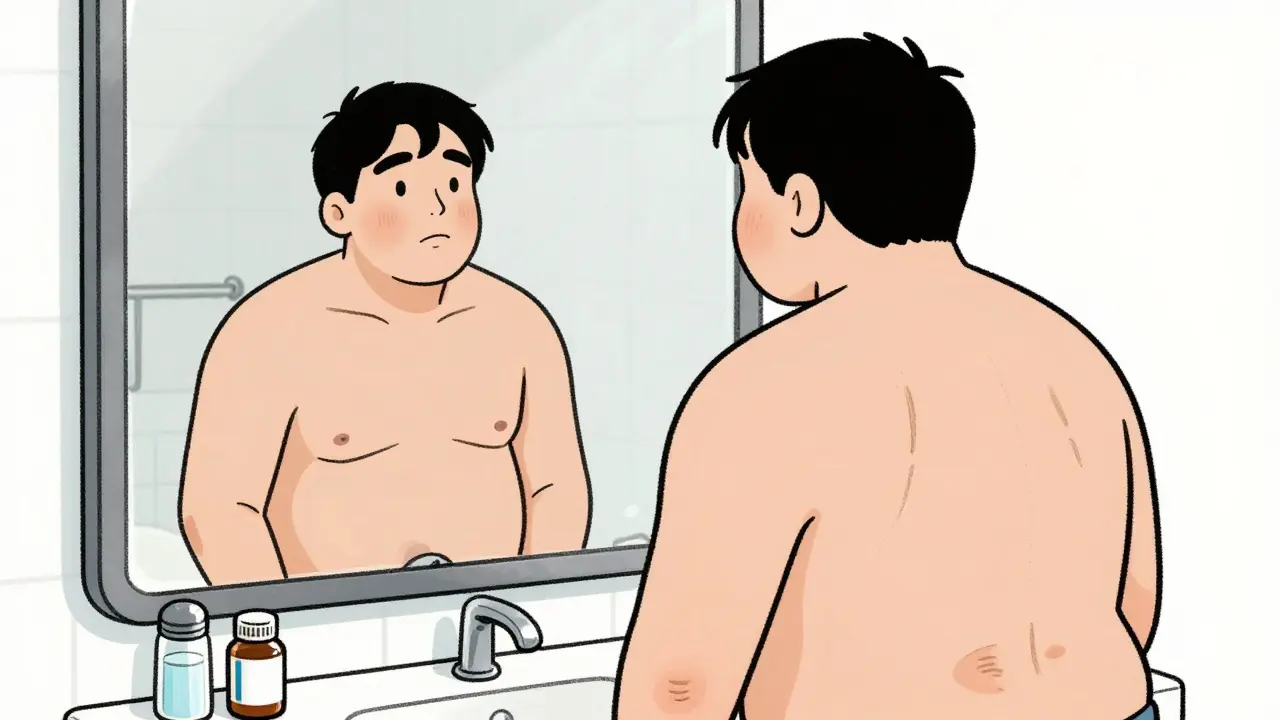
When you're taking corticosteroids like prednisone to manage a chronic condition-whether it's rheumatoid arthritis, lupus, or inflammatory bowel disease-you're not just fighting inflammation. You're also fighting changes to your own body. One of the most visible and distressing side effects is moon face: a round, puffy, swollen appearance that makes your cheeks look fuller, your jawline blurrier, and your reflection unfamiliar. It's not just cosmetic. For many, it's a daily reminder that their treatment is changing them in ways they didn't sign up for.
Why Moon Face Happens
Moon face, or Cushingoid facies, isn't caused by gaining fat all over your body. It's about fat redistribution. Corticosteroids mimic cortisol, your body's natural stress hormone. When you take them long-term-usually more than three months-your body starts storing fat differently. Fat moves from your arms and legs to your face, neck, and upper back. At the same time, your kidneys hold onto more sodium and water, adding to the puffiness. The result? A face that looks swollen, full, and oddly symmetrical.This isn't random. Studies show that about 25-30% of people on long-term glucocorticoid therapy develop visible facial changes. The risk goes up with dose: if you're taking more than 7.5 mg of prednisone daily, your chances increase. Higher doses-like 30 mg or more-can push the incidence to over 40%. Women and younger adults are more likely to notice it, possibly because of how fat is naturally distributed in their bodies.
It’s Not Just Your Face
Moon face doesn’t happen alone. It’s part of a bigger picture. Along with facial swelling, you might notice:- Weight gain around the abdomen
- A fatty hump between your shoulders (buffalo hump)
- Thinner skin that bruises easily
- Acne or oily skin
- Muscle weakness, especially in your arms and legs
These changes aren’t just annoying-they’re signals. High cortisol levels from steroids can lead to insulin resistance, which increases your risk of developing steroid-induced diabetes. That’s why doctors recommend checking your blood sugar every 3 to 6 months if you’re on long-term therapy. Moon face might look like a cosmetic issue, but it’s often the first visible sign of deeper metabolic disruption.
What You Can Do: Realistic, Evidence-Based Strategies
There’s no magic fix. You can’t instantly reverse moon face with a quick diet or exercise routine. But you can slow it down, reduce the swelling, and make it less noticeable. Here’s what actually works:1. Cut Back on Sodium
Sodium is the biggest driver of fluid retention. Every gram of salt you eat pulls in about 200 ml of water. If you’re on prednisone, your body is already holding onto extra fluid. Adding salt makes it worse.The NHS and Cleveland Clinic both recommend limiting sodium to under 1,500 mg per day. That’s less than half the average American intake. Read labels. Avoid processed foods-soups, canned veggies, deli meats, frozen meals, and even bread can be loaded with sodium. Cook at home using fresh ingredients. Use herbs, lemon juice, or vinegar instead of salt for flavor.
2. Drink More Water
This sounds backward, but it works. When your body thinks it’s dehydrated, it holds onto every drop of water it can. Drinking enough water-aim for at least 2 liters daily-tells your kidneys to flush out excess sodium and fluid. One study found that 72% of patients who drank 2-3 liters of water daily saw noticeable reduction in facial swelling within 10-14 days.3. Eat Potassium-Rich Foods
Potassium helps your body get rid of sodium. Bananas, spinach, sweet potatoes, avocados, and beans are all good sources. They won’t magically erase moon face, but they help balance your electrolytes and reduce water retention. Try adding one potassium-rich food to each meal.4. Stay Active-But Smart
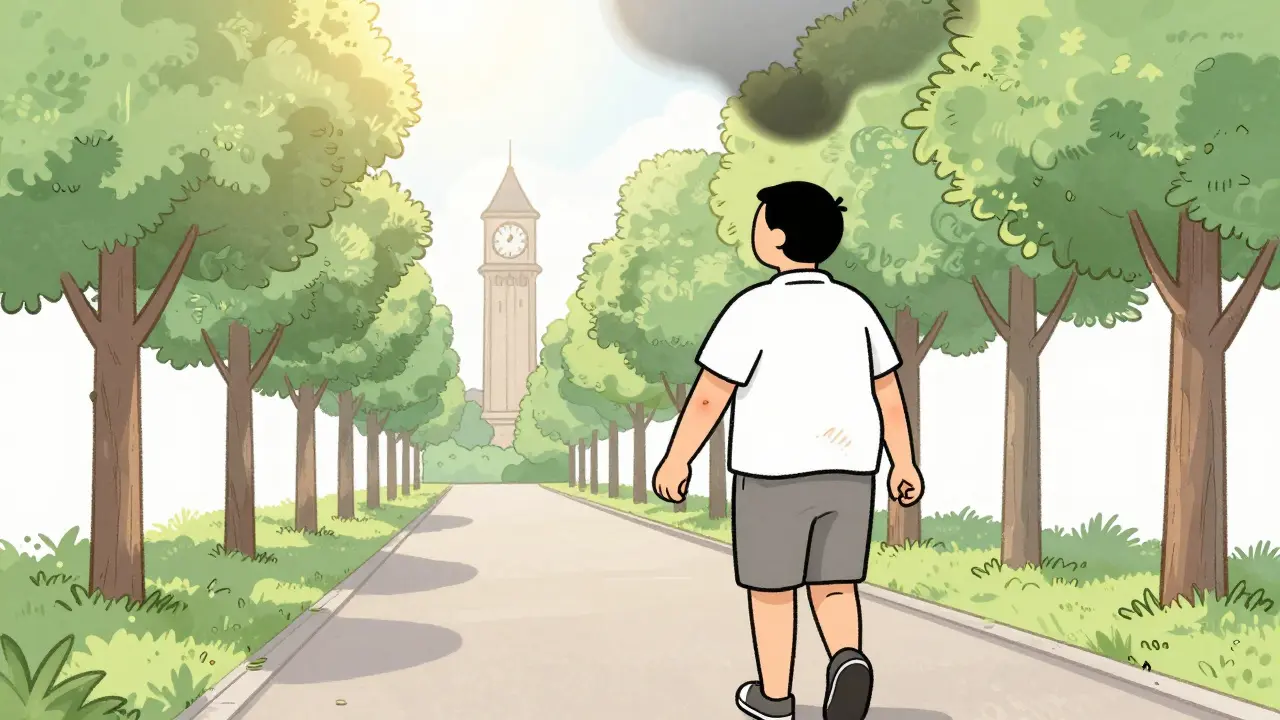
Corticosteroids weaken muscles and can cause fatigue. That doesn’t mean you should sit still. Gentle movement helps circulation and reduces fluid buildup. Walking, swimming, or light resistance training (like band exercises) can help. Avoid intense workouts that raise your heart rate too much-those can trigger more fluid retention. Aim for 30 minutes most days, even if it’s just a slow walk around the block.5. Don’t Stop or Reduce Steroids on Your Own
This is critical. If you cut your dose too fast, your body won’t be able to produce its own cortisol. That can lead to adrenal crisis-low blood pressure, fainting, vomiting, even death. Always taper under your doctor’s supervision. Even if you’re frustrated with how you look, don’t skip doses or quit early. The risk of your original condition flaring up is often worse than the side effects.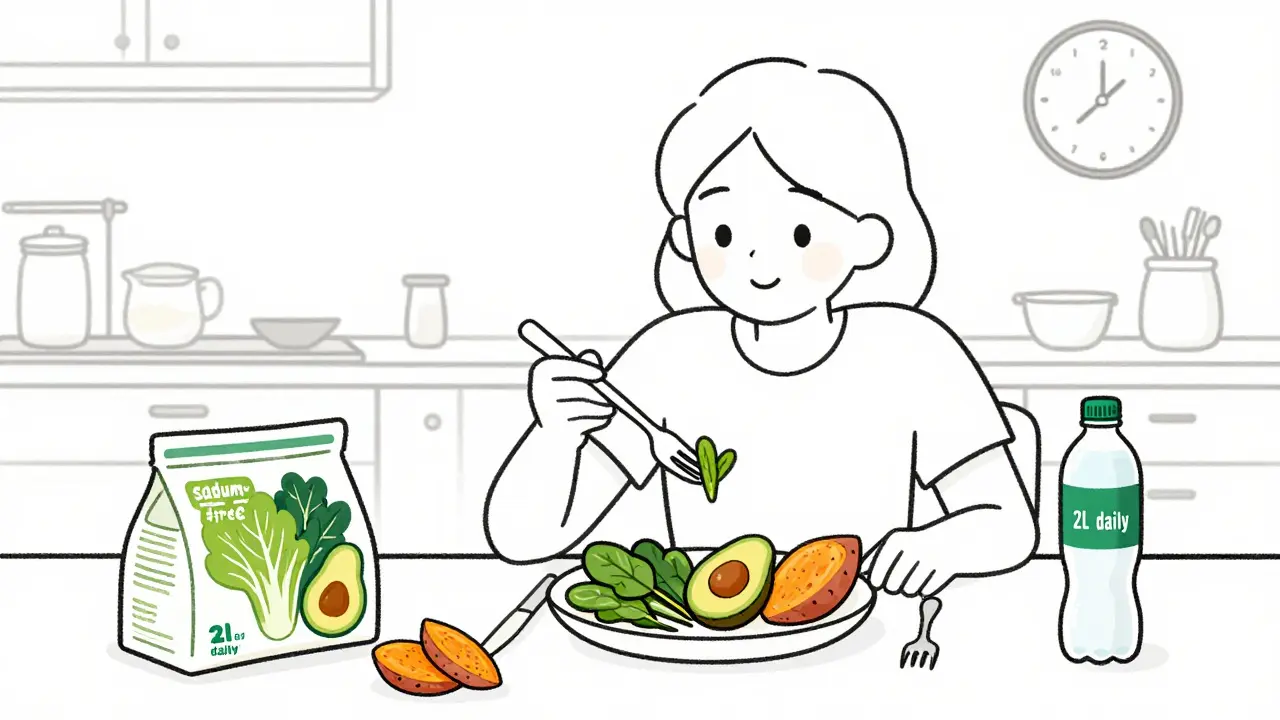
How Long Does It Last?
The good news? Moon face usually goes away after you stop the medication. But it takes time. Most people see improvement within 6 to 12 months after stopping steroids. The longer you were on them, the longer it takes. If you were on high doses for over a year, it might take 18 months or more. Patience is part of the treatment.Psychological Impact Is Real
It’s not just about looks. Studies show that moon face causes real emotional distress. People report avoiding mirrors, skipping social events, and feeling ashamed. One patient on a Crohn’s disease forum said, “I avoided family gatherings for months because I didn’t recognize myself.”Research confirms this: patients with visible steroid side effects are more likely to stop their medication. In one study, 23% of people with inflammatory bowel disease stopped taking their steroids because they couldn’t handle how they looked. That’s dangerous. Stopping treatment can lead to hospitalization or worse.
Psychological support matters. Talking to a counselor, joining a patient group, or even just sharing your experience with others who get it can help. The Cushing’s Support & Research Foundation reports that nearly half of their members sought counseling specifically for body image issues caused by steroid side effects.
What’s on the Horizon?
Scientists are working on new steroids that don’t cause these side effects. Selective glucocorticoid receptor modulators (SEGRMs) are in late-stage trials and show promise-reducing moon face by over 60% compared to traditional steroids. But these aren’t available yet. For now, the best tools we have are dose control, diet, hydration, and time.When to Call Your Doctor
Not all swelling is harmless. If you notice:- Sudden, severe headaches
- Blurred vision
- Slow-healing cuts or infections
- Unexplained weight gain (more than 5 lbs in a week)
contact your doctor. These could be signs of Cushing’s syndrome from overproduction of cortisol-not just from medication. It’s rare, but serious.
Can moon face be prevented completely?
No, moon face can't be completely prevented if you're on long-term corticosteroids. It's a direct result of how these drugs affect fat distribution and fluid balance. But you can reduce its severity by lowering sodium, drinking plenty of water, and keeping your steroid dose as low as possible under medical supervision.
Will I lose the weight if I stop taking steroids?
Yes, most of the weight gain from steroids-including moon face-reverses after you stop taking them. Fluid retention fades within weeks, and fat redistribution gradually improves over 6 to 12 months. The timeline depends on how long and how much you were taking. Some people see noticeable changes in 2-3 months; others need a full year.
Does cutting salt really help with facial swelling?
Yes, cutting salt is one of the most effective things you can do. Sodium causes your body to hold onto water, and steroids make that worse. Limiting sodium to under 1,500 mg per day has been shown to reduce facial puffiness in 72% of patients within two weeks. Avoid processed foods, canned soups, and salty snacks.
Can exercise make moon face worse?
Intense workouts can temporarily increase fluid retention and swelling, especially if you're dehydrated or eating too much sodium. But gentle movement-like walking, swimming, or light resistance training-helps circulation and reduces fluid buildup. Avoid high-intensity cardio or heavy lifting until your dose is lowered and your body adjusts.
Is moon face dangerous?
Moon face itself isn’t dangerous-it’s a side effect, not a disease. But it’s a warning sign. It often comes with other issues like high blood sugar, muscle weakness, or high blood pressure. If you have moon face and are on long-term steroids, your doctor should monitor you for metabolic problems like steroid-induced diabetes or osteoporosis.

9 Comments
Lyle Whyatt
February 8 2026
Man, I didn’t realize how much moon face was just the tip of the iceberg until I read this. I’ve been on prednisone for 18 months for my ulcerative colitis, and yeah, my face looks like I’ve been inflated by a balloon pump-but it’s the buffalo hump that really got me. I used to wear t-shirts, now I need button-ups to hide the lump between my shoulder blades. And the skin? Bruises like I’m 90 and fell down the stairs every other day. The sodium thing? Total game-changer. I cut out the canned soup, the frozen meals, even the bread-I started baking my own with no salt. Within two weeks, my cheeks didn’t look like overinflated balloons anymore. Not gone, but better. And drinking two liters of water a day? Feels weird at first, but your body stops hoarding fluid like it’s the last drop in the desert. It’s not a cure, but it’s a fight you can actually win.
Also, emotional stuff hits hard. I avoided my niece’s birthday party because I didn’t recognize myself in the group photo. Felt like a stranger in my own skin. Talking to others who get it? That’s the real medicine.
Still waiting on those SEGRMs. Can’t wait till we don’t have to choose between living and looking like a Cushing’s poster child.
Sam Dickison
February 9 2026
Just wanna clarify one thing real quick-moon face isn’t fat gain, it’s fat redistribution + fluid retention. Cortisol upregulates PPARγ in adipocytes, which shifts lipid storage to visceral and facial depots. Sodium retention? That’s aldosterone-mediated via mineralocorticoid receptor cross-talk. You can’t just ‘diet it out’-you gotta manage the hormonal cascade. That’s why hydration + potassium is more effective than keto or intermittent fasting. Also, 1500mg Na is aggressive. Most guidelines say 2300mg max, but for steroid users? Yeah, go lower. Evidence supports it.
Brett Pouser
February 10 2026
As someone from the Midwest who’s been on prednisone for lupus since 2020, I feel you. I didn’t think anyone else got it-the way your own reflection feels like a betrayal. But here’s the thing: the more you talk about it, the less alone you feel. I started a little Instagram page just posting selfies with captions like ‘This is what remission looks like.’ Got a few hundred followers. Mostly other steroid warriors. We don’t post filter-free selfies to be ‘humble’-we post them to say: I’m still here. Still fighting. Still me. And yeah, my face looks weird. But so does my IV drip. So does my scar. So does my life. And we’re still here.
Also, potassium-rich foods? Sweet potatoes for breakfast. Spinach in my smoothie. Avocado on everything. It’s not magic. But it’s something. And that’s enough.
Simon Critchley
February 12 2026
OH MY GOD YES. I’ve been on 20mg of prednisone for 3 years. Moon face? More like ‘Moon Face + Buffalo Hump + Oily Skin + Bruise City’. I’ve got the full Cushing’s buffet. And guess what? I’ve been drinking 3L of water a day since January. My face? Down 30%. Not gone. But noticeably less puffy. Sodium? Cut to 1200mg. No more deli meat. No more soy sauce. I cook with garlic, smoked paprika, and lime juice like it’s a religion. And I swear-my skin cleared up. No more acne. No more ‘I look like I’m 16 and in a horror movie’ vibes.
Also, exercise? I do 30 min of resistance bands every morning. Not because I wanna be jacked. Because I wanna stop losing muscle in my arms. I can’t lift my coffee cup without my biceps screaming. So yeah. Move. Gently. Smart. Not ‘go to the gym and deadlift 300lbs’-that’s just asking for a fracture.
And NO, you can’t ‘just stop’ steroids. I tried. Almost died. Adrenal crisis? Not a vibe. Trust me. Taper. Slow. With your doc. Or don’t live to regret it.
John McDonald
February 13 2026
Just want to say-this post is exactly what people need. No fluff. No BS. Just straight-up science with real-life tactics. I’ve been on steroids for RA since 2018. I didn’t know any of this. I thought ‘just eat less’ would fix it. Nope. Sodium was the killer. I was eating 4000mg+ a day. Now I’m at 1400. My ankles don’t swell anymore. My face? Still there, but softer. And I’m drinking water like it’s my job. I even got a 2L bottle with time markers. It’s weirdly satisfying. Also, walking 45 min a day-no running, no intense stuff-just slow, steady movement. It helps circulation. Helps everything. And yeah, the emotional toll? Real. I cried looking at my wedding photo last week. But I’m still here. Still alive. Still fighting. And that’s what matters.
Joseph Charles Colin
February 13 2026
Let’s be clear: steroid-induced metabolic syndrome is a thing. Moon face is a biomarker for insulin resistance. Fasting glucose and HbA1c should be monitored every 3 months. If you’re on >7.5mg/day prednisone for >3 months, you’re in the high-risk cohort for new-onset diabetes. The mechanism? Gluconeogenesis upregulation + peripheral insulin resistance. This isn’t just ‘weight gain’-it’s a systemic endocrine disruption. That’s why lifestyle mods matter. Sodium restriction reduces plasma volume expansion. Potassium counters aldosterone. Hydration reduces ADH-driven fluid retention. It’s not anecdotal. It’s pathophysiology.
John Sonnenberg
February 14 2026
I HATE THIS. I HATE HOW I LOOK. I HATE THE MIRROR. I HATE THE PHOTOS. I HATE WHEN PEOPLE SAY ‘YOU LOOK HEALTHY!’ LIKE THAT’S A COMPLIMENT. I’M NOT HEALTHY. I’M A WALKING SIDE EFFECT. I’M A HUMAN VERSION OF A CUSHING’S SYNDROME DIAGRAM. I CAN’T WEAR A T-SHIRT. I CAN’T SMILE WITHOUT FEELING LIKE A CLOWN. I CAN’T GO OUT. I CAN’T BE ME. I’M NOT A PATIENT. I’M A SYMPTOM. AND I’M SO. TIRED. OF. BEING. A. SIDE. EFFECT.
Joshua Smith
February 14 2026
Just wanted to say thanks for the practical advice. I’ve been on low-dose prednisone for 14 months and didn’t realize how much sodium was hiding in ‘healthy’ foods. I started reading labels like a detective. Turned out my ‘low-sodium’ soup had 800mg per serving. Who knew? Now I make my own broth with herbs and lemon. It’s not perfect, but it’s mine. And I’ve been drinking water like a man possessed-2.5L a day. My face isn’t gone, but it’s… less moon-like. More like… me. Still working on the emotional stuff. It’s slow. But I’m trying.
Jessica Klaar
February 16 2026
I’m a nurse who’s been on prednisone for 5 years. I’ve seen this side effect in patients. I’ve lived it myself. The worst part? No one talks about it. We talk about infections, bone loss, diabetes-but not the face. Not the shame. Not the way your child looks at you and asks, ‘Mommy, why do you look like that?’
I started a small support group in my hospital. We meet once a month. No doctors. Just us. We share photos. We cry. We laugh. We swap recipes. We say: ‘I see you.’ And that’s more powerful than any drug. The science helps. But the humanity? That’s what keeps us alive.