
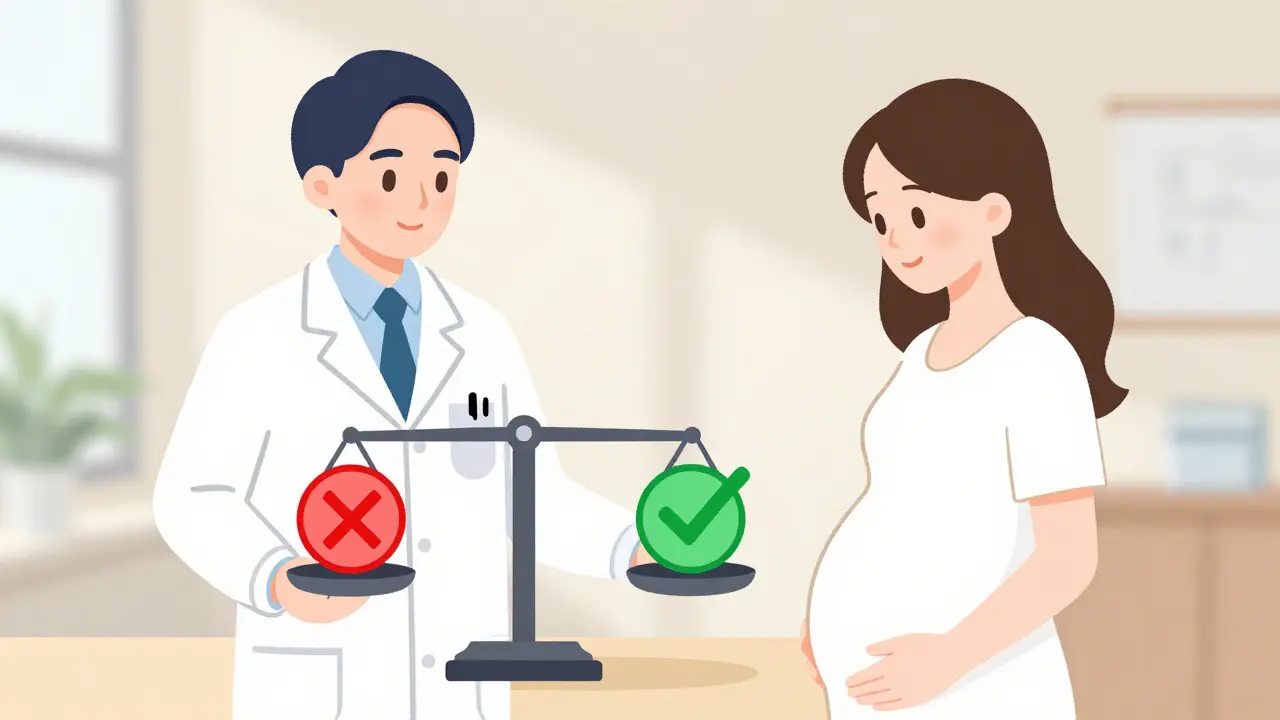
Statins During Pregnancy Risk Calculator
This tool calculates your potential risk based on current medical evidence. Always consult your healthcare provider for personalized advice.
Your Personalized Risk Assessment
Background risk of major birth defects: 3-5%
Your statin-related risk: 0%
Relative risk: 1.07 (95% CI 0.85-1.37)
Based on 2021 FDA review of 1,152 statin-exposed pregnancies and 886,996 controls showing no significant increase in birth defects. This tool is for informational purposes only and does not replace medical advice.
Statins and Pregnancy: A Changing Landscape
For years, doctors told women to stop statins before getting pregnant. But in 2021, the U.S. Food and Drug Administration FDA U.S. Food and Drug Administration changed its stance after reviewing decades of data. What does this mean for you? If you're taking statins and planning a pregnancy-or already pregnant-the risks aren't as clear-cut as once believed. statins during pregnancy used to be strictly forbidden, but new evidence shows a more nuanced story. Let's break down what you need to know.
What Are Statins and Why Were They Banned During Pregnancy?
Statins Cholesterol-lowering medications are drugs like atorvastatin or simvastatin that lower LDL "bad" cholesterol. They work by blocking an enzyme in the liver called HMG-CoA reductase. For decades, they were labeled unsafe during pregnancy. Why? Early animal studies showed birth defects at very high doses. The FDA even gave them "Pregnancy Category X"-the strictest warning, meaning risks clearly outweighed benefits.
But animal studies don't always translate to humans. Statins were never tested in pregnant women due to ethical concerns. So doctors followed the label: stop statins before conception. This left women with serious heart conditions in a tough spot. For example, someone with familial hypercholesterolemia (FH) might have LDL levels over 300 mg/dL. Stopping statins could mean a heart attack during pregnancy. That's why the FDA's 2021 update matters.
New Evidence: What the Research Says Now
In 2021, the FDA removed the strongest warning after reviewing large human studies. The biggest one? A 2015 analysis of 1,152 statin-exposed pregnancies. Compared to 886,996 matched controls, the risk of birth defects was almost identical: relative risk of 1.07 (95% CI 0.85-1.37). That means no statistically significant increase. Another study in JAMA Network Open Medical journal (2021) looked at over 1.4 million pregnancies. Only 469 were statin-exposed. They found no higher risk of congenital malformations.
What about specific defects? Researchers checked heart problems, neural tube defects, and limb abnormalities. No clear link emerged. A 2025 European study of 805,368 pregnancies in Norway confirmed this. First-trimester statin exposure didn't raise birth defect risks. The FDA concluded statins have "limited potential to cause malformations" in humans. But they still advise stopping statins for most pregnant women-except high-risk cases.
Risks and Realities: What's Actually Safe?
While major birth defects don't seem linked to statins, other risks need attention. The same 2021 JAMA study found statin-exposed babies were more likely to be born early (preterm) or have low birth weight. But these outcomes often tie to the mother's underlying health. Women with severe cardiovascular disease or FH are already at higher risk for preterm birth. It's hard to separate statin effects from their condition.
Here's a key fact: the background risk of major birth defects in any pregnancy is 3-5%. Statins didn't push this higher in studies. For example, a 2022 meta-analysis of 9 studies found no increase in stillbirths (odds ratio 1.30) or miscarriages. The real danger? Uncontrolled high cholesterol. LDL above 190 mg/dL can cause heart attacks in young women. For FH patients, stopping statins might be riskier than continuing them.
Planning for Pregnancy: What to Do Before and During
If you're on statins and thinking about pregnancy, start planning early. The American College of Obstetricians and Gynecologists (ACOG) recommends ACOG American College of Obstetricians and Gynecologists counseling at least 3 months before conception. For most women, stopping statins 1-2 months before trying is safe. But for those with FH or established heart disease, it's different.
Take Sarah's story. She has FH and an LDL of 320 mg/dL. Her doctor said, "Your risk of a cardiac event during pregnancy outweighs potential fetal risks." She stayed on atorvastatin 10mg throughout her pregnancy. Her baby was born healthy at 37 weeks. This isn't rare-about 12,000-15,000 U.S. pregnancies each year involve women taking statins at conception.
For high-risk cases, a team approach is key. Cardiologists, OB-GYNs, and maternal-fetal medicine specialists should collaborate. Monitoring includes monthly liver tests and ultrasounds to check fetal growth. The FDA says doctors should "consider ongoing therapeutic needs" for patients at very high cardiovascular risk. But for women without severe heart issues, discontinuation remains the standard advice.
Expert Opinions and Guidelines
Guidelines aren't uniform. The FDA's 2021 update was a big shift, but the European Medicines Agency (EMA) still has stricter warnings. They classify statins as "Category D"-meaning risks aren't ruled out. The European Society of Cardiology advises stopping statins "except in exceptional circumstances." Meanwhile, the American Heart Association supports the FDA's nuanced approach. Dr. Robert Harrington, former AHA president, said the update was "necessary but leaves doctors and patients to navigate complex decisions."
Dr. Cynthia Maxwell, a maternal-fetal medicine expert, adds: "The benefits of continuing statins must be weighed individually. First-trimester exposure is best studied, but second- and third-trimester data is limited." For most women, stopping before pregnancy is safest. But for those with life-threatening heart conditions, the calculus changes. A 2023 survey found 68% of obstetricians now say occasional first-trimester exposure is "unlikely to cause birth defects," up from 32% in 2019.
Current Research and Future Directions
Science is moving fast. The StAmP trial (NCT04879874) is testing pravastatin for preeclampsia prevention in high-risk pregnancies. Phase 2 results showed a 47% reduction in preeclampsia cases. This could expand statin use beyond cholesterol management. The FDA's 2023 guidance encourages developing pregnancy safety data for drugs like statins. Next up? The NIH-funded PRESTO study (2025-2027), tracking 5,000 pregnancies with statin exposure. It will provide detailed trimester-specific safety data.
By 2030, the American College of Cardiology predicts 15-20% of women with severe heart conditions will continue statins during pregnancy-up from less than 5% today. For now, the message is clear: don't panic if you took statins before knowing you were pregnant. Talk to your doctor. For high-risk women, the benefits might outweigh the risks. For others, stopping statins is still the safest path.
Are statins safe during pregnancy?
For most women, statins aren't recommended during pregnancy. But recent data shows they likely don't cause major birth defects. The FDA removed its strongest warning in 2021 after studies found no significant increase in congenital malformations. However, they still advise discontinuing statins for most pregnant women. For those with severe heart conditions or familial hypercholesterolemia, continuing might be safer than stopping. Always consult your doctor for personalized advice.
Can statins cause birth defects?
Current evidence says no. Large studies like the 2015 Medicaid cohort analysis (1,152 statin-exposed pregnancies) found a relative risk of birth defects of just 1.07-meaning almost identical to women not taking statins. A 2021 JAMA study of 1.4 million pregnancies also found no increased risk. The background rate of major birth defects is 3-5% in any pregnancy. Statins didn't push this higher. However, some studies suggest possible links to preterm birth or low birth weight, which may relate to the mother's underlying health condition.
When should I stop statins before getting pregnant?
For most women, stop statins 1-2 months before trying to conceive. This aligns with standard advice from the American College of Obstetricians and Gynecologists. But if you have severe heart disease or familial hypercholesterolemia, this may not apply. Work with your cardiologist and OB-GYN to create a plan. Some high-risk patients continue statins during pregnancy under close monitoring. Never stop or adjust statins without medical guidance.
What if I took statins before knowing I was pregnant?
Don't panic. Most women who took statins accidentally in early pregnancy have healthy babies. Studies show no significant increase in birth defects from first-trimester exposure. Contact your doctor immediately-they'll likely monitor your pregnancy more closely but won't recommend termination based on statin exposure alone. The American College of Obstetricians and Gynecologists confirms accidental statin use in early pregnancy doesn't warrant pregnancy termination.
Are there safer statins for pregnancy?
Pravastatin is often preferred for high-risk pregnancies because it's less likely to cross the placenta. The StAmP trial uses pravastatin for preeclampsia prevention. Atorvastatin is also studied but has higher placental transfer. However, no statin is "safe" for routine use during pregnancy. For most women, discontinuation is still best. For those who must continue, pravastatin is the go-to choice under specialist guidance. Always discuss options with your care team.

13 Comments
Savannah Edwards
February 6 2026
I have to say, this article really opened my eyes. I've been on statins for years and when I found out I was pregnant, I was terrified. But after talking to my OB and cardiologist, they said the risks are minimal. My baby is healthy now, and I'm so grateful for the updated guidelines. It's important to remember that each case is unique, though. For some women, stopping statins could actually be riskier. So please, don't make decisions based on fear alone. Consult your doctors, get the facts, and trust the process. It's all about balancing risks and benefits. I know it's scary to hear about birth defects, but the data shows the risk is very low. Studies like the one from JAMA looked at over a million pregnancies and found no significant increase. The background rate of birth defects is 3-5%, and statins didn't push that higher. For me, continuing my medication was the best choice. My doctor monitored me closely, and everything turned out fine. I'm so glad I didn't panic and stop them. It's crucial to have a plan with your healthcare team. Don't let fear make decisions for you. There's a lot of misinformation out there, but the science is clear. For women with high cholesterol or FH, the risks of stopping might be worse. I wish more people knew this. It's not about taking risks; it's about making informed choices. Trust your doctors and the data. You're not alone in this.
Eric Knobelspiesse
February 6 2026
Statins during pregnancy? Pffft. I heard some doc said it's safe now but I think they're all just tryna push meds. My cousin had a baby with birth defects after statins and now she's suing. But hey, whatever. #TinfoilHat
Heather Burrows
February 6 2026
Of course the FDA changed their stance. Big pharma has been pulling strings for decades. I can't believe people are still taking these drugs during pregnancy. It's irresponsible. My neighbor's baby had issues because of it. But hey, what do I know? Just a concerned citizen.
Ritu Singh
February 8 2026
Based on the comprehensive review of clinical data presented, it is evident that the risks associated with statin use during pregnancy are significantly lower than previously believed. However, individualized patient care remains paramount. For instance, in the Indian context, where cardiovascular diseases are increasingly prevalent among women of reproductive age, a balanced approach considering both maternal and fetal health is essential. Collaboration between cardiology and obstetrics specialists is crucial to ensure optimal outcomes.
Mark Harris
February 9 2026
Hey folks, the science is pretty clear now! Statins aren't as scary as we thought. For those with high cholesterol or FH, continuing them might be safer than stopping. Talk to your doc, but don't panic. We got this! 💪
Mayank Dobhal
February 10 2026
Statins safe? Sure. But I've seen too many cases where it went wrong. Trust me, better safe than sorry. Stop them. Period.
Marcus Jackson
February 10 2026
People don't realize the FDA's update was based on flawed data. Those studies had tiny sample sizes. Real risk is higher. I've read the actual papers. You're all being misled.
Natasha Bhala
February 11 2026
statins r safe during pregancy.
Gouris Patnaik
February 13 2026
India has always known the truth about statins. Western medicine is too quick to change guidelines. We must protect our children. Statins should never be used during pregnancy. It's a disgrace.
Jesse Lord
February 14 2026
i think its important to remember that for women with severe heart conditions stopping statins could be dangerous. the benefits often outweigh the risks. but everyone should get personalized advice. no one size fits all here.
AMIT JINDAL
February 15 2026
Oh, the FDA's update is just another example of how Western medicine lacks nuance. 🤦♂️ In India, we have a much better understanding of these matters. Pravastatin is the only safe option, and even then, it's only for the most critical cases. Most people don't need statins at all. This is why we need more research before blindly following guidelines.
Catherine Wybourne
February 16 2026
Ah yes, because nothing says 'safe pregnancy' like taking cholesterol meds. *sarcasm* But seriously, the data is reassuring. For those with FH, it's a no-brainer. Just make sure your doctor knows what they're doing. Otherwise, good luck.
Ashley Hutchins
February 17 2026
statins during pregnancy? I dont think so. the risks are way too high. my cousin had a baby with heart problems because of it. the FDA shouldnt have changed their stance. its reckless. people need to stop taking these drugs immediately.