
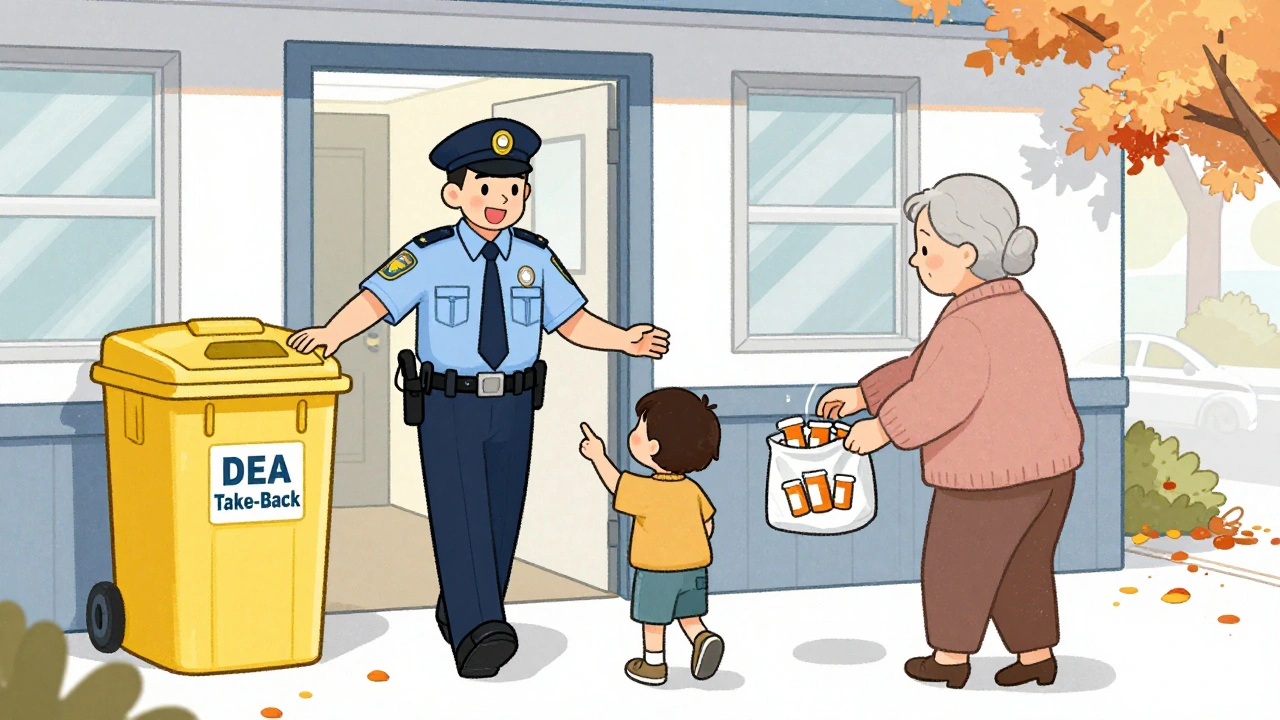
Every year, millions of unused or expired prescription drugs sit in bathroom cabinets, kitchen drawers, and medicine chests across the U.S. - many of them never making it to a safe disposal site. That’s where National Prescription Drug Take-Back Days come in. These events aren’t just convenient - they’re critical for keeping dangerous medications out of the wrong hands, protecting kids, preventing overdoses, and reducing environmental harm.
When and Where Do These Events Happen?
The National Prescription Drug Take-Back Day happens twice a year, on the last Saturday of April and October. The next one is on October 25, 2025, from 10 a.m. to 2 p.m. local time. You don’t need an appointment. You don’t need to show ID. You just show up with your old or unused pills, patches, or capsules. There are over 4,500 collection sites across the country. These aren’t random drop boxes - they’re run by local law enforcement. You’ll find them at police stations, sheriff’s offices, hospital pharmacies, and even some retail clinics. If you’re not sure where to go, the DEA’s official site, takebackday.dea.gov, has a searchable map. The Dispose My Meds app also works for real-time location updates.What Can You Drop Off?
You can bring almost any prescription medication that’s solid: pills, capsules, patches, even liquid medicines - as long as they’re sealed in their original containers. No need to remove labels. Just toss the whole bottle or box into the collection bin. Here’s what’s not accepted:- Syringes, needles, or other sharps
- Illicit drugs like heroin or cocaine
- Thermometers or medical devices
- Over-the-counter medicines (like ibuprofen or allergy pills)
- Chemotherapy drugs or radioactive substances
Why This Matters More Than You Think
In 2024, over 17 million Americans misused prescription drugs. Nearly 60% of them got those drugs from friends or family - often by taking them from a medicine cabinet. That’s not a statistic you can ignore. It’s your neighbor’s teen. Your cousin’s ex. Your own uncle who’s still holding onto painkillers from a surgery five years ago. The DEA collected over 620,000 pounds of unused medications during the April 2025 event alone. That’s more than 300 tons. Since 2010, the program has taken in nearly 10 million pounds total. Every pill that’s safely collected is one less pill that could end up in a child’s mouth, a teen’s backpack, or a drug dealer’s supply chain. And it’s not just about safety. Flushing pills down the toilet or tossing them in the trash pollutes waterways and soil. The DEA doesn’t incinerate these drugs - they’re destroyed under strict environmental protocols. That’s a small but real win for the planet.
What to Expect When You Show Up
You walk in. You hand over your meds. You’re done. That’s it. No questions asked. No forms to fill out. No judgment. Police officers and DEA agents are there to help, not to investigate. Most people spend less than two minutes at the site. You might see a table with brochures about safe storage or signs warning about opioid risks. Some sites - especially those attached to hospitals - offer short educational talks. But you don’t need to stay. You don’t even need to talk. Just drop the bag, walk out. If you’ve ever worried about what to do with your grandma’s leftover oxycodone, or your own unused antidepressants, this is your answer.What’s New in 2025?
The DEA has made some real changes to improve access. This year, they’re rolling out 120 mobile collection units - basically, vans that drive into rural towns where the nearest drop-off site might be 30 miles away. In pilot areas, participation jumped by 18%. They’re also testing a new feature: when you fill a prescription at certain hospitals, your electronic record will now prompt you to schedule a take-back drop-off. It’s still in beta, but it could change how people think about disposal - from an afterthought to a normal part of treatment. And while the event itself is only one day twice a year, more pharmacies are setting up permanent drop boxes. Walgreens and CVS now have over 1,200 permanent kiosks nationwide. These are open year-round, during store hours. If you can’t make the October event, you still have options.Why Not Just Flush Them or Throw Them Away?
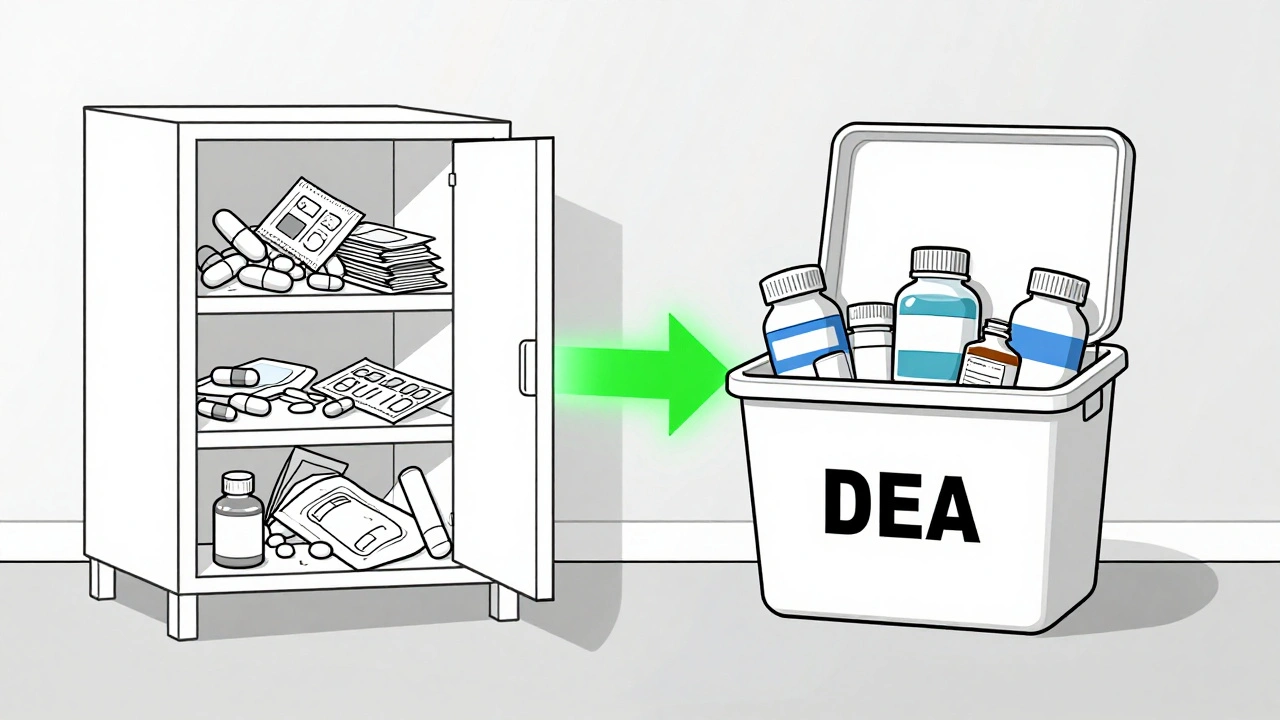
It’s tempting. You’ve got a drawer full of old meds. You don’t want to keep them. So you flush them. Or you toss them in the trash. Here’s why that’s risky:- Flushing contaminates drinking water. The EPA has found traces of pharmaceuticals in rivers and lakes across the country.
- Trash bins aren’t secure. Curbside collection can be dug through by animals or people looking for pills.
- It’s illegal in some states to dispose of controlled substances in the trash.
What If You Miss the Date?
You don’t have to wait six months. The DEA maintains over 14,000 permanent collection sites - mostly at pharmacies and law enforcement offices - that accept medications year-round. You can find them at deadiversion.usdoj.gov. Some states also have their own programs. In California, for example, pharmacies are legally required to offer take-back services. In New York, the state runs a mail-back program for residents. But nothing matches the scale and simplicity of the biannual event. It’s the one day when the whole country is focused on the same goal: getting dangerous drugs out of homes.What People Are Saying
On Reddit, users regularly share their experiences. One person wrote: “Dropped off my mom’s unused opioids at the police station - no questions asked, took two minutes. I know they won’t end up in a teen’s hands.” That’s the kind of feedback the DEA hears every year. The biggest complaints? Limited hours (only 4 a.m. to 2 p.m.), and not enough sites in rural areas. But with the new mobile units and permanent kiosks, those gaps are shrinking.Final Thoughts
National Prescription Drug Take-Back Days aren’t a magic fix. They won’t end the opioid crisis. But they’re one of the most effective, low-cost, and widely accessible tools we have to prevent harm before it starts. If you’ve got old prescriptions sitting around - even if they’re “just a few pills” - take them to a collection site. It’s quick. It’s free. It’s anonymous. And it might just save a life.Can I drop off medications from someone else’s prescription?
Yes. You can bring medications that belong to family members, friends, or even deceased loved ones. No proof of ownership is required. The goal is to remove unused drugs from homes - regardless of who they were prescribed to.
Do I need to remove the labels from my pill bottles?
No. Keep the labels on. The staff will handle the containers. Removing labels can actually slow things down. Just drop the whole bottle or box into the bin.
What if I have liquid medications like cough syrup?
Yes, you can bring liquid medications, but they must be in their original sealed containers. Do not pour them out or transfer them to another bottle. The collection bins are designed to safely hold sealed liquids.
Are there any medications that are too dangerous to bring?
No. If it’s a prescription medication - even if it’s a controlled substance like oxycodone or fentanyl patches - it’s safe to bring. The DEA and law enforcement are trained to handle all types of pharmaceuticals. Never hesitate to drop off something you’re unsure about.
Can I dispose of expired over-the-counter drugs at these events?
No. Take-Back Days only accept prescription medications. For over-the-counter drugs like pain relievers or allergy pills, check with your local pharmacy. Many offer separate OTC disposal bins, or you can dispose of them in the trash after mixing them with coffee grounds or cat litter to make them unappealing.
What happens to the drugs after they’re collected?
All collected medications are transported to licensed destruction facilities. They’re incinerated under strict environmental regulations to ensure no chemicals enter the air or water. The DEA requires full documentation and auditing of every batch to ensure compliance with federal law.

8 Comments
Paul Dixon
December 11 2025
Just dropped off my grandpa’s leftover oxy bottles last year. No questions, no forms, just walked in handed it over and left. Two minutes. Felt good knowing those pills aren’t sitting in his drawer waiting to be found by some curious teen.
Jean Claude de La Ronde
December 12 2025
so like… we’re supposed to trust the cops with our meds now? cool cool. next they’ll be collecting our toothpaste and telling us how to floss. also why is this a national event and not just… a thing pharmacies do every day? capitalism failed us again lol
Jim Irish
December 14 2025
This initiative saves lives. Simple as that. No grandstanding needed. The data speaks for itself. Communities are safer because people are disposing responsibly. Thank you to the officers and volunteers who make this possible.
Monica Evan
December 14 2025
Y’all gotta stop flushing meds like its a toilet emoji 😅 I used to do it too until my cousin’s dog got into the trash and ended up in the vet with a 200mg oxycodone belly. Now I use the take-back bins religiously. Even my 78yo mom does it. She calls it her ‘meds retirement plan’ 💉
Mia Kingsley
December 16 2025
Oh great another government program that costs millions and only works one day a year. And let me guess the DEA is gonna tell us what to do with our OTC ibuprofen next? Meanwhile my pharmacy has a drop box open 24/7 and nobody cares. This whole thing feels like performative activism with a badge
Aidan Stacey
December 17 2025
Let me tell you something real. I work in ER. I’ve seen kids overdose on pills they found in their own grandparents’ cabinets. I’ve held teenagers who didn’t know what they were taking. This isn’t about ‘safe disposal’ - it’s about preventing heartbreak before it happens. If you’ve got old meds? Bring them. Don’t wait. Don’t overthink it. Just go. One bottle could be the difference between a funeral and a birthday party.
Taylor Dressler
December 19 2025
For anyone wondering about liquid medications: yes, sealed bottles are accepted. No need to decant or transfer. Labels stay on. The bins are designed to contain liquids safely. Also, if you’re unsure whether something qualifies, bring it anyway. The staff will sort it. Better safe than sorry - and better safe than landfill.
Sylvia Frenzel
December 20 2025
Why are we spending taxpayer money on this? We’ve got real problems like border security and inflation. This is just feel-good nonsense. If people want to keep their meds, let them. It’s their business. The government doesn’t need to babysit our medicine cabinets.