
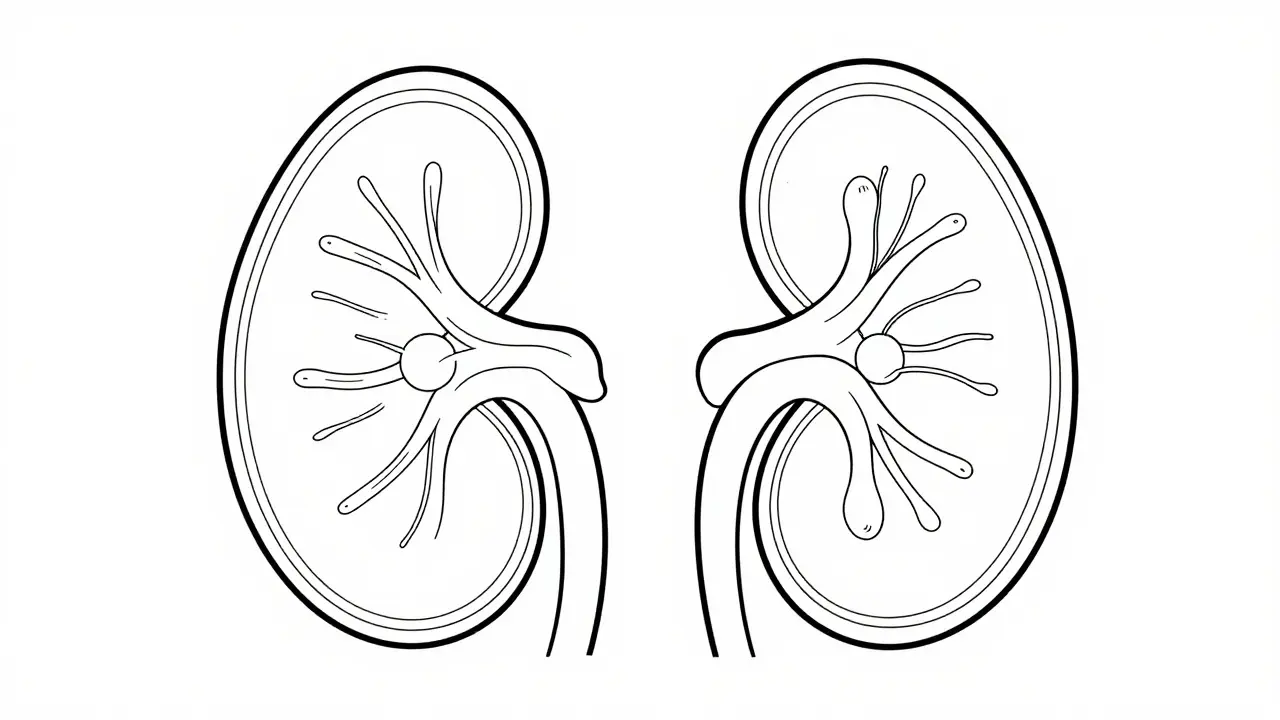
For decades, if you were diagnosed with IgA Nephropathy, also known as Berger's disease, your doctor’s advice was essentially "wait and see." You’d get blood pressure meds, maybe some steroids if things looked really bad, and then you’d hope for the best. That approach is dead.
The landscape of treating this autoimmune kidney disorder has shifted dramatically. With the release of the updated KDIGO 2025 Clinical Practice Guidelines, we are moving from passive monitoring to aggressive, simultaneous treatment. This isn't just a tweak; it's a paradigm shift that changes how we predict your future (prognosis) and what we do about it (therapy). If you or a loved one has been told they have IgA deposits in their kidneys, understanding these new rules is critical for protecting your long-term health.
Understanding the Enemy: What Is IgA Nephropathy?
To understand why the treatment changed, you first need to know what is actually happening inside your kidneys. IgA Nephropathy is an autoimmune condition. Normally, your immune system fights off infections. In IgAN, something goes wrong with immunoglobulin A (IgA), a type of antibody. These IgA molecules clump together into immune complexes and get stuck in the filtering units of your kidneys, called glomeruli.
This blockage causes inflammation. Over time, that inflammation scars the tissue. Scarred kidney tissue can't filter waste properly, leading to protein leaking into your urine (proteinuria) and eventually, kidney failure. It is the most common primary glomerulonephritis worldwide, affecting roughly 25-40% of people with primary kidney diseases in Western countries and up to 50% in Asian populations.
Most people find out they have it between adolescence and young adulthood. You might notice pink or cola-colored urine after a cold or stomach bug (macroscopic hematuria). Or, more commonly, you might never feel sick at all, and a routine urine test reveals microscopic blood and protein. The danger lies in its silence. Without intervention, up to 50% of patients with persistent protein progression to kidney failure within 10 to 20 years.
The New Prognosis Model: Risk Stratification
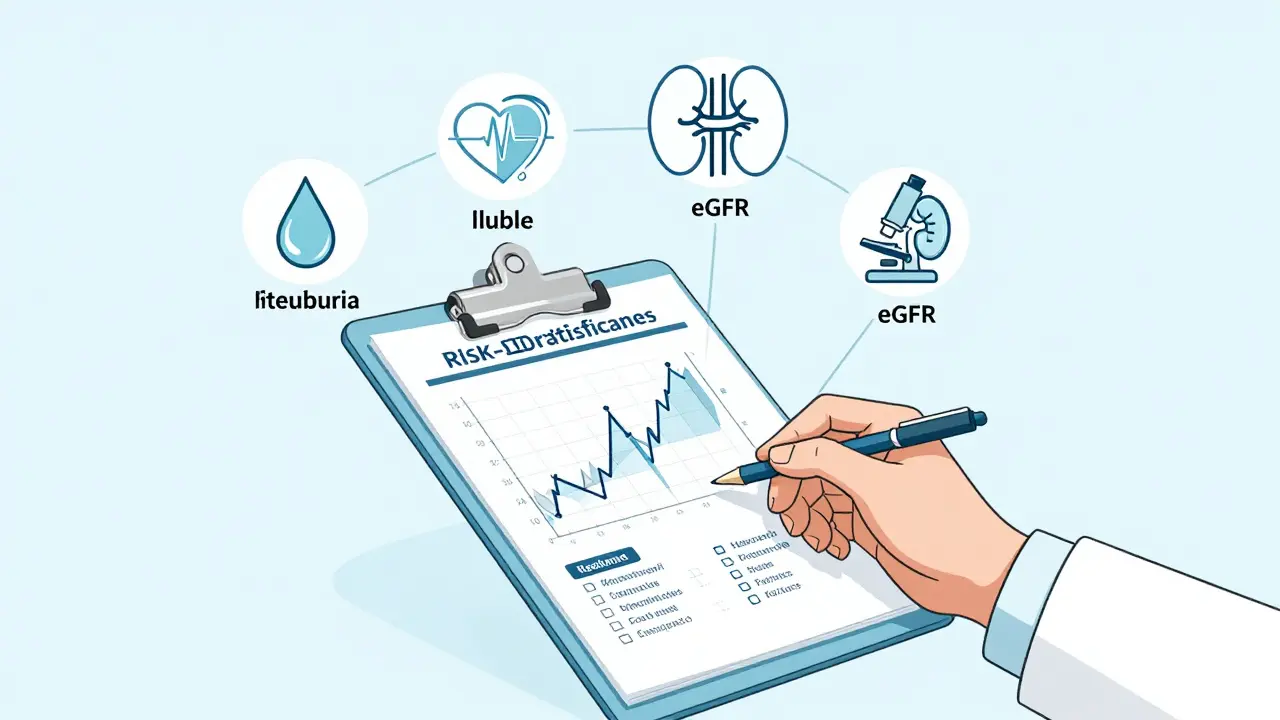
Old wisdom relied heavily on one number: your proteinuria level. The new KDIGO 2025 guidelines introduce a much more nuanced way to look at your risk. They use a clinical calculator that combines four key factors:
- Proteinuria: How much protein is in your urine?
- Blood Pressure: Is it well-controlled?
- eGFR: Your estimated glomerular filtration rate (kidney function).
- Oxford Classification (MEST-C): Specific findings from your kidney biopsy showing the extent of scarring and inflammation.
This combination allows doctors to categorize you as low, intermediate, or high risk for progressing to end-stage kidney disease (ESKD). Why does this matter? Because your treatment plan now depends entirely on this risk profile. High-risk patients don't wait. They get treated immediately and aggressively. Low-risk patients still need care, but it focuses on preventing generic kidney injury rather than heavy immunosuppression.
| Factor | What It Means | Impact on Prognosis |
|---|---|---|
| Persistent Proteinuria >1 g/day | High amount of protein leakage despite medication | Strong predictor of rapid decline |
| Uncontrolled Blood Pressure | Hypertension damaging kidney vessels | Accelerates scarring |
| Low eGFR (<60 mL/min) | Reduced kidney filtering capacity | Indicates existing damage |
| MEST-C Score (Biopsy) | Microscopy findings (Mesangial hypercellularity, etc.) | Reveals active inflammation vs. old scarring |
Current Therapies: The Dual Approach
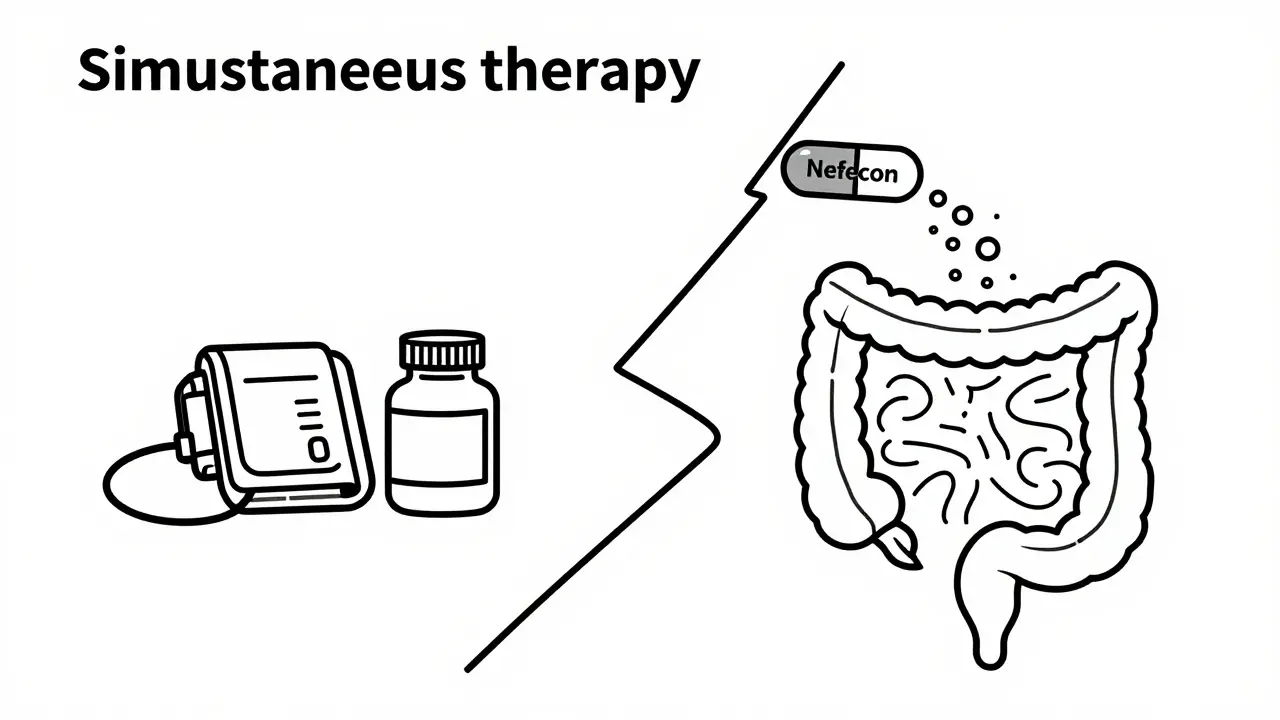
The biggest change in the 2025 guidelines is the concept of simultaneous therapy. Previously, doctors would give you three months of supportive care (blood pressure meds) and only add immunosuppressants if that failed. Now, for high-risk patients, you start both paths at once. Why? Because waiting those three months allowed the disease to keep damaging your kidneys unnecessarily.
The two paths are:
- Managing Generic Responses: Reducing pressure on the kidneys and lowering protein leakage.
- Managing IgAN-Specific Drivers: Stopping the production of the harmful IgA antibodies and reducing inflammation directly.
1. Supportive Care (The Foundation)
Every patient gets this, regardless of risk level. It involves:
- RAS Inhibitors: Drugs like ACE inhibitors (e.g., lisinopril) or ARBs (e.g., losartan). These lower blood pressure and specifically reduce proteinuria.
- SGLT2 Inhibitors: Originally diabetes drugs (like dapagliflozin or empagliflozin), these have proven highly effective in protecting kidneys from further damage in non-diabetic patients too.
- Dual Endothelin Receptor Antagonists (DEARA): Sparsentan is a newer drug approved for IgAN that targets two pathways involved in inflammation and fibrosis.
The goal here is strict control. The new target for proteinuria is less than 0.5 grams per day. This is stricter than the previous 1.0 gram target because data showed that even levels between 0.44 and 0.88 grams still led to kidney failure in 30% of patients over ten years.
2. Targeted Immunosuppression (The Heavy Hitters)
If you are high-risk, you add one of these to your supportive care:
Nefecon (Budesonide): This was the first FDA-approved drug specifically for IgAN (approved Dec 2023). Unlike traditional steroids that affect your whole body, Nefecon is designed to release budesonide directly in the distal ileum (part of the intestine). This is where many of the pathogenic IgA cells originate. By targeting the gut, it reduces systemic side effects like weight gain, bone loss, and infection risk. In trials, it significantly reduced proteinuria compared to placebo.
Systemic Glucocorticoids: Oral prednisone is still used, especially where Nefecon is unavailable or unaffordable. However, due to severe side effects, the guidelines recommend using the lowest effective dose for the shortest time (usually six months) and only in patients who can tolerate them.
Regional Variations: Treatment isn't one-size-fits-all globally. In Japan, tonsillectomy (removal of the tonsils) combined with steroids is a standard option, based on strong local evidence. In China, mycophenolate mofetil and hydroxychloroquine are frequently used and show efficacy in Asian populations, though data is less robust for other ethnic groups.
Barriers to Treatment: Cost and Access
While the science is advancing, the reality of getting treated is complex. The biggest hurdle right now is cost. Nefecon, for example, carries an annual list price of around $125,000 in the United States. Insurance denials are common, requiring extensive prior authorization appeals. According to patient surveys, nearly 70% of U.S. patients face initial insurance rejection for these newer therapies.
There is also a "treatment burden" issue. Managing multiple medications-blood pressure pills, SGLT2 inhibitors, and immunosuppressants-with complex dosing schedules can be overwhelming, especially for younger patients. Doctors must balance the urgency of saving kidney function with the quality of life during treatment.
What Does the Future Hold?
We are entering an era of personalized medicine for IgAN. Currently, we guess which drug will work best based on general risk profiles. But ongoing studies, like the TARGET-IgAN trial, aim to identify specific biomarkers that will tell us exactly which patient benefits from complement inhibition versus APRIL blockade versus targeted intestinal therapy.
Within five years, experts predict that treatment selection will be guided by your biological profile rather than just your clinical symptoms. Until then, the focus remains on early detection, aggressive proteinuria reduction, and minimizing toxicity. The goal is simple but ambitious: delay and prevent kidney failure across your entire lifetime.
Is IgA Nephropathy curable?
Currently, there is no cure for IgA Nephropathy. It is a chronic condition. However, with modern therapies like Nefecon and optimized supportive care, progression to kidney failure can often be slowed down significantly or halted entirely, allowing patients to live normal lifespans without dialysis.
What is the difference between Nefecon and regular steroids?
Regular steroids (like prednisone) circulate throughout your entire body, causing widespread side effects such as weight gain, high blood sugar, and increased infection risk. Nefecon is a targeted-release formulation of budesonide designed to act primarily in the gut, where pathogenic IgA is produced. This localized action aims to reduce kidney inflammation while minimizing systemic side effects.
How important is diet for IgA Nephropathy?
Diet plays a supportive role. A low-sodium diet helps control blood pressure, which is crucial for reducing kidney strain. Limiting protein intake may also help reduce proteinuria, though extreme restriction is not recommended without medical supervision. Omega-3 fatty acids have shown some promise in reducing inflammation, but they are not a replacement for prescribed medication.
Why did the KDIGO guidelines change in 2025?
The 2025 guidelines reflect new evidence that sequential treatment (waiting to see if blood pressure meds work before adding immunosuppressants) allows unnecessary kidney damage. The new approach advocates for simultaneous initiation of targeted therapies and supportive care for high-risk patients to stop disease activity immediately. It also lowers the proteinuria target to under 0.5 g/day for better long-term outcomes.
Can I get IgA Nephropathy from someone else?
No, IgA Nephropathy is not contagious. It is an autoimmune disorder caused by genetic and environmental factors that lead to abnormal IgA production. While it can run in families due to shared genetics, you cannot catch it from another person through contact or bodily fluids.
