
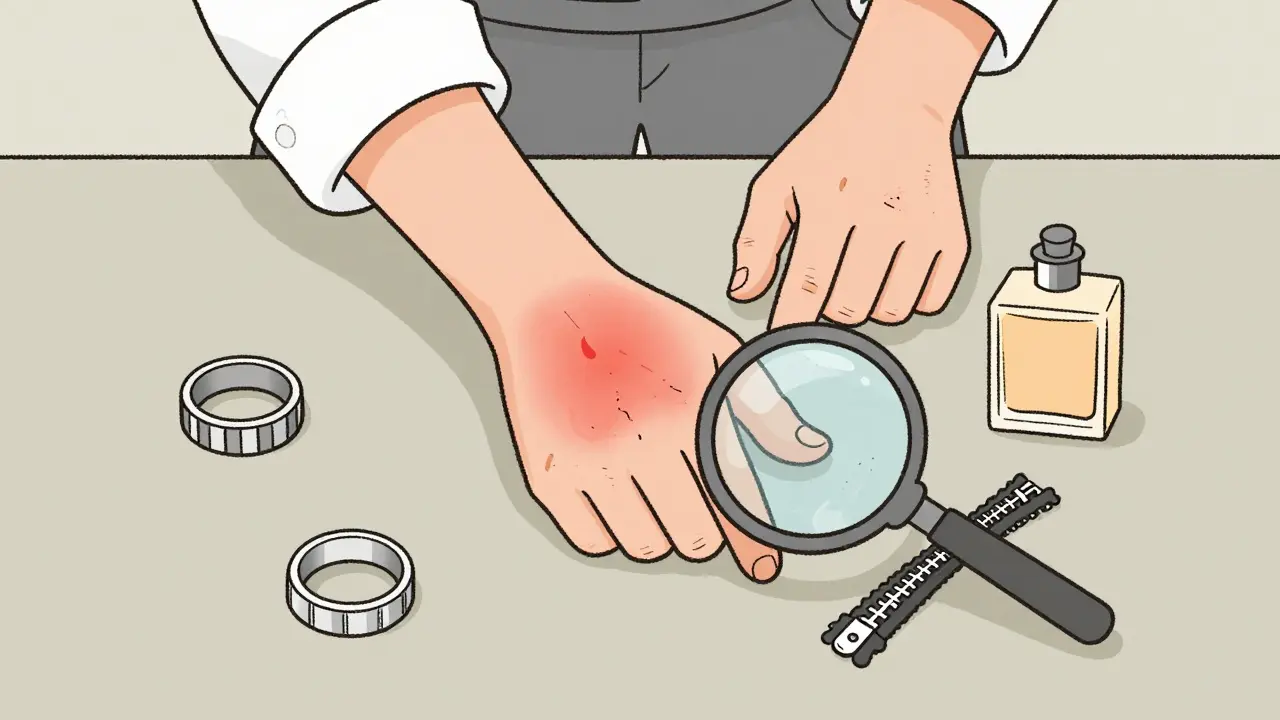
Over 13 million workers in the United States experience skin rashes from hidden allergens each year. For many, this isn't just a minor annoyance-it's a chronic condition that affects their daily lives. This condition is called allergic contact dermatitis (ACD), a delayed immune reaction to specific substances. Unlike simple skin irritation, ACD occurs when your body mistakes harmless chemicals for threats, triggering inflammation and rashes.
Allergic Contact Dermatitis is a skin condition caused by an immune reaction to specific chemicals. It affects about 20% of all contact dermatitis cases and can turn everyday items like jewelry or perfume into skin irritants.How Patch Testing Works
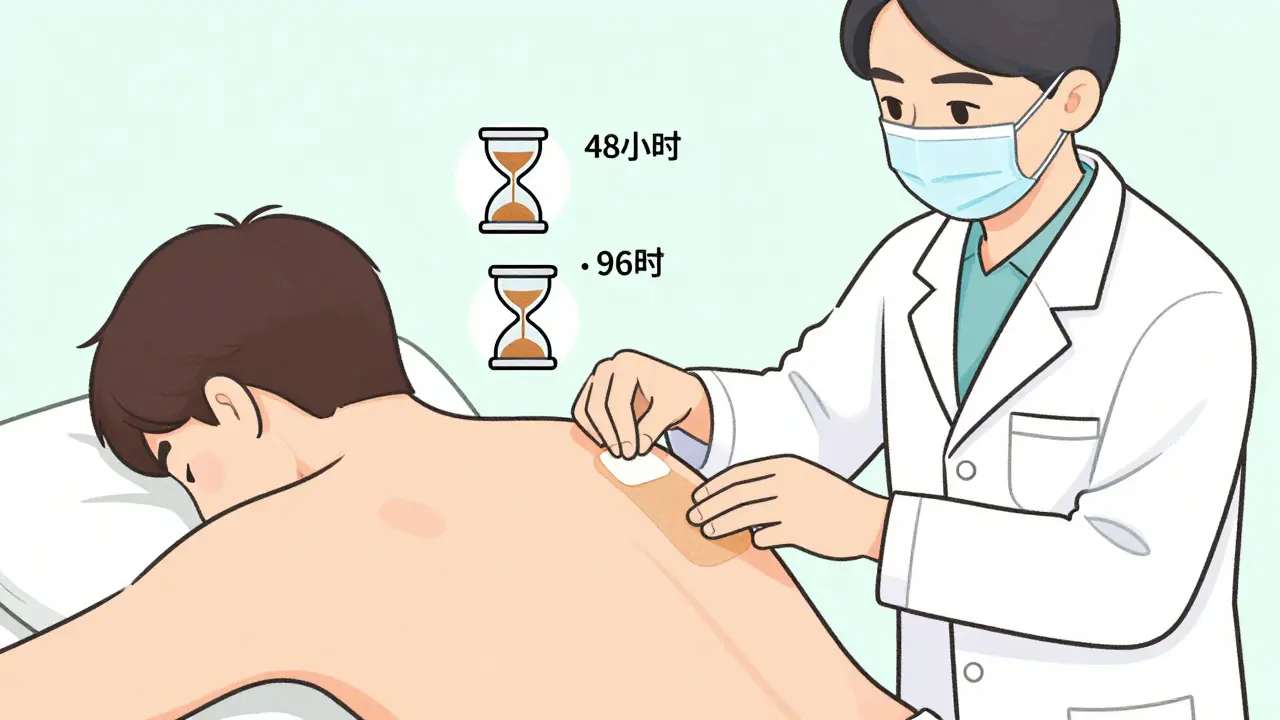
Patch testing is the gold standard for identifying allergens causing allergic contact dermatitis. This procedure involves applying small amounts of common allergens to your skin and monitoring reactions over several days. Here's what to expect:
- First visit: Patches with allergens are applied to your back.
- Wait 48 hours: Patches stay on for two days.
- Second visit: Read initial reactions.
- Third visit (after 96 hours total): Final evaluation for delayed reactions.
Patch testing has a sensitivity and specificity between 70% and 80%, making it highly reliable for diagnosing ACD. The standard TRUE Test panel includes 29 common allergens, but expanded panels can test up to 100 substances for complex cases.
Common Allergens and Where They Hide
While thousands of potential allergens exist, certain chemicals are responsible for most cases. Here's a breakdown of the most frequent triggers:
| Allergen | Common Sources | Prevalence in Positive Tests |
|---|---|---|
| Nickel sulfate | Jewelry, buttons, zippers, coins | 14.7% |
| Thimerosal | Vaccines, eye drops, some cosmetics | 5.0% |
| Cobalt chloride | Metal alloys, dental materials, cosmetics | 4.8% |
| Fragrance mix | Perfumes, lotions, shampoos | 3.4% |
| Balsam of Peru | Spices, foods, skincare products | 3.0% |
Dr. Jacob Thyssen, a leading ACD researcher at Copenhagen University Hospital, notes that 'nickel remains the most prevalent contact allergen globally, with legislative restrictions in the European Union reducing prevalence by 25% since 2004.' However, even with regulations, nickel allergies persist due to its widespread use in everyday items.
Practical Steps for Allergen Avoidance
Once you know your triggers, avoiding them is key. Here's how to get started:
- Read product labels carefully: Look for ingredient lists. Common allergens like fragrances may appear under 'parfum' or 'fragrance mix'.
- Use the Contact Allergen Replacement Database (CARD): This resource, maintained by the American Contact Dermatitis Society, provides safe product alternatives for 27 common allergens. The 2024 update expanded coverage to 18,452 consumer products.
- Check workplace exposures: If your job involves metals, chemicals, or frequent hand washing, talk to occupational health specialists about protective measures.
- Test new products: Apply a small amount to your inner arm for a week before full use to spot reactions.
Dr. Matthew Zirwas, Director of the Ohio Dermatology Association Contact Dermatitis Center, explains, 'Patch testing changes management in 60-70% of cases when performed correctly. Knowing your specific allergens makes avoidance strategies much more effective.' The Contact Allergen Management Program (CAMP) also provides personalized avoidance lists based on patch test results, with a 78% improvement rate in chronic dermatitis cases.
Real Patient Stories: What Works
Reddit's r/Dermatology community shares firsthand experiences. 'EczemaWarrior87' wrote in March 2024: 'After 5 years of unexplained rashes, patch testing identified my allergy to cocamidopropyl betaine-avoiding it cleared my hand dermatitis completely.' Conversely, 'RashQueen2023' complained in May 2024: 'The TRUE Test missed my formaldehyde allergy-it took expanded testing to find it, costing me an extra $350 out-of-pocket.'
A 2023 survey by the National Eczema Association involving 1,247 ACD patients revealed:
- 82% reported significant symptom improvement after implementing allergen avoidance strategies
- 47% initially struggled to identify hidden sources of allergens in consumer products
- 76% said knowing the specific cause reduced their anxiety about flare-ups
These stories highlight both the power of accurate diagnosis and the challenges of incomplete testing. Dermatologists often recommend expanded patch testing for complex cases, especially when common allergens don't explain symptoms.
When Patch Testing Might Miss the Mark
While patch testing is reliable, it's not perfect. About 33% of patients require expanded testing beyond the standard panel, according to Dermatitis journal's 2023 patient satisfaction study. This often happens when:
- Common allergens aren't the cause (e.g., formaldehyde in cosmetics)
- Occupational exposures involve unique chemicals
- Products contain complex mixtures not covered by standard panels
Dr. Heather Pratt of Dalhousie University cautions, 'Patch test interpretation requires significant expertise, with inter-observer variability as high as 30% among non-specialists.' For accurate results, always consult a board-certified dermatologist or allergist experienced in contact dermatitis.
Future of Contact Dermatitis Diagnosis
Researchers are exploring new methods to complement patch testing. Dr. Jeanne Duus Johansen's 2024 study at the National Allergy Research Center found that IL-18 blood levels correlate with ACD severity (r=0.73, p<0.001), offering a potential objective monitoring tool. Meanwhile, the American Contact Dermatitis Society plans to expand the TRUE Test to 80 antigens by Q3 2025, specifically addressing emerging allergens in personal electronics and green cosmetics.
However, Dr. Howard Maibach's 2024 commentary in Dermatology Times emphasizes that 'patch testing remains irreplaceable for clinical diagnosis, with molecular methods serving as complementary rather than alternative approaches for the foreseeable future.' Regulatory changes are also underway-the European Union's REACH regulations restrict 26 fragrance allergens in cosmetics, while the U.S. continues to debate comprehensive legislation.
How long does patch testing take?
Patch testing typically spans 96 hours across three clinical visits. Patches are applied on Monday, read on Wednesday (after 48 hours), and read again on Friday (after 96 hours). This schedule allows enough time to detect delayed reactions characteristic of allergic contact dermatitis.
What are the most common allergens causing contact dermatitis?
Nickel sulfate is the most prevalent allergen globally, affecting 14.7% of positive patch tests. Other common triggers include fragrance mix (3.4%), cobalt chloride (4.8%), thimerosal (5.0%), and balsam of Peru (3.0%). These allergens are found in everyday items like jewelry, perfumes, cosmetics, and metal objects.
Can I do patch testing at home?
No, patch testing must be performed by a trained medical professional. The procedure requires precise application of allergens, controlled reading of reactions, and expert interpretation of results. Home testing kits are unreliable and can lead to misdiagnosis or worsened symptoms.
How do I know if a product contains an allergen?
Check ingredient labels for specific allergens. Common allergens like fragrances may appear as 'parfum' or 'fragrance mix'. The Contact Allergen Replacement Database (CARD) provides safe product alternatives for 27 common allergens, helping you identify safer options. For occupational exposures, consult workplace safety data sheets for chemical ingredients.
What if my patch test is negative but I still have symptoms?
A negative patch test doesn't rule out contact dermatitis. It could mean the allergen wasn't included in the test panel, or you might have irritant contact dermatitis instead of allergic. Your dermatologist may recommend expanded testing or further evaluation of other skin conditions. Always discuss persistent symptoms with your healthcare provider.

13 Comments
Thorben Westerhuys
February 4 2026
This is absolutely critical information! I've been dealing with contact dermatitis for years, and patch testing was the only thing that helped me finally identify my nickel allergy! It's life-changing! Seriously, if you're struggling, don't wait-get tested today! The pain and frustration are real, but there's hope! I'm so grateful for this article! It's a game-changer! Thank you for sharing this!
Laissa Peixoto
February 5 2026
I've been researching this topic extensively. Patch testing is indeed the gold standard, but it's crucial to note that the standard panel may miss certain allergens. For instance, occupational exposures often require expanded panels. It's important to discuss your specific work environment with a dermatologist. The CARD database is an underutilized resource that can help find safe alternatives. Always check labels for hidden allergens like 'fragrance mix' which may appear as 'parfum'.
Lana Younis
February 7 2026
Okay, so I've been dealing with contact dermatitis for a while now, and this article really hit home for me.
Patch testing is indeed the gold standard, but let's not forget that the standard panel only covers so many allergens.
In my case, it was cobalt that was causing the issues, and it wasn't even on the basic panel.
I had to go for an expanded test, which was a bit of a hassle but totally worth it.
Also, the CARD database is a lifesaver-I used it to find replacement products for my skincare routine.
One thing I noticed is that some brands are starting to label allergens more clearly, but it's still not consistent.
For example, 'fragrance mix' can be hidden under 'parfum' on labels, which is super confusing.
And Balsam of Peru? That's in so many things, like spices and skincare.
I had no idea it was in my favorite lip balm!
The article mentions Dr. Thyssen's work on nickel, and it's true-EU regulations have helped, but it's still everywhere.
I work in a lab, so occupational exposure is a big deal for me.
We need better awareness in workplaces about these allergens.
Also, the CAMP program is great for personalized avoidance lists.
I wish more doctors would recommend it.
Oh, and don't forget to test new products on a small patch of skin first!
I learned that the hard way after a reaction to a new shampoo.
Overall, this info is super valuable, but there's still so much more to learn.
Let's keep pushing for better regulations and awareness!
Thanks for the article, it's a great starting point!
one hamzah
February 7 2026
This is so helpful! 🌟 Patch testing saved me from years of frustration! I'm from India, and in my country, many people don't know about this-so spreading awareness is key! 😊 Also, CARD is amazing-found so many safe products! 🙌
Matthew Morales
February 9 2026
This is great info! 🙌 I had a reaction to nickel in my jeans zipper-patch testing helped me figure it out. Typos happen, but this article really helped me! 😊
Diana Phe
February 10 2026
The government should regulate nickel more strictly. They're probably hiding something-why isn't there a complete ban? It's all about corporate profits. I've seen too many cases where testing is incomplete. The FDA is in bed with big pharma.
Carl Crista
February 11 2026
Patch testing unreliable they test wrong things real allergens in vaccines government hiding truth data shows conspiracy
Andre Shaw
February 12 2026
Patch testing is a total farce. The medical industry is just milking us for cash. Natural remedies like aloe vera and tea tree oil are way better. Who needs fancy tests? I cured myself with homeopathy. The whole system is rigged.
Tehya Wilson
February 13 2026
The data presented is superficial. Minimal effort to address systemic issues. Patch testing remains flawed. The statistics cited are questionable. A more rigorous approach is needed.
jan civil
February 14 2026
Interesting point about expanded testing. How do you know which allergens to test for? Are there common ones beyond the standard panel?
lance black
February 14 2026
Just did patch testing! Game changer. Avoid nickel. Life is better now. 🚀
Cullen Bausman
February 16 2026
The EU regulations on nickel are insufficient. We need stricter laws. This is a national issue. The government must act.
Cole Streeper
February 16 2026
Patch testing is a government ploy. They're hiding the real causes. It's all about controlling the population. You should be testing for other things like 5G exposure.