
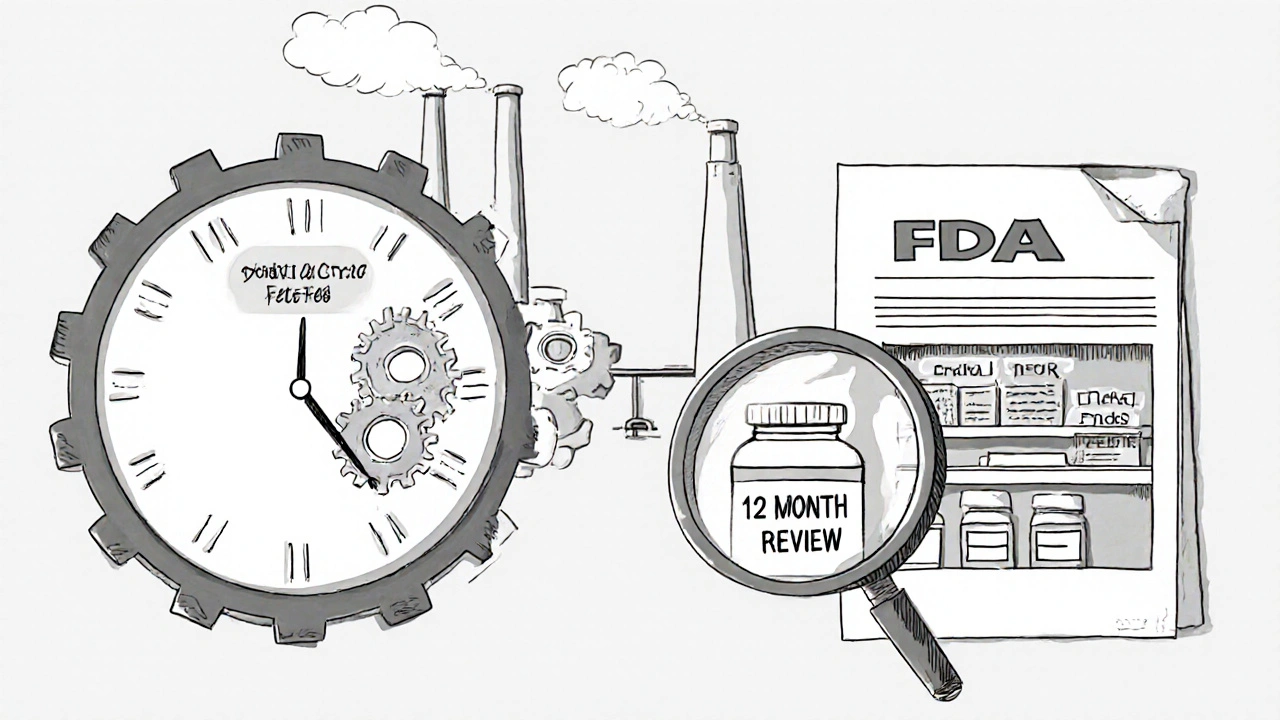
The U.S. generic drug market moves fast - and it’s not because companies are racing to cut corners. It’s because of a quiet but powerful law: the Generic Drug User Fee Amendments, or GDUFA. Since 2012, this program has transformed how the FDA reviews generic medicines, turning a slow, backlogged system into one that’s faster, more predictable, and more transparent. If you’ve ever filled a prescription for a low-cost version of a brand-name drug, GDUFA helped make that possible.
What Is GDUFA, and Why Does It Matter?
GDUFA isn’t a typical law. It’s a funding deal between the FDA and generic drug makers. Before 2012, the FDA relied almost entirely on Congress for money to review generic drug applications. That meant long delays. In 2011, over 1,300 applications were stuck in review. Some sat for years. Patients waited. Prices stayed high. GDUFA changed that. It lets the FDA collect fees directly from generic drug companies - not as a tax, but as a payment for services. In return, the FDA commits to specific timelines: reviewing applications within set months, inspecting factories on schedule, and publishing performance reports every quarter. This isn’t just bureaucracy. It’s a contract that keeps the system moving. The goal? Get safe, effective, affordable generic drugs to patients faster. And it’s working. Since GDUFA started, the average review time for an ANDA (Abbreviated New Drug Application) dropped from over 30 months to under 12. The backlog? All but gone.How GDUFA Fees Work - And Who Pays
Every company that makes or sells generic drugs in the U.S. pays fees under GDUFA. These aren’t optional. They’re required by law. The fees cover three main things:- Facility fees - paid annually by every factory that makes active ingredients (API) or finished pills (FDF), whether it’s in Ohio or India.
- Application fees - a one-time charge when a company submits an ANDA to get approval for a new generic drug.
- Drug Master File (DMF) fees - paid when a supplier’s technical file is first used in an ANDA.
How GDUFA Changed the Game - And Created New Problems
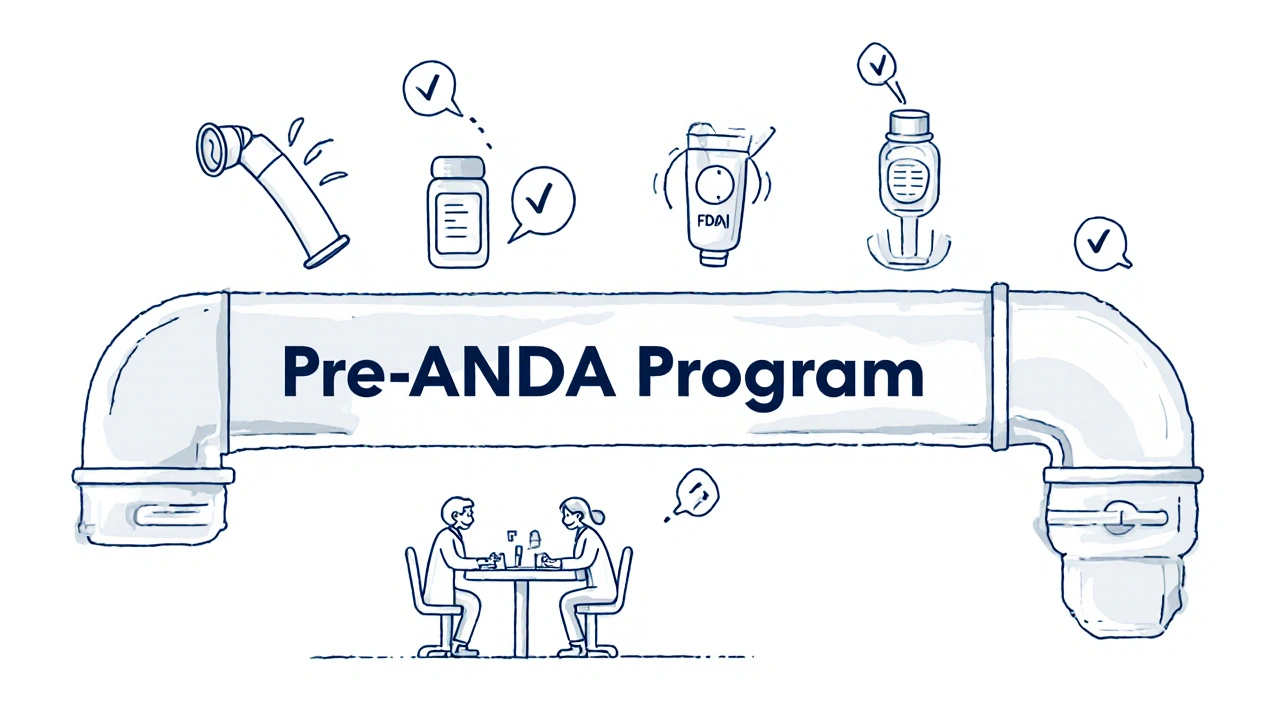
GDUFA didn’t just speed things up. It reshaped the entire industry. Before GDUFA, only big companies could afford to wait years for approval. Smaller firms, startups, and niche manufacturers couldn’t compete. GDUFA I unintentionally made that worse. The fixed annual fees hit small players harder. A company with one product paid the same as one with ten. That pushed consolidation. Today, the top 10 generic makers control over half the U.S. market. GDUFA II (2018-2022) tried to fix this. It introduced fee reductions for small businesses and new applicants. GDUFA III went further. It launched the Pre-ANDA Program, letting companies talk to the FDA before submitting a full application. That’s huge for complex generics - like inhalers, injectables, or topical creams - where getting the formulation right is tricky. Now, companies can get feedback early. Avoid costly rejections. Save time. Save money. That’s why the Pre-ANDA Program is one of the most valued parts of GDUFA III. But challenges remain. Foreign manufacturers - especially in India and China - still complain about the higher fees. They argue the $15,000 difference doesn’t reflect real costs. Some say it’s a barrier to entry. Others say it’s fair. The FDA says it’s based on data. The debate continues.
Who Benefits - And Who Pays the Price
Patients win. Generic drugs make up 90% of all prescriptions in the U.S. They save billions every year. GDUFA keeps that pipeline full. Manufacturers win too - if they can afford it. Big companies with multiple products spread the fees across many applications. They get faster approvals, bigger market share, and better predictability. But for small companies? It’s tougher. The fees are high. The paperwork is heavy. The compliance burden requires full-time regulatory staff. Many can’t afford it. Some exit the market. Others never enter. The FDA knows this. That’s why GDUFA III includes a User Fee Resource Management Program - a tool to help smaller firms understand costs, plan payments, and avoid penalties. Still, it’s not enough. Industry groups like the Association for Accessible Medicines keep pushing for more relief.What’s Next? GDUFA IV and Beyond
GDUFA III runs through September 30, 2027. After that, Congress must reauthorize it - again. Talks about GDUFA IV are already starting. Industry and regulators are discussing:- Further fee adjustments for small businesses
- More support for complex generics
- Digital-only submissions (no more paper)
- Streamlining inspections for multi-site manufacturers
How Manufacturers Stay Compliant
If you’re a generic drug maker, you don’t just submit an application. You manage a whole system:- Register every facility - domestic and foreign - with the FDA
- Pay fees on time, or risk delays or rejection
- Submit accurate, complete DMFs and ANDAs
- Keep up with changing fee schedules - they update every October
Why This Matters to Everyone
You don’t need to be a drug maker to care about GDUFA. It’s about access. About cost. About trust. When a generic drug hits the market faster, prices drop. Insurance premiums go down. Out-of-pocket costs shrink. For millions of Americans on fixed incomes, that’s life-changing. GDUFA isn’t perfect. But it’s the best system we’ve had. It’s not about big pharma vs. small. It’s about making sure safe, affordable medicines keep flowing - without delay, without guesswork, without backlogs. The next five years will test whether GDUFA can balance fairness, efficiency, and innovation. One thing’s clear: without it, the U.S. generic drug system would be broken. With it? It’s working.What does GDUFA stand for?
GDUFA stands for Generic Drug User Fee Amendments. It’s a U.S. law that lets the FDA collect fees from generic drug manufacturers to fund the review of generic drug applications and facility inspections.
When does GDUFA III expire?
GDUFA III expires on September 30, 2027. After that, Congress must pass new legislation to continue the program. Negotiations for GDUFA IV are already underway.
Do foreign manufacturers pay more under GDUFA?
Yes. Foreign facilities pay $15,000 more than U.S. facilities for both finished drug and active ingredient manufacturing. This reflects the higher cost of inspecting overseas sites. Critics argue the gap is too large; the FDA says it’s based on actual inspection expenses.
How has GDUFA affected generic drug prices?
GDUFA hasn’t directly set prices, but by speeding up approvals and reducing backlogs, it has increased competition in the generic market. More suppliers entering the market faster leads to lower prices. Generic drugs now make up 90% of U.S. prescriptions and save patients an estimated $300 billion a year.
Can small generic companies afford GDUFA fees?
It’s difficult. Annual facility fees can be over $200,000 - a heavy burden for companies with only one or two products. GDUFA II and III introduced fee reductions for small businesses, but many still struggle. The FDA offers tools and guidance, but compliance often requires dedicated regulatory staff, which small firms can’t always afford.
What is the Pre-ANDA Program?
The Pre-ANDA Program, introduced under GDUFA III, lets generic drug manufacturers meet with the FDA before submitting a full application. This helps clarify requirements, avoid costly mistakes, and speed up approval - especially for complex drugs like inhalers or injectables.
Are GDUFA fees used for anything besides generic drug reviews?
No. By law, GDUFA fees can only be spent on activities directly related to reviewing generic drug applications and inspecting manufacturing facilities. The FDA must report annually on how the money is used, and Congress audits the program.

9 Comments
Sue Barnes
November 30 2025
Let’s be real-GDUFA is just corporate welfare dressed up as reform. Big pharma clones pay a fee, get fast-tracked, and then jack up prices anyway. The FDA’s just a rubber stamp now. And don’t even get me started on how foreign plants get inspected once every five years while U.S. ones get quarterly raids. It’s rigged.
jobin joshua
November 30 2025
Brooo... 😅 I work in a generic pharma lab in Hyderabad and we pay those fees every year. 😩 The $260K? It’s brutal. But honestly? The FDA’s feedback through Pre-ANDA saved us 18 months. 🙌 We got our first approval last year. India’s not perfect, but we’re trying. 🇮🇳💪
Sachin Agnihotri
December 1 2025
Hey, I’ve been reading this whole thing, and honestly, I think GDUFA is one of the few government programs that actually works. Yeah, the fees are high, and yeah, small guys get squeezed-but the Pre-ANDA program? That’s genius. I know a startup in Iowa that got their injectable approved in 8 months instead of 3 years. That’s life-changing for patients with chronic pain. 🤝 Maybe it’s not perfect, but it’s way better than the chaos before 2012.
Evelyn Salazar Garcia
December 1 2025
U.S. companies pay less? That’s racist.
Clay Johnson
December 3 2025
The structural incentive alignment here is nontrivial. Fee-for-service regulation internalizes externalities previously borne by the public through delayed access. The FDA transitions from a constrained public agency to a performance-oriented operator. This is regulatory capture, yes-but capture with measurable public benefit. The real failure is the absence of price controls alongside efficiency gains.
Chris Taylor
December 3 2025
I’m a pharmacist in Ohio. I see the difference every day. Five years ago, we’d wait 4 months for a generic to come in. Now? Sometimes it’s 2 weeks. Patients don’t care about fees or regulations-they just want their meds cheap and on time. GDUFA does that. Simple as that.
Josh Evans
December 4 2025
Just read the part about foreign facilities paying more and I had to laugh. My cousin works at a plant in Chennai. They got audited last year and the FDA inspector stayed for 3 weeks. Flights, hotel, translators, meals-all paid by the FDA. So yeah, $15K extra? Totally fair. We’re not talking about a Zoom call here.
Allison Reed
December 5 2025
This is actually one of the most inspiring policy stories I’ve read in a while. The fact that the FDA is transparent enough to publish quarterly reports? That’s leadership. And the Pre-ANDA program? That’s listening. Small companies need more help, sure-but the system is trying. We should build on this, not tear it down.
Jacob Keil
December 5 2025
So we pay 250k to get a drug approved and then some big corp buys the patent and sells it for 10x? LMAO. This isn't reform its just a tax on small biz so the big boys can monopolize. And the FDA? They're just the bank teller. #GDUFAisacapitalisttrap