
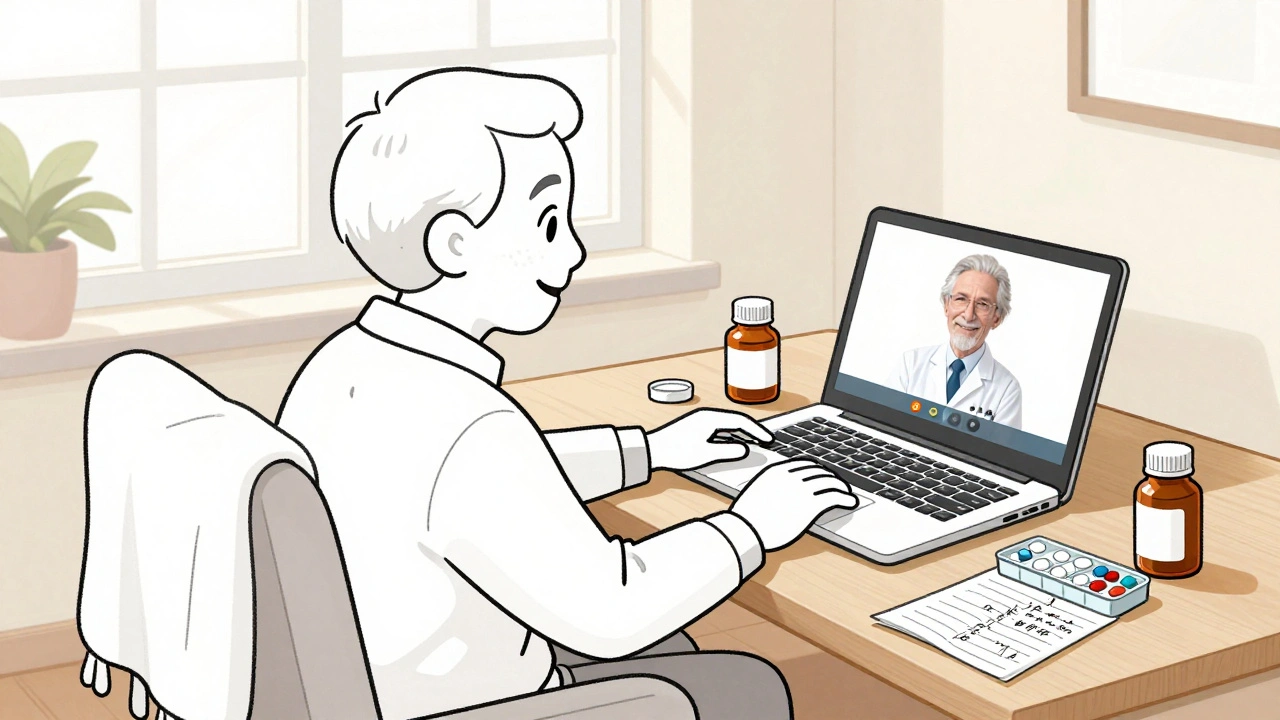
When you’re managing multiple medications, a telehealth medication review can be a lifesaver. But if you walk into that video call unprepared, you might miss the chance to catch dangerous interactions, unclear instructions, or unnecessary drugs. This isn’t just about convenience-it’s about safety. In 2024, over 78% of U.S. healthcare systems offered telehealth medication reviews, and studies show they reduce adverse drug events by nearly 35% in older adults. But only if you show up ready.
What Exactly Is a Telehealth Medication Review?
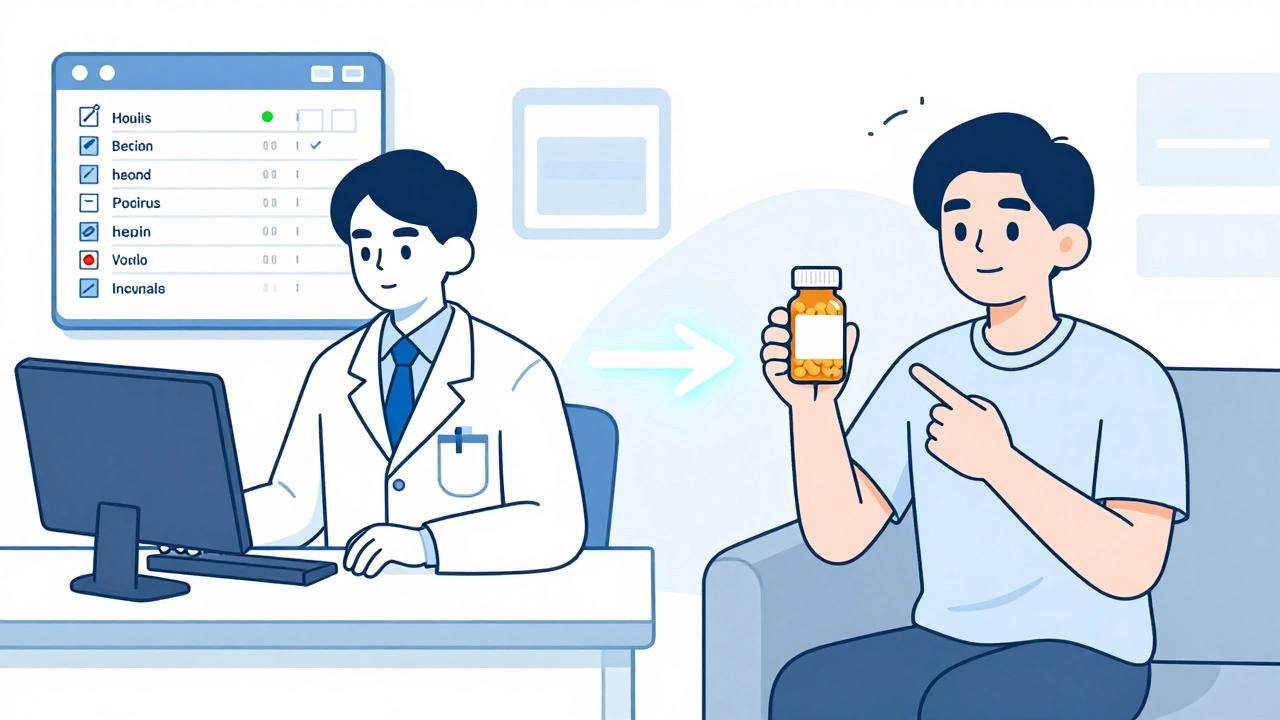
A telehealth medication review is a virtual meeting with a pharmacist or doctor to go over every pill, patch, supplement, and over-the-counter drug you’re taking. It’s not a quick check-in. It’s a full audit of your regimen-looking for duplicates, harmful interactions, doses that are too high or too low, and medicines you no longer need. These reviews use Clinical Decision Support Systems (CDSS) to cross-check your list against medical guidelines and your lab results. They’re especially helpful for people on five or more medications, those recently discharged from the hospital, or anyone with chronic conditions like diabetes, heart failure, or depression.
Unlike in-person visits, you don’t need to travel. You can do it from your living room. But that also means you have to be your own advocate. No nurse is there to hand you a pill organizer. No pharmacist can physically check if you’re swallowing your pills or if your blood pressure monitor is working right. So preparation is everything.
How to Prepare Before Your Telehealth Medication Review
Most people think they know what they’re taking-until they actually lay it all out. A 2023 study found that patients who displayed all their medications during the call improved review accuracy by 37.4%. Here’s how to get it right:
- Collect everything. Gather every prescription bottle, OTC box, vitamin container, and supplement packet. Don’t rely on memory. Include creams, inhalers, patches, and eye drops.
- Write down the details. For each item, note the name, dose, how often you take it, and why (e.g., "Lisinopril 10mg, once daily, for blood pressure"). If you’re unsure why you’re taking something, write that down too.
- Bring your pharmacy list. Log into your pharmacy’s app or call them to get a printed or digital copy of your current prescriptions. Compare it to what’s in your medicine cabinet. Mismatches are common-43.2% of medication errors start with an inaccurate list.
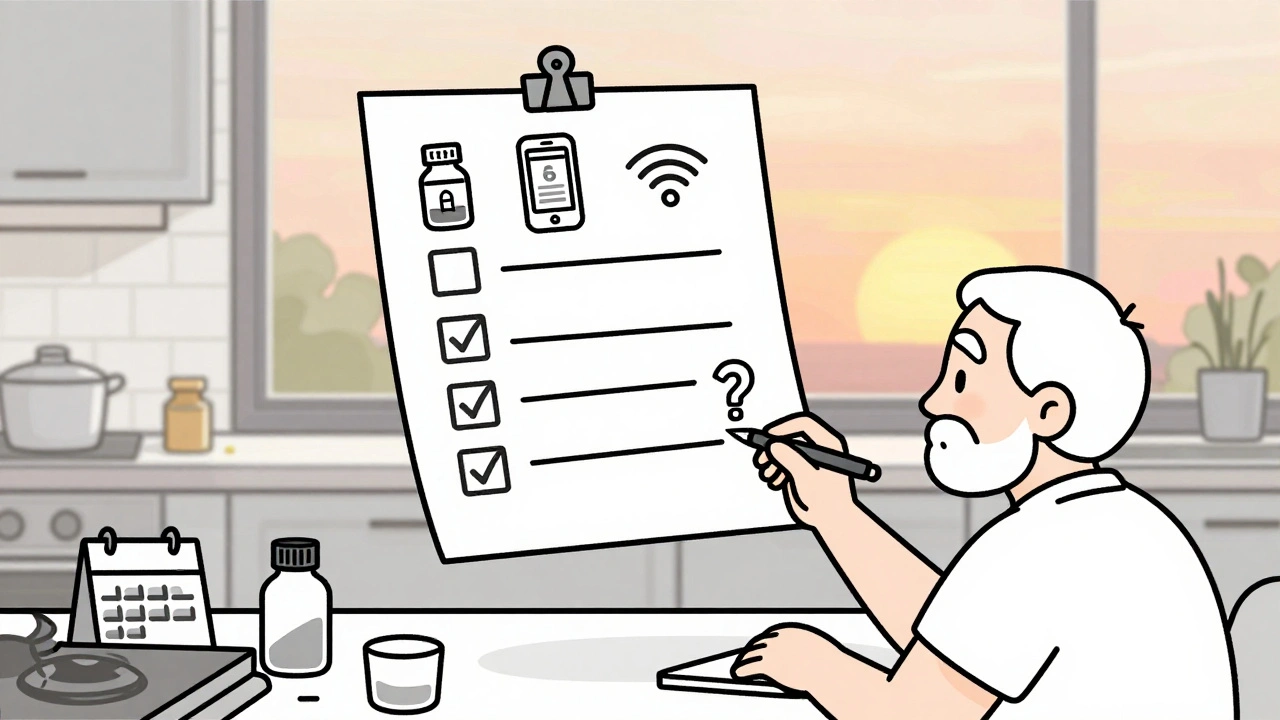
- Test your tech. Make sure your camera, mic, and internet are working. You need at least 1.5 Mbps upload/download speed. Use a HIPAA-compliant platform like Doxy.me or Zoom for Healthcare. If you’ve never used video calls before, ask a family member to help you test it a day before.
- Write down your questions. Don’t wait until the call to think of them. Jot them down ahead of time. You’ll forget half of them once the conversation starts.
Pro tip: Keep a running list in your phone or notebook. Update it every time you get a new prescription or stop one. That way, you’re never starting from scratch.
What to Ask During Your Telehealth Medication Review
You’re not just there to listen-you’re there to dig. Here are the questions that matter most:
- "How will you verify my medication list against my pharmacy records?" This is critical. Many systems don’t automatically sync with your pharmacy. If they’re just going by what you say, you’re at risk. Ask if they’ll check your pharmacy’s database directly.
- "Are any of these medications no longer needed?" Sometimes, drugs are prescribed for short-term use but kept for years. A 2020 study found that nearly 1 in 4 elderly patients were still taking at least one unnecessary medication.
- "Is there a safer or cheaper alternative?" Some medications have generic versions or non-drug alternatives (like exercise for mild depression or diet changes for high cholesterol). Don’t assume your current option is the only one.
- "What side effects should I watch for between now and my next appointment?" Virtual reviews can miss early signs of problems. Ask for specific red flags-like dizziness, confusion, swelling, or unusual bruising-and what to do if they appear.
- "How will you communicate your recommendations to my doctor?" Only 62.8% of telehealth services have a clear, standardized way to send changes to your primary care provider. If they don’t, you might end up with conflicting advice.
- "Do I need any lab tests before we adjust anything?" Some meds need blood work to be safe. For example, kidney function checks for certain blood pressure drugs, or liver tests for statins. Don’t let them skip this.
These aren’t optional questions. They’re your safety net.
When Telehealth Medication Reviews Fall Short
They’re not perfect. A 2021 study found that 17.3% of reviews for patients with multiple chronic conditions were incomplete because the provider couldn’t physically assess things like muscle weakness, skin rashes, or swelling in the legs. If you have dementia, severe mobility issues, or psychiatric conditions that need a full mental status exam, telehealth might not be enough.
Also, technical problems happen. A Reddit user in November 2024 reported their video kept freezing during a blood pressure demonstration. If your connection drops or the audio cuts out, pause the call. Don’t let them keep talking while you’re trying to show your pills. Reschedule if needed.
And don’t ignore the digital divide. Nearly one-third of patients over 75 don’t participate in telehealth because they lack tech support. If you’re in that group, ask your clinic if they offer phone-based reviews or if a family member can join the call to help you.
What Happens After the Review?
The review doesn’t end when the video ends. You should get a written summary-either emailed or mailed-within 3-5 business days. It should list:
- Changes made to your medications
- Reasons for each change
- Next steps (e.g., lab tests, follow-up call)
- Who to contact if you have side effects
If you don’t get this, call the pharmacy or clinic. No summary means no accountability. And if your doctor hasn’t received the recommendations, follow up with them too. You’re the only one who connects all the dots.
Also, track your own progress. Note any changes in how you feel-better sleep, less dizziness, fewer stomach issues. Bring those notes to your next appointment. That’s the real measure of whether the review worked.
Cost and Insurance Coverage
As of 2025, Medicare and most private insurers cover telehealth medication reviews under specific codes: G2225 for comprehensive reviews ($142.37) and G2226 for targeted reviews ($78.92). You’ll usually pay your standard copay-same as an in-person visit. But check with your plan. Some require prior authorization.
Private telehealth pharmacies (like PillPack or CVS MinuteClinic) may charge extra. If you’re paying out of pocket, ask if they offer a free initial consultation. Many do.
What’s Next for Telehealth Medication Reviews?
The field is growing fast. By 2028, the market is expected to hit $9.24 billion. New rules from the DEA allow more providers to manage controlled substances via telehealth-but only if they meet strict criteria. Starting in 2026, you might see more integration with smart pill dispensers and wearable monitors that send real-time data to your pharmacist.
For now, the goal is simple: make sure every medication you take is still necessary, safe, and working. Telehealth makes that easier-but only if you’re prepared.
Do I need to have all my medications in front of me during the call?
Yes. Studies show that displaying your actual pills, bottles, or packaging during the review increases accuracy by 37.4%. Relying on memory or a list you wrote weeks ago can lead to mistakes. Even if you think you know what you’re taking, seeing the labels helps the pharmacist spot errors in dosage, brand vs. generic, or expired meds.
Can a pharmacist change my prescription during a telehealth review?
No, they can’t prescribe or adjust doses on their own. But they can recommend changes to your doctor and explain why. For example, they might say, "Your blood pressure is stable on 10mg of Lisinopril-let’s reduce it to 5mg to lower your risk of dizziness." Your doctor then reviews and approves the change. The pharmacist’s role is to spot problems and suggest solutions-not to make final decisions.
What if I don’t understand the pharmacist’s recommendations?
Ask them to explain it again-using simpler words. You have the right to understand every change. Say: "Can you explain that like I’m 12?" or "What does this mean for my daily life?" If they get frustrated, that’s a red flag. Good providers expect questions. If you’re still confused, ask for a written summary or request a follow-up call with your doctor.
Are telehealth medication reviews safe for controlled substances like opioids or sleeping pills?
Yes, but with limits. As of December 2025, the DEA allows telehealth management of Schedule III-V controlled substances (like certain painkillers and sedatives) without an in-person visit, as long as the provider has a special telemedicine registration. Schedule II drugs (like oxycodone or Adderall) still require an initial in-person exam, but follow-ups can be virtual. Always confirm your provider’s DEA status and state rules-requirements vary by location.
How often should I get a telehealth medication review?
If you’re on five or more medications, or have a chronic condition like diabetes or heart disease, aim for at least once a year. If you’ve recently been hospitalized, had a major surgery, or started a new drug, get one within 30 days. Some pharmacies offer free reviews every six months for high-risk patients. Ask your pharmacist or doctor if you qualify.
What if I miss my telehealth appointment?
Call the clinic or pharmacy as soon as possible. Many systems allow you to reschedule online, but if you don’t show up and don’t cancel, you might be dropped from the program. Some insurers require you to complete the review within a certain window to qualify for reimbursement. If you missed it because of tech issues, ask if they can switch you to a phone call instead.

11 Comments
Clare Fox
December 6 2025
i just dumped all my meds on the couch before the call and my pharmacist literally gasped. turns out i was still taking that thyroid pill from 2018 and my blood pressure med was expired. i didnt even know.
Akash Takyar
December 8 2025
It is imperative that patients approach telehealth medication reviews with diligence, precision, and a structured methodology. The data presented herein is unequivocally compelling, and adherence to the outlined preparatory steps is not merely advisable-it is a clinical imperative.
Nigel ntini
December 10 2025
This is gold. I’ve been doing these reviews for my mom and the difference is night and day. She used to forget half her pills, now she has a little checklist on her fridge. Small changes, huge impact.
Mansi Bansal
December 11 2025
Let me be perfectly clear: if you are not meticulously cataloging every pill, capsule, and herbal tincture you have ever consumed since 1998, you are not just unprepared-you are endangering your life. The indifference displayed by most patients is not merely negligent-it is a moral failure.
pallavi khushwani
December 11 2025
my grandma did this over the phone with my help and she cried because she realized she didn’t need half the stuff she was taking. i’m gonna make my whole family do it next month.
Shayne Smith
December 12 2025
my cat walked on my keyboard during the call and the pharmacist thought i said 'i take 20 pills' instead of 'i take 2 pills.' we laughed. then she told me i was on a dangerous combo. so… thanks, cat?
Katie O'Connell
December 12 2025
One cannot help but observe the alarming commodification of healthcare under the banner of telehealth convenience. While the metrics cited appear statistically significant, they are derived from a system that prioritizes efficiency over holistic patient engagement. The notion that a video call can substitute for tactile assessment is, frankly, a dystopian fantasy.
Annie Gardiner
December 14 2025
wait so you’re telling me i shouldn’t just keep taking my ex’s antidepressants because ‘they worked for me’? shocking. next you’ll say i shouldn’t drink bleach for my ‘chronic joy deficiency’.
Rashmi Gupta
December 14 2025
you people are so naive. what if the pharmacist is just trying to push generics to hit quotas? what if the ‘CDSS’ is owned by Big Pharma? i’ve seen things. they’re watching. they’re tracking your pill bottles.
Andrew Frazier
December 15 2025
us citizens are too lazy to even read the labels on their meds. we want a video call to fix everything? in my day we walked 5 miles uphill both ways to the pharmacy and liked it. now we cry because the wifi drops.
Kumar Shubhranshu
December 15 2025
just list your meds. ask about side effects. get the summary. done. stop overthinking it.