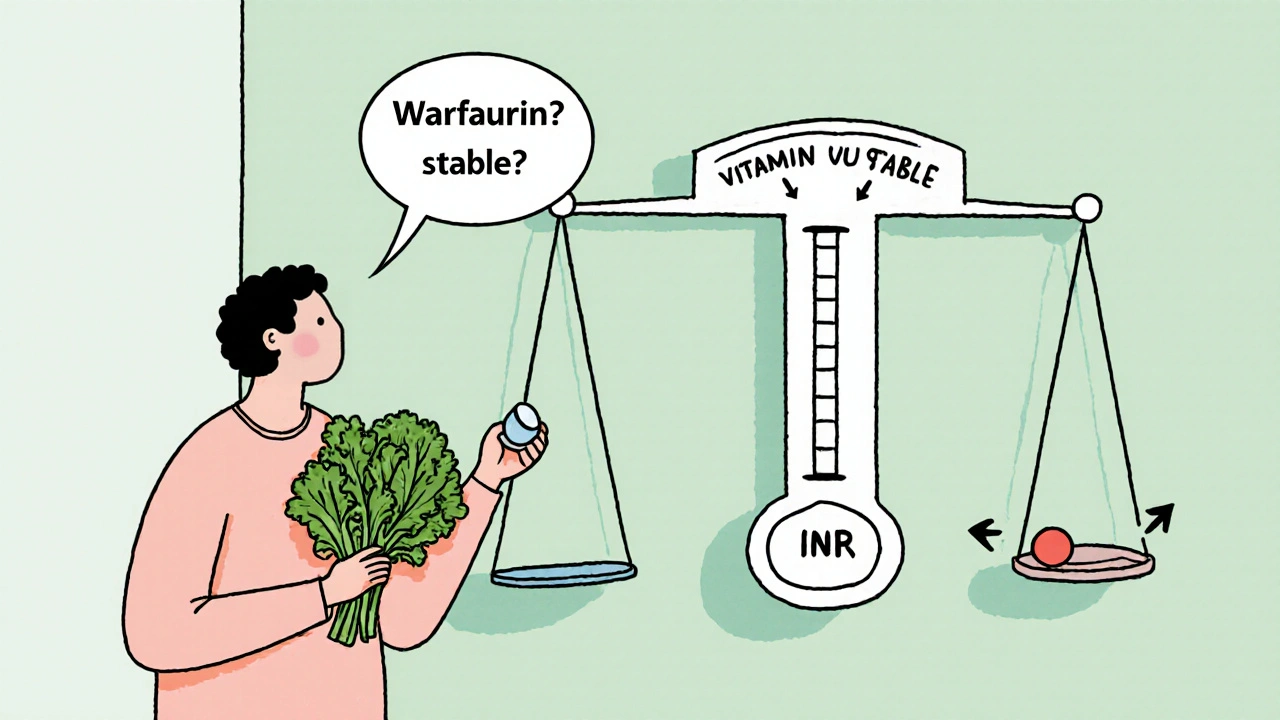
Learn how consistent vitamin K intake stabilizes warfarin therapy, improves INR control, and reduces complications with practical diet tips and tools.
Vitamin K: What It Does, Where to Find It, and Why It Matters
When you cut yourself, your body doesn’t just bleed forever—it stops. That’s thanks to vitamin K, a fat-soluble nutrient essential for blood clotting and bone metabolism. Also known as phylloquinone in its K1 form, it’s not just a backup player in your health routine—it’s a silent guardian working every single day. Without enough vitamin K, even small injuries can become serious, and your bones might weaken over time without you even noticing.
There are two main types you need to know: vitamin K1, mostly found in leafy greens like spinach and kale, and vitamin K2, made by bacteria and found in fermented foods like natto, cheese, and egg yolks. K1 helps your blood clot fast when you need it. K2 directs calcium where it belongs—into your bones and teeth—and away from your arteries. That’s why people taking blood thinners like warfarin are often told to watch their vitamin K intake: it directly affects how the drug works. And if you’re older, or eating a lot of processed food, you might not be getting enough K2, which could silently impact your bone density.
You won’t find vitamin K listed on most supplement labels unless you’re looking for a specific blend. But it’s in the foods you eat every day—if you choose them right. Broccoli, Brussels sprouts, and even green tea contain measurable amounts. And while most people don’t get sick from low vitamin K, long-term deficiency is linked to higher fracture risk and heart issues. It’s not a flashy nutrient like vitamin C or D, but it’s just as vital. The posts below dig into real-life situations where vitamin K matters: from how it interacts with medications like warfarin, to why some people need supplements after gut surgery, and how diet choices affect its absorption. You’ll find clear, no-fluff advice on what to eat, what to avoid, and when to talk to a doctor about your levels.