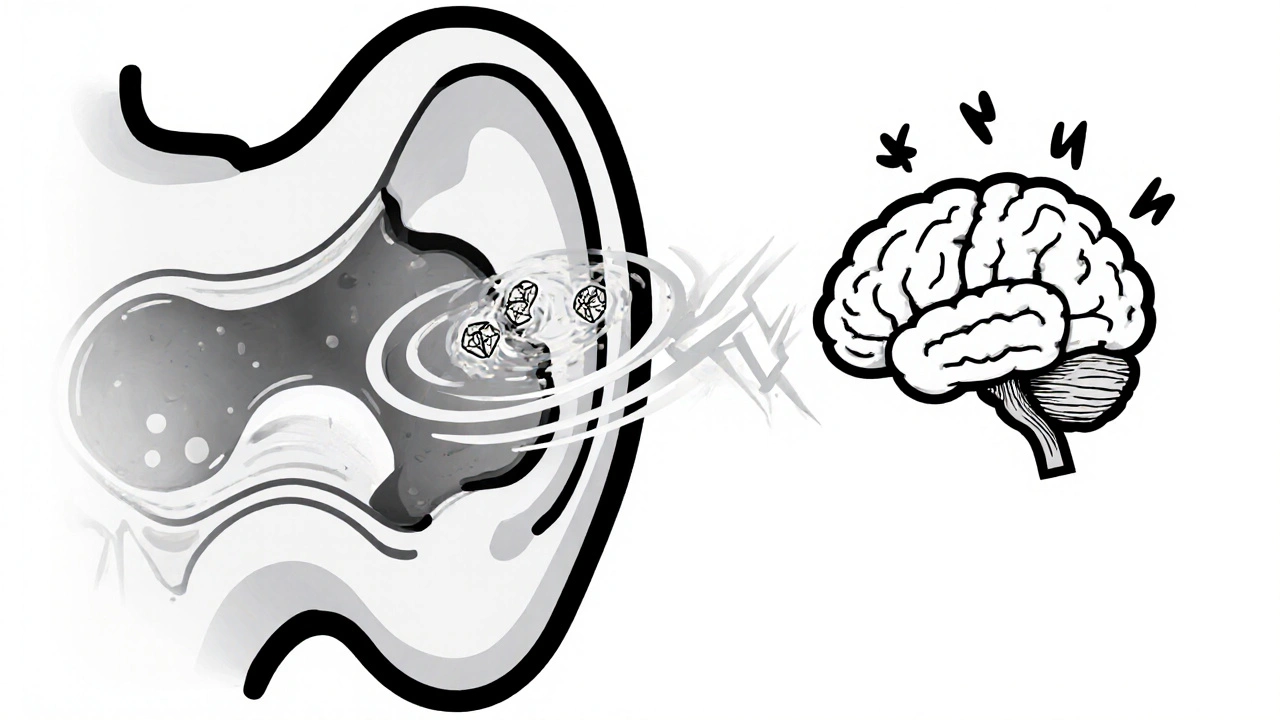
Vertigo isn't just dizziness - it's a spinning sensation often caused by inner ear problems like BPPV. Learn how vestibular therapy, the Epley maneuver, and lifestyle changes can restore balance without drugs.
Vestibular Therapy: What It Is and How It Helps with Dizziness and Balance Issues
When your inner ear sends mixed signals to your brain, you don’t just feel dizzy—you might feel like the room is spinning, you’re off-balance, or you’re about to fall. That’s where vestibular therapy, a targeted form of physical therapy designed to retrain the brain to compensate for inner ear dysfunction. Also known as vestibular rehabilitation, it’s not just exercises—it’s a science-backed way to reset your body’s balance system. Unlike pills that mask symptoms, vestibular therapy fixes the root problem: your brain and inner ear aren’t talking right anymore.
This therapy works for people with vertigo, a sensation of spinning or movement when you’re still, often caused by conditions like BPPV (benign paroxysmal positional vertigo), labyrinthitis, or vestibular neuritis. It’s also used after head injuries or in older adults with declining balance. The goal? To help your brain rely on other signals—like your eyes and muscles—to stay steady. You don’t need to be an athlete to benefit. Even people who just struggle to walk without holding onto walls can see real improvement.
It’s not magic. It’s repetition. Therapists use specific head and body movements—like the Epley maneuver for BPPV—to gently reset the tiny crystals in your inner ear that get out of place. Other exercises train your eyes to track movement while your head moves, or help you walk without relying on sight. These aren’t random stretches. They’re precise, evidence-based drills proven in clinical studies to reduce dizziness and prevent falls. And unlike medications that make you sleepy or numb your senses, vestibular therapy makes you stronger, more confident, and more in control.
You’ll find that many of the posts below dive into related areas—like how steroid myopathy can weaken muscles and throw off balance, or how medication-induced insomnia might make dizziness worse by disrupting sleep cycles. Others cover how drug interactions or older adult medications can affect the vestibular system. Some even explain how visual dosing aids or digital prescription tools help people manage their symptoms safely at home. This isn’t just about spinning sensations. It’s about reclaiming your stability, your independence, and your daily life.
What you’ll see here isn’t theory. It’s real advice from people who’ve been there—whether they’re managing vertigo after an infection, recovering from a fall, or trying to avoid one. The tools, tips, and treatments listed below are practical, tested, and focused on what actually moves the needle. No fluff. No hype. Just what works.