
When you take a medication, you expect it to help-not hurt. But mistakes happen. A pharmacist gives you the wrong dose. A nurse administers a drug you’re allergic to. Your doctor prescribes something that clashes with another medicine you’re taking. These aren’t rare blips. In the U.S. alone, medication errors affect over 5 million hospital admissions every year. That’s one in every 67 people admitted. And for many, the real problem isn’t just the error-it’s what happens after. Too often, patients feel ignored, dismissed, or told it’s "just a mistake" with no follow-up. You have the right to speak up. And when you do, you don’t just protect yourself-you help prevent the next person from going through the same thing.
Recognize the Error Before It’s Too Late
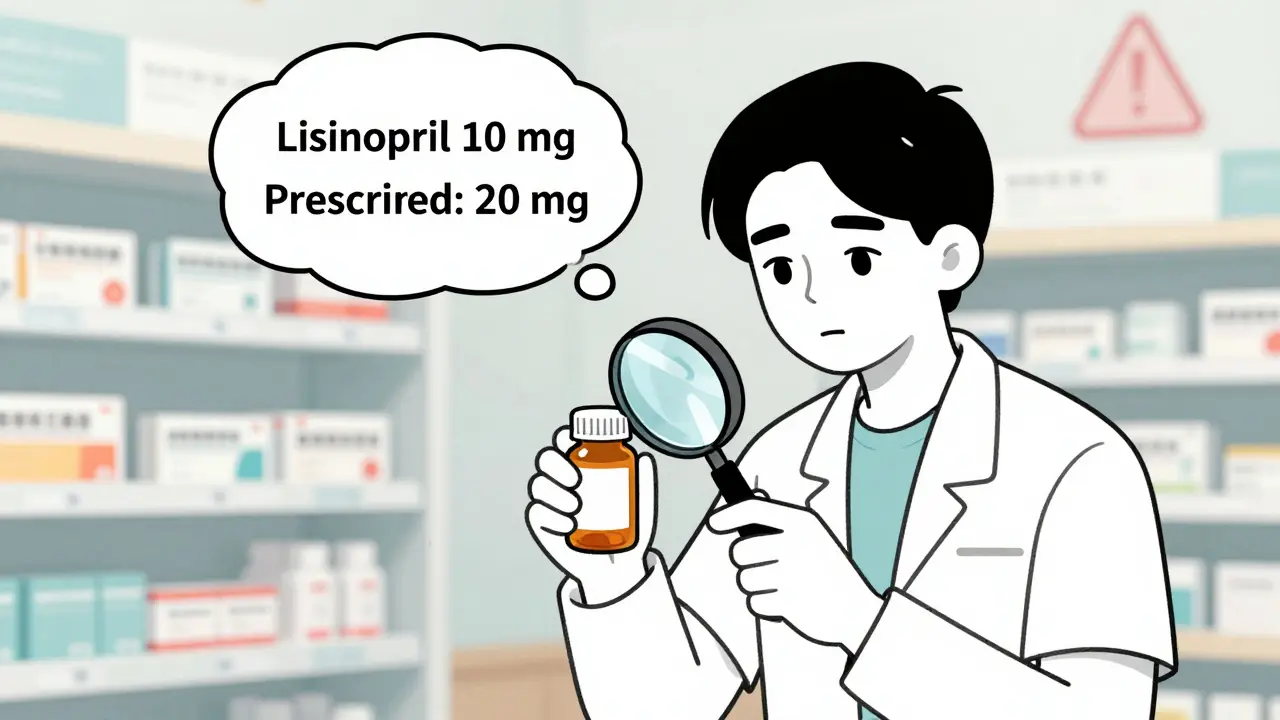
The first step in reporting a medication error is knowing when something’s wrong. It’s not always obvious. Some errors show up right away: a rash after taking a new pill, dizziness, vomiting, or sudden confusion. Others creep in slowly: unexplained fatigue, swelling, or a change in your blood pressure that doesn’t match your usual pattern. Don’t brush it off. If something feels off, it probably is.Look at the pill bottle. Does the label match what your doctor told you? Is the dosage different from what you’ve taken before? Check the color, shape, and imprint code. Many pharmacies use generic pills that look different than your usual brand-but they should still be the same medicine. If the label says "Lisinopril 10 mg" but your doctor prescribed "Lisinopril 20 mg," that’s a red flag.
Patients often miss near-misses. Maybe the nurse almost gave you a drug you’re allergic to but caught it at the last second. Maybe the pharmacy filled your prescription with a different brand that has the same name but a different strength. These aren’t "luck"-they’re warning signs. Document them. Write down what happened, when, and who was involved. Keep the pill bottle. Take a photo of the label. These details matter more than you think.
Start With Your Provider-But Be Prepared
Your first stop should be the person who prescribed or dispensed the medication. That’s usually your doctor, pharmacist, or nurse. Call their office. Don’t wait. Say clearly: "I believe there was a medication error, and I need to talk about it." Don’t soften it with "I’m not sure, but..." or "Maybe I’m wrong." You’re not asking for permission. You’re reporting a safety issue.Be ready with facts. Bring the medication bottle. Show your symptom log. Mention the exact name of the drug, the dose, and when you took it. If you noticed a change in how you feel, describe it in plain language: "I’ve had a pounding headache every day since I started this new pill," or "My heart has been racing, and I’ve never felt this way before."
Don’t assume they’ll apologize or fix it right away. A 2022 study in BMJ Quality & Safety found that 64% of patient reports were dismissed unless backed by documentation. So don’t rely on memory. Bring records. Ask for a copy of your prescription history. If they hesitate, say: "I’m not here to blame anyone. I just want to make sure this doesn’t happen again." That shifts the conversation from blame to safety-and most providers respond better to that.
Know Your Reporting Options
Reporting doesn’t end with your doctor. There are three main paths:- Internal hospital or clinic reporting: Most clinics and hospitals have an internal system for reporting errors. It’s confidential, fast, and used to improve local practices. But here’s the catch: only 14% of nurses report all errors because they fear punishment. If your provider says, "We’ll handle it internally," ask: "Can I get a copy of the report?" You have a right to know what was filed.
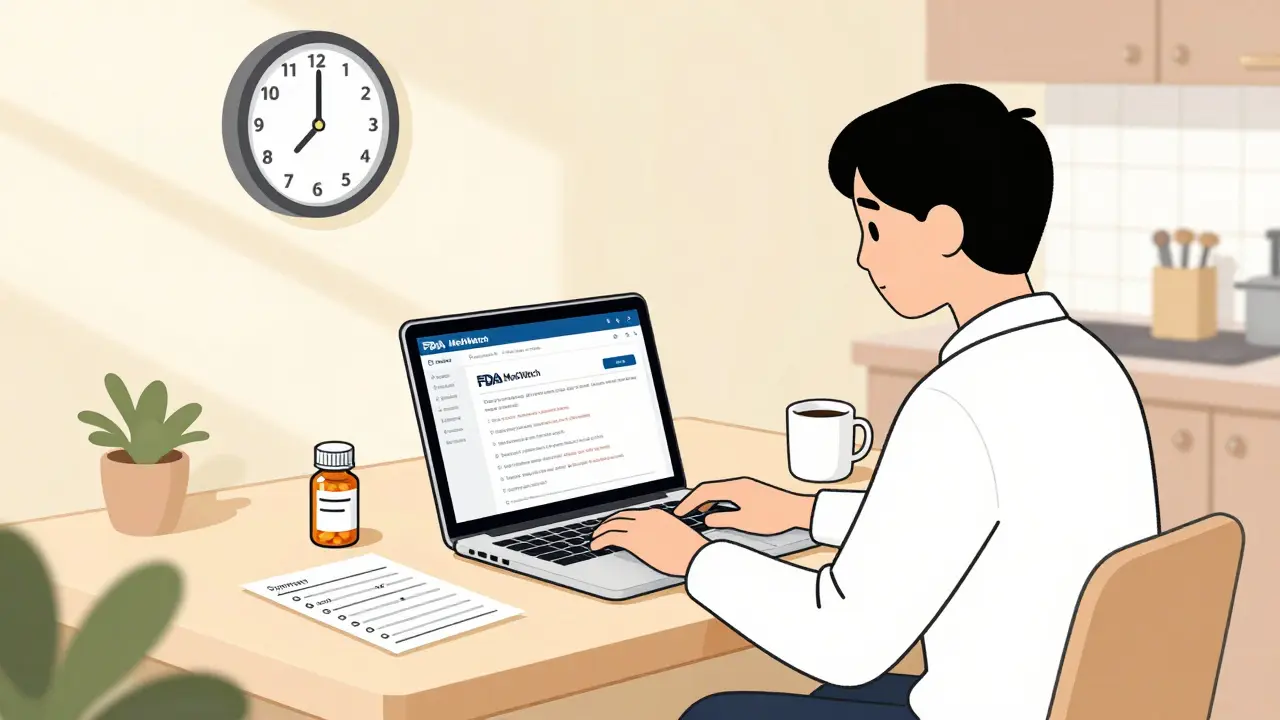
- FDA’s MedWatch program: This is the federal system for reporting adverse events. Anyone can file a report-patients, family members, caregivers. It’s free. It’s anonymous if you choose. And it goes directly to the agency that regulates drugs. In 2022, MedWatch received over 140,000 reports. But only 14% came from patients. That means most of the data is from healthcare workers. Your report matters because it fills a gap. The FDA’s new online form takes under 9 minutes to complete. You’ll need: the drug name, dose, your symptoms, and when it happened.
- ISMP’s confidential reporting system: The Institute for Safe Medication Practices runs a non-punitive system where providers and patients can report errors anonymously. They analyze patterns and publish safety alerts. In 2022, they processed over 12,500 reports, and 67% led to public warnings. This is especially powerful if you’re reporting a pattern-like a pharmacy that keeps mislabeling pills or a brand that changes its formula without warning.
Don’t choose just one. File with your provider and the FDA. They serve different purposes. Your provider fixes what went wrong in your care. The FDA fixes what’s wrong in the system.
What to Include in Your Report
A good report doesn’t just say "I got the wrong pill." It gives enough detail to be acted on. Here’s what you need:- Drug name (generic and brand if different)
- Dosage (e.g., 10 mg, 2 tablets)
- Route (oral, injection, cream)
- When you took it (date and time)
- Your symptoms (what happened, how long it lasted)
- Any allergies or other meds you take
- Who was involved (pharmacist name, nurse ID, doctor’s name)
- Photos of the pill bottle or label
- Medical records (if you have them)
Don’t leave out the little things. If you felt dizzy after taking the pill at 8 a.m. but not at 8 p.m., say that. If your doctor wrote "take as needed" but the label said "take twice daily," point it out. These details help investigators find the root cause.
What Happens After You Report
You might not hear back right away. The FDA says only 28% of consumer reports get a formal acknowledgment. But that doesn’t mean nothing happened. If you report through your provider, you’re more likely to get a response-89% of those get a reply, according to FDA data.Internal reports often lead to changes: a new double-check system at the pharmacy, a revised label format, staff retraining. These fixes rarely reach you directly. But if you ask, you can request a summary of what was done. You have a right to know the outcome.
FDA reports go into a national database. If multiple people report the same error-say, a batch of pills with the wrong strength-the FDA can issue a recall. One patient in 2023 submitted a MedWatch report with a photo of a mislabeled insulin bottle. Within three days, the FDA issued a recall. That’s the power of your report.
Special Cases: Schools and Children
If the error happened in a school-like a nurse giving the wrong dose to a child-the rules are different. In 48 U.S. states, schools are required to report medication errors within 24 hours. But parents often don’t know how. If your child had a reaction:- Ask for the school’s incident report immediately.
- Request a copy of the medication log.
- Follow up in writing: "I would like to know what steps the school is taking to prevent this from happening again."
- If you don’t get a response within 10 days, contact your state’s department of education. Many have dedicated health and safety offices.
A 2022 analysis in Iowa found that only 41% of parents who reported school errors received any follow-up. That’s unacceptable. Don’t let silence be the answer.
Why Your Report Matters
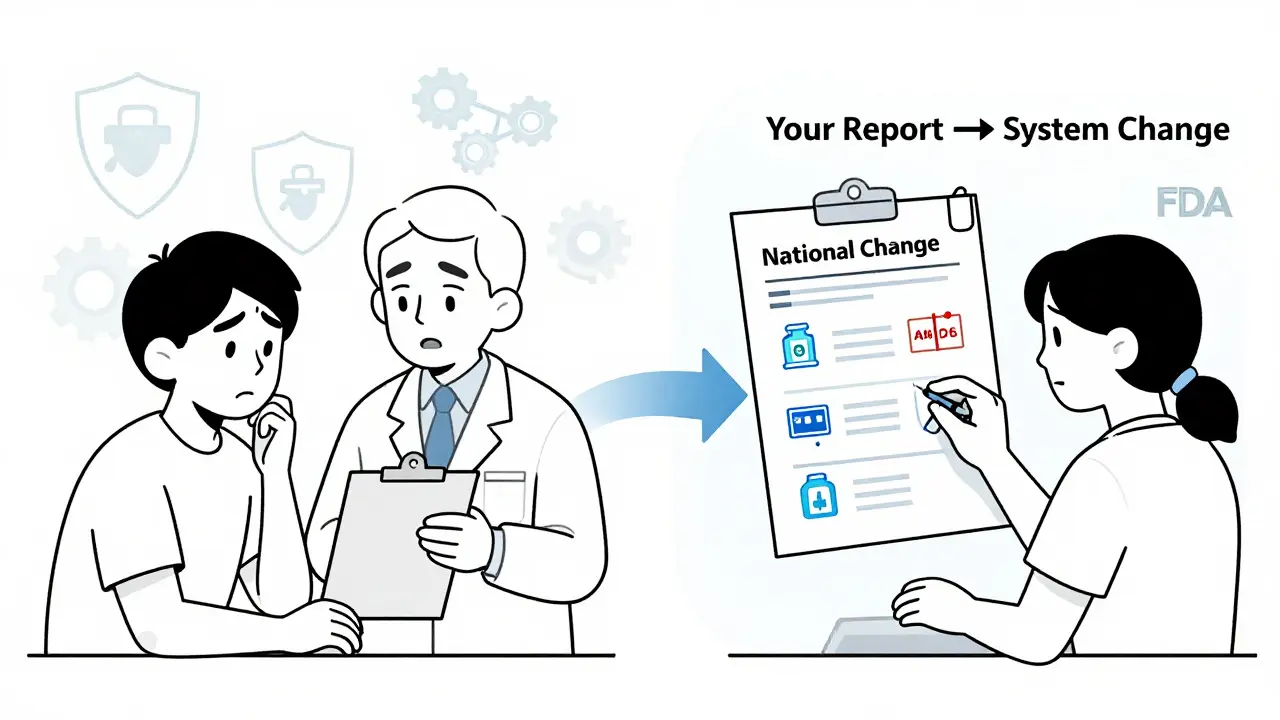
You might think, "It was just one mistake. It won’t happen again." But medication errors aren’t random. They’re systemic. A 2021 study showed that hospitals with non-punitive reporting cultures saw a 300-400% increase in error reporting. Why? Because people stopped hiding mistakes. And when mistakes are seen, they’re fixed.The Institute of Medicine found that 1.3 million people are injured each year by medication errors. That’s not because doctors are careless. It’s because systems are broken. A label gets misprinted. A computer defaults to the wrong dose. A nurse is rushed. These aren’t personal failures. They’re design flaws.
When you report, you’re not just fixing your own care. You’re helping build a safer system for everyone. You’re telling the system: "I’m not just a patient. I’m a partner in safety."
Common Roadblocks-and How to Get Past Them
You’ll face pushback. Here’s how to handle it:- "We don’t have time." Say: "I understand you’re busy. Can you send me the form to file this myself?" Then file it with the FDA.
- "It wasn’t that serious." Say: "I didn’t say it was serious. I said it was an error. Errors matter, even if they don’t cause harm yet."
- "You’re being too sensitive." Say: "I’m being responsible. If my child got the wrong medicine, I’d want to know why-and how to stop it."
- "You can’t report this." You can. Anyone can report to the FDA. No permission needed.
If you’re ignored, escalate. Ask for the patient advocate. Call the hospital’s main line and ask for the quality improvement department. Send a certified letter. Keep a paper trail. You’re not being difficult. You’re being vigilant.
What You Can Do Today
Don’t wait for the next error. Be ready:- Keep a list of all your meds, doses, and reasons for taking them.
- Take a photo of every pill bottle when you get it.
- Know the names of your providers and pharmacists.
- Bookmark the FDA MedWatch page: fda.gov/medwatch (you can file online in minutes).
- Learn the ISMP reporting link: ismp.org/report
Reporting a medication error isn’t about blame. It’s about truth. It’s about saying: "I trust you to keep me safe. But I’m not going to let a mistake slip by without asking why."
What should I do if I think I was given the wrong medication?
Stop taking the medication immediately. Call your provider or pharmacist to confirm the correct prescription. Keep the original bottle and take photos of the label. Document any symptoms you’re experiencing. File a report with your provider and consider submitting a report to the FDA’s MedWatch program. Don’t wait-early reporting can prevent harm to others.
Can I report a medication error even if I didn’t get hurt?
Yes. In fact, reporting near-misses is one of the most valuable things you can do. Many serious errors are caught before they cause harm. These "close calls" help systems identify weaknesses before someone gets hurt. The Institute for Safe Medication Practices says near-miss reports are just as important as injury reports because they reveal where systems are failing.
Will reporting a medication error get me in trouble?
No. Reporting a medication error as a patient will not get you in trouble. The FDA and ISMP systems are designed to protect reporters. Your report is confidential and anonymous if you choose. Even if you report through your provider, they are required to focus on fixing the system-not punishing you. The goal is safety, not blame.
How long does it take for a reported medication error to lead to changes?
It varies. Internal reports may lead to changes in your clinic within weeks-like updated labeling or staff training. FDA reports take longer, often months, because they’re analyzed alongside thousands of others to spot national patterns. But when a pattern emerges-like a specific drug batch being mislabeled-it can trigger a recall in days. Your report is part of a larger puzzle.
Do I need medical records to report a medication error?
You don’t need them to file a report, but they make your report stronger. If you can get your prescription history or pharmacy records, include them. A 2023 FDA guideline says 92% of successful investigations rely on comparing what was prescribed versus what was given. If your provider won’t give you records, you can request them directly under HIPAA-they’re legally required to send them within 30 days.
Can I report a medication error that happened in a nursing home?
Yes. Nursing homes are required to report medication errors to state health departments and the FDA. You can file a report directly through the FDA’s MedWatch portal. If the error affected a loved one, you can report on their behalf. Include details about the facility, the staff involved, and the medication error. Your report helps improve safety standards across the entire system.
Medication errors are not your fault. But fixing them? That’s something you can do. And when you do, you’re not just protecting yourself. You’re protecting everyone who walks into a pharmacy, clinic, or hospital tomorrow.

12 Comments
Patrick Jackson
March 5 2026
I just got back from my pharmacy and saw a pill that looked totally different from last time. I didn't say anything at first... thought maybe I was crazy. But then I checked the label - same name, different number. Took a pic. Called my doctor. They were shocked. Turns out, it was a mix-up at the warehouse. I filed with MedWatch. Don't wait. You're not being dramatic. You're being smart. 🙌
Adebayo Muhammad
March 6 2026
So... let me get this straight. You're telling me that the FDA receives 140,000 reports annually... and only 14% come from patients? That's not a system failure. That's a cultural failure. We've been conditioned to be passive. To trust institutions blindly. But trust is not a substitute for verification. The system doesn't fix itself. People do. And people like you? You're the anomaly. The irritant. The necessary glitch in the matrix.
Pranay Roy
March 7 2026
You know what's really happening? This whole thing is a distraction. Big Pharma and the FDA are in bed together. They want you to report errors so they can say 'look how transparent we are!' while quietly burying the real issues - like drug pricing, generic substitution without disclosure, and off-label promotion. You're being manipulated into playing their game. The real solution? Defund the FDA. Let the market decide. Or better yet - stop taking pills altogether.
Joe Prism
March 9 2026
I'm from Nigeria. We don't have MedWatch. We have 'hope and a prayer.'
But I still take photos of my pills. I still ask questions.
Because in a system that doesn't care - your vigilance is your only safety net.
Thanks for writing this. It's not just for Americans.
Bridget Verwey
March 10 2026
Oh sweet baby Jesus, someone finally said it. You don’t need permission to speak up. You don’t need to be polite. You don’t need to be 'grateful' for being alive after a near-miss. You’re not a patient. You’re a human being with a right to not be poisoned by bureaucracy. 🙏💊 #StopBeingNiceToSystemsThatFailYou
Andrew Poulin
March 12 2026
Stop overcomplicating this. If it feels wrong - stop taking it. Call your doctor. Take a picture. File the report. Done. No drama. No guilt. No 'maybe I'm wrong.' You're not a burden. You're the firewall.
Weston Potgieter
March 12 2026
I read this whole thing and honestly? I'm tired. Why do we have to do all this work? Shouldn't the pharmacy just get it right? Why is the burden on the person who's already sick? This isn't empowerment. It's exhaustion with a side of bureaucracy. I'm not filing anything. I'm just going to stop taking meds altogether. Maybe I'll live longer.
Vikas Verma
March 13 2026
Medication error reporting is a critical component of pharmacovigilance ecosystem. The data collected through MedWatch and ISMP systems enables root cause analysis and systems-level interventions. It is imperative that stakeholders - particularly patients - actively participate in adverse event surveillance to enhance patient safety metrics and reduce preventable morbidity. Proactive engagement yields measurable outcomes in healthcare quality indices.
Sean Callahan
March 14 2026
i just wanted to say... i reported a thing last year and then... i dont know... i just felt so drained? like i did something right but then no one cared? and then i started doubting myself like was it even a mistake? or was i just paranoid? i still have the photo. i still have the bottle. i just... dont know what to do with it anymore. sorry for the ramble. just needed to say it.
Jeff Mirisola
March 16 2026
This is why I love people like you. You don't just complain. You fix. You report. You turn pain into power. You're not just protecting yourself - you're building a legacy of safety for strangers you'll never meet. Keep going. The world needs more of this.
Susan Purney Mark
March 17 2026
I'm a nurse. I've seen the system from the inside. I'm so sorry you had to go through this. But thank you - for speaking up. We need more patients like you. You're not a hassle. You're a hero. 🫶
Ian Kiplagat
March 17 2026
Filing a report with MedWatch took me 7 minutes. I didn't even need to log in. Just typed, uploaded the photo, hit submit. That's it. No drama. No paperwork. Just a button. Why aren't more people doing this?