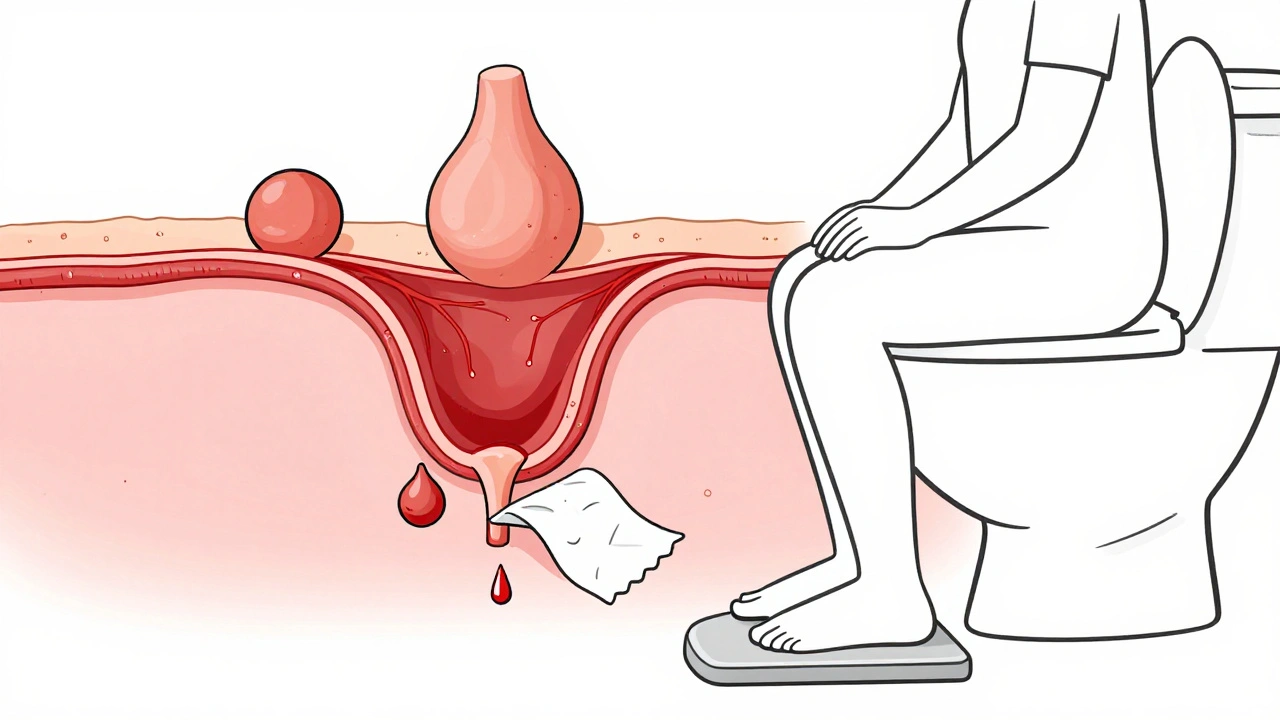
Learn the difference between internal and external hemorrhoids, what causes them, and the most effective treatments-from home remedies to medical procedures. Stop guessing and start fixing.
Rectal Bleeding: Causes, Risks, and What to Do Next
When you see rectal bleeding, blood coming from the rectum during or after a bowel movement. Also known as hematochezia, it’s a symptom that can range from minor irritation to a warning sign of something serious. It’s not a disease itself—it’s your body’s way of saying something’s off inside. Many people panic or ignore it, but the truth is, you need to understand why it’s happening before deciding what to do.
Hemorrhoids, swollen veins in the rectum or anus are the most common cause. They’re uncomfortable, sometimes painful, and often show up after straining during bowel movements. Then there’s anal fissure, a small tear in the lining of the anus, which causes sharp pain and bright red blood on toilet paper. Both are usually harmless, but they can feel terrifying if you’ve never experienced them. On the other hand, gastrointestinal bleeding, bleeding from deeper in the digestive tract—like the colon or rectum—can signal conditions like diverticulosis, inflammatory bowel disease, or even colorectal cancer, a tumor in the colon or rectum that may bleed silently over time. The color of the blood matters: bright red usually means the source is near the end of the digestive tract, while darker blood could mean it’s coming from higher up.
Age, family history, and lifestyle play big roles. If you’re over 50 and notice new bleeding, it’s not something to wait on. Even if it stops, it can come back. And if you’ve got changes in bowel habits, unexplained weight loss, or fatigue along with the bleeding, those are red flags that need attention. The good news? Many causes are treatable, especially when caught early. You don’t need to suffer in silence or fear. There are clear steps to take—what tests to ask for, what doctors look for, and how to know if it’s time to push for more than a quick checkup.
Below, you’ll find real, practical advice from people who’ve been there. Whether it’s understanding how medications can cause bleeding, recognizing when a routine colonoscopy is overdue, or learning how to track symptoms before your doctor’s visit, these posts give you the tools to act—not just worry. No fluff. No scare tactics. Just what you need to know to protect your health.