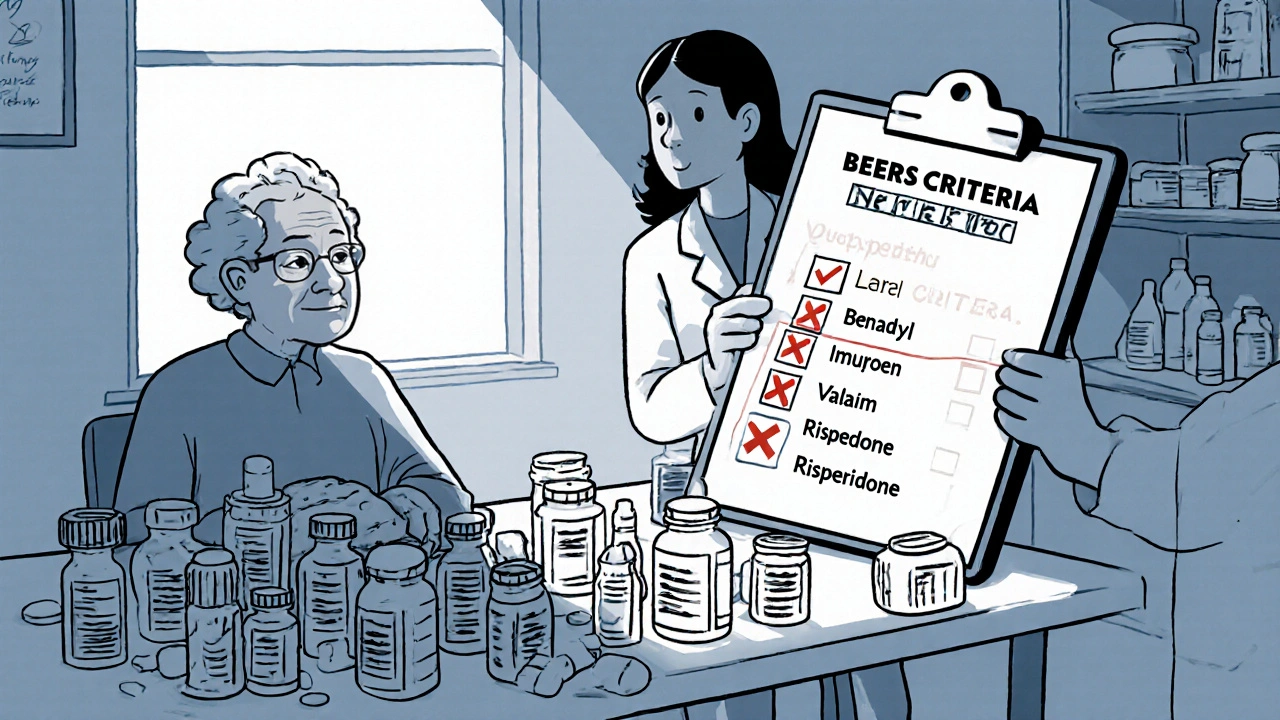
The Beers Criteria identifies medications that pose more risks than benefits for seniors. Learn which common drugs to avoid, why they're dangerous, and what safer alternatives exist for older adults.
Inappropriate Drugs for Elderly: Safe Medication Choices for Seniors
When it comes to aging, not all medicines are created equal. A drug that works fine for a 40-year-old might be inappropriate for elderly patients—leading to dizziness, confusion, falls, or even hospitalization. The Beers Criteria, a widely used list of potentially harmful medications for older adults is updated regularly by experts to help doctors and patients spot these risks. It’s not about age alone—it’s about how the body changes. Slower metabolism, weaker kidneys, and altered brain chemistry mean many common prescriptions become more dangerous than helpful after 65.
One major issue is polypharmacy, when seniors take five or more medications at once. Each new drug adds risk, especially if it interacts with another. For example, an antihistamine for allergies might seem harmless, but it can cause severe drowsiness or urinary retention in older adults. Same with benzodiazepines for sleep or anxiety—they increase fall risk by up to 50%. Even some common pain relievers like long-term NSAIDs can damage kidneys or cause stomach bleeds. The drug interactions in seniors, often overlooked because symptoms mimic normal aging can be silent killers: confusion mistaken for dementia, fatigue blamed on getting older, or constipation ignored until it becomes critical.
What makes this even trickier is that many of these drugs were prescribed years ago and never re-evaluated. A prescription for a muscle relaxant after a back injury at 58 might still be on file at 75, long after the injury healed. Or a sleep aid started during a stressful time may now be taken nightly, even if it’s no longer needed. The goal isn’t to stop all meds—it’s to stop the ones that do more harm than good. That’s where the Beers Criteria becomes a practical tool. It doesn’t say avoid everything—it says avoid these specific ones, like diphenhydramine, chlorpheniramine, cyclobenzaprine, and certain anticholinergics, because the data shows clear harm with little benefit in older adults.
Knowing which drugs to question is the first step. The next is having the right conversation with your doctor or pharmacist. Bring your full list—prescriptions, OTCs, supplements. Ask: Is this still necessary? Are there safer alternatives? Could we try reducing the dose? Many seniors feel guilty questioning their meds, but the truth is, your body now needs different care than it did ten years ago. The articles below show real cases, real mistakes, and real fixes—like how a simple switch from an old sleeping pill to a non-drug sleep strategy cut falls in half, or how stopping an unnecessary anticholinergic reversed confusion in an elderly man thought to have early Alzheimer’s. You’ll find practical guides on spotting risky meds, understanding what’s in your pill bottle, and how to advocate for safer choices without sounding demanding. This isn’t about fear—it’s about smart, informed care.