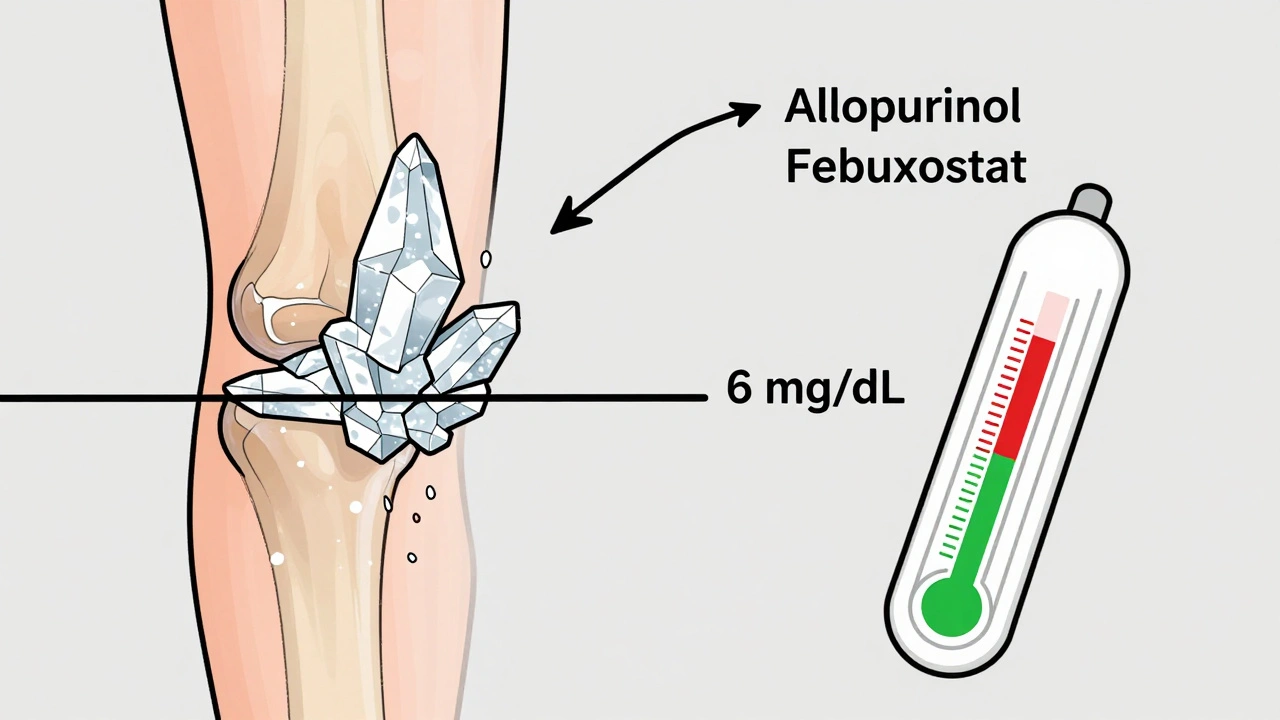
Learn how allopurinol and febuxostat help control gout by lowering serum urate to target levels below 6 mg/dL. Understand dosing, side effects, and why most patients fail to reach their goals.
Allopurinol: What It Is, How It Works, and What You Need to Know
When your body makes too much allopurinol, a xanthine oxidase inhibitor used to lower uric acid in the blood. Also known as Zyloprim, it’s one of the most prescribed drugs for gout and kidney stones caused by excess uric acid. Unlike painkillers that just mask symptoms, allopurinol goes after the root cause: overproduction of uric acid from broken-down purines in your food and cells.
It’s not just for gout flare-ups. People with certain cancers, like leukemia or lymphoma, often take allopurinol before chemotherapy to prevent uric acid spikes that can damage kidneys. It’s also used in people with recurrent kidney stones linked to high uric acid levels. The drug works by blocking the enzyme xanthine oxidase—this stops your body from turning purines into uric acid. Less uric acid means fewer crystals forming in joints and kidneys. Studies show that consistent use can cut gout attacks by over 80% in the first year, but it takes weeks to build up in your system. That’s why doctors don’t start you on it during a flare—you’ll need a separate pain reliever for that.
Side effects are usually mild, but some people get rashes, nausea, or drowsiness. Rarely, a severe skin reaction called Stevens-Johnson syndrome can happen, especially in people of Asian descent with the HLA-B*5801 gene variant. That’s why some doctors test for this gene before prescribing, especially if you’re from Southeast Asia. If you get a rash, stop taking it and call your doctor right away. Allopurinol also interacts with other drugs like azathioprine and warfarin, so always tell your pharmacist what else you’re taking. It’s not a quick fix—it’s a long-term tool. Most people take it daily for years, and many say their quality of life improves dramatically once their uric acid stays under control.
What you won’t find in the prescription bottle is how diet plays into this. Allopurinol helps, but if you’re still eating liver, anchovies, or drinking too much beer, you’re fighting an uphill battle. The best results come from combining the drug with lower-purine eating habits and staying well-hydrated. You’ll also see in the posts below how allopurinol fits into broader medication safety topics—like avoiding dangerous interactions, managing long-term use, and understanding why some people need genetic testing before starting. There’s also real talk about what happens when generics aren’t available, how to save on costs, and what to do if you miss a dose. This isn’t just a drug guide—it’s a practical roadmap for living well with high uric acid.