

Imagine your heart’s electrical system is a tightly choreographed dance. Every beat follows a precise rhythm. Now imagine a medication slips in and slows down the recovery phase of that dance just enough to cause a stumble. That stumble can lead to torsades de pointes, a dangerous, twisting ventricular tachycardia that can degenerate into cardiac arrest. This isn't a rare horror story; it is a documented reality for patients taking common drugs like antibiotics, antidepressants, and anti-nausea medications. The condition behind this risk is called QT prolongation, an abnormal lengthening of the QT interval on an electrocardiogram (ECG). While most people will never experience this, understanding which medications raise the stakes can be life-saving.
What Is QT Prolongation?
To understand the risk, you first need to look at the ECG. The QT interval represents the time it takes for your heart’s ventricles to depolarize (contract) and repolarize (reset) between beats. Think of it as the recharge time for your heart’s battery. When certain drugs block specific potassium channels-specifically the rapid component of the delayed rectifier potassium current (IKr) encoded by the hERG gene-that recharge takes longer. The QT interval stretches out on the monitor.
Clinicians use Bazett’s formula to correct this interval for heart rate, resulting in the QTc value. A normal QTc is typically under 450 milliseconds for men and 460 milliseconds for women. However, the danger zone starts when the QTc exceeds 500 milliseconds. At this threshold, the risk of developing torsades de pointes increases three- to five-fold. Even more concerning is a sudden increase of more than 60 milliseconds from a patient’s baseline, even if they haven’t hit 500 ms yet. This electrical instability creates a substrate where re-entrant arrhythmias can spark, turning a manageable condition into a medical emergency.
The High-Risk Medication List
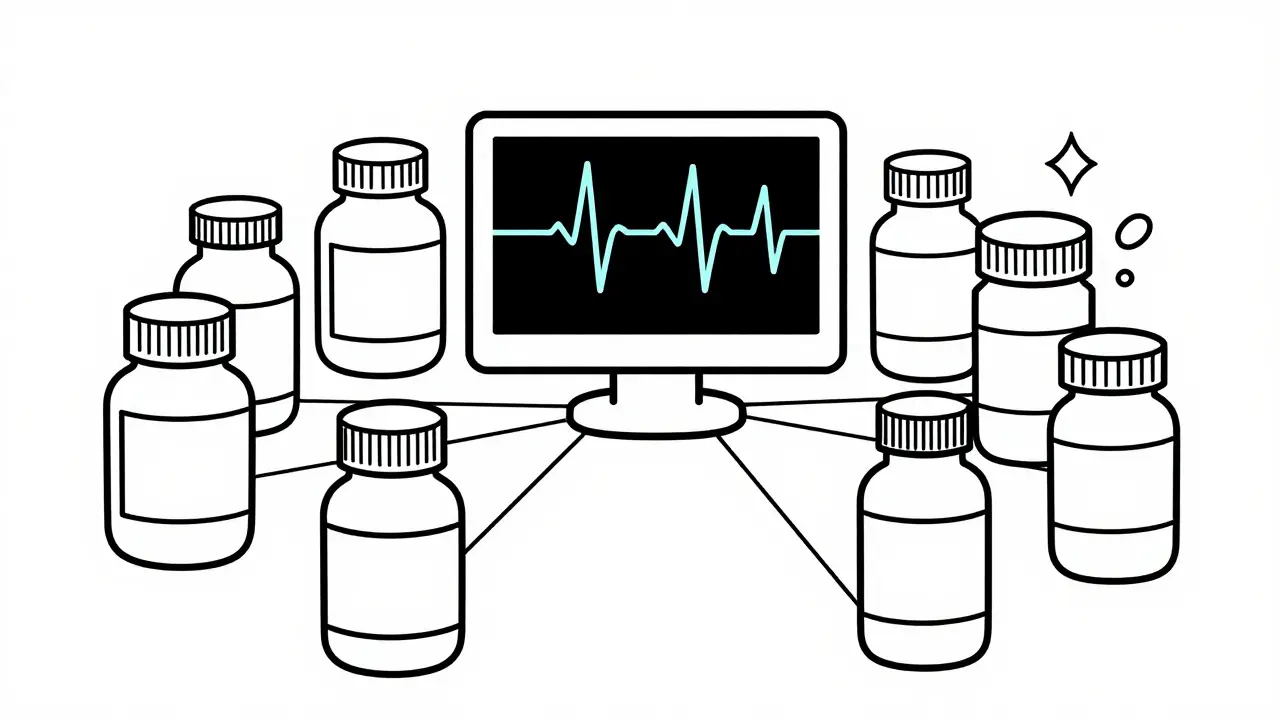
Not all drugs are created equal when it comes to heart rhythm risks. In a landmark March 2013 review, the U.S. Food and Drug Administration (FDA) analyzed 205 drugs and found that 46 agents (22%) were confirmed to prolong the QT interval. By late 2018, the database at crediblemeds.org had expanded to include 223 drugs with known, possible, or conditional risks. Here is how these medications break down by category:
| Drug Class | Common Examples | Risk Level | Key Notes |
|---|---|---|---|
| Class Ia Antiarrhythmics | Quinidine, Procainamide | High | Quinidine causes TdP in ~6% of patients historically. |
| Class III Antiarrhythmics | Sotalol, Dofetilide, Ibutilide | High | Sotalol has a 2-5% incidence in trials; Amiodarone is lower (<1%). |
| Antibiotics | Erythromycin, Clarithromycin, Moxifloxacin | Moderate to High | Erythromycin can prolong QTc by 15-25 ms, especially with CYP3A4 inhibitors. |
| Antipsychotics | Haloperidol, Ziprasidone | Moderate | Ziprasidone carries a black box warning for ventricular arrhythmia. |
| Antiemetics | Ondansetron | Moderate | Involved in 42% of drug-induced TdP cases in one FDA analysis. |
| Antidepressants | Citalopram | Dose-Dependent | FDA limited max dose to 40 mg (20 mg for over 60s) due to risk. |
It is crucial to note that while amiodarone strongly prolongs the QT interval, its actual risk of causing torsades de pointes is surprisingly low (less than 1%). This is because amiodarone affects multiple ion channels, not just the hERG channel, which stabilizes the heart despite the prolonged QT. In contrast, sotalol blocks IKr more selectively and carries a significantly higher risk profile.
Who Is Most Vulnerable?
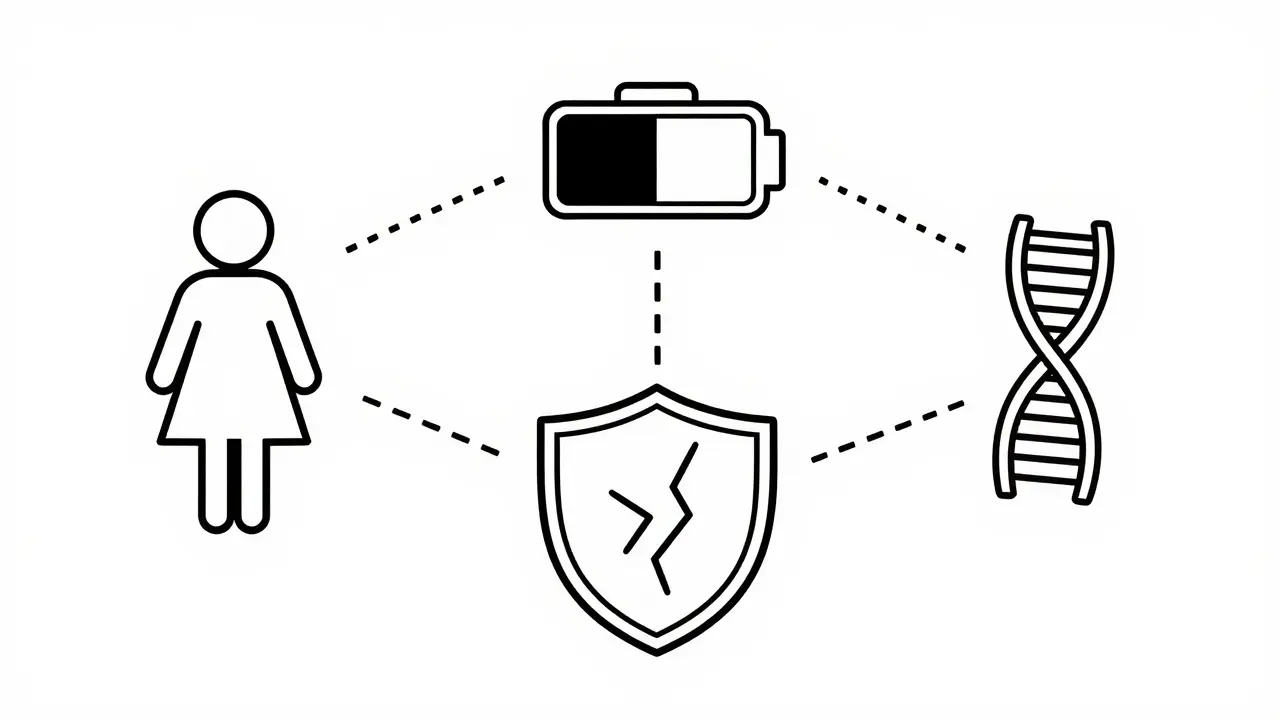
Medication alone rarely causes torsades de pointes in a healthy heart. The danger arises from a "perfect storm" of factors. According to Dr. Ray Woosley, founder of crediblemeds.org, the risk depends on the confluence of patient-specific vulnerabilities. Here are the key risk multipliers:
- Female Sex: Women account for approximately 70% of documented TdP cases. Female sex confers a 2- to 3-fold higher risk compared to males, particularly in the postpartum period.
- Electrolyte Imbalances: Low levels of potassium (hypokalemia) or magnesium (hypomagnesemia) destabilize the heart’s electrical reset mechanism. This is a major trigger when combined with QT-prolonging drugs.
- Bradycardia: Slow heart rates naturally lengthen the QT interval. If a patient with a slow heart rate takes a QT-prolonging drug, the additive effect can push them into the danger zone.
- Genetic Predisposition: About 30% of drug-induced TdP cases involve underlying genetic variants in the hERG channel or other ion channels, often undiagnosed until a drug triggers the event.
- Drug Interactions: Taking two QT-prolonging drugs simultaneously is risky. A 2017 study showed that combinations like haloperidol plus ondansetron carry substantially higher risks than either drug alone.
For example, a 65-year-old woman with gastroenteritis might receive standard doses of ondansetron for nausea and azithromycin for infection. If she also has mild dehydration leading to low magnesium, her QTc could jump from 440 ms to 530 ms within 24 hours, triggering TdP. This scenario was reported by emergency physicians in clinical discussions, highlighting how common outpatient treatments can become lethal without proper screening.
Monitoring and Prevention Strategies
You cannot prevent what you do not measure. The European Society of Cardiology’s 2022 guidelines recommend a systematic approach to managing this risk. For patients initiating high-risk QT-prolonging medications, a baseline ECG is essential. Repeat monitoring should occur within 3 to 7 days of starting therapy or increasing the dose.
Here is a practical checklist for clinicians and informed patients:
- Screen for Modifiable Risks: Before prescribing, check electrolytes (potassium, magnesium, calcium). Correct any abnormalities.
- Review Medication List: Avoid combining multiple QT-prolonging agents unless absolutely necessary. Use tools like crediblemeds.org to check interactions.
- Baseline ECG: Obtain an ECG for high-risk patients (age >65, structural heart disease, or polypharmacy).
- Monitor QTc: If the QTc exceeds 500 ms or increases by more than 60 ms from baseline, discontinue the offending agent immediately unless there are no alternatives.
- Avoid Bradycardia: Be cautious with beta-blockers or other rate-slowing drugs in patients on QT-prolonging therapies.
Hospital systems have found success with electronic health record alerts. A 2022 evaluation showed that integrated decision support reduced inappropriate prescribing of high-risk QT combinations by 58%. However, technology is only as good as the data entered. Clinicians must still interpret the context, such as whether a patient is receiving a single short-course antibiotic versus chronic methadone therapy.
The Future of Cardiac Safety Testing
The pharmaceutical industry is shifting away from relying solely on the QT interval measurement. The Comprehensive in vitro Proarrhythmia Assay (CiPA) initiative, launched in 2013 by the FDA, EMA, and Japanese regulators, now requires multi-channel screening data. This new paradigm assesses how drugs affect several ion channels simultaneously, providing a more accurate prediction of proarrhythmia risk. As of January 2025, new drug applications must include CiPA methodology results. This shift aims to reduce the failure rate of drugs in late-stage development, where each failure costs an average of $2.6 billion.
Research is also moving toward genetic stratification. The 2023 QTGEN study identified 23 genetic variants that explain 18% of the variability in drug-induced QT prolongation. In the future, a simple genetic test might tell us exactly who needs an ECG before taking citalopram or erythromycin, and who does not. Until then, vigilance remains our best defense.
What is the safe limit for QTc interval?
A QTc interval exceeding 500 milliseconds is considered the critical threshold for high risk of torsades de pointes. Additionally, an increase of more than 60 milliseconds from a patient's baseline QTc is a warning sign that warrants immediate clinical attention and potential discontinuation of the offending drug.
Why are women at higher risk for QT prolongation?
Women have a naturally longer QT interval than men due to hormonal influences on cardiac ion channels. Studies show female sex confers a 2- to 3-fold higher risk of drug-induced torsades de pointes, particularly during the postpartum period or in older age groups.
Can I take antibiotics if I have a long QT syndrome?
Some antibiotics, such as macrolides (erythromycin, clarithromycin) and fluoroquinolones (moxifloxacin), prolong the QT interval. Patients with congenital long QT syndrome should avoid these whenever possible. Always inform your doctor about your heart condition before starting any new antibiotic.
Is amiodarone safe despite prolonging the QT interval?
Yes, amiodarone is unique. While it significantly prolongs the QT interval, it has a very low risk of causing torsades de pointes (less than 1%) because it blocks multiple ion channels, which stabilizes the heart's electrical activity despite the prolonged repolarization time.
How do electrolytes affect QT prolongation risk?
Low levels of potassium (hypokalemia) and magnesium (hypomagnesemia) impair the heart's ability to repolarize properly. These electrolyte imbalances synergize with QT-prolonging drugs, significantly increasing the likelihood of developing torsades de pointes. Maintaining normal electrolyte levels is a key preventive strategy.
