
Did you know that while generic drugs make up the vast majority of prescriptions filled in the United States, they account for only a fraction of the money spent on medication? In 2024, this disparity reached historic levels. The U.S. healthcare system saved $467 billion thanks to generic and biosimilar medicines alone. That is not a typo. These savings are not just theoretical; they represent real dollars kept in patients' pockets and federal budgets.
Yet, despite these massive benefits, many people still overpay or avoid generics due to misconceptions about quality. This article breaks down the hard numbers from the latest national statistics, showing exactly how much you can save, why brand-name drugs are getting more expensive, and what risks loom on the horizon for the generic market.
The Big Picture: Volume vs. Spending
To understand the value of generics, you have to look at two different metrics: volume (how many pills are taken) and spending (how much money changes hands). The gap between these two numbers tells the story of modern American healthcare economics.
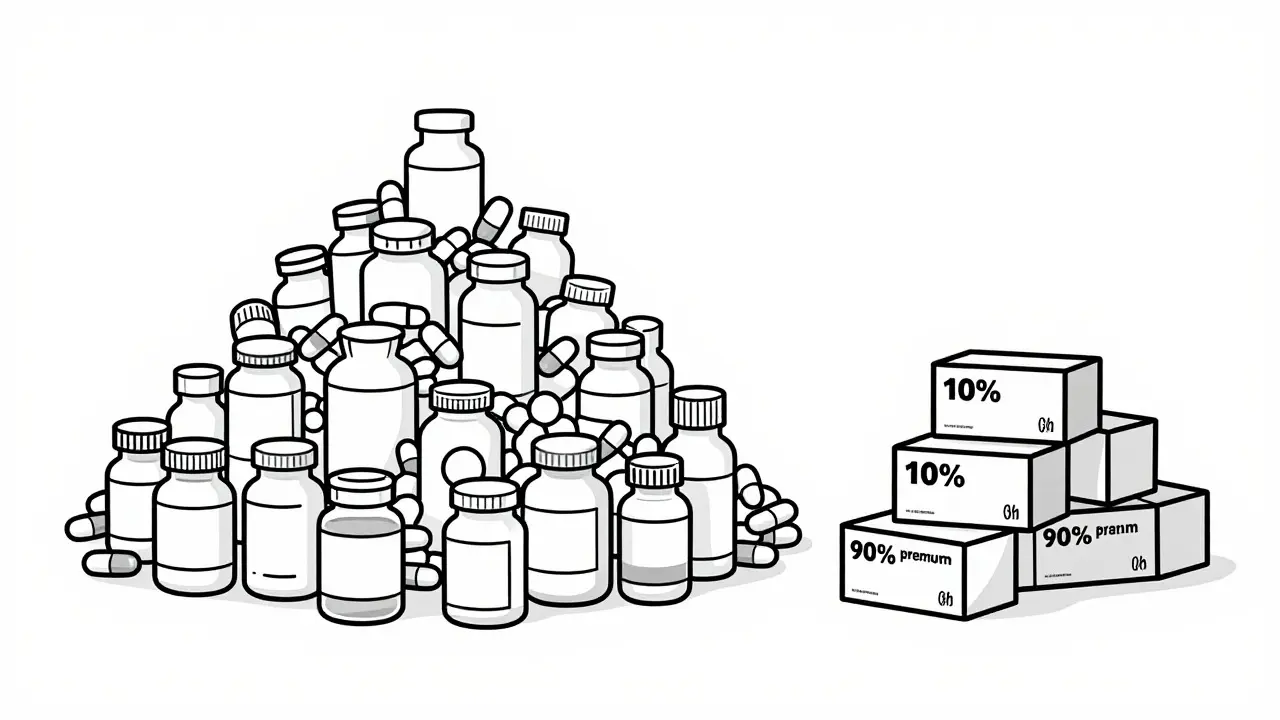
In 2024, Americans filled 3.9 billion prescriptions for generic and biosimilar medicines. That represents 90 percent of all prescriptions filled in the country. However, these prescriptions accounted for only 12 percent of total prescription drug spending, totaling roughly $98 billion. Compare that to brand-name drugs: they made up just 10 percent of prescriptions (435 million fills) but consumed 88 percent of the spending ($700 billion).
| Metric | Generics & Biosimilars | Brand-Name Drugs |
|---|---|---|
| Prescription Volume Share | 90% | 10% |
| Total Spending Share | 12% | 88% |
| Average Out-of-Pocket Cost | $6.95 | $28.69 |
| Cumulative Savings (2015-2024) | $3.4 Trillion+ | N/A |
This trend has been consistent since 2016. Generics have steadily maintained their 90 percent market share in volume, but their cost share has dropped significantly-from 27 percent in 2016 to 12 percent in 2024. This demonstrates the deflationary impact of competition in the generic market. As more manufacturers enter the space, prices drop, even as more people use the drugs.
What You Pay at the Pharmacy Counter
Statistics help policymakers, but your wallet cares about the price tag at the pharmacy counter. The difference in out-of-pocket costs is stark. According to the Center for Biosimilars' analysis of 2024 data, the average out-of-pocket cost for a generic prescription was $6.95. For a brand-name equivalent, that number jumps to $28.69.
That is nearly a five-fold difference. If you take multiple medications daily, choosing generics over brand names can save you hundreds of dollars every month. For uninsured Americans, the stakes are even higher. Since 2019, the cost of brand-name drugs for the uninsured has increased by approximately 50 percent, reaching an average of $130.18 per prescription. During that same period, the cost of generic prescriptions actually decreased by $2.45 (a 6 percent drop).
This divergence highlights a critical reality: brand-name pricing is often driven by patent exclusivity and lack of competition, allowing companies to raise prices well above inflation rates. In contrast, the generic market operates on thin margins and high volume, forcing prices down as efficiency improves.
Biosimilars: The Rising Star in Savings
While traditional small-molecule generics (like aspirin or metformin) get most of the attention, a newer category called biosimilars is rapidly changing the landscape. Biosimilars are highly similar to complex biological products already approved by the FDA. They are used to treat serious conditions like cancer, rheumatoid arthritis, and Crohn's disease.
In 2024, biosimilars generated $20.2 billion in savings, nearly doubling from the previous year. Since entering the U.S. market in 2015, they have accumulated $56.2 billion in total savings. Remarkably, about 60 percent of these savings occurred in just the past two years, indicating accelerating adoption.
Safety is often a concern with new drug types, but the data is reassuring. Biosimilars have been administered across nearly 3.3 billion days of patient therapy with no unique clinical challenges reported. This suggests that as biologic patents expire, switching to biosimilars will become a major driver of future healthcare cost reduction.
The Deflationary Power of Generics
One of the most counterintuitive facts about the pharmaceutical industry is that it is one of the few sectors where spending goes down even when usage goes up. This is known as deflation.
Consider the volume of generic oral solids (pills and capsules). In 2015, Americans took approximately 167 billion units. By 2024, that number rose to around 197 billion-a 15 percent increase in utilization. Yet, despite selling more pills, the total amount spent on all generic sales in the U.S. decreased by $6.4 billion since 2019.
Recent quarterly data confirms this trend continues into 2025. In May 2025, there was $40 million in deflationary generic drug pricing against $26 million in inflationary drugs, resulting in $14 million of net deflation for Medicaid programs. June 2025 showed even stronger results, with $45 million in deflation against $29 million in inflation, yielding $17 million in net deflation.
This deflationary pressure is unique to generics. Brand-name drugs, by contrast, saw median price increases of 4.5 percent in early 2025-nearly double the overall U.S. inflation rate. This widening gap means that the choice between generic and brand is becoming increasingly significant for budget-conscious patients and payers alike.
Who Benefits Most? Medicare and Medicaid
Government healthcare programs bear the brunt of rising drug costs, making generic savings vital for fiscal sustainability. In 2024, generics generated $142 billion in savings for Medicare. When broken down per person, that equates to $2,643 saved for each beneficiary.
For hospitals participating in the 340B program, which provides discounted outpatient medications, the outlook is also positive. Current annual spending on outpatient medications at these hospitals is $19.8 billion. Projections suggest this could decrease to $10.2 billion, yielding potential annual savings of $9.5 billion. Over a ten-year period, these efficiencies could result in estimated savings of $144 billion.
These numbers illustrate that generic drugs are not just a personal financial tool but a systemic necessity for keeping public health programs solvent. Without generics, Medicare and Medicaid would face unsustainable cost trajectories.
The Hidden Risk: Sustainability and Shortages
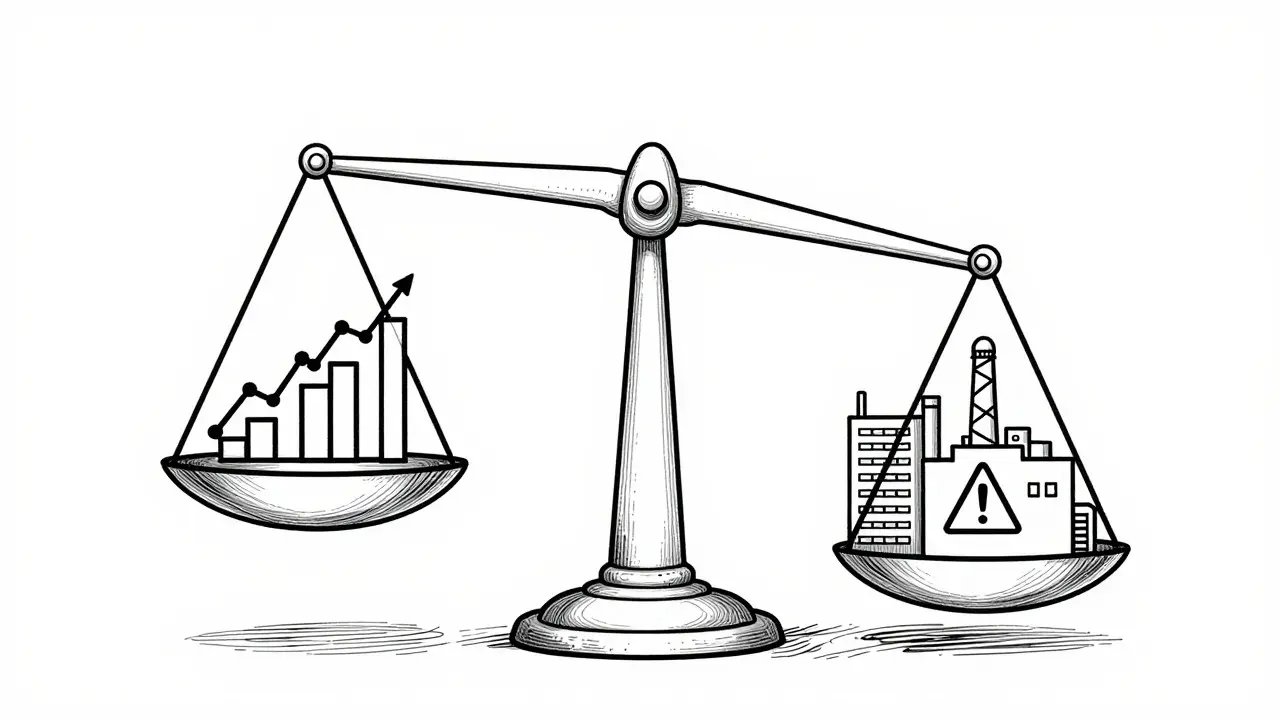
If generics are so beneficial, why aren't we hearing more about them? The answer lies in the fragility of the supply chain. The very forces that drive prices down-intense competition and low margins-also make manufacturing less profitable for some companies.
The Biosimilars Council warns that "significant price deflation... can lead to unsustainable market conditions for generic drug manufacturers." When profits vanish, companies may stop producing certain drugs altogether. This increases the likelihood of shortages or drugs leaving the market entirely.
We have seen glimpses of this instability. For example, Vasostrict by Endo Pharmaceuticals experienced a 76 percent list price decrease from April to July 2025. While great for buyers, such drastic cuts signal margin compression that could threaten long-term production capacity. Policymakers are now grappling with how to maintain low prices without driving manufacturers out of business.
Barriers to Entry: Patents and Delay Tactics
Despite the clear benefits, generic access is often delayed by strategic legal maneuvers from brand-name holders. Two common tactics are "patent thicketing" and "product hopping."
- Patent Thicketing: Brand companies file numerous minor patents to create a web of legal barriers, delaying generic entry. The Congressional Budget Office estimates that limiting this practice would yield $1.8 billion in savings over 10 years.
- Product Hopping: Companies slightly reformulate a drug right before a patent expires, forcing doctors to switch to the new version and resetting the clock for generic competitors. Ending this could reduce federal spending and increase revenues by $1.1 billion over a decade.
- Pay-for-Delay: Settlements where brand companies pay generic makers to delay launching cheaper alternatives. A study by the Actuarial Research Corporation found these settlements drive up costs by nearly $12 billion annually, with $3 billion impacting Medicare.
Banning pay-for-delay practices alone could save $45 billion over 10 years. These policy levers offer opportunities to accelerate generic availability and deepen savings beyond current levels.
Future Outlook: What to Expect in 2026 and Beyond
As we move through 2026, several trends will shape the generic drug landscape. First, biosimilar adoption is expected to accelerate as more blockbuster biologics lose patent protection. Second, regulatory bodies like the Department of Health and Human Services are implementing Most-Favored-Nation pricing targets, aiming to align U.S. prices with those in other developed nations.
However, consumers should remain vigilant about supply chain stability. The convergence of growing biosimilar adoption, continued generic price deflation, and brand-name price inflation creates a complex environment. While the substantial savings delivered by generics and biosimilars remain critically important, they are vulnerable to market forces and policy decisions.
For individuals, the strategy remains simple: always ask for the generic option unless your doctor specifies otherwise. The science supports equivalence, and the economics support your wallet. With nearly $467 billion in savings recorded last year, generics continue to be the backbone of affordable healthcare in the United States.
Are generic drugs as effective as brand-name drugs?
Yes. The FDA requires generic drugs to be bioequivalent to their brand-name counterparts, meaning they must contain the same active ingredients, strength, dosage form, and route of administration. Clinical studies show they perform identically in the body.
Why are brand-name drugs so much more expensive?
Brand-name drugs carry the cost of research and development, marketing, and patent exclusivity. Without competition, manufacturers can set higher prices. Generics benefit from established safety profiles and intense market competition, which drives prices down.
What is a biosimilar?
A biosimilar is a biological product that is highly similar to an already-approved reference biologic. Unlike small-molecule generics, biologics are complex proteins produced in living cells, so biosimilars are not identical copies but meet strict standards for safety, purity, and potency.
How much did generics save the US healthcare system in 2024?
According to the 2025 U.S. Generic & Biosimilar Medicines Savings Report, generic and biosimilar medicines saved the U.S. healthcare system $467 billion in 2024 alone.
Will generic drug shortages increase?
There is a risk. Industry groups warn that extreme price deflation can make manufacturing unprofitable, leading companies to exit the market. This could result in shortages if too few manufacturers remain to supply essential medications.
Do I need a special prescription for a generic?
No. Your doctor writes a prescription for a specific medication, and the pharmacist typically dispenses the generic version automatically unless the prescription states "Dispense as Written" or "Brand Medically Necessary." You can also request a generic substitution directly.
