

When a patient fills a prescription for warfarin, levothyroxine, or tacrolimus, they might not realize they’re taking a NTI drug-a medication where even tiny changes in dose can cause serious harm. These aren’t ordinary pills. A 5% drop in blood levels might mean the drug stops working. A 5% rise could trigger toxicity. And yet, pharmacists in many states can swap the brand name for a generic without telling the doctor-or even the patient. So what do the doctors who write these prescriptions really think about it?
Why NTI Drugs Are Different
Narrow Therapeutic Index (NTI) drugs have a razor-thin margin between effectiveness and danger. The FDA defines them as drugs where the difference between the lowest dose that works and the lowest dose that causes harm is two or less. For comparison, most medications have a ratio of 10 or higher. That means if your body absorbs 10% more of an NTI drug than it should, you could end up in the hospital. If it absorbs 10% less, the treatment fails.Common NTI drugs include warfarin (a blood thinner), levothyroxine (for thyroid function), phenytoin (for seizures), lithium (for bipolar disorder), and tacrolimus (used after organ transplants). These aren’t optional meds. They’re life-sustaining. And because their effects are so sensitive, even small differences in how generics are made can matter.
The FDA requires generic versions of NTI drugs to meet stricter bioequivalence standards than regular generics. While most generics must be within 80-125% of the brand’s concentration, NTI generics must stay between 90-111%. That sounds tight-but is it tight enough? Many prescribers say no.
Doctors Are Divided
A 2018 survey of 710 pharmacists found that 87% believed most doctors thought generic NTI drugs were just as safe and effective as brand names. But here’s the twist: only 60% of those same pharmacists substituted generics for refills, even though they did so for 82% of new prescriptions. Why the difference?Because once a patient is stable on a brand-name drug, doctors don’t want to risk shaking that stability. Switching a patient from brand to generic might seem harmless on paper. But in real life, it often means more blood tests, more office visits, and more anxiety-for both patient and provider.
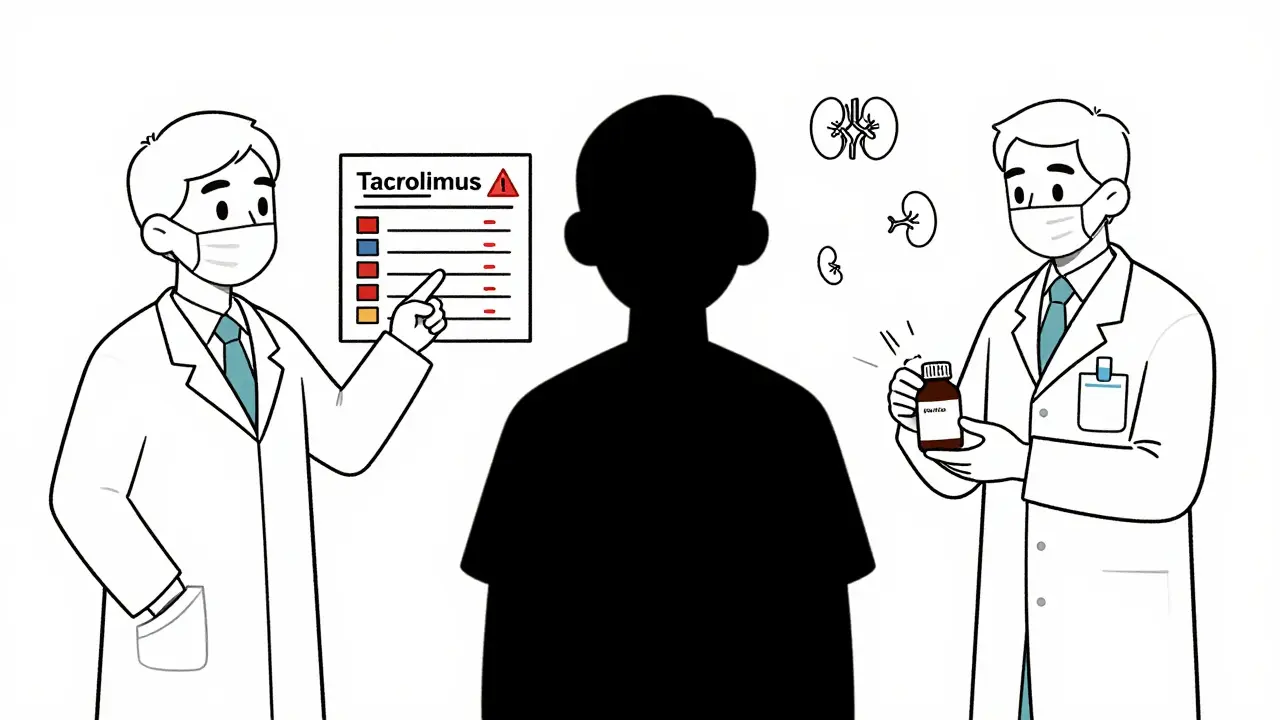
Transplant specialists are especially wary. A 1997 survey of 59 transplant pharmacists showed that 92% believed bioequivalence testing for drugs like tacrolimus should be done in actual patients, not healthy volunteers. Only 12% thought the FDA’s current standards were good enough. That’s not skepticism-it’s experience. In transplant patients, a small drop in tacrolimus levels can mean organ rejection. A small spike can mean kidney damage.
Neurologists are just as cautious. The American Academy of Neurology says automatic substitution for drugs like phenytoin and levothyroxine should require prescriber approval. Why? Because seizures and thyroid levels don’t tolerate guesswork.
State Laws Create a Patchwork
The rules vary wildly depending on where you live. As of 2023, 28 U.S. states have specific laws around NTI drug substitution. Some, like Texas and Florida, maintain official lists of NTI drugs and block automatic substitution unless the prescriber checks a box saying it’s okay. Other states require the pharmacist to notify the doctor before switching. And 17 states require the patient to give explicit consent before a substitution happens.That matters. A 2022 study found that states with strict consent laws had 23% fewer generic substitutions for NTI drugs. That’s not because patients refused-they just didn’t get switched without being asked.
Meanwhile, the Academy of Managed Care Pharmacy says restricting substitution hurts patients by raising costs. They argue pharmacists, working with doctors, should be allowed to use their judgment. But the American Society of Health-System Pharmacists disagrees. Their 2021 survey found 78% of hospital pharmacists always notify the prescriber before substituting an NTI drug. That’s not just policy-it’s habit. Because they’ve seen what happens when communication breaks down.
The Real Cost of Substitution
It’s easy to talk about savings. Generic drugs save billions. But when it comes to NTI drugs, the hidden costs add up fast.The American Medical Association found that 41% of physicians dealt with confused patients after an NTI substitution. Patients didn’t understand why their blood test results changed. Why they felt different. Why they had to come back for another check-up. That confusion led to 29% more office visits for monitoring. Each one cost an average of $127-according to MGMA data. Multiply that across thousands of patients, and you’re talking real money.
And it’s not just time and money. The Institute for Safe Medication Practices tracked over 1,200 NTI-related medication errors between 2015 and 2020. Nearly 4 in 10 involved substitution. That’s not a small number. Even if only 8% caused harm, that’s still nearly 100 patients who were hurt because someone switched their drug without warning.
Prescribers Still Prefer Brands
Despite generics being cheaper, brand-name NTI drugs still hold onto a surprising share of the market. Medicare Part D data from 2022 shows brand-name NTI drugs kept 23% of prescriptions-compared to just 8% for non-NTI drugs. That’s not because patients demand them. It’s because doctors prescribe them.Top NTI drugs with the highest brand persistence:
- Tacrolimus: 32% brand share
- Warfarin: 28%
- Levothyroxine: 25%
- Phenytoin: 21%
- Lithium: 19%
A 2023 survey of internists found that 57% would choose brand-name NTI drugs when starting a high-risk patient on therapy. Why? Stability. Consistency. Predictability. One doctor put it simply: "I don’t want to be the one who switched it and then had to explain why their INR went from 2.5 to 5.8."
Communication Is the Key
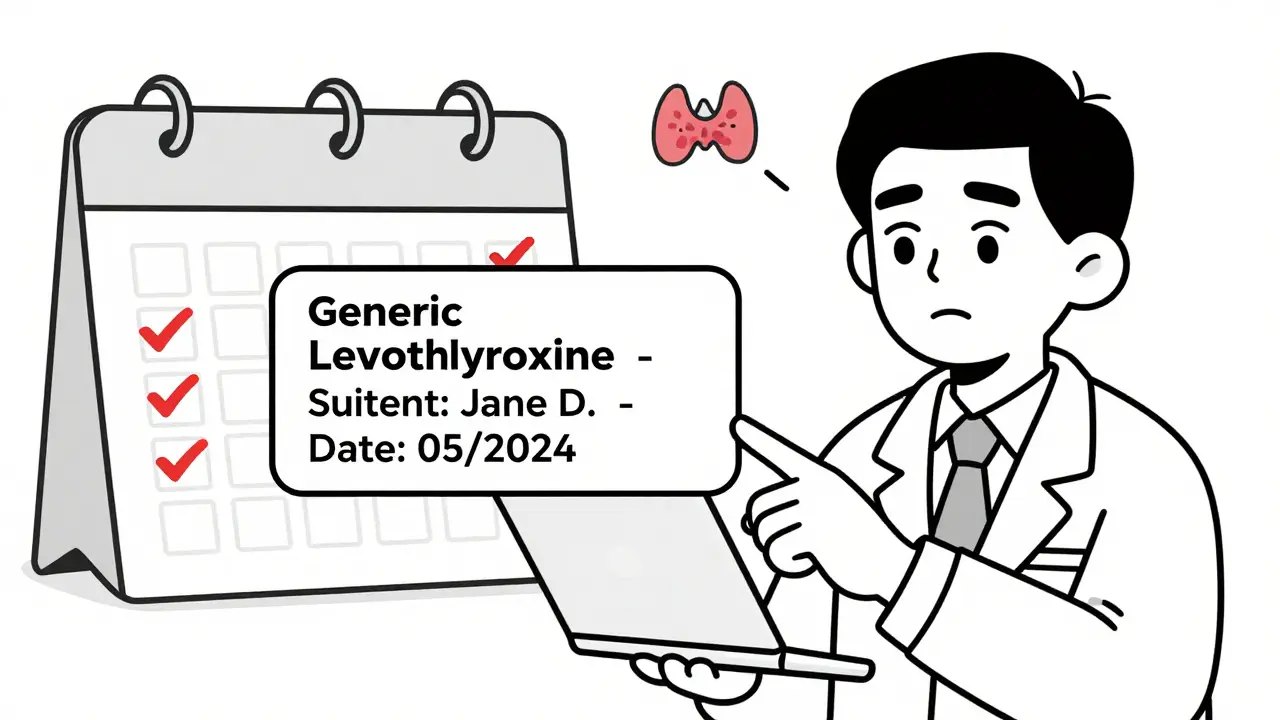
Doctors aren’t against generics. They’re against surprise. A 2021 study found that 63% of physicians preferred electronic notifications about NTI substitutions-not phone calls. Primary care doctors got about 2.7 notifications a month. Psychiatrists managing lithium? Over five.That’s not noise. That’s necessary information. When a pharmacist switches a patient’s levothyroxine, the doctor needs to know. Not because they’re controlling. But because they need to check thyroid levels before the next appointment. If they don’t know about the switch, the patient might show up with symptoms of hypothyroidism-and the doctor won’t know why.
Dr. Michael Cohen of the Institute for Safe Medication Practices says prescribers need clearer labeling and standardized communication. That’s not a luxury. It’s a safety requirement.
What’s Changing?
The FDA added 12 new drugs to its NTI list in March 2023 and removed three based on new data. That shows they’re listening. The American Society of Clinical Oncology now supports generic substitution for oral cancer drugs-so long as therapeutic drug monitoring is in place. That’s a shift.The PRESCRIPT-NTI trial, currently enrolling 1,200 patients across 42 sites, will deliver results in mid-2024. It’s the first large-scale study to track actual patient outcomes after NTI substitution. Until then, doctors are flying blind in some ways.
And CMS, the agency that runs Medicare, just proposed a rule in November 2023 requiring prescriber notification for all NTI substitutions under Part D. That’s a big move. It means even if your state doesn’t require it, Medicare will.
Where Do We Go From Here?
The truth is, most NTI generics are safe. The FDA says 98% perform within 3-4% of the brand. And that’s true for most people. But medicine isn’t about most people. It’s about the ones who can’t afford a mistake.Doctors don’t want to be the bottleneck. They want to be informed. They want to know when a switch happens. They want to know if the patient is stable. They want to avoid unnecessary blood tests and ER visits. And they want to trust that the system won’t accidentally harm someone under their care.
It’s not about brand loyalty. It’s about responsibility. And until we have better communication, clearer labeling, and real-world data proving substitution is safe for every patient-many prescribers will keep choosing the brand. Not because they’re old-fashioned. But because they’ve seen what happens when the system gets it wrong.

15 Comments
lisa Bajram
January 9 2026
Okay but let’s be real-switching someone’s levothyroxine is like swapping out the engine in a Formula 1 car and hoping it still wins the race. I’ve seen patients go from feeling fine to exhausted, depressed, and hair falling out in clumps. No one talks about how much mental toll that takes. It’s not just labs-it’s trust broken.
Paul Bear
January 11 2026
Let’s not confuse bioequivalence with therapeutic equivalence. The FDA’s 90–111% range is statistically acceptable but clinically meaningless for NTI drugs. Pharmacokinetic variability in real patients-especially those with GI disorders, polypharmacy, or aging metabolism-can easily push levels outside safe thresholds. This isn’t opinion, it’s pharmacology 101.
Kunal Majumder
January 11 2026
My uncle was on warfarin for 12 years on brand. Got switched to generic without warning. INR went from 2.4 to 6.1. Ended up in ER with a bleed. Docs didn’t even know it happened. Don’t let bureaucrats decide what’s safe for your life.
Jake Kelly
January 11 2026
Doctors aren’t anti-generic. They’re pro-stability. If it ain’t broke, don’t fix it-especially when the stakes are death or organ rejection.
Jaqueline santos bau
January 13 2026
So what you’re saying is… the system is literally gambling with people’s lives for a few bucks? And we’re supposed to be OK with that? I’m not even mad, I’m just disappointed. Like, we could’ve fixed this in 2010. But nope. Let’s just let pharmacists play Russian roulette with my thyroid.
neeraj maor
January 15 2026
Did you know the FDA’s bioequivalence studies for NTI drugs are done on healthy college students? Not elderly transplant patients with kidney failure? Not people on 12 meds? That’s not science-it’s corporate theater. The real data? Hidden. The studies? Suppressed. The FDA? Complicit. Wake up.
Ian Cheung
January 16 2026
I get why doctors freak out but let’s not ignore the cost crisis. People skip doses because generics are cheaper. If you can’t afford your meds at all, does it matter if it’s brand or generic? The real villain here is drug pricing, not substitution.
Aurora Memo
January 17 2026
My mom’s on lithium. Switched to generic. She got dizzy, started slurring, and ended up in psych eval. Turned out the generic had different fillers-caused an absorption spike. Took three months to stabilize. Doctors should be notified. Always. No exceptions.
anthony martinez
January 18 2026
So the AMA says 41% of patients are confused after a switch… and yet we’re still letting pharmacists do this without consent? I mean, if I switched my car’s oil brand and it blew up, I’d sue. But with my life? Nah, let’s just assume it’s fine.
Ashlee Montgomery
January 20 2026
Is the real issue here about drugs-or about who gets to decide what’s safe? If a pharmacist can swap a drug without telling anyone, are we still in a patient-centered system? Or just a cost-optimized machine?
chandra tan
January 21 2026
In India we don’t even have this debate. Generics are all there is. But we also don’t have good lab access. So if someone gets switched? They just suffer silently. No follow-up. No INR checks. Just… hope. This system isn’t just flawed-it’s cruel.
Jake Nunez
January 22 2026
My cousin’s a transplant nurse. Says tacrolimus swaps are the #1 reason for rejection cases they see. Not noncompliance. Not infection. Just a switch. No warning. No monitoring. She calls it ‘pharmacy roulette.’
Ted Conerly
January 22 2026
Here’s what we need: mandatory electronic alerts to prescribers, standardized labeling on generic NTI bottles (like ‘NTI-DO NOT SUBSTITUTE WITHOUT CONSULTING PRESCRIBER’), and real-world outcome tracking. It’s not rocket science. It’s basic patient safety.
McCarthy Halverson
January 23 2026
Doctors don’t want to be gatekeepers. They just want to know when the switch happened. One text. One alert. That’s all. Not a battle. Just a heads-up.
Ritwik Bose
January 24 2026
Respectfully, I believe the solution lies in collaboration-not restriction. Pharmacists and physicians must work as a team, with clear protocols and shared decision-making. Let us honor the science, the patients, and the professionals who serve them. 🙏