
Imagine you are taking medication for chronic pain. It helps you get through the day, but it comes with a hidden danger. If your breathing slows down too much-even while you sleep-it can become fatal. This is the reality for millions of patients prescribed opioids, powerful pain relievers that carry a risk of respiratory depression and overdose. For years, doctors focused solely on pain management. Today, the standard of care has shifted. We now prioritize safety alongside relief. The most critical tool in this shift is naloxone co-prescribing, the practice of prescribing naloxone, an opioid antagonist, simultaneously with opioid analgesics to at-risk patients. This isn't about judging patients or assuming they will misuse their medication. It is about providing a safety net. Think of it like wearing a seatbelt. You don’t wear one because you plan to crash; you wear it because accidents happen. Naloxone acts as that seatbelt for opioid therapy. It reverses the effects of an overdose quickly, buying time until emergency services arrive. Understanding how and why this works can save lives.
Why Naloxone Co-Prescribing Matters Now More Than Ever
The landscape of pain management has changed dramatically since the mid-2010s. In 2017 alone, approximately 48,000 people in the United States died from drug overdoses involving opioids. These numbers aren't just statistics; they represent families, friends, and communities shattered by preventable tragedies. The Centers for Disease Control and Prevention (CDC), a federal agency responsible for protecting public health and safety through disease control and prevention recognized this crisis early. In March 2016, they published a landmark guideline recommending that clinicians offer naloxone when specific risk factors are present. Naloxone, an FDA-approved opioid antagonist medication first approved in 1971 that competitively binds to opioid receptors to reverse respiratory depression was originally developed in 1960. It works by displacing opioids from the brain’s receptors. Opioids slow down breathing. Naloxone kicks them off those receptors, restoring normal breathing within minutes. It does not cause a high, nor does it treat withdrawal symptoms directly. Its sole job is reversal. When prescribed alongside painkillers, it ensures that if an overdose occurs-whether accidental or intentional-someone nearby has the immediate ability to intervene.
Major health organizations including the Substance Abuse and Mental Health Services Administration (SAMHSA), the U.S. government agency leading efforts to advance behavioral health treatment and recovery and the American Medical Association (AMA), a professional association and advocacy group of physicians and medical students in the United States endorse this approach. They view it as a core component of harm reduction. Harm reduction doesn't mean giving up on abstinence or cure. It means keeping people alive today so they can seek help tomorrow.
Identifying Who Needs Naloxone: Risk Factors and Guidelines
Not every patient taking opioids needs naloxone. Prescribing it indiscriminately would overwhelm pharmacies and stigmatize low-risk users. However, identifying high-risk patients is crucial. The CDC provides clear criteria. Clinicians should consider co-prescribing naloxone if any of the following factors are present:
- High Dosage: Patients taking 50 or more morphine milligram equivalents (MME) per day. The risk of overdose doubles compared to those taking 20 MME/day.
- History of Overdose: Any prior non-fatal overdose significantly increases future risk.
- Concurrent Benzodiazepine Use: Mixing opioids with benzodiazepines (like Xanax or Valium) creates a synergistic effect that severely depresses the central nervous system. This combination is particularly deadly.
- Respiratory Conditions: Patients with COPD or obstructive sleep apnea already have compromised breathing. Adding opioids can be fatal.
- Substance Use Disorder: A history of alcohol or drug misuse raises the likelihood of accidental ingestion or intentional overdose.
- Mental Health Disorders: Depression and anxiety are linked to higher suicide risks, which may involve medication.
In 2023, the CDC updated these guidelines. They now recommend offering naloxone to patients on any dose who have experienced a non-fatal overdose in the past year. This reflects a growing understanding that even lower doses can be dangerous for individuals with reduced tolerance or other vulnerabilities.
| Risk Factor | Threshold/Criteria | Reason for Increased Risk |
|---|---|---|
| Opioid Dosage | ≥50 MME/day | Dose-dependent respiratory depression |
| Benzodiazepines | Any concurrent use | Synergistic CNS suppression |
| Respiratory Issues | COPD, Sleep Apnea | Pre-existing breathing compromise |
| Past Overdose | Any history | Strongest predictor of future overdose |
| Recent Incarceration | Released within 30 days | Loss of physical tolerance |
How Naloxone Works: Mechanisms and Formulations
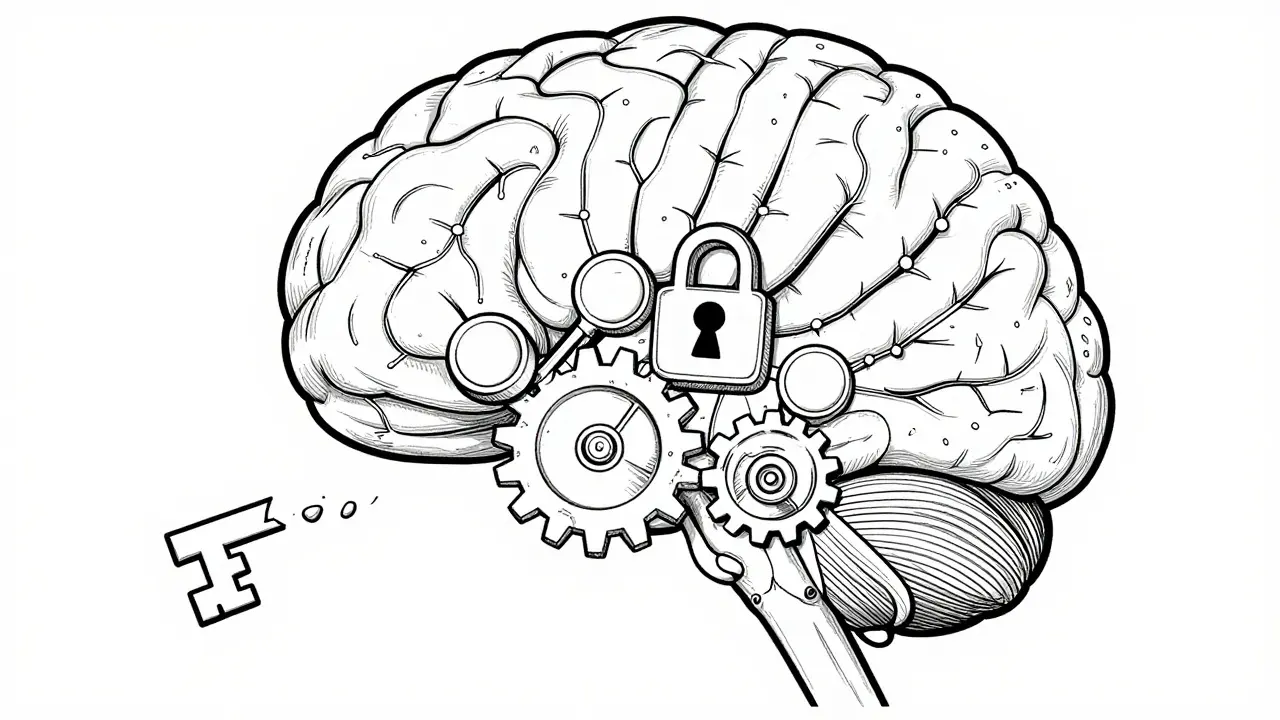
Understanding how naloxone functions helps demystify its use. It is an opioid antagonist. This means it blocks opioid receptors without activating them. Imagine opioid receptors are locks, and opioids are keys that fit perfectly, slowing down vital functions. Naloxone is a broken key that jams the lock. It binds to the receptor with greater affinity than the opioid, kicking the opioid out. Once displaced, breathing resumes. The beauty of modern naloxone lies in its delivery methods. You no longer need a needle. The most common form today is the intranasal spray, a non-injectable formulation of naloxone administered through the nose for rapid absorption into the bloodstream. Brands like Narcan, a brand-name naloxone hydrochloride nasal spray widely used for emergency reversal of opioid overdose and generic alternatives deliver a precise dose (typically 4 mg) into the nasal cavity. The mucous membranes absorb the drug quickly, reaching the brain within two to five minutes. This ease of use is critical. In an emergency, panic sets in. An injector requires training and courage. A spray requires only aiming and pressing. Other formulations exist, including intramuscular injections and high-dose sprays like Kloxxado™, designed for cases involving potent synthetic opioids like fentanyl. Fentanyl is 50 to 100 times stronger than morphine. Standard doses of naloxone might not fully reverse a fentanyl overdose immediately. Higher doses or repeated administrations may be necessary. This is why knowing the type of opioid involved matters, though in an emergency, you simply administer what you have and keep trying.
Overcoming Barriers: Stigma, Cost, and Access
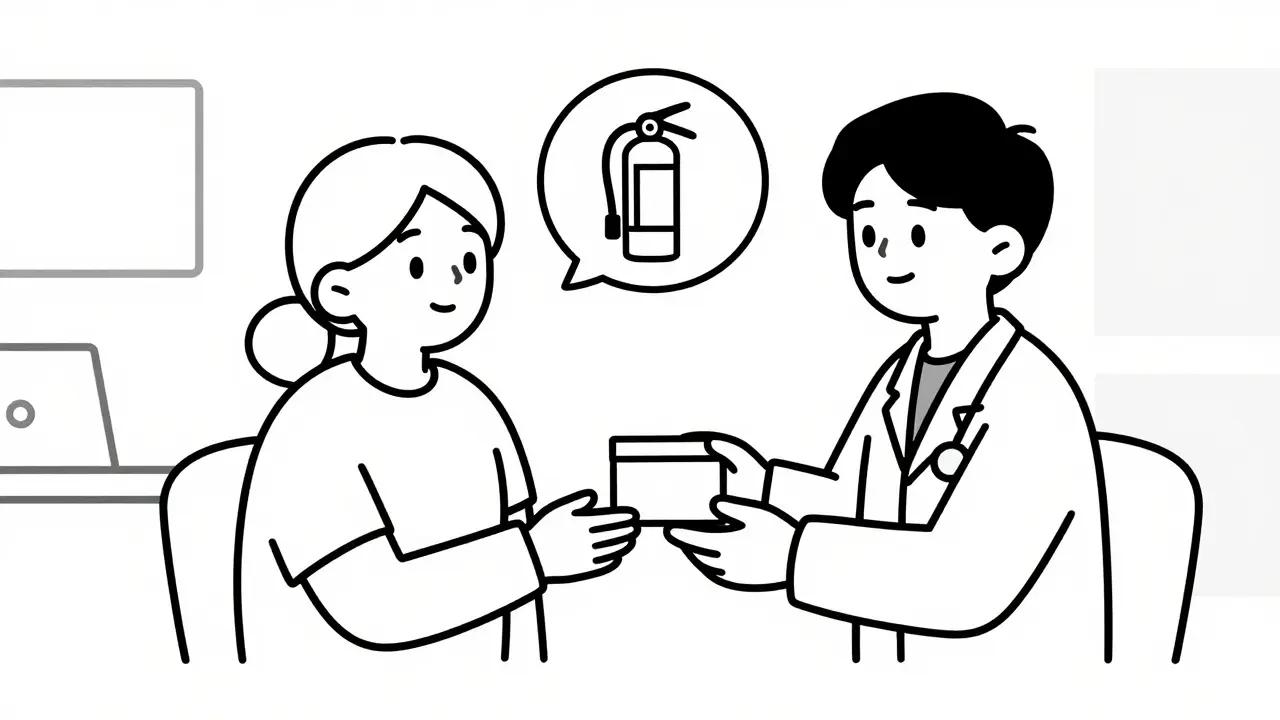
Despite the clear benefits, barriers remain. One of the biggest is stigma. Many patients feel offended when offered naloxone. They interpret it as a judgment-that their doctor thinks they are an addict or likely to die. A 2021 survey found that 68% of primary care physicians felt discomfort discussing overdose risk. Meanwhile, 42% of providers reported patient refusal due to perceived stigma. Addressing this requires skillful communication. Doctors are encouraged to frame naloxone as a standard safety precaution, similar to a fire extinguisher. "We give this to everyone in this dosage category" removes the personal accusation. It becomes protocol, not suspicion. Education materials from SAMHSA emphasize that having naloxone does not mean failure. It means preparation. Cost is another concern. Brand-name Narcan can cost between $130 and $150 without insurance. Generic kits range from $25 to $50. However, the SUPPORT Act of 2018 changed the financial landscape. Medicare Part D and Medicaid programs now cover naloxone with minimal or no copay for eligible beneficiaries. Most private insurers follow suit. Pharmacists play a key role here. In many states, pharmacists can dispense naloxone under standing orders without a direct prescription from a doctor. As of 2024, 49 states allow this. This bypasses appointment delays and reduces friction. Geographic disparities persist. Urban pharmacies stock naloxone consistently (85% availability), while rural pharmacies lag behind (42%). Rural areas often face higher opioid use rates but have fewer healthcare resources. Telehealth initiatives and community distribution programs are helping bridge this gap, but work remains.
Implementing Co-Prescribing in Clinical Practice
For healthcare providers, integrating naloxone into routine visits takes only five to seven minutes. The process involves three steps: 1. Risk Assessment: Review the patient’s Prescription Drug Monitoring Program (PDMP) data. Check for concurrent benzodiazepine prescriptions. Calculate the total MME/day using the CDC calculator. Identify comorbidities like sleep apnea. 2. Patient Education: Use the "S.L.A.M." framework recommended by the Indian Health Service:
- Signs of overdose: Pinpoint pupils, unresponsiveness, slow or stopped breathing, blue lips/fingernails.
- Life-saving steps: Call 911 immediately.
- Administer naloxone: Show how to use the nasal spray. Demonstrate on a model if possible.
- Monitor: Stay with the person. Be prepared to give a second dose if no response in two minutes.
The Future of Naloxone Access and Policy
The trajectory for naloxone access is positive but uneven. Federal funding continues to support distribution. The NIH’s HEAL Initiative has invested billions in overdose prevention, with significant portions allocated to improving naloxone delivery systems. New formulations are in development, including long-acting versions currently in Phase III trials. These could provide sustained protection against overdose, potentially reducing the need for repeated dosing. State laws vary widely. Twenty-four states mandate offering naloxone to certain patients. California requires it for doses over 90 MME/day. New York requires it for all opioid prescriptions. Other states have no mandates. This patchwork creates confusion for both providers and patients traveling across borders. Advocacy groups push for uniform national standards. Critics argue that co-prescribing treats symptoms rather than causes. Dr. Andrew Kolodny notes that without comprehensive addiction treatment access, naloxone is merely a band-aid. There is truth to this. Naloxone saves lives in the moment, but it does not cure opioid use disorder. Medication-Assisted Treatment (MAT) with buprenorphine or methadone addresses the underlying addiction. Naloxone and MAT should work together, not replace each other. As we move forward, the goal is universal access. Every patient at risk should have naloxone available. Every bystander should know how to use it. Every community should have distribution points. The technology exists. The evidence supports it. The policy frameworks are emerging. What remains is consistent implementation and continued destigmatization.
Does naloxone cause withdrawal symptoms?
Yes, naloxone can precipitate acute withdrawal in someone physically dependent on opioids. Symptoms include nausea, vomiting, agitation, sweating, and rapid heart rate. While uncomfortable, these symptoms are rarely life-threatening. The priority is reversing respiratory arrest. Withdrawal symptoms typically subside as the naloxone wears off (30-90 minutes).
How long does naloxone last?
Naloxone has a shorter half-life than most opioids. Its effects last 30 to 90 minutes. If the opioid in the system lasts longer (e.g., methadone or extended-release oxycodone), the patient may slip back into overdose once the naloxone wears off. This is called re-narcotization. Continuous monitoring and multiple doses may be required until emergency medical services arrive.
Can I buy naloxone without a prescription?
In many U.S. states, yes. Pharmacists can dispense naloxone under standing orders without a direct prescription from a doctor. Some states allow over-the-counter sales. Check your local pharmacy regulations. Community organizations also distribute free naloxone kits.
What is the difference between Narcan and generic naloxone?
Narcan is a brand name for naloxone hydrochloride nasal spray. Generic versions contain the same active ingredient and function identically. Generics are typically cheaper. Both are FDA-approved and effective for reversing opioid overdoses.
Should I call 911 if I use naloxone?
Always call 911. Naloxone is a temporary measure. It buys time but does not treat the underlying overdose. The patient needs professional medical evaluation to ensure they are stable and to address potential complications. Good Samaritan laws in most states protect bystanders from legal liability when calling for help during an overdose.
