
That sharp, grinding sensation when you turn your head to check a blind spot? Or the dull ache that settles in after staring at a laptop screen for six hours straight? You are likely dealing with cervical strain, which is a common musculoskeletal injury involving the stretching or tearing of muscles, tendons, and ligaments in the neck. It is not just a minor annoyance; it is one of the most frequent reasons people visit primary care physicians, accounting for roughly 60-70% of all acute neck pain cases. Understanding exactly what is happening inside your neck-and how to fix it without relying solely on painkillers-can save you weeks of suffering and prevent this from becoming a chronic issue.
What Is Cervical Strain and Why Does It Happen?
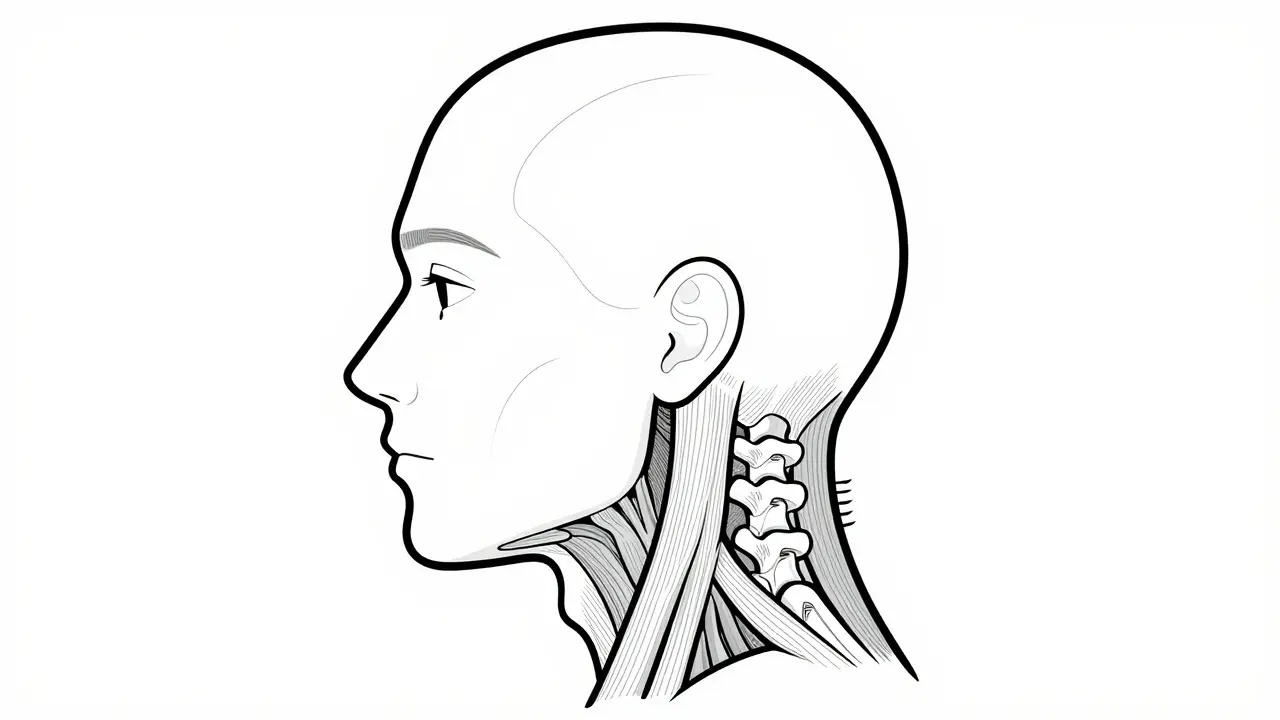
Cervical strain occurs when the soft tissues of your cervical spine (the medical term for your neck) are subjected to forces beyond their normal range of motion. Think of these tissues like rubber bands. If you stretch them too far or too fast, they develop microscopic tears. This damage triggers inflammation, leading to pain, stiffness, and tenderness.
You might wonder why this happens so often. The anatomy of the neck is designed for mobility, not heavy lifting. The muscles most commonly involved are the trapezius, levator scapulae, and sternocleidomastoid. These muscles work together to hold your head up and allow rotation. When you sleep in an awkward position, suffer a whiplash injury from a car accident, or maintain poor posture while working, these muscles fatigue and tear.
It is crucial to distinguish a simple strain from more serious conditions. Unlike cervical radiculopathy, which involves a pinched nerve causing numbness or weakness down the arm, a cervical strain keeps pain localized to the neck and shoulders. It also differs from cervical stenosis, a narrowing of the spinal canal that affects older adults and can impact gait or bladder control. If your pain worsens with movement and improves with rest, you are likely looking at a mechanical strain rather than an inflammatory condition like rheumatoid arthritis, which typically causes morning stiffness lasting over 30 minutes.
Recognizing the Symptoms: Mild vs. Severe
Not all neck pain is created equal. The severity of your symptoms depends on the degree of tissue damage. Medical professionals categorize strains into three grades:
- Mild Strain (Grade I): Microscopic tearing of muscle fibers. Pain usually resolves within 48-72 hours. You might feel slight stiffness but can still move your neck relatively freely.
- Moderate Strain (Grade II): Partial tearing of the muscle or tendon. Pain persists for 1-2 weeks, and you will notice significant tenderness and limited range of motion.
- Severe Strain (Grade III): Complete rupture of the muscle or tendon. This is rare but requires 6-12 weeks for recovery and may involve surgical consultation.
In most cases, you will experience localized neck pain, stiffness, and tenderness to touch. According to data from the Mayo Clinic, 92% of patients report localized pain, while 87% experience stiffness. You might also find that turning your head side-to-side increases pain intensity significantly. If you have headaches originating from the base of your skull, this could be referred pain from strained suboccipital muscles.
The First 72 Hours: Immediate Care Protocols
How you handle the first three days after injury sets the tone for your recovery. The old advice of "rest completely" is outdated. Current clinical guidelines from the American Association of Neurological Surgeons emphasize relative rest combined with early mobilization. Complete immobilization for more than 48-72 hours actually correlates with longer recovery times.
- Cryotherapy (Ice): Apply ice packs to the affected area for 15-20 minutes every 2-3 hours during the first 72 hours. A randomized controlled trial published in the Journal of Athletic Training showed this method provides 32% greater pain reduction compared to continuous ice application. Always wrap the ice pack in a towel to protect your skin.
- Activity Modification: Avoid activities that aggravate the pain, such as heavy lifting or high-impact sports. However, do not stay in bed all day. Gentle walking helps maintain circulation and prevents stiffness.
- Pain Management: Over-the-counter nonsteroidal anti-inflammatory drugs (NSAIDs) like ibuprofen can help reduce inflammation. However, the American Academy of Physical Medicine and Rehabilitation cautions against using NSAIDs for more than 7-10 days, as they offer no additional benefit over acetaminophen for long-term pain control and increase the risk of gastrointestinal complications.
Physical Therapy and Rehabilitation Exercises
If your pain persists beyond the initial acute phase, physical therapy becomes the cornerstone of treatment. Studies show that patients who begin physical therapy within 72 hours of injury demonstrate 28% faster functional recovery. The goal is not just to relieve pain but to correct biomechanical issues, such as forward head posture, which affects 68% of office workers.
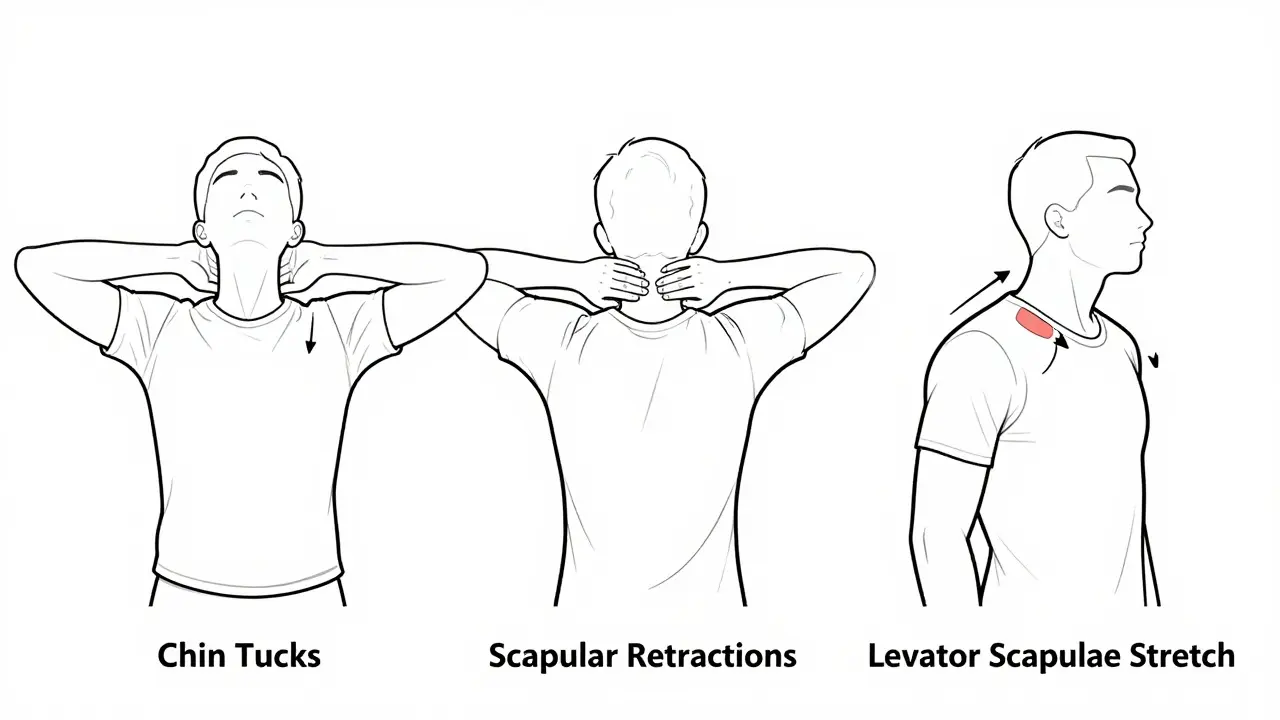
Here are three evidence-based exercises recommended by physiotherapists:
| Exercise | Target Muscle Group | Instructions | Frequency |
|---|---|---|---|
| Chin Tucks | Deep neck flexors | Gently pull your chin back as if making a double chin. Hold for 5 seconds. | 10-15 reps, 3x daily |
| Scapular Retractions | Rhomboids, Lower Trapezius | Squeeze shoulder blades together and down. Imagine holding a pencil between them. | 10-15 reps, 3x daily |
| Levator Scapulae Stretch | Levator Scapulae | Tilt head to one side, then rotate chin toward armpit. Gently apply pressure with hand. | Hold 30 seconds, 3x per side |
Between days 4 and 14, focus on controlled range-of-motion exercises. By week 3, you can introduce progressive resistance training using light resistance bands (TheraBand®). Research indicates that training at 30-40% of your one-repetition maximum produces greater strength gains than bodyweight exercises alone. Consistency is key; adherence drops significantly after two weeks, so try to stack these habits with existing routines, like doing stretches while brushing your teeth.
When to Seek Professional Help
While 85% of acute cervical strains resolve within four weeks with conservative management, some cases require professional intervention. You should see a doctor or physical therapist if:
- Pain does not improve after 1-2 weeks of home care.
- You experience numbness, tingling, or weakness in your arms or hands (signs of nerve involvement).
- The pain was caused by a significant trauma, such as a fall or car accident.
- You have a history of chronic neck pain or osteoarthritis.
Delayed diagnosis is a major contributor to chronicity. Forum discussions reveal that many patients wait an average of 8 weeks before seeking specialized care, allowing acute strains to develop into myofascial pain syndrome. Early intervention with manual therapy and sensorimotor training can reduce recurrence rates to 18% at 12 months, compared to 39% with manual therapy alone.
Prevention and Long-Term Management
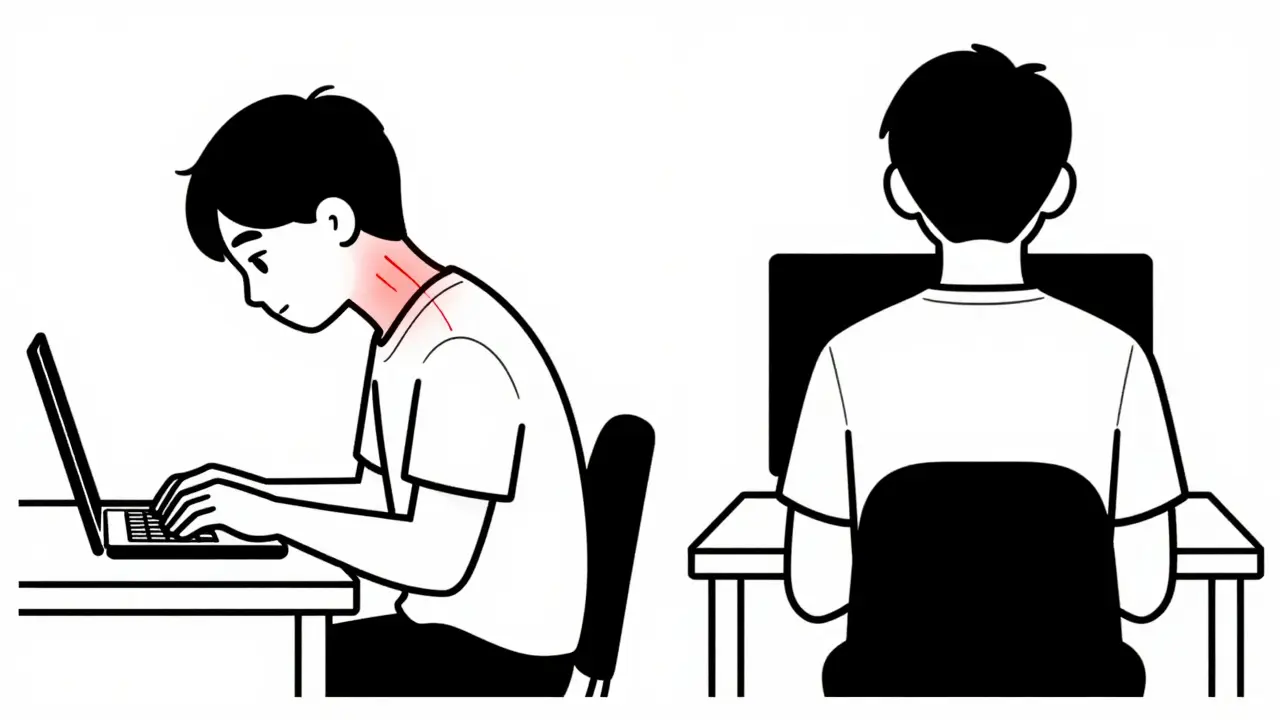
Preventing future cervical strain starts with ergonomics. If you work at a desk, ensure your monitor is at eye level to avoid forward head posture. Take breaks every 30 minutes to reset your posture. Emerging technology, such as wearable biofeedback devices, can help monitor your cervical posture in real-time, though these are currently more common in occupational health settings.
Strengthening the muscles around your neck and upper back is equally important. Incorporate exercises that target the lower trapezius and serratus anterior to stabilize your scapulae. Cognitive-behavioral strategies are also increasingly recommended for those prone to pain catastrophizing, as anxiety about pain can heighten sensitivity and delay healing.
How long does it take for a cervical strain to heal?
Most mild to moderate cervical strains heal within 2 to 4 weeks with proper care. Severe strains involving complete tears may take 6 to 12 weeks. Early mobilization and physical therapy can speed up this process significantly.
Is heat or ice better for neck strain?
Ice is recommended for the first 72 hours to reduce inflammation and pain. After the acute phase, heat can help relax tight muscles and improve blood flow. Alternating between the two may provide additional relief for some individuals.
Can cervical strain cause headaches?
Yes, tension headaches are a common symptom of cervical strain. Tight muscles in the neck and upper shoulders can refer pain to the head, particularly the base of the skull and temples.
Should I wear a neck brace for a strain?
Generally, no. Modern guidelines advise against prolonged use of neck braces for simple strains, as immobilization can lead to muscle weakness and slower recovery. Braces are typically reserved for severe injuries or post-surgical care.
What exercises are best for preventing neck strain?
Focus on strengthening the deep neck flexors and scapular stabilizers. Chin tucks, scapular retractions, and gentle stretching of the levator scapulae and trapezius muscles are highly effective. Maintaining good posture throughout the day is also crucial.
