
It is 2 a.m. Your child is screaming, tugging at their ear, and refusing to sleep. You check their temperature, and it’s climbing. Within hours, you are standing in an urgent care clinic or calling your pediatrician, desperate for relief. This scenario plays out millions of times across the UK and beyond every year. Acute Otitis Media, commonly known as an ear infection, is the most common reason parents seek medical care for young children. It affects roughly 83% of children by age three, making it nearly universal rather than exceptional.
For decades, the standard response was immediate antibiotics. But medical guidelines have shifted dramatically. Today, you face three distinct paths: immediate antibiotic treatment, watchful waiting, which involves monitoring symptoms without immediate medication, or surgical intervention with tympanostomy tubes, small devices that ventilate the middle ear to prevent fluid buildup. Choosing the right path isn't just about comfort; it’s about avoiding unnecessary risks while ensuring your child gets better quickly.
Understanding Acute Otitis Media
To make smart decisions, you first need to know what you are dealing with. An ear infection is not just pain; it is a specific clinical condition defined by three criteria: rapid onset of symptoms, middle ear effusion (fluid behind the eardrum), and signs of inflammation like a bulging tympanic membrane or severe earache.
The peak age for these infections is between six and twenty-four months. Why so young? The Eustachian tube, which connects the middle ear to the back of the throat, is shorter and more horizontal in toddlers. This anatomy makes it easier for bacteria and viruses from colds to travel up into the middle ear, where they multiply and cause pressure and pain. By age five, most children have experienced at least one episode, but recurrent cases are less common.
Severity matters. Doctors classify infections as either non-severe or severe. Non-severe means mild pain and no high fever. Severe involves moderate-to-severe pain (continuous crying for over three hours, difficulty sleeping) or a temperature above 102.2°F (39°C). This distinction drives the treatment decision tree.
The Case for Watchful Waiting
If you were told ten years ago that your child had an ear infection, you likely left with a prescription for amoxicillin. Today, guidelines from the American Academy of Pediatrics (AAP) and other bodies strongly support watchful waiting for many cases. Why? Because 60-80% of ear infections resolve on their own within two to three days without any antibiotics.
Watchful waiting is safe and recommended for specific groups:
- Children aged 6 to 23 months with unilateral AOM (one ear) and non-severe symptoms.
- Children aged 24 months or older with unilateral or bilateral AOM and non-severe symptoms.
This approach reduces antibiotic overuse, which contributes to resistance. The CDC estimates that inappropriate prescribing leads to millions of resistant infections annually. However, watchful waiting does not mean ignoring the problem. It requires active monitoring. Parents must watch for worsening symptoms, such as persistent pain lasting more than 48 hours or a spike in fever. In many clinics, doctors provide a "safety-net" prescription-a paper prescription that you fill only if symptoms worsen. Studies show that among families given this option, only about 33% ultimately use the antibiotics.
Pain management is the cornerstone of this strategy. Regardless of whether you choose antibiotics or observation, you must treat the pain. Regular doses of acetaminophen or ibuprofen (for children over six months) can significantly improve comfort and allow your child to rest and heal.
When Antibiotics Are Necessary
There are clear scenarios where watchful waiting is not appropriate, and immediate antibiotic treatment is required. These include:
- Children under six months old (all require treatment).
- Children aged 6 to 23 months with bilateral AOM (both ears affected).
- Any child with otorrhea (pus draining from the ear) or severe symptoms.
The first-line antibiotic is typically high-dose amoxicillin. For children under two years or those with severe symptoms, the course lasts 10 days. For ages 2-5, it is seven days, and for children six and older with non-severe cases, five days may suffice. If your child is allergic to penicillin, alternatives like cefdinir or clindamycin are used.
Why the strict duration? Shorter courses in older children have been proven effective, reducing side effects like diarrhea and rash. However, stopping early in younger children or severe cases can lead to treatment failure and recurrence. Always complete the full course prescribed by your doctor.
Tympanostomy Tubes: Surgery for Recurrent Cases
Some children suffer from frequent ear infections despite proper medical management. This is called recurrent AOM. Defined as three episodes in six months or four in twelve months (with at least one in the last six months), this pattern warrants a different approach: surgery.
Tympanostomy tube placement, often called inserting ear tubes, is a quick outpatient procedure. A surgeon makes a tiny incision in the eardrum, drains any fluid, and inserts a small tube. This tube ventilates the middle ear, preventing fluid buildup and reducing pressure. Most tubes fall out on their own within six to eighteen months.
The benefits are significant. Tubes reduce the risk of further ear infections by about 50% in the first six months after insertion. They also help restore hearing if chronic fluid has caused temporary hearing loss, which can impact speech development. Approximately 667,000 children in the US undergo this procedure annually.
However, tubes are not a first-line treatment. They are reserved for cases where medical management fails or when there is persistent middle ear effusion for three months or longer with documented hearing loss. Overuse of tubes for simple recurrent infections without hearing impairment is discouraged by experts, as it carries surgical risks and costs.
| Strategy | Best For | Risks/Side Effects | Success Rate |
|---|---|---|---|
| Watchful Waiting | Non-severe cases in older toddlers | Pain persists; small risk of complications | 60-80% resolve spontaneously |
| Antibiotics | Severe cases, infants <6mo, bilateral AOM | Diarrhea, rash, antibiotic resistance | High efficacy for bacterial causes |
| Ear Tubes | Recurrent AOM (≥3 in 6mo) with hearing loss | Surgical risks, tube extrusion issues | Reduces recurrence by 50% |
Pain Management: The Often Overlooked Priority
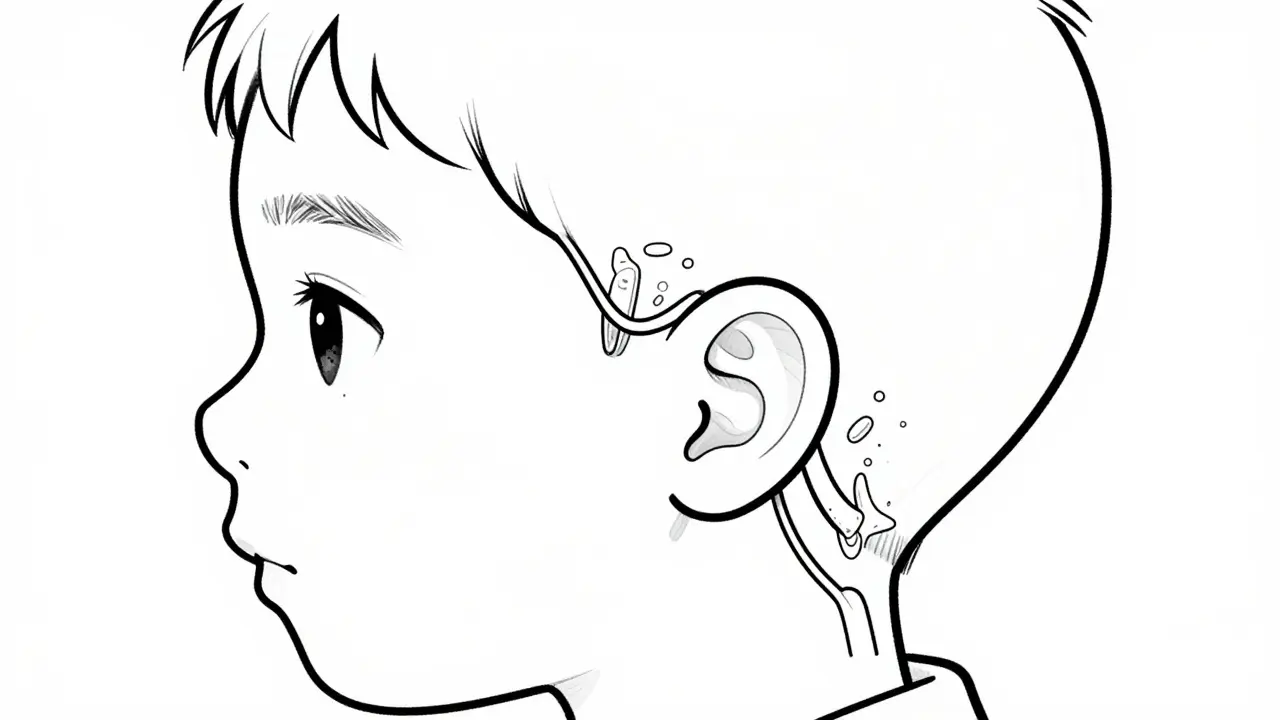
While we debate antibiotics and surgery, pain management remains the most immediate need. Research shows that 69% of children experience significant pain during an ear infection, yet only 37% receive adequate analgesia. Pain relief should never be secondary to antibiotic decisions.
Use acetaminophen (10-15 mg/kg every 4-6 hours) or ibuprofen (5-10 mg/kg every 6 hours for children over six months). Alternating these medications can provide sustained relief. Topical eardrops containing lidocaine may also be prescribed for additional comfort. Do not put anything in the ear canal unless directed by a doctor, especially if the eardrum might be perforated.
Prevention and Future Outlook
Can you prevent ear infections? Vaccination plays a huge role. The pneumococcal conjugate vaccine (PCV13) has reduced AOM incidence by 12% and recurrent cases by 20%. Breastfeeding also offers protective antibodies, and avoiding secondhand smoke reduces irritation to the Eustachian tubes.
Decongestants and antihistamines do not help with ear infections and may cause side effects. Avoid them unless treating a concurrent allergy or congestion issue separately.
As guidelines evolve, expect tighter criteria for tube insertion and expanded use of watchful waiting. The goal is always the same: treat the child, not just the diagnosis, while minimizing unnecessary interventions.
How long does an ear infection last in children?
Most ear infections resolve within 3 to 5 days. Symptoms often improve within 24 to 48 hours, even without antibiotics. If pain or fever persists beyond 48 hours, contact your doctor.
Is watchful waiting safe for my baby?
Yes, for babies over 6 months with non-severe symptoms in one ear. It is not recommended for infants under 6 months, those with both ears infected, or anyone with severe pain or high fever.
What are the signs of a severe ear infection?
Signs include continuous crying for more than 3 hours, inability to sleep, temperature above 102.2°F (39°C), pus draining from the ear, or swelling behind the ear.
Do ear tubes affect hearing permanently?
No. Ear tubes actually help restore hearing blocked by fluid. Most tubes fall out naturally within 6-18 months, and the eardrum heals completely. Permanent hearing loss is rare.
Can I use home remedies for ear infections?
Warm compresses can soothe pain. However, avoid putting oils, garlic, or herbs in the ear canal. Decongestants and antihistamines are not effective for ear infections and may cause side effects.
