
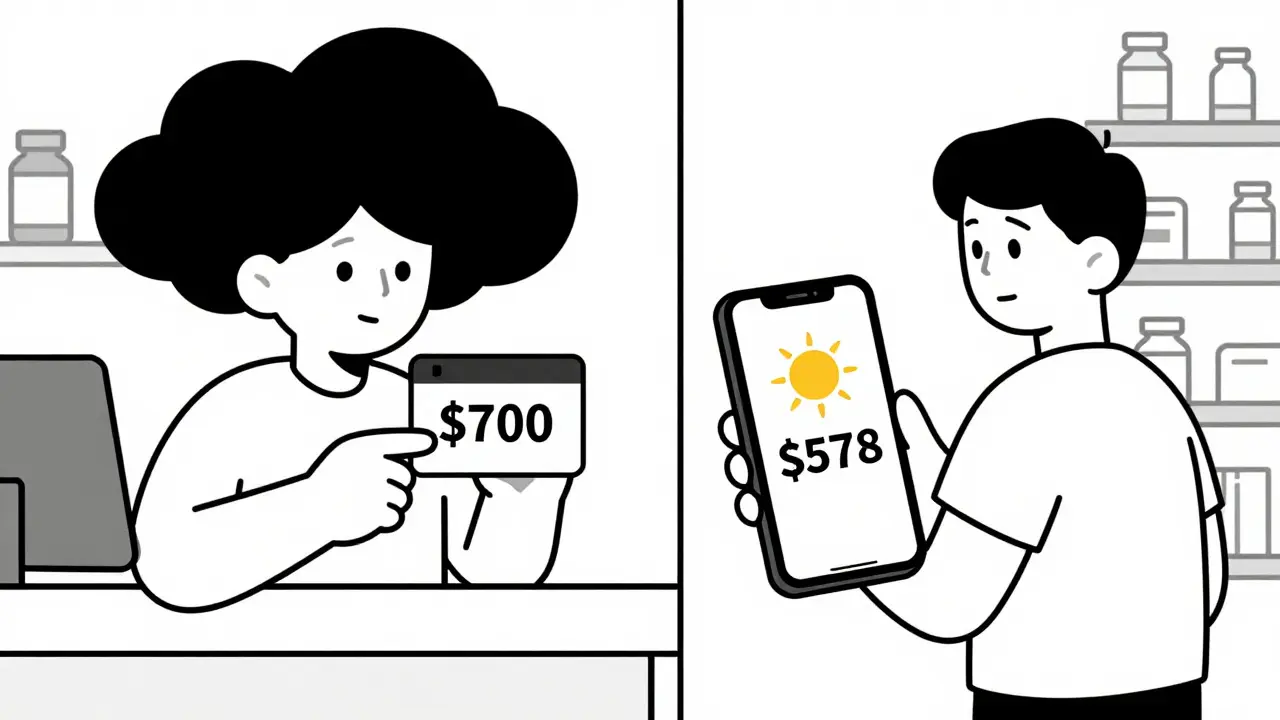
Imagine standing at a pharmacy counter with two options: use your insurance card for a $700 bill on Jardiance, or pull out a smartphone app to pay $578 in cash. It sounds too good to be true, but for millions of Americans, this is the daily reality of navigating the complex world of prescription discount services. These platforms, led by market giant GoodRx, have carved out a massive niche by offering cash prices that often undercut traditional insurance copays.
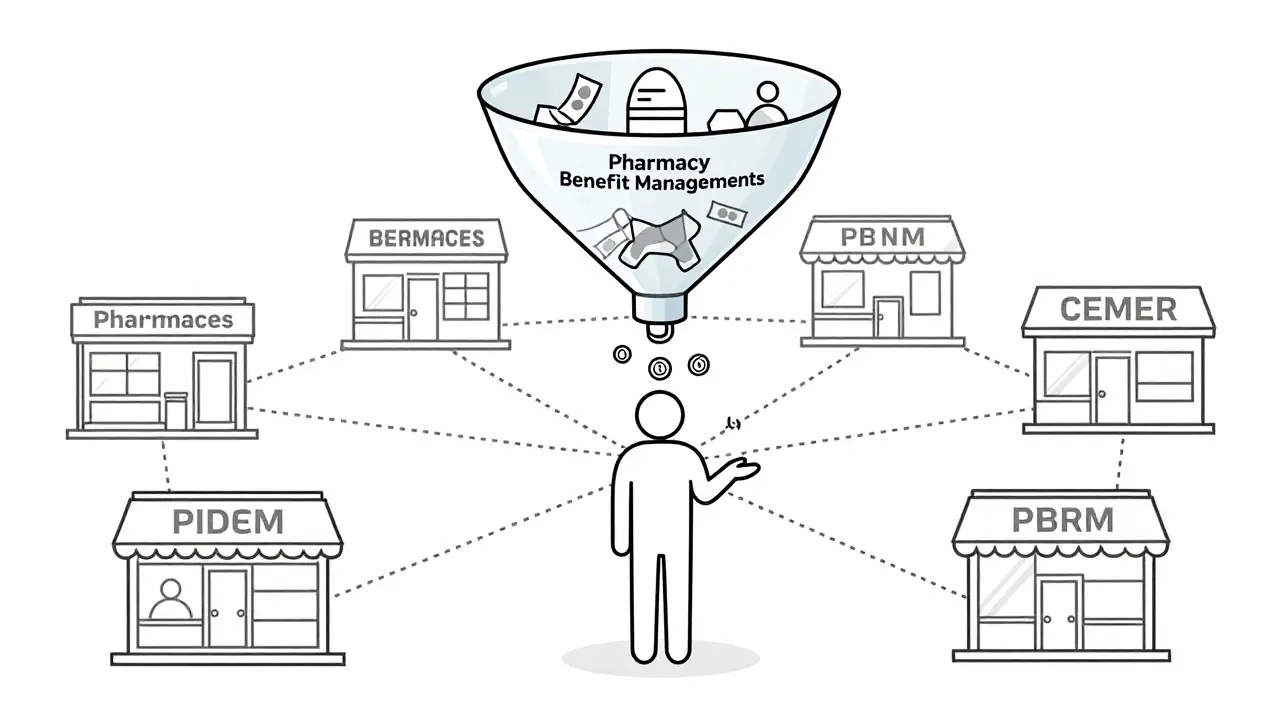
The confusion starts here: if you have insurance, why would you ever pay cash? The answer lies in how our healthcare system works behind the scenes. Insurance companies and Pharmacy Benefit Managers (PBMs) negotiate rates that don’t always reflect the lowest possible price for every specific drug. Sometimes, the negotiated rate for an uninsured patient through a discount service is actually cheaper than the copay structure designed for insured patients. This article breaks down exactly when using a service like GoodRx beats your insurance, how these hidden networks work, and the critical mistakes to avoid so you don’t accidentally void your coverage.
How Discount Platforms Actually Work
Most people think of apps like GoodRx as simple coupon sites. They’re wrong. GoodRx is technically a digital intermediary that taps into existing contracts between pharmacies and PBMs. When you search for a drug on the app, it doesn’t just guess a price; it pulls real-time data from over 70,000 participating pharmacies. It shows you the discounted cash price available at specific locations, which can be 30% to 80% lower than standard retail rates.
This model relies on volume. Because millions of users generate transactions, platforms can secure better rates than an individual shopper could. However, there is a strict rule you must follow: you cannot combine insurance and a discount coupon. It’s one or the other. If you present a GoodRx coupon, the pharmacist processes the transaction as a "cash" sale. Your insurance company sees no activity, meaning that payment does not count toward your deductible or out-of-pocket maximum. For some, skipping the deductible progress is worth the immediate cash savings; for others, it’s a strategic error.
When Cash Prices Beat Insurance Copays
You might assume insurance is always cheaper because you’ve already paid premiums. That’s a logical assumption, but often incorrect. There are three specific scenarios where discount services consistently win:
- High-Deductible Plans: If you haven’t met your annual deductible yet, you’re paying the full list price or a high percentage of it. A discount service can slash that cost immediately. For example, generic imatinib (400mg) has been recorded at $88 via GoodRx versus nearly $7,700 at retail without any discount applied.
- Non-Formulary Drugs: Insurance plans have a "formulary," which is their approved list of covered drugs. If your doctor prescribes a brand-name drug that isn’t on your plan’s preferred list, your copay might be sky-high. A discount platform ignores formulary tiers and offers a flat cash discount.
- Generic Medications: While insurance covers generics well, discount apps often find deeper cuts for common generics like blood pressure meds or statins, especially at chains like Walmart or Costco.
A case study from SmartAsset highlighted a Medicare Part D beneficiary who saved over $100 monthly on Jardiance by switching from insurance to a cash discount. This happens because insurance plans often prioritize covering hospital stays and surgeries, leaving room for higher cost-sharing on certain maintenance medications.
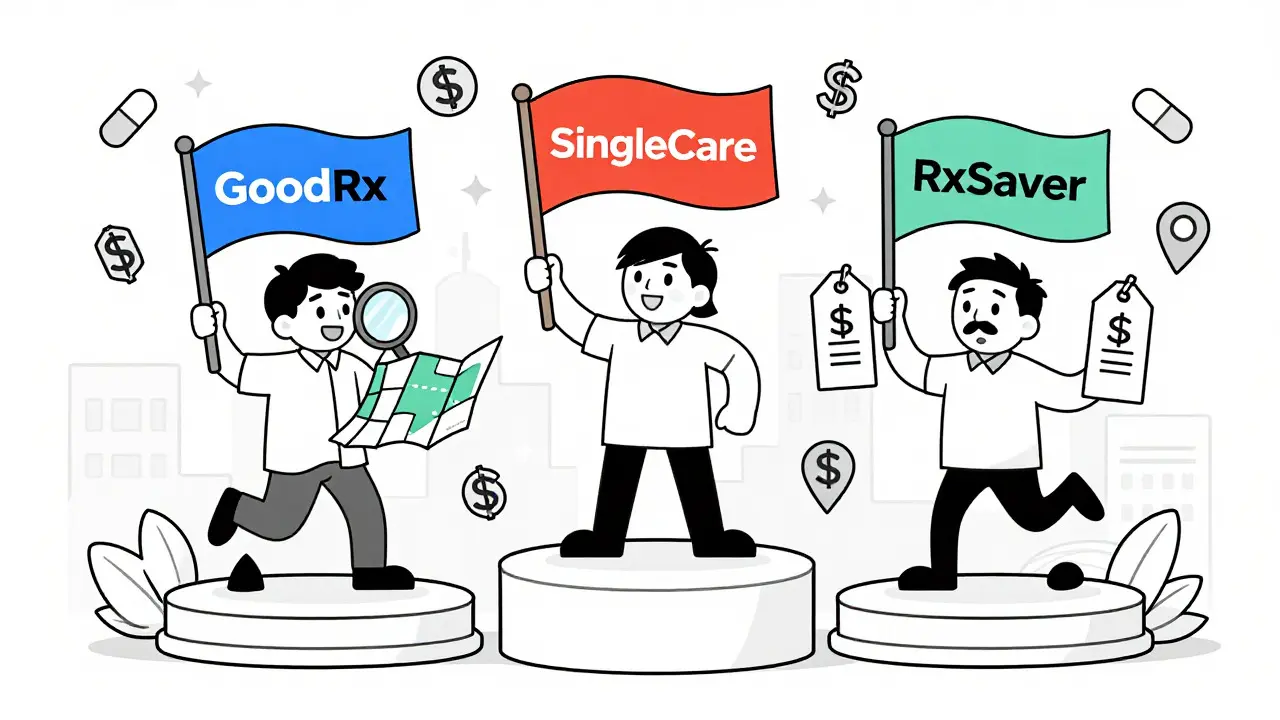
The Major Players: GoodRx vs. SingleCare vs. RxSaver
While GoodRx dominates the conversation with roughly 75% market share, it’s not the only player. Understanding the differences helps you find the absolute lowest price. You shouldn’t rely on just one app; savvy consumers check multiple sources.
| Service | Key Feature | Best For | Limitations |
|---|---|---|---|
| GoodRx | Real-time price comparison across 200+ pharmacies | Users wanting the widest choice of pharmacies and transparent pricing | No telehealth integration; requires manual coupon presentation |
| SingleCare | Integrated telehealth and mail-order options | Users who want to consult a doctor and get meds in one place | Static network pricing may miss last-minute local deals |
| RxSaver | Deep discounts on specific brand-name drugs | Specifically targeting high-cost brand medications | Smaller network of participating pharmacies compared to GoodRx |
GoodRx’s strength is its breadth. It aggregates data from major PBMs like Express Scripts and OptumRx. SingleCare, while having fewer total members, integrates tightly with telehealth providers, allowing you to see a virtual doctor and send the script directly to a discounted pharmacy. RxSaver often competes aggressively on specific high-volume brands. If you’re hunting for a deal on Ozempic or similar GLP-1 agonists, checking all three can yield different results depending on your zip code.
Critical Pitfalls: Medicare and Medicaid Users Beware
Here is where things get legally tricky. If you have Medicare or Medicaid, you generally cannot use these discount coupons. Federal anti-kickback statutes prohibit pharmacies from accepting third-party discounts for government-funded beneficiaries.
If you try to use a GoodRx coupon with a Medicare card, two bad things can happen. First, the pharmacy might reject the coupon entirely. Second, and worse, if they accept it incorrectly, it can trigger audits that flag potential fraud. In some cases, improper use of coupons alongside government insurance has led to coverage termination reviews. Always ask your pharmacist: "Can I use this cash coupon with my Medicare plan?" The answer is almost always no. Stick to manufacturer coupons or state-specific assistance programs instead.
Strategic Tips for Maximum Savings
To get the most out of these services, you need to treat them like a tool, not a magic wand. Here is how to optimize your workflow:
- Compare Before You Buy: Don’t wait until you’re at the register. Check the app before your appointment. Ask your doctor if there are generic alternatives that are cheaper via cash price than your brand-name copay.
- Check the Expiration Date: Coupons expire. Prices fluctuate hourly based on PBM negotiations. A price you saw yesterday might be $5 higher today.
- Understand "Cash Price": At the counter, explicitly ask for the "cash price." Pharmacists sometimes default to billing insurance automatically. You have the right to request the cash price quote.
- Consider Subscription Models: If you take multiple medications, look into subscription services like GoodRx Gold ($9.99/month). It often provides deeper discounts and free home delivery, which can outweigh the monthly fee if you spend more than $20-$30 per month on meds.
Also, keep receipts. Since these payments don’t go through insurance, they won’t appear in your online health portal. You’ll need physical or digital copies for tax deductions or HSA/FSA reimbursements.
The Future of Drug Pricing Transparency
The landscape is shifting. New regulations, such as the ban on "gag clauses" (which previously prevented pharmacists from telling you if cash was cheaper), are making these comparisons easier. As of 2026, transparency laws require many pharmacies to disclose cash prices upfront. This levels the playing field but also puts pressure on PBMs, who are losing rebate revenue as more people opt out of insurance for cheap generics.
We are seeing a rise in direct-to-consumer models, like Amazon Pharmacy, which undercuts traditional discounters by 8-12% on generics. However, GoodRx maintains an advantage in convenience and pharmacy variety. The trend suggests that while insurance will remain essential for catastrophic care and expensive specialty drugs, cash-pay discounts will become a standard part of routine healthcare budgeting for the average American.
Does using GoodRx count toward my insurance deductible?
No. When you use a discount coupon, the transaction is processed as a cash sale. It bypasses your insurance provider entirely, so the amount paid does not accumulate toward your annual deductible or out-of-pocket maximum.
Can I use GoodRx if I have Medicare or Medicaid?
Generally, no. Federal laws prohibit the use of third-party discount cards for patients covered by government-funded programs like Medicare and Medicaid. Attempting to do so can result in rejected claims or compliance issues for the pharmacy.
Why is the cash price sometimes lower than my insurance copay?
Insurance plans often have complex structures involving deductibles, coinsurance, and formulary tiers. For non-preferred brand drugs or during high-deductible phases, the negotiated cash rate offered by discount platforms can be significantly lower than the amount your insurance requires you to pay.
Do I need to create an account to use these services?
For basic searches, you usually don't need an account. However, creating a free account allows you to save favorite medications, track price history, and access exclusive member-only coupons. Some features, like home delivery, may require registration.
Are all pharmacies required to accept these coupons?
No. Participation is voluntary. While major chains like CVS, Walgreens, and Walmart typically participate, many independent pharmacies may not. Always check the app's map for participating locations near you before driving to a specific store.

10 Comments
John Park
August 31 2026
It is the eternal dialectic of modern existence: the soul versus the deductible. We are trapped in a panopticon of pricing where the 'insurance' is merely a social construct designed to extract value from the vulnerable while the PBM, that great leviathan of greed, feasts on our ignorance. The app does not save you; it merely reveals the absurdity of the system. To pay cash is to reject the illusion of coverage and embrace the harsh truth of market forces. It is nihilism with a pharmacy receipt.
Kathleen McGrath
September 1 2026
This is such a helpful breakdown! I had no idea that using a coupon could actually be cheaper than my copay sometimes. It’s amazing how much we miss out on just because we assume insurance is always the best route. I’m definitely going to check these apps next time I pick up my prescriptions. You’re doing such important work sharing this info!
Lemuel Gomez
September 3 2026
I... I agree, mostly??
The part about High-Deductible Plans really hits home for me. My wife and I switched to a HDHP last year, thinking it would save us money on premiums, but then every single generic refill felt like a punch in the gut until we hit that deductible.
We started checking GoodRx before going to CVS, and honestly? The difference was night and day. Like, $45 vs $120 kind of difference.
But yeah, the rule about not combining them is crucial. I messed that up once, and the pharmacist looked at me like I had two heads. It’s tricky, though, because if you’re trying to build up your out-of-pocket max, skipping the insurance claim feels wrong, even if it saves cash today.
Emmanuel Umana
September 3 2026
In Nigeria, we often rely on direct negotiation with pharmacists. The American complexity is fascinating. Why must there be so many layers between patient and medicine?
Lilian Binda
September 5 2026
disgusting that yall need an app to afford meds!! american healthcare is broken as hell and they act surprised when people use coupons instead of insurance lol its not their fault the system is rigged by greedy corporations who profit off sickness
Fabian Saldana
September 5 2026
This article provides excellent guidance for navigating the complexities of pharmaceutical costs. It is truly empowering to understand that consumers have agency through these digital tools. I strongly encourage everyone to take control of their healthcare spending by utilizing these resources proactively. Knowledge is power, and savings follow those who seek them!
Colin Finch
September 5 2026
Oh, absolutely brilliant piece here! I’ve been telling my mates back home in the UK that you Americans are living in a parallel universe regarding drug prices. It’s genuinely shocking to read that Jardiance can be half the price cash. Here, we’d never dream of having to compare three different apps just to get a blood pressure pill without being robbed blind. Fantastic read, mate, truly eye-opening stuff.
Betty Childers
September 6 2026
yeah i used to think i was dumb for not knowing this stuff but apparently most people dont realize the cash price thing until they see the bill. its kinda wild how much we just accept whatever the insurance says we owe without asking what the actual cost is. good reminder to speak up at the counter.
Amy Zalkin
September 7 2026
omg yes!! i literally did this last week for my allergy meds. paid like $15 via the app instead of the $60 quote from my insurance. felt like i was hacking the matrix or something. totally worth the hassle of showing the barcode on my phone. also, don't forget to keep those receipts!! my accountant went crazy trying to figure out why nothing showed up in my health portal.
Alex Brown
September 8 2026
A thoughtful analysis. While the financial benefits are clear, one must consider the ethical implications of bypassing the risk pool. When healthy individuals opt out of insurance claims for routine medications, do we inadvertently weaken the collective bargaining power of the insured population? Yet, pragmatism dictates that individual savings cannot be ignored. Perhaps the ideal solution lies not in choosing one over the other, but in systemic reform that aligns incentives for all stakeholders. Until then, informed consumerism remains our best defense against opacity.