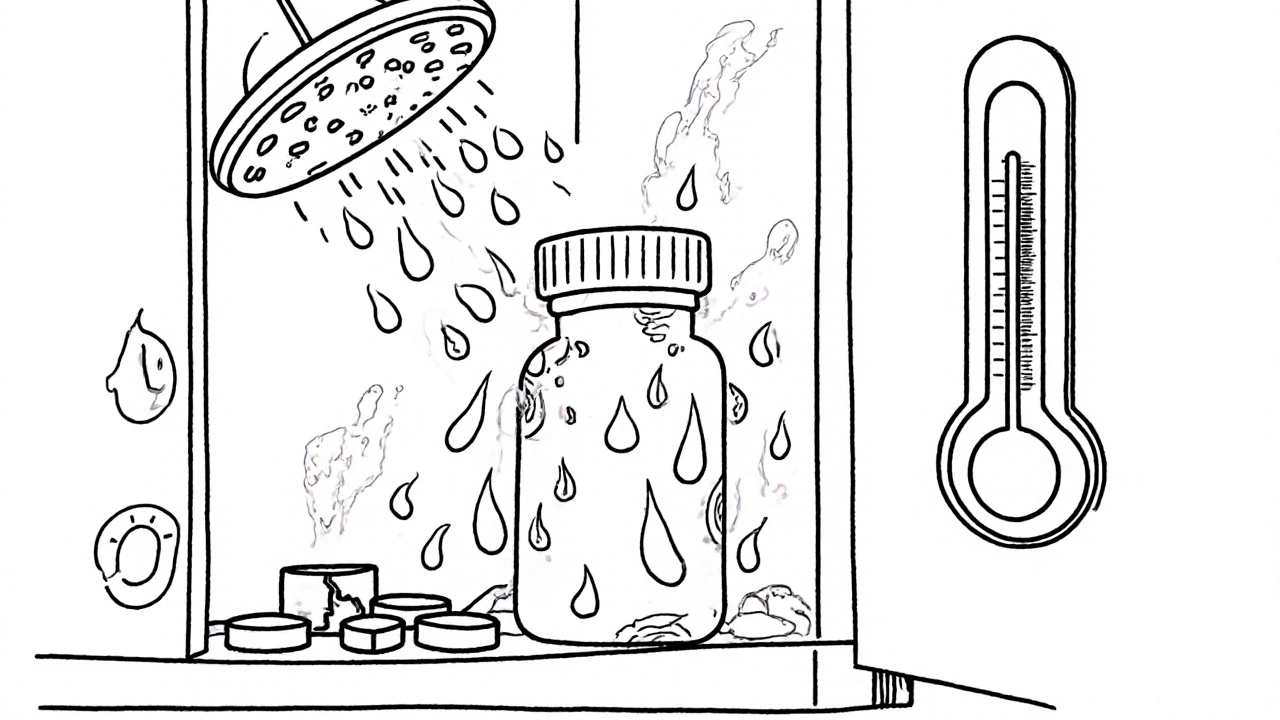
Heat and humidity can ruin your medicine long before the expiration date. Learn which drugs are most at risk, where not to store them, and how to keep your meds effective and safe.
Drug Storage: How to Keep Medications Safe and Effective
When it comes to drug storage, the way you keep your pills, liquids, and creams directly affects how well they work and whether they’re safe to use. Also known as medication storage, it’s not just about keeping them out of sight—it’s about controlling temperature, humidity, and exposure to light to preserve potency and prevent dangerous degradation. Many people stash their meds in the bathroom cabinet because it’s convenient, but that’s one of the worst places. The steam from showers and fluctuating temperatures can break down active ingredients, making your blood pressure pill or antibiotic less effective—or worse, unsafe.
Proper drug storage means understanding how different forms of medicine react to their environment. Liquid antibiotics, eye drops, and insulin often need refrigeration, while tablets like warfarin or lisinopril should stay dry and cool. Heat can cause pills to stick together or lose strength; moisture turns tablets into mush and promotes mold. Even sunlight can alter the chemical structure of some drugs, like certain antidepressants or thyroid meds. That’s why a cool, dark drawer in your bedroom or kitchen—away from the stove or sink—is usually better than the bathroom.
Childproofing is another critical part of medication safety. The same drawer that keeps your meds dry should also be locked or out of reach of kids and pets. Every year, thousands of children end up in emergency rooms after finding and swallowing pills they thought were candy. A simple lockbox or high cabinet can prevent a tragedy. And don’t forget about seniors—many older adults mix up meds because they’re stored in unmarked containers or scattered across multiple spots. A labeled pill organizer kept in one consistent place reduces confusion and risk.
Then there’s the issue of storage conditions for special drugs. Some, like epinephrine auto-injectors, can’t be frozen or left in a hot car. Others, like certain biologics or injectables, require precise temperature ranges that regular home fridges can’t always guarantee. If you’re using a medication that needs special care, always check the label or ask your pharmacist. They’ll tell you if it needs to stay between 36°F and 46°F—or if it’s fine at room temperature for a few weeks.
And don’t overlook expired meds. Just because a pill looks fine doesn’t mean it’s still safe. Expired antibiotics might not kill the infection, and expired nitroglycerin could fail during a heart attack. Most drugs lose potency after their expiration date, and some can even break down into harmful compounds. The best practice? Clean out your medicine cabinet twice a year. Toss anything you don’t use, anything past its date, and anything that looks odd—discolored, cracked, or smells strange.
What you’ll find below are real, practical guides on how to handle medications safely—not just storing them, but also using them correctly, recognizing when they’ve gone bad, and knowing when to ask for help. From how to use visual dosing aids to avoid mistakes, to why flushing pills harms the environment, these posts cover everything you need to keep your meds working as they should—and keep your household safe.