
Green Tea & Warfarin INR Risk Estimator
Fill in your daily intake to see a qualitative assessment.
How Your Intake Compares to Other Foods
Below shows how common dietary sources compare in Vitamin K content per typical serving. Your estimated total is highlighted at the top.
Imagine you're sipping your favorite green tea while managing a serious heart condition with Warfarin is an oral anticoagulant that has been the standard of care for preventing blood clots since 1954. For millions of patients in the UK and US, this medication is life-saving, but it comes with a strict requirement: keeping your International Normalized Ratio (INR) stable. This ratio measures how long it takes your blood to clot, and it must stay within a narrow therapeutic window, usually between 2.0 and 3.5. The problem? Green tea contains Vitamin K, the very nutrient Warfarin works by blocking. If you drink too much, you might be accidentally canceling out your medication.
The Core Conflict: Vitamin K vs. Anticoagulants
To understand why this matters, you need to know how Warfarin actually works. It inhibits an enzyme called VKORC1, which prevents your body from activating Vitamin K. Without active Vitamin K, your liver can't produce four critical clotting factors: II, VII, IX, and X. When these factors are low, your blood clots more slowly, which is exactly what you want if you have atrial fibrillation or a mechanical heart valve. However, if you suddenly introduce a large amount of Vitamin K into your system-say, through excessive green tea consumption-you provide the raw material Warfarin was trying to hide. Your liver starts producing those clotting factors again, your INR drops, and your protection against clots weakens.
Here is the nuance that confuses most people: not all green tea is created equal. Dried green tea leaves are packed with Vitamin K, containing approximately 1,428 micrograms per 100 grams. But when you brew them into a cup of hot water, only a tiny fraction leaches out. Research published in the Journal of Agricultural and Food Chemistry shows that prepared brewed green tea contains just 0.03 micrograms of Vitamin K per 100 milliliters. This means a standard 8-ounce (240ml) cup contains less than 0.1 micrograms of Vitamin K. To put that in perspective, a single leaf of spinach contains about 48 micrograms. So, unless you are drinking gallons of tea a day, the direct Vitamin K load from a typical cup is negligible compared to a salad.
How Much Is Too Much?
So, where is the line between safe enjoyment and medical risk? Clinical guidelines suggest that moderate consumption-defined as 1 to 3 cups (240 to 720 ml) daily-is generally safe for most Warfarin users. The American Heart Association notes that maintaining consistent intake is key; if you drink two cups every day, your body adapts, and your INR remains stable. The issue arises with inconsistency or excess. A landmark case report documented a man whose INR plummeted from 3.79 to 1.37 after he started drinking half a gallon to a full gallon of green tea daily. That’s roughly 2 to 4 liters, far beyond normal dietary habits.
However, there is a second mechanism at play that makes green tea tricky. Beyond Vitamin K, green tea is rich in catechins, specifically epigallocatechin gallate (EGCG). These compounds can inhibit platelet aggregation, meaning they make your blood *less* likely to clot. This creates a paradox: the Vitamin K pushes your INR down (clotting faster), while the catechins push your bleeding risk up (clotting slower). In most cases, the Vitamin K effect dominates at high volumes, but in sensitive individuals, the dual action can cause unpredictable fluctuations. This is why doctors often advise consistency over elimination. If you love green tea, pick a routine-say, one cup in the morning-and stick to it. Avoid alternating between zero cups and five cups, as these swings are far more dangerous to your INR stability than a steady, moderate habit.
Brewed Tea vs. Matcha: A Critical Distinction
If you are a fan of matcha, pay close attention. Regular green tea involves steeping leaves in water and discarding them. Matcha, however, is powdered whole leaves. When you whisk matcha into a latte or smoothie, you consume the entire leaf, including all its fiber and nutrients. Consequently, matcha contains 10 to 20 times more Vitamin K than equivalent amounts of brewed tea. Hematologists at UCSF Medical Center warn that patients switching from brewed green tea to matcha lattes may see significant INR drops requiring dose adjustments. If you enjoy matcha, treat it as a supplement rather than a beverage and discuss your specific intake with your anticoagulation clinic. A single serving of matcha powder (about 1-2 grams) can contain several micrograms of Vitamin K, which adds up quickly if you’re having multiple servings a day.

Practical Management Strategies
You don’t need to quit green tea cold turkey, but you do need to manage it strategically. Here is a practical approach used by anticoagulation specialists:
- Standardize Your Intake: Decide on a fixed amount, such as 2 cups (480 ml) per day, and keep it consistent week over week. Consistency allows your doctor to calibrate your Warfarin dose to account for that baseline Vitamin K exposure.
- Monitor More Frequently During Changes: If you start drinking green tea regularly for the first time, or if you increase your intake significantly, request an extra INR test within 7 to 10 days. This helps catch any downward trend before it becomes clinically significant.
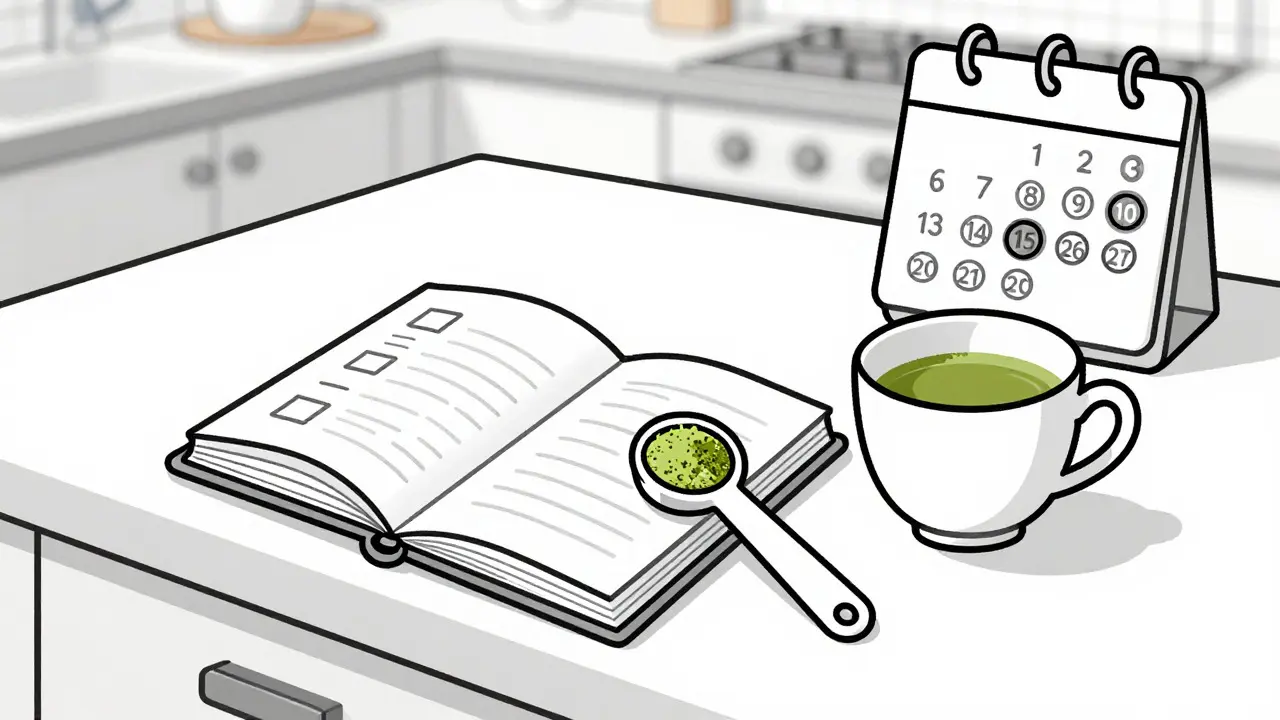
- Watch for Matcha Spikes: If you add matcha powder to your diet, log the exact grams used. Even small increases can shift your INR. Many patients find that limiting matcha to twice a week keeps their levels stable.
- Keep a Food Diary: Track not just your tea, but other Vitamin K-rich foods like kale, broccoli, and spinach. Sudden spikes in any of these can mimic the effects of increased tea consumption. The goal is total daily consistency, not just tea consistency.
When to Worry: Signs of Interaction
Your body will give you clues if the balance is off. Because Warfarin interacts with diet, symptoms of imbalance can be subtle. If your INR drops too low due to excess Vitamin K, you might notice bruising less easily, or your doctor might detect a subtherapeutic level during a routine check. Conversely, if the catechins dominate or you reduce your tea intake abruptly, your INR might spike, leading to easy bruising, nosebleeds, or prolonged bleeding from cuts. Always report these changes to your healthcare provider. Do not adjust your Warfarin dose yourself based on tea intake; instead, let your monitoring data guide the adjustment.
Comparison: Green Tea vs. Other Dietary Risks
To help you prioritize, here is how green tea stacks up against other common food interactions for Warfarin users. While grapefruit juice is often cited as a major culprit for statins, it has a lesser direct impact on Warfarin metabolism compared to cranberry juice, which can raise INR by inhibiting drug breakdown. Green tea’s primary risk is the Vitamin K content, which is lower than leafy greens but higher than most beverages. Understanding this hierarchy helps you focus your energy on the biggest threats to your stability.
| Item | Vitamin K Content (per 100g/ml) | Typical Serving | Risk Level for Warfarin Users |
|---|---|---|---|
| Brewed Green Tea | 0.03 µg / 100ml | 240ml (8 oz) | Low (if consistent) |
| Matcha Powder | ~10-20x brewed tea | 1-2g powder | Moderate (requires monitoring) |
| Spinach (Raw) | 483 µg / 100g | 100g (1 cup chopped) | High (significant INR drop potential) |
| Broccoli (Cooked) | 141 µg / 100g | 100g (half cup) | Moderate |
| Cranberry Juice | Negligible Vitamin K | 240ml | Moderate (raises INR via metabolism inhibition) |
This table illustrates that while green tea is rarely a standalone danger, it contributes to the overall Vitamin K load. If you eat a lot of spinach and drink gallons of tea, the cumulative effect can definitely lower your INR. The strategy remains the same: consistency. You don't have to stop eating spinach, but you shouldn't start eating double portions one week and none the next.
Future Outlook and Alternatives
For many patients, Warfarin remains the best option, especially for those with mechanical heart valves, where newer anticoagulants like rivaroxaban or apixaban are not approved. However, research is ongoing. The FDA recently approved andexanet alfa as a reversal agent for factor Xa inhibitors, which simplifies management for those who can switch medications. Additionally, mobile health apps now include specific trackers for herbal and tea consumption, helping users log their intake and alert them if they exceed recommended thresholds. As we move forward, personalized nutrition advice tailored to individual genetic variations in VKORC1 sensitivity will likely become more common, allowing for even finer-tuned guidance on how much green tea is truly safe for each person.
Can I drink green tea while taking Warfarin?
Yes, you can. Moderate consumption of 1 to 3 cups (240-720ml) of brewed green tea per day is generally considered safe, provided your intake is consistent. The key is to avoid sudden large increases or decreases in consumption, as this can cause fluctuations in your INR levels.
Is matcha tea safer or riskier than regular green tea?
Matcha is riskier because you consume the whole leaf, resulting in 10 to 20 times more Vitamin K than brewed tea. If you use matcha, limit it to occasional servings (e.g., twice a week) and inform your anticoagulation clinic so they can monitor your INR more closely.
How does green tea affect my INR levels?
The Vitamin K in green tea can counteract Warfarin's effect, potentially lowering your INR (making your blood clot faster). However, the catechins in green tea can also inhibit platelets, which might slightly increase bleeding risk. For most people, the Vitamin K effect is dominant at high volumes, leading to a drop in INR.
What should I do if I want to start drinking green tea regularly?
Start with a small, consistent amount, such as one cup per day. Keep a food diary to track your intake alongside other Vitamin K-rich foods. Schedule an additional INR test 7 to 10 days after starting the new habit to ensure your current Warfarin dose is still appropriate.
Does cold-brewed green tea have less Vitamin K than hot-brewed?
Yes, studies suggest that cold-brewed green tea extracts less Vitamin K than hot-brewed tea due to lower solubility at cooler temperatures. However, the difference is marginal for moderate consumption. The preparation method matters less than the total volume consumed.
