
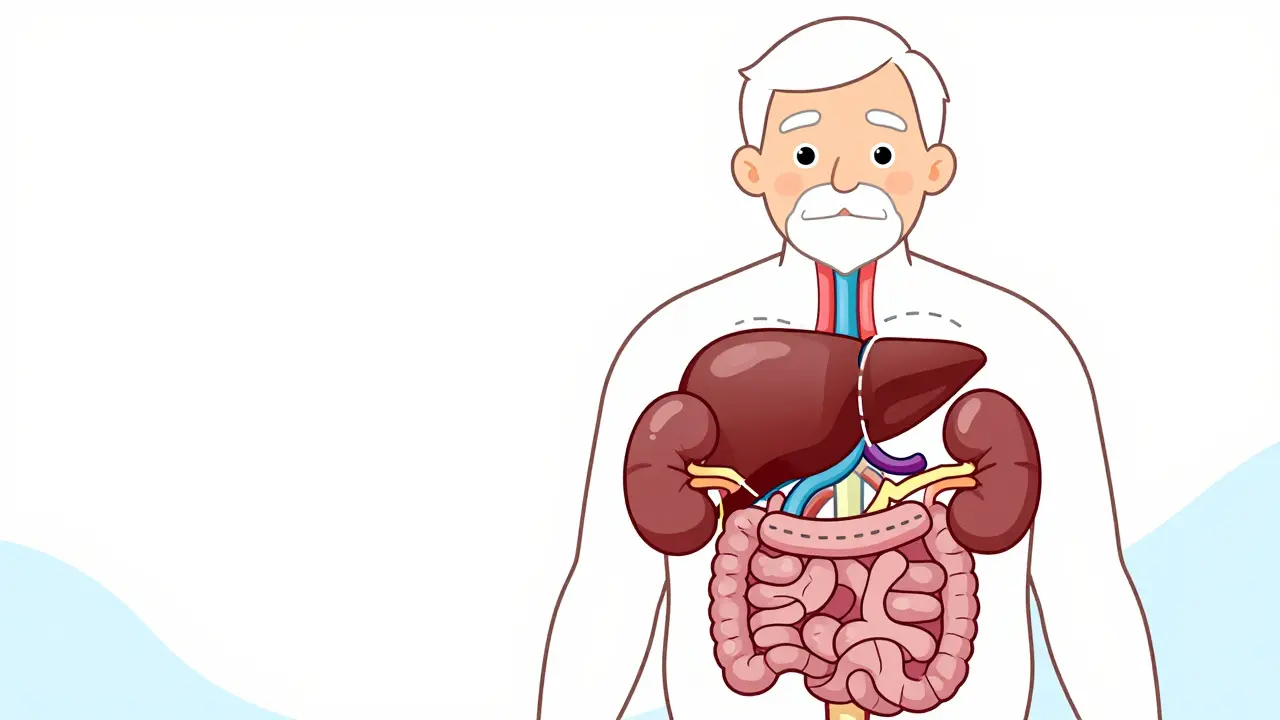
Ever wonder why your doctor suddenly wants to swap a medication you've taken for years, or why they're hesitant to prescribe a common sleep aid for your aging parent? It's usually not random. As we get older, our bodies change how they handle drugs. Organs like the kidneys and liver don't process chemicals as efficiently, and our brains become more sensitive to certain ingredients. This is where the Beers Criteria is an evidence-based set of guidelines that identifies medications that are potentially inappropriate for adults aged 65 and older comes into play.
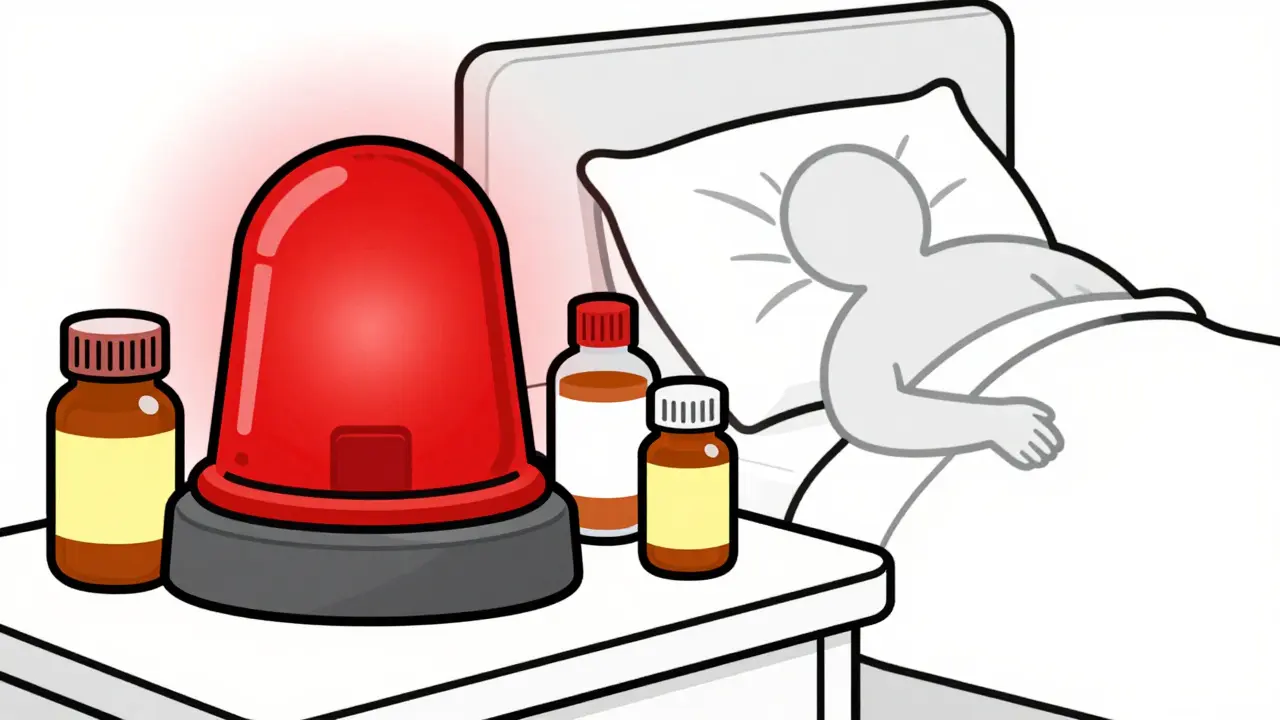
Think of the Beers Criteria as a high-level safety manual for geriatric care. It doesn't tell doctors exactly what to do in every single case, but it acts as a "warning light." It highlights drugs where the risk of a bad reaction-like a severe fall or mental confusion-often outweighs the potential benefit of the treatment. When these guidelines are ignored, the risk of hospital admissions and functional decline goes up significantly.
What Exactly Are Potentially Inappropriate Medications?
In the medical world, these are called Potentially Inappropriate Medications (or PIMs). A medication becomes "inappropriate" when the risk of an adverse drug event is too high compared to the clinical benefit. For an older adult, a drug that is perfectly safe for a 30-year-old might cause sudden delirium, internal bleeding, or a dangerous drop in blood pressure for someone over 65.
The American Geriatrics Society (AGS) manages these lists, updating them every few years to keep up with new research. The 2023 update, for example, looked at over 1,500 scientific articles to refine these warnings. They categorize these risks into five main buckets so clinicians can quickly spot the danger zones:
- General avoidance: Drugs that should be avoided by almost all older adults, regardless of their health status.
- Condition-specific avoidance: Medications that might be fine for some, but are dangerous for people with specific diseases (like dementia or heart failure).
- Cautionary use: Drugs that are acceptable but require very close monitoring.
- Renal considerations: Medications that need dose adjustments based on how well the kidneys are working.
- Drug-drug interactions: Specific combinations of meds that create a "toxic cocktail" in an older body.
Common Red Flags in the Beers List
While the list is extensive, a few categories appear more often than others because they have the most dramatic impact on daily life. One of the biggest concerns is the use of Benzodiazepines. These sedative-hypnotics are often used for anxiety or insomnia, but in older adults, they drastically increase the risk of falls and cognitive impairment. A fall in a 75-year-old often leads to a hip fracture, which can trigger a downward spiral in overall health.
Another major area of concern is the use of antipsychotics, especially for patients with dementia. The evidence shows that these drugs can increase the risk of stroke and death in this specific population. Similarly, certain over-the-counter meds, like some first-generation antihistamines, can cause extreme drowsiness and confusion, making them a poor choice for senior citizens.
| Feature | Beers Criteria | STOPP/START Criteria |
|---|---|---|
| Primary Focus | Identifying medications to avoid (PIMs) | Identifying meds to stop AND meds that are missing |
| Scope | Narrower, risk-focused | Broader, comprehensive review |
| Usage | Standard quality metric (CMS/HEDIS) | Clinical screening tool |
| Main Goal | Preventing adverse drug events | Optimizing total medication regimen |
How the Criteria Are Used in Real Life
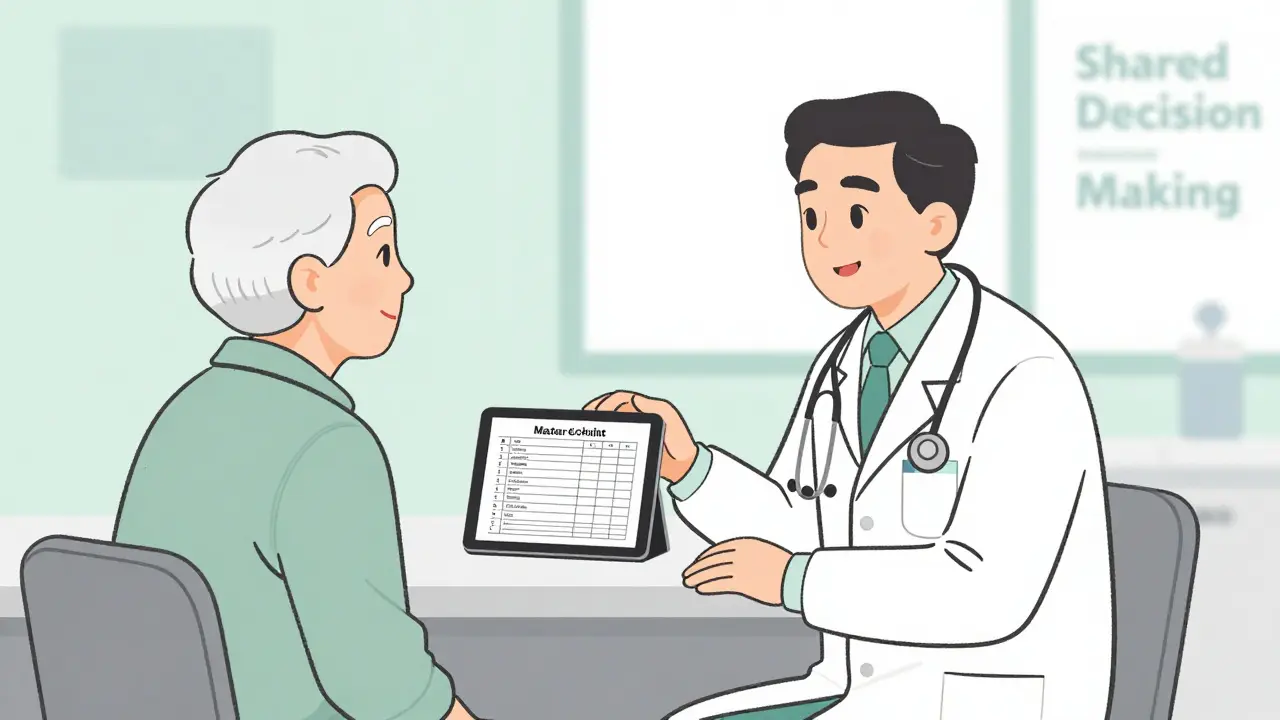
If you're a caregiver or a patient, you'll likely see the Beers Criteria in action during a "medication review." This is where a doctor or pharmacist goes through every single pill-including vitamins and supplements-to see if any overlap with the Beers list. In a study of patients in Alternate Level of Care (ALC) settings, nearly 46% of patients were found to be taking at least one medication flagged by the criteria. That's nearly half the patients who could potentially be safer with a different prescription.
However, the AGS is very clear: these aren't absolute laws. They are guidelines. For example, if a patient has a severe, end-of-life condition where comfort is the only goal, a medication that is usually "avoided" might actually be the best choice for that specific person. This is called Shared Decision Making, where the clinical evidence of the Beers list is balanced against the patient's personal goals and quality of life.
The Challenge of Polypharmacy
The real struggle comes from Polypharmacy-the practice of taking multiple medications concurrently. About 40% of older adults deal with this. When a patient sees a cardiologist for their heart, a neurologist for their memory, and a primary doctor for their diabetes, the risk of prescribing a "Beers-flagged" drug increases because not every doctor sees the full list of what the others are prescribing.
This is why integrating the Beers Criteria into Electronic Health Records (EHR) is so vital. When a doctor tries to prescribe a flagged drug, a pop-up warning can alert them to the risk immediately. This automated safety net is far more effective than expecting a busy clinician to memorize 131 different criteria while managing a patient with five different chronic illnesses.
Tips for Patients and Caregivers
You don't need to be a pharmacist to help improve medication safety. The best thing you can do is keep a master list of everything being taken. When you visit a new specialist, ask them directly: "Does this medication follow the current Beers Criteria for older adults?" or "Are there safer alternatives that have a lower risk of falls or confusion?"
Be wary of "prescribing cascades." This happens when a drug causes a side effect, and the doctor prescribes a second drug to treat that side effect, even though the first drug was the problem all along. For instance, a medication might cause swelling in the ankles, leading the doctor to prescribe a diuretic, which then causes dehydration. Recognizing these patterns is the first step toward deprescribing-the process of safely tapering off unnecessary medications.
Are the Beers Criteria absolute rules?
No, they are guidelines, not mandates. While they identify drugs that are generally risky for older adults, a physician may decide a specific drug is necessary based on a patient's unique health needs. The goal is to prompt a conversation about risks, not to forbid a medication entirely.
Who is the target audience for the Beers Criteria?
They are primarily designed for healthcare providers-doctors, pharmacists, and nurses-treating adults aged 65 and older. However, patient-friendly versions are available to help families advocate for safer care.
How often are the guidelines updated?
The American Geriatrics Society (AGS) updates the criteria periodically. The most recent major revision was in 2023, which incorporated thousands of new research papers to update the risk profiles of various drugs.
Can these criteria be used for people under 65?
Generally, no. These criteria are specifically tailored to the physiological changes that happen with aging (like decreased kidney function). Younger adults have different metabolic rates and risk profiles.
What happens if a doctor ignores the Beers Criteria?
While the AGS states the criteria should not be used punitively, some regulatory bodies (like nursing home inspectors) use them as quality benchmarks. From a clinical standpoint, ignoring the warnings without a clear reason increases the risk of adverse drug events, such as falls or cognitive decline.
Next Steps for Medication Safety
If you're reviewing medications for yourself or a loved one, start by creating a comprehensive list of all prescriptions, over-the-counter drugs, and herbal supplements. Schedule a dedicated "medication review" appointment with your primary care physician or a geriatric pharmacist. Don't stop any medication abruptly on your own, as this can cause dangerous withdrawal symptoms; instead, work with your provider to create a tapering plan if a drug is identified as potentially inappropriate.

12 Comments
Goodwin Colangelo
April 4 2026
The prescribing cascade is a huge issue that people often overlook. I've seen so many cases where a patient is on five different meds just to treat the side effects of the first one, and it just creates a nightmare for their kidney function. Getting a geriatric pharmacist involved is honestly the best move because they're trained specifically to look for these overlaps that a general practitioner might miss in a fifteen-minute appointment.
Beth LeCours
April 6 2026
Too long.
Divine Manna
April 7 2026
It is quite telling that the average clinician remains blissfully ignorant of these frameworks until a computerized alert manifests on their screen. One must realize that the intersection of pharmacology and senescence is not merely a matter of dosage, but a fundamental shift in biological equilibrium. To treat an octogenarian as a smaller version of a youth is a categorical error in medical logic. The Beers Criteria are a necessary, if basic, attempt to formalize a wisdom that should be intuitive to anyone who has actually studied the degradation of renal clearance over time.
Ace Kalagui
April 8 2026
I really think it is so wonderful that we have these resources to help our elders live more comfortably, and I just want to encourage everyone to take the time to sit down with their parents and really go through those medicine cabinets together because it can be such a bonding experience to advocate for their health as a family unit, especially when you consider how overwhelming the modern medical system can feel to someone who just wants to enjoy their retirement years without worrying about a sudden trip to the ER due to a bad drug interaction!
The Charlotte Moms Blog
April 9 2026
Typical!!! My kids' doctor completely ignored these guidelines and almost gave my mother-in-law something that would've knocked her out cold... absolutely unacceptable behavior from the medical board!!!
Lawrence Rimmer
April 11 2026
Guidelines are just suggestions for people who can't think for themselves. True medicine is an art, not a checklist for the mediocre.
Hudson Nascimento Santos
April 12 2026
There's a certain irony in the fact that we spend the first half of our lives building our health and the second half trying to manage the collapse of it through chemicals. These criteria are just a way of managing the decline. Does the goal of "safety" outweigh the goal of "quality of life" in the final chapters?
simran kaur
April 13 2026
Sure, follow the "evidence-based" guidelines provided by the very same institutions that profit from the pharma-industrial complex. It's convenient how these lists change every few years, probably just to shift the liability away from the drug companies when the lawsuits start piling up. They tell you it's about "renal considerations" but it's actually about keeping the elderly in a state of manageable dependence while they tweak the formulas to make them more addictive or less effective.
angel sharma
April 15 2026
This is exactly the kind of proactive approach we need in healthcare and I am so incredibly energized by the possibility of reducing hospitalizations through simple medication reviews because when we empower caregivers with this knowledge we are essentially creating a frontline of defense that can save thousands of lives every single year and I truly believe that if every family implemented a master list as suggested here we would see a massive spike in the overall quality of life for our seniors across the globe!
Jenna Carpenter
April 16 2026
honestly doctors just dont care anymore.. my dad was on a benzo for years and the doc didnt even check the beers list until he fell twice in one month.. just lazy medicine if u ask me
Joey Petelle
April 16 2026
Oh look, another set of rules for us to follow while the bureaucrats in DC play doctor with our lives. It's just peak comedy that we need a manual to tell us that drugging an 80-year-old into a coma with sleep aids is a bad idea. Truly a masterpiece of American efficiency, isn't it?
Dipankar Das
April 18 2026
It is an absolute necessity that all medical professionals adhere to these standards with utmost rigor because any deviation is a failure of duty to the patient and the family! One must be aggressive in demanding that their physician provides a written justification for any medication that falls under the avoidance category!