
Cardiac Arrhythmia Risk Assessment
This tool helps assess your individual risk for cardiac arrhythmias when taking stimulant medications. Based on factors identified in the article, we calculate a risk score and provide personalized recommendations.
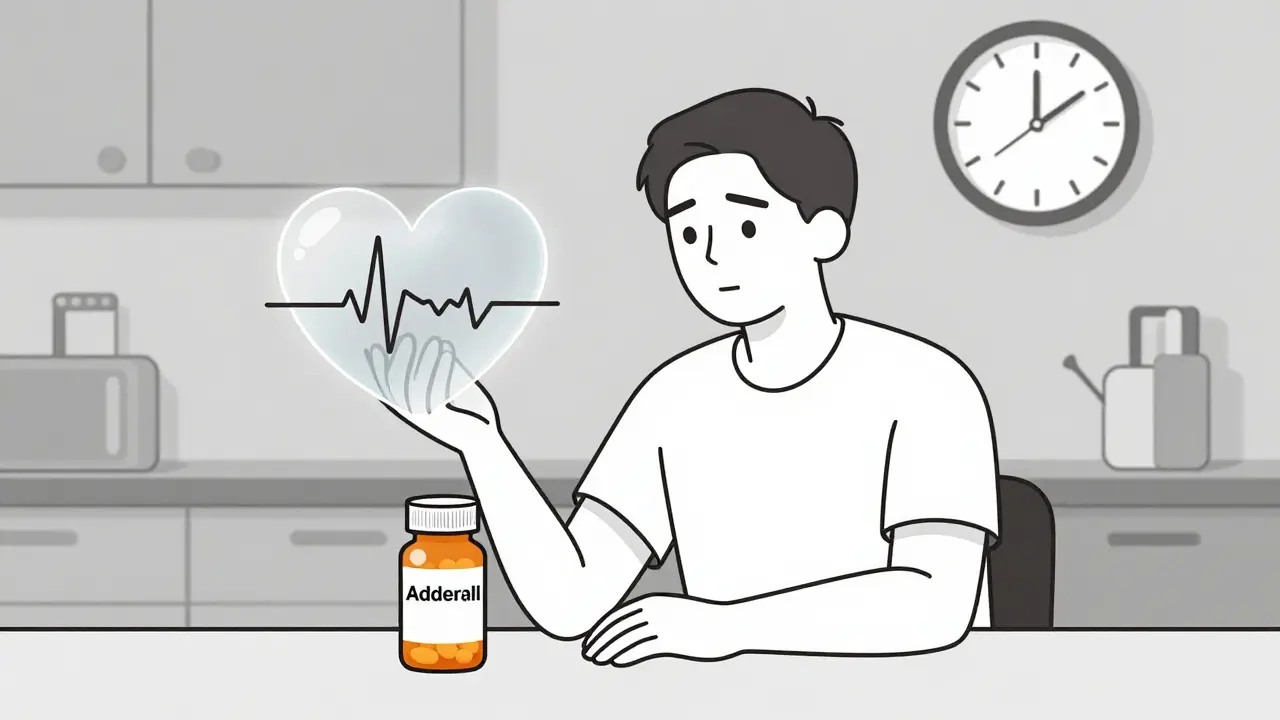
When you're managing ADHD with stimulant medication, the goal is clear: focus, calm, and control. But what happens when your heart starts acting up? A skipped beat, a flutter, or a racing pulse might not seem like much-until a doctor says it could be linked to the very drug helping you function. This isn't rare. In fact, stimulants like Adderall and Ritalin are among the most prescribed medications in the U.S., used by millions of children and adults. Yet, behind the numbers is a quiet debate: are we trading short-term focus for long-term heart risk?
How Stimulants Affect the Heart
Stimulants don’t just sharpen your mind-they tug on your heart, too. Prescription drugs like amphetamines and methylphenidate work by boosting dopamine and norepinephrine. That’s good for attention, but it also spikes adrenaline. Your heart rate goes up by 1-2 beats per minute. Blood pressure rises, even if just a few points. For most people, this is harmless. But for others, it’s enough to trigger something dangerous: an arrhythmia.
Arrhythmias aren’t just "bad heart rhythms." They’re electrical misfires. In the case of stimulants, they can come from blocked ion channels in heart cells. Cocaine and methamphetamine do this aggressively-blocking potassium and sodium channels, stretching the heart’s electrical cycle, and causing early beats that spiral into dangerous rhythms. Even prescription stimulants, though weaker, can do the same thing in vulnerable people. Studies show that within 30 days of starting stimulants, adults over 65 face a threefold increase in ventricular arrhythmias. That’s not a guess. It’s a measured risk from a 2021 study in PubMed Central.
Prescription vs. Illicit: A Clear Divide
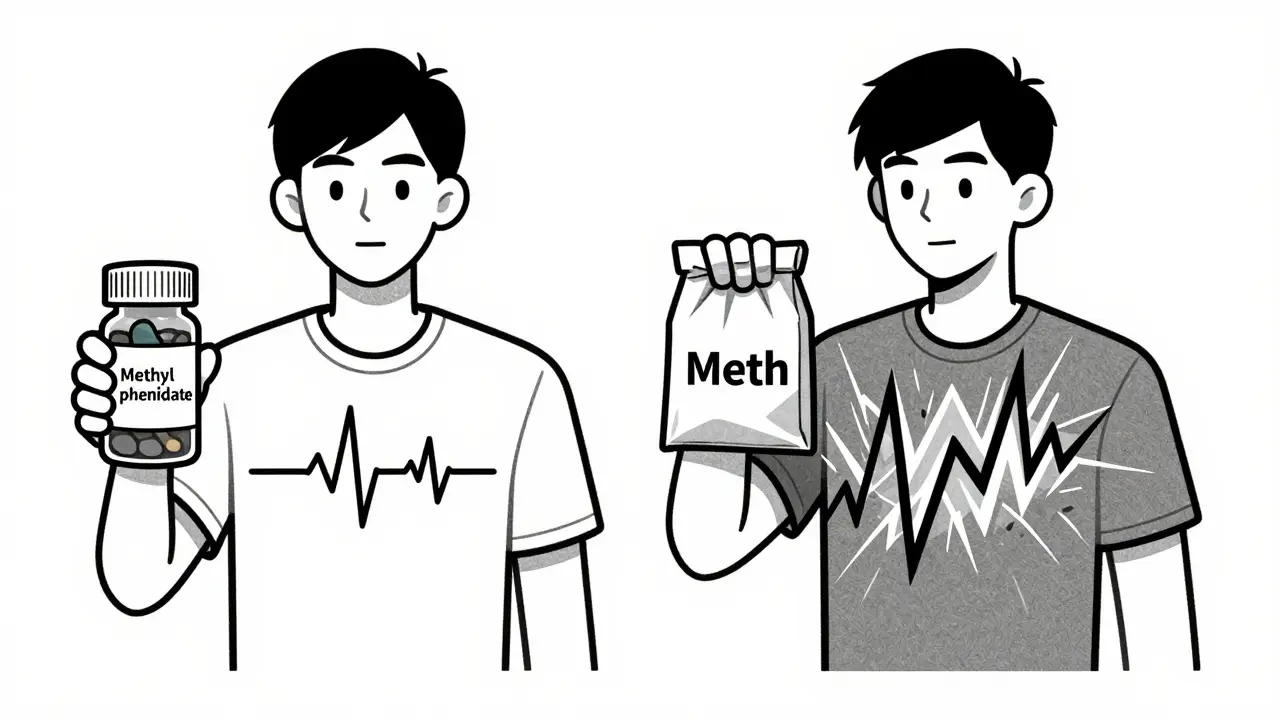
Not all stimulants are the same. There’s a massive gap between a 20mg dose of Adderall and a street hit of meth. Illicit drugs like cocaine and methamphetamine are far more dangerous. One study in the European Heart Journal found cocaine users had a 2.5 to 4.5 times higher chance of ventricular arrhythmias than non-users. Why? These drugs don’t just stimulate-they poison the heart’s electrical system. They lengthen the QT interval, slow down heart cell recovery, and create chaotic electrical pathways.
Prescription stimulants? The risk is lower, but it’s not zero. Amphetamines seem to carry slightly more risk than methylphenidate because they release more norepinephrine. But even that’s not settled science. A 2022 meta-analysis in JAMA Network Open found no statistically significant link between ADHD meds and heart disease across all age groups. So what gives? The answer lies in who you are, not just what you take.
Who’s at Real Risk?
Most people on stimulants won’t have heart problems. But some will. The key is knowing who they are.
- Family history: Did a parent or sibling die suddenly before age 50? Or have a known heart condition like long QT syndrome or hypertrophic cardiomyopathy? That’s a red flag.
- Personal symptoms: Unexplained fainting, chest pain, or palpitations during exercise? Don’t ignore them.
- Age: Older adults (66+) face the highest short-term arrhythmia risk after starting stimulants. Younger people? Risk builds slowly-studies show cardiomyopathy risk rises over years, not days.
- Pre-existing conditions: Congenital heart defects, even if repaired, need careful monitoring. The American Academy of Pediatrics says it’s okay to use stimulants in stable cases-but only with close follow-up.
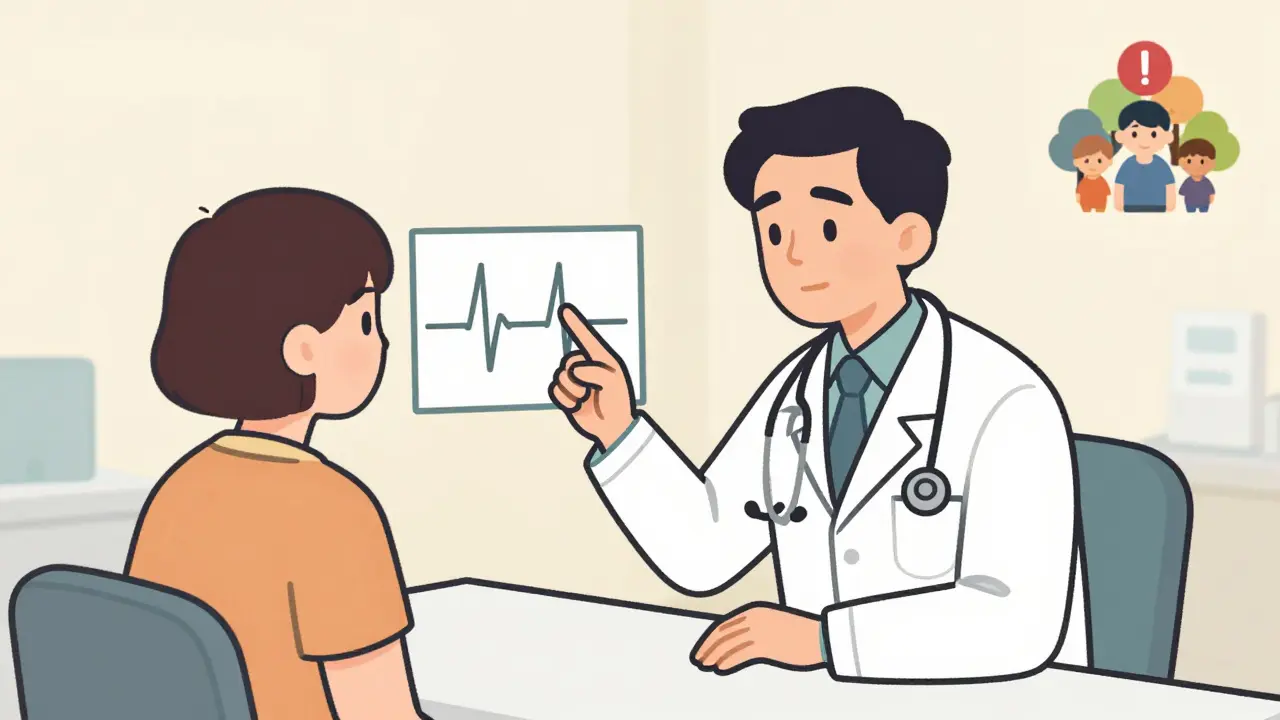
Doctors don’t need to do an ECG on everyone. The American Heart Association and American Academy of Pediatrics agree: routine ECGs before starting stimulants aren’t necessary. But they do recommend a thorough history and physical. Ask about fainting, chest pain, family deaths. Listen for heart murmurs. Check blood pressure and pulse. That’s the baseline.
What Happens After Starting?
Starting stimulants isn’t a one-time decision. It’s a long conversation with your body.
- Check blood pressure and pulse within 1-3 months of starting.
- Repeat every 6-12 months during ongoing treatment.
- Monitor more often during dose changes.
- If blood pressure rises above the 95th percentile for your age and height, pause the medication and reassess.
- If an ECG shows a QT interval longer than 0.46 seconds, stop the stimulant. That’s a hard line.
Doctors report spending 15-20% more time during ADHD evaluations since the FDA’s 2008 warning. That’s not overkill-it’s smart medicine. A 2024 study from the American College of Cardiology showed that while the absolute risk of heart damage is low, it grows over time. For someone on stimulants for eight years, the risk of cardiomyopathy is 57% higher than someone not on them. Still, that’s a small number of people. But for those affected? It’s everything.
Alternatives That Don’t Stress the Heart
If your heart is a concern, there are options. They’re not as fast-acting. They’re not as effective for everyone. But they’re safer.
- Atomoxetine (Strattera): A non-stimulant that works on norepinephrine. It doesn’t raise heart rate or blood pressure. Response rates? About 50-60%. Slower to work-takes weeks-but no cardiac risk.
- Guanfacine (Intuniv) and Clonidine (Kapvay): Blood pressure medications repurposed for ADHD. They calm the nervous system. Good for impulsivity and emotional regulation. Side effects? Drowsiness, dizziness. But no arrhythmia risk.
These alternatives aren’t magic bullets. They don’t work as well for focus as stimulants. But for someone with a family history of sudden cardiac death, or who’s already had a palpitation, they’re the only responsible choice. Many clinicians now use them as first-line for patients with known cardiac risk factors.
The Bigger Picture
The global ADHD medication market is worth nearly $18 billion-and growing. Stimulants make up 80% of prescriptions. Regulatory agencies haven’t backed off. The FDA still says the benefits outweigh the risks. And for most people, they do.
But medicine isn’t about averages. It’s about individuals. One person’s safe medication is another’s danger. That’s why blanket rules fail. What we need is personalized care: a history taken seriously, symptoms listened to, and choices made with full awareness-not fear, but clarity.
Stimulants aren’t villains. But they’re not harmless, either. The best approach isn’t to avoid them. It’s to know who they’re safe for-and who they aren’t.
Do all stimulants increase the risk of arrhythmias?
No. Prescription stimulants like methylphenidate and amphetamines carry a small, measurable risk-especially in older adults or those with heart conditions. Illicit stimulants like cocaine and methamphetamine carry far higher risks due to their direct toxic effects on heart cells. Not everyone will develop arrhythmias, but the risk is real enough to warrant screening in high-risk groups.
Should I get an ECG before starting ADHD medication?
Routine ECGs aren’t recommended for everyone. Major guidelines from the American Heart Association and American Academy of Pediatrics say a detailed medical history and physical exam are enough. But if you have symptoms like fainting, chest pain, or a family history of sudden cardiac death, an ECG and possibly a cardiologist referral are advised.
How often should I check my heart health while on stimulants?
Blood pressure and pulse should be checked within 1-3 months after starting, then every 6-12 months. More frequent checks are needed during dose changes. If you’re over 65, have a heart condition, or develop symptoms like palpitations, your doctor may recommend more frequent monitoring or an ECG.
Are non-stimulant ADHD medications less effective?
Yes, generally. Stimulants improve ADHD symptoms in 70-80% of users. Non-stimulants like atomoxetine, guanfacine, and clonidine work for about 50-60%. They’re slower to take effect and may not help with focus as strongly. But for people with heart risks, they’re the best available alternative.
Can I switch from stimulants to non-stimulants safely?
Yes, but it should be done under medical supervision. Stopping stimulants suddenly can cause withdrawal symptoms like fatigue, depression, or rebound ADHD. A doctor will typically taper the stimulant while gradually introducing the non-stimulant. It can take weeks to find the right balance, but many patients do well on non-stimulant regimens, especially when cardiac safety is a priority.

11 Comments
Sabrina Sanches
March 15 2026
I've been on Adderall for 8 years and never had a single heart issue. My doc checked my BP and pulse every 6 months. I'm 32, no family history, and I run marathons. This article makes it sound like everyone's one heartbeat away from cardiac arrest. Chill.
Adam M
March 17 2026
Stop overmedicalizing ADHD. If your heart flutters, maybe you're just anxious. Or maybe you're taking too much. Simple.
Elsa Rodriguez
March 17 2026
I had a panic attack after my first Adderall dose. My heart felt like it was trying to escape my chest. I cried in the parking lot. My doctor just shrugged. That's not care. That's negligence.
Kathy Leslie
March 19 2026
I'm a nurse and I've seen this play out. One guy, 68, started Ritalin for focus after retirement. Three weeks later, he had VTach. He's lucky he got to the ER. This isn't theoretical. It's real. And it's quiet.
douglas martinez
March 20 2026
The data is clear: for the vast majority, stimulants are safe. The risk is not zero, but it is low. What matters is informed consent. A thorough history, a listening provider, and regular monitoring. That's the standard of care. Not fear. Not blanket restrictions. Just good medicine.
Alex MC
March 21 2026
I switched to Strattera after a palpitation scare. Took 6 weeks to feel normal. Focus isn't laser-sharp like Adderall, but I sleep better, my BP is normal, and I don't feel like my heart's gonna explode. Worth it. 🙏
Amisha Patel
March 22 2026
In India, ADHD is still underdiagnosed. But when it's treated, stimulants are rarely used. We use behavioral therapy first. Maybe we're missing something. Or maybe we're avoiding a problem we don't know how to handle.
Buddy Nataatmadja
March 23 2026
I'm from Indonesia. We don't have access to Strattera here. My cousin has ADHD. His mom gives him green tea and yoga. He's okay. Maybe we don't need pills. Maybe we just need space to breathe.
Serena Petrie
March 23 2026
So what? Just stop taking them if you're scared.
mir yasir
March 24 2026
The scientific literature is replete with methodological limitations in studies assessing cardiovascular risk of stimulants. Most are retrospective, underpowered, and fail to control for confounders such as comorbid anxiety or substance use. To draw firm conclusions is premature.
Leah Dobbin
March 25 2026
It's fascinating how the medical community has turned a simple neurochemical imbalance into a high-stakes cardiac gamble. The real tragedy isn't the arrhythmias-it's the industry that profits from fear, not from care.