
Dry Mouth Product Finder
Find Your Perfect Dry Mouth Solution
Answer a few quick questions to get personalized recommendations for products that work best for your situation.
Your Personalized Recommendations
When your mouth feels like cotton wool-especially when you’re trying to swallow, speak, or even sleep-you’re not just uncomfortable. You’re at risk. Dry mouth, or xerostomia, isn’t just a nuisance. It’s a silent threat to your teeth, gums, and overall oral health. Over 500 common medications list dry mouth as a side effect, from blood pressure pills to antidepressants. About 30% of adults over 65 deal with it regularly, and even younger people on multiple prescriptions can find themselves struggling. The good news? You don’t have to just live with it. With the right products and habits, you can take back control.
Why Dry Mouth Is More Than Just Discomfort
Saliva isn’t just there to help you chew and swallow. It’s your mouth’s natural defense system. It washes away food particles, neutralizes acids, and fights bacteria that cause cavities and gum disease. When saliva production drops, everything changes. Teeth become more vulnerable. Sores form more easily. Bad breath sticks around. And your risk of tooth decay jumps dramatically.
Medications are the biggest culprit. Diuretics, antihistamines, antidepressants, and painkillers all cut saliva flow. Aging, cancer treatments, and autoimmune conditions like Sjögren’s syndrome also play a role. But even if you know why it’s happening, the damage won’t stop unless you act.
What Makes a Dry Mouth Product Actually Work?
Not all mouthwashes, gels, or sprays are created equal. The best ones don’t just add moisture-they mimic what saliva does naturally. Look for products with three key ingredients:
- Xylitol: A natural sugar alcohol that stops cavity-causing bacteria from sticking to teeth. It also stimulates saliva flow slightly. The Mayo Clinic recommends xylitol-containing products for daily use.
- Carboxymethylcellulose or hydroxyethyl cellulose: These thickening agents create a protective film that lasts longer than water alone. They’re the backbone of most effective saliva substitutes.
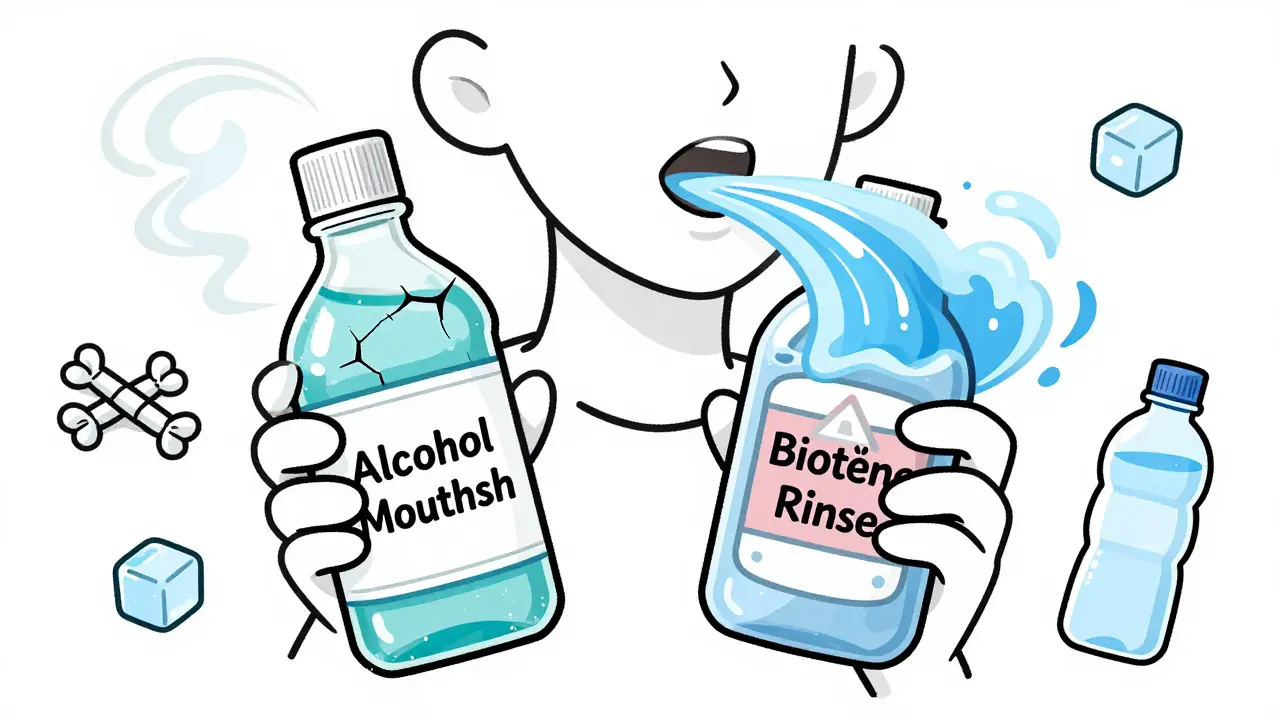
- No alcohol: Alcohol dries out your mouth even more. Avoid anything labeled "antibacterial" or "medicinal" unless it’s specifically designed for dry mouth.
Also skip products with sodium lauryl sulfate (SLS), the foaming agent in many toothpastes. It can irritate dry, sensitive tissues and make things worse.
Top Products That Dentists Actually Recommend
Biotène is the #1 dentist, pharmacist, and hygienist recommended brand for dry mouth. Why? Because it’s built around those three key ingredients and designed for real-life use. Here’s how their main products stack up:
| Product | Form | Key Ingredient | Duration of Relief | Best For | Price (Approx.) |
|---|---|---|---|---|---|
| Biotène Oralbalance Moisturizing Gel A thick, overnight moisturizer that coats the mouth with a protective film. | Gel | Carboxymethylcellulose | Up to 4 hours | Nighttime use, severe dryness | $8.29 for 1.5 oz |
| Biotène Dry Mouth Oral Rinse Alcohol-free rinse with xylitol and moisturizing agents. | Rinse | Xylitol, hydroxyethyl cellulose | 2-3 hours | Daily cleansing, fresh breath | $12.99 for 33.8 fl oz |
| ACT Dry Mouth Moisturizing Lozenges Sugar-free lozenges with xylitol for on-the-go relief. | Lozenge | Xylitol | 1-2 hours | Daytime, quick relief | $6.79 for 36 pieces |
| XyliMelts Adhesive discs that slowly release xylitol and moisture while you sleep or work. | Disc (adhesive) | Xylitol | Up to 6 hours | Nighttime, long-lasting relief | $11.49 for 40 pieces |
| TheraBreath Dry Mouth Oral Rinse Clinically tested formula with oxygenating agents and xylitol. | Rinse | Xylitol, sodium fluoride | 2-3 hours | Breath freshening + moisture | $10.99 for 16 fl oz |
Each product fills a different need. The gel is best at night. Lozenges and sprays work during the day. XyliMelts are unique-they stick to your gums and release moisture slowly, making them ideal for sleep or long meetings. And while Biotène leads in professional recommendations, ACT and TheraBreath offer solid alternatives, especially if you’re looking for flavor variety or breath-focused relief.
Non-Product Habits That Make a Real Difference
Products help, but habits change everything. You can use the best gel in the world, but if you’re sipping soda all day, you’re still setting yourself up for decay.
- Sip water constantly. Keep a bottle nearby. Don’t wait until you’re thirsty-by then, you’re already dry.
- Suck on ice chips. They’re better than sugary drinks. They hydrate without sugar or acid.
- Chew sugar-free gum with xylitol. It triggers saliva flow naturally. Aim for 3-5 pieces a day.
- Breathe through your nose. Mouth breathing dries you out fast. If you snore or have nasal congestion, talk to your doctor about solutions.
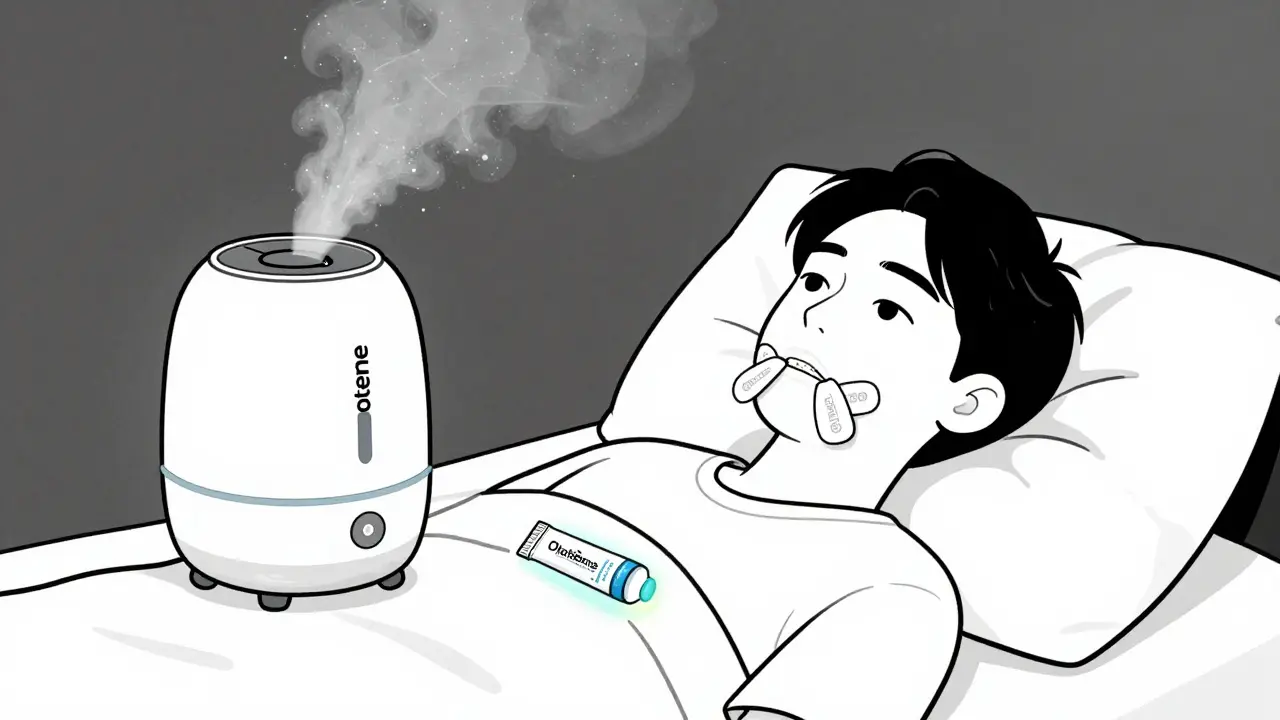
- Use a humidifier at night. Especially in winter. Adding moisture to the air helps your mouth stay moist while you sleep.
- Avoid alcohol, caffeine, and sugary drinks. These all pull moisture from your mouth. Even one coffee or glass of wine can make symptoms worse for hours.
- Stay away from acidic or sugary foods. Citrus, soda, candy, and even dried fruit raise your risk of cavities when saliva is low.
Dental Care: Don’t Skip the Dentist
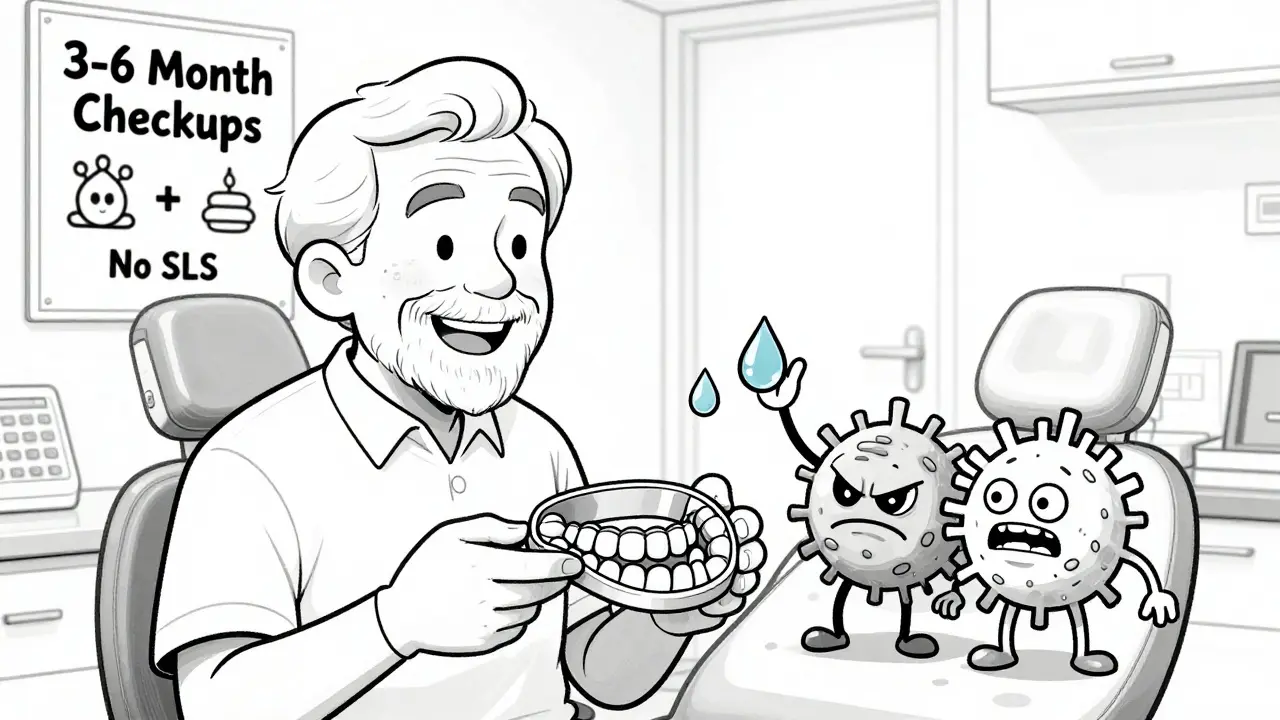
If you have dry mouth, you need more than just a yearly checkup. Most dentists recommend visits every 3-6 months for people with chronic dry mouth. Why? Because decay can spread fast when there’s no saliva to protect your teeth.
Ask your dentist about:
- Fluoride treatments. Prescription-strength fluoride toothpaste or gel can strengthen enamel.
- Custom fluoride trays. These are like mouthguards filled with fluoride gel that you wear for a few minutes each night.
- Saliva-stimulating options. Some dentists prescribe medications like pilocarpine to boost natural saliva production.
Also, make sure your toothpaste is fluoride-based and free of SLS. Colgate, Sensodyne, and Biotène all make dry mouth-friendly toothpastes. Avoid whitening or tartar-control formulas-they often contain harsh abrasives or drying agents.
Putting It All Together: A Simple Daily Routine
You don’t need to overcomplicate this. Here’s what a practical routine looks like:
- Morning: Brush with fluoride toothpaste. Rinse with Biotène or ACT rinse. Sip water all morning.
- Midday: Chew a xylitol gum or suck on an ACT lozenge. Keep water handy.
- Evening: Rinse again with dry mouth mouthwash. Apply Biotène gel to gums and tongue. Use a humidifier.
- Before bed: Use a fluoride gel or rinse if your dentist recommends it.
That’s it. No magic. Just consistency. The goal isn’t to eliminate dry mouth overnight-it’s to manage it so your teeth stay healthy and your mouth feels comfortable.
What to Avoid
- Antiseptic mouthwashes with alcohol (like Listerine Original). They burn and dry.
- Oral sprays that only contain water. They evaporate fast and offer no protection.
- Drinking sports drinks or juice to hydrate. They’re full of sugar and acid.
- Smoking or vaping. Both severely reduce saliva and damage oral tissues.
- Ignoring symptoms. If dry mouth gets worse or you notice mouth sores, white patches, or pain, see your dentist right away.
Can dry mouth be cured?
Dry mouth itself isn’t usually "cured," especially if it’s caused by medication or aging. But its effects can be fully managed. With the right products and habits, you can prevent tooth decay, reduce discomfort, and keep your mouth healthy for years.
Is xylitol safe for daily use?
Yes, xylitol is safe for daily use in the amounts found in dry mouth products. The Mayo Clinic confirms it helps prevent cavities. But consuming over 50 grams per day (far more than you’d get from gum or lozenges) may cause stomach upset. Stick to the recommended use-usually 3-5 lozenges or sticks a day.
Why does my mouth feel worse after using mouthwash?
Most likely, it contains alcohol or sodium lauryl sulfate (SLS). These ingredients strip away moisture and irritate dry tissues. Switch to a product labeled "alcohol-free" and "SLS-free," like Biotène or ACT Dry Mouth Rinse.
Can I use regular toothpaste if I have dry mouth?
You can, but it’s not ideal. Regular toothpaste often contains SLS, which dries out the mouth, and lacks extra fluoride. Use a toothpaste made for dry mouth-these have higher fluoride levels and no irritating foaming agents.
How long should I wait after using a dry mouth gel before eating or drinking?
Wait at least 15-30 minutes. These gels work by forming a protective film. Eating or drinking too soon washes it away. Apply it before bed or during long breaks when you won’t be eating.
Next Steps
Start simple. Pick one product-maybe the Biotène rinse or a pack of ACT lozenges-and add one habit: sip water all day. Track how you feel after a week. If your mouth feels less sticky and your breath improves, you’re on the right track. Then add another step: a humidifier at night, or a fluoride gel from your dentist.
Dry mouth doesn’t have to be a life sentence. With smart choices, you can protect your teeth, feel more comfortable, and keep your quality of life intact-even if you’re on medication for life.

10 Comments
Byron Boror
March 15 2026
Let me get this straight - we’re recommending Biotène like it’s some kind of miracle cure? I’ve been on blood pressure meds for 12 years and dry mouth is just part of the package. No gel, no rinse, no lozenge is gonna fix what Big Pharma broke. You want real relief? Talk to your doctor about switching meds. Stop wasting money on fancy mouthwash that costs more than your toothpaste.
And don’t even get me started on xylitol. It’s fine for chewing gum, but slap a 1.5 oz tube of gel on your tongue at 2 a.m.? That’s not oral care - that’s a science experiment gone wrong.
Kandace Bennett
March 15 2026
OMG YES 🙌 I’ve been using the Biotène gel for 6 months and my mouth feels like it’s been baptized 😭 I used to wake up with cotton balls in my throat and now? I can actually TASTE my coffee again. And I swear by the XyliMelts - they’re like little moisture fairy dust for your gums 💫
Also - STOP USING LISTERINE. Like, literally. It’s the oral equivalent of rubbing sandpaper on your lips. Switch to ACT or TheraBreath and your tongue will thank you. Also, humidifier. Always. Even in summer. My cat judges me but my enamel doesn’t. 🐱💤
Tim Schulz
March 16 2026
Ohhh so we’re giving a Yelp review for dry mouth products now? 🤦♂️
Let me guess - you got this from a sponsored post on Instagram and now you’re a certified saliva whisperer? Xylitol? Carboxymethylcellulose? Hydroxyethyl cellulose? Did you just drop a chemistry textbook into a Reddit thread?
Real talk: if your mouth feels like a desert, maybe don’t chug 4 espressos and a Coke Zero all day. But sure, keep buying $12 bottles of ‘oral balance’ like it’s a luxury skincare serum. I’ll be over here sipping water like a normal human.
Jinesh Jain
March 17 2026
Interesting breakdown. I’ve been dealing with this since my chemotherapy, and I’ve tried almost everything. The gel works, but I find the lozenges more practical during work hours. I also noticed that drinking warm water helps more than cold - less shock to the tissues. No fancy products needed, just consistency.
Also, nose breathing is huge. I started using nasal strips at night and my dryness dropped by half. Simple things matter.
douglas martinez
March 17 2026
Thank you for this comprehensive and clinically grounded overview. The emphasis on evidence-based ingredients - xylitol, cellulose derivatives, and avoidance of alcohol and SLS - aligns with current dental guidelines. Many patients are misled by marketing claims and end up using products that exacerbate their condition.
I would add that patients on multiple medications should consult with a pharmacist for potential drug interactions that may compound xerostomia. A multidisciplinary approach involving both medical and dental professionals yields the best long-term outcomes.
Sabrina Sanches
March 18 2026
YES YES YES I started using the ACT lozenges and my breath stopped smelling like a gym sock and now I can actually talk to people without feeling gross 😍 I used to think I was just old and dry but NOPE it was the mouthwash I was using like a maniac
Also humidifier. Do it. Even if you think you don’t need it. You do. I didn’t believe it until my lips stopped cracking. Life changer. Also sip water. Like. All the time. I have a bottle next to my bed now. I’m basically a water ninja now. 💧💧💧
Shruti Chaturvedi
March 20 2026
My mom has dry mouth from diabetes and we tried everything until we switched to just plain water and chewing sugar-free gum. No fancy products. No gels. Just simple. She says she feels better already. Also breathing through nose helped a lot. Humidifier is nice but not necessary if you drink enough. Keep it simple.
And please stop telling people to buy expensive stuff. Not everyone can afford $12 rinses.
Katherine Rodriguez
March 22 2026
I hate how every article on this makes it sound like you just need to buy the right gel and suddenly your life is fixed. No. You’re on 7 medications and your mouth is dry because your body is shutting down to survive. Stop pretending this is a lifestyle hack.
And don’t get me started on xylitol. It’s fine for kids but if you’re 70 and on lithium? You don’t need more sugar alcohols in your system. This whole thing is a scam for people who want to feel like they’re doing something.
I just suck on ice and cry into my coffee. That’s my routine. And it’s real.
Devin Ersoy
March 23 2026
Ohhh so Biotène is the holy grail? 🤭 Let me grab my crystal ball and tell you what’s really going on here - this isn’t oral care, it’s a cult. Xylitol? Sure. But did you know that chewing gum triggers salivary glands better than any gel? And don’t even get me started on the fact that TheraBreath is basically a glorified breath mint with a fancy label.
Meanwhile, I’m over here using a $2.99 electrolyte spray from the gas station and my mouth feels like a tropical rainforest. Who needs $12 bottles when you’ve got hustle? Also - I don’t use humidifiers. I just sleep with a wet towel. Revolutionary, I know.
TL;DR: stop buying into the dry mouth industrial complex. Your saliva is not broken - your habits are. And yes, I’ve tried all the products. I’m basically the Oprah of xerostomia.
Scott Smith
March 24 2026
Thank you for sharing this. I’ve been managing dry mouth for over a decade, and your breakdown of ingredients and habits is spot on. I especially appreciate the emphasis on consistency over quick fixes. Many patients give up because they expect overnight results, but this condition requires daily discipline.
One addition: if you’re on medication, ask your doctor about saliva-stimulating agents like pilocarpine. It’s not a magic bullet, but for some, it’s life-changing. Also - fluoride toothpaste without SLS is non-negotiable. I use Sensodyne Daily Protection and haven’t had a cavity in 5 years.
Small steps. Daily. That’s the key.